DIY Friday: WiFi Network Detector

Ever been working on a train, and a “New Network Found” popup hits you everytime you pass through a station or suburb? Of course, you’ll never actually connect as the train whips past the station; it just annoys you 10-15 times until you have enough motivation to disable your network adaptor.

Now, imagine if you could carry that annoyance around with you all the time, only replacing it with a disturbing heart-beat sound. Great, huh? Let’s make a DIY hot-spot detecter:

This project is for a small electronic unit that allows the user to sense the presence and relative signal strength of wireless hotspots. It can be worn as a pendant or carried in a pocket. It is “always on” and communicates the presence and signal strength of an in-range hotspot by way of sequences of pulses – like a heartbeat you can feel. The stronger and faster the “heartbeat”, the stronger the wireless signal detected.

It does not actually authenticate or otherwise interact with a hotspot in any way. It is a 100% passive device, meaning it transmits nothing – it can detect hotspots, but cannot be detected itself.

This project consists of a microcontroller, some custom interface electronics, a small vibe motor, and an off-the-shelf Wi-Fi detector – the one I used is by D-Link and is keychain-sized.

Instructions on building your own are available here. And, in what appears to be a bad remake of the video game Doom, they provided us with a demonstration video.

If you want to be lame you could just purchase a key-chain version for about $20 dollars, but you will lose out on the heart beat. For a little more money, Canary Wireless sells a version that detects not just the signal strength, but the type of authentication – letting you know if you will be able to easily “borrow” a signal. Still no annoying heart beat, though.

Of course, all of this is quite useless if you have an iPhone or wirelessly enabled smart phone.

Hovercraft – they aren’t just for the movies

Hovering is no easy exercise. Remember Star Wars and the X-34 landspeeder? Even the SoroSuub Corporation struggled.

But hovering isn’t just for Sci-Fi movie fans and role-players. Today’s rocket scientists may have found a new way to hover using “magnetic pinning.”

Superconductor technologies designed at Cornell aim to hold space-station modules and satellites in place without tethers or retrorockets by magnetically “pinning” them in place. Using unpowered superconductors and fixed permanent magnets, the Cornell researchers claim a new-age solution to longstanding stability and control problems in space vehicles.

Cornell hopes to prove the concept of magnetic pinning using unpowered superconductors for NASA spacecraft that must assemble themselves in orbit without the help of astronauts.. Within six months, the researchers plan to have a working test bed in place to verify that unpowered superconducting architectures can stabilize and control spacecraft.

“We believe that magnetic pinning with superconductors will enable much more stable space platforms to be constructed and held together without physical connections,” said Cornell University professor Mason Peck. “Modules that are magnetically pinned will also have a built-in bumper that prevents them from accidentally bumping into each other, potentially preventing the kind of damage that is hard to repair in space.”

This type of hovering may very well be utilized in the next year – but how will it work?

Magnetic pinning works by placing two space modules—one with an unpowered, but supercooled, superconducting coil and the other with an ordinary permanent magnet—near each other. The permanent magnet induces a current in the superconductor that is persistent and exactly opposite to the field of the magnet. In essence, one essentially “grips” the other with an invisible magnetic glove.

“When you bring a permanent magnet near a superconductor, it induces a current that stays there and exactly opposes the magnet’s own field–these are tiny current loops at the quantum level,” said Peck. “This in effect links the two objects with equal, opposing magnetic fields that keep them hovering next to each other indefinitely without supplying any external power. Even when external forces perturb them, they will maintain both their rotational and translational position.”

Of course, hovercraft are not new. Hell, Minnesota is using a much simpler version for ice rescues on Lake Minnetonka:

The department recently purchased the 16-foot vehicle that, using pressurized air power, travels above the ground, ice or water. It is perfect for when the ice is too thin to support another vehicle but too thick for a boat.

“The suits, the crawling – we were putting the victims and the firefighters in more danger,” said Dana George, assistant fire chief.

“This is not only a safer but a quicker way to reach people.”

At just $34,000, I can’t help but wonder why I can’t buy a hovercraft and go cruising. Or maybe I can:

WOW, On My BlackBerry


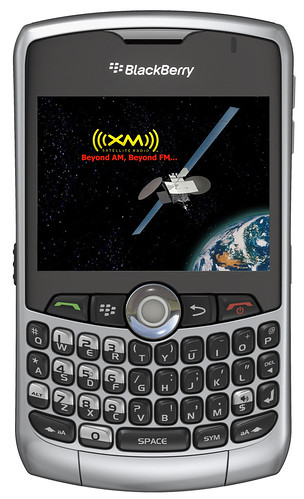
I knew this would happen. Adding satellite radio reception to smartphones is very cool. I subscribe to Sirius, so I’m a little jealous to hear XM will be offered on some BlackBerry models, according to TWICE:

XM Satellite Radio today became available on BlackBerry devices from all leading carriers, broadening the availability of XM’s Radio Mobile service.

Previously XM Radio Mobile, which offers a selection of XM channels, was available only on select phones using the Alltel and AT&T networks.

Research in Motion BlackBerry devices will carry a selection of 20 XM channels on models including the Pearl, Curve, 8700 and 8000 series for a fee of $7.99 per month.

The service is enabled across many carriers through the OpenVideo platform from QuickPlay Media, a leading provider of mobile TV and video solutions. It will operate on BlackBerry devices using the Verizon, AT&T, Sprint Nextel and T-Mobile networks, said an XM spokesman.

The select XM music and comedy channels are accessed via a downloadable application. They appear in a user interface with graphical icons and the software lets users see the song title, artist and album of a song that’s playing as well as the songs playing in real-time on other XM Radio Mobile channels. Subscribers can also listen to XM while performing other BlackBerry tasks.

Does this now open the door for Apple’s iPhone to begin offering the competing satellite radio service? If you read Apple’s patent application from two years ago ("Mobile Me"), it does include satellite reception.

Cool: it includes "The Virus" — the channel featuring O&A. Here’s the channel line up. It might be worth $8 a month after all. Get the download here.


Mars Colony

Screw $200,000 sub-orbital flights, when you can go to Mars. You heard me right – Mars:

Earth has issues, and it’s time humanity got started on a Plan B. So, starting in 2014, Virgin founder Richard Branson and Google co-founders Larry Page and Sergey Brin will be leading hundreds of users on one of the grandest adventures in human history: Project Virgle, the first permanent human colony on Mars.

Using their massive combined wealth, Branson, Page, and Brin will begin settling Mars in 2014. Worried by the coming climate crisis and aided by dramatic advances in spacecraft development and new Mars discoveries, the team is convinced the project is doable in the next 6-8 years. The team’s scientists have already chosen a location:

Our landing site is located on Lunae Planum on the northwest side of Kasei Valles. Lunae Planum marks the transition between the high Tharsis rise, a giant volcanic bulge, and the northern lowland plains. This region shows many signs of significant crustal deformation and other structures that are likely caused by ice. Scientists have hypothesized that this area’s valleys and ridges (called "fretted terrain") may have developed as icy debris flowed onto the northern plains eons ago, during the great Martian flood epoch. It’s an ideal place for our settlement, because of the likelihood of both subsurface water and nearby lava tubes and pits; mild weather (in Martian terms) due to its proximity to the equator; and proximity to Kasei Valles, which, after terraformation, will be highly attractive shorefront property. The Virgle 1 should settle down not far from Chryse Planitia, the Plains of Gold, where the Viking 1 spacecraft landed on July 20, 1976.

Watch Branson’s introductory video:

In other news, G-Mail announced a much anticipated custom time feature, TechCrunch is suing Facebook, and today marks the 500th anniversary of a major holiday.

Sky Angel to Take Flight on IPTV

Sky Angel, the "faith and family" direct broadcast satellite service currently available on Echostar 3 at 61.5° West, is moving all the way to an IPTV platform in the United States:


Nancy Christopher, Sky Angel’s VP for Corporate Communication, [says] "Yes, we will be transitioning Sky Angel to a broadband Internet protocol called Internet Protocol Television (IPTV). It’s a proven technology that’s widely used in Europe and Asia and gaining popularity in the U.S. We already deliver our service into Canada using this technology."

IPTV provides viewers value-added services and conveniences such as the ability to set up their own equipment (no outside dish or antenna or professionally installed equipment needed), to retrieve programs that have already aired, much like a personal video recorder, and to utilize Video on Demand. IPTV enables programs to be viewed on conventional TVs, personal computers and handheld instruments, which will provide viewers the benefit of receiving programs at home and on the go. Enhanced programming, additional channels and more choices of programming packages for individual subscribers are other features afforded by IPTV.

The move is not without its controversies, as some of the comments over at Phil Cooke’s blog indicate. Some lifetime subscribers question whether abandoning satcom means abandoning Sky Angel’s vision of spreading the Gospel throughout the world. But with Sky Angel having already transferred their licenses to Echostar, the deal is done.

Defenders of the move note that more channels will be made available at the same price on the IPTV platform. Sky Angel just last week added the CBS College Sports network to its line up; and, unlike some cable operators, Sky Angel on IPTV will include the much-in-demand NFL Network.

Of course, Sky Angel’s news and religious channels will continue to provide coverage of major religious events, like the Pope’s upcoming visit to the United States

The move to IPTV isn’t the first time Sky Angel has been among the first to set up shop on the borders of new broadcasting technologies:

Sky Angel led the way in exploring and then utilizing another cutting-edge technology known as direct broadcast satellite (DBS) when DBS was in its infancy back in the 1980’s. Sky Angel was actually the second company to apply to the FCC for a DBS license back in 1981 when DBS was actually untested technology. Back then, frequency spectrum and orbital slots were yet to be assigned, and there was no satellite manufacturer with a high-power DBS satellite design; the DBS technology was widely opposed by television station and cable industry trade groups back then. Of course, DBS came into its own during the ’90’s. In 1999, Sky Angel became the sole surviving DBS pioneer from that first round of nine 1981 DBS licensees when USSB merged with DirecTV (DISH and DirecTV acquired their licenses later).

You can learn more about Sky Angel on their corporate website

Space Junk, Mate!


Via the Daily Mail, stories of space junk landing in the Outback:

 Outback farmer James Stirton’s property consisted of little more than a herd of cattle and a sea of dust – until a curious object from outer space dropped in.

Mr Stirton scratched his head in wonder as he stared at the mangled ball of metal.

No one in their senses would drive hundreds of miles across the desert just to dump it in the middle of nowhere. So it must have come from above.

But what was it and how had it got there?

It came from outer space: James Stirton surveys the lump of twisted metal, which he found on his cattle farm in Queensland, Australia

Mr Stirton asked aeronautical experts in Australia and the U.S. But no one could give him a clear-cut answer.

So he loaded the object onto his truck and drove it to Charleville, 100 miles from his 120,000-acre property in Queensland. In Charleville it was examined by Mark Rigby, a curator from the Brisbane Planetarium.

He declared he had no doubt what it was – a helium or nitrogen tank from a rocket used to blast a U.S. solar satellite into space. Mr Stirton came across the object last November.

Mr Rigby was able to establish that it had most likely been launched from Cape Canaveral on October 26, 2006, on one of two satellites that were to study the sun.

The tank had been predicted for re-entry into the Earth’s atmosphere at 11.47am, Australian time, on November 1, which would have put it near Indonesia.

Space junk: The whorl of shredded metal is believed to have once been part of a rocket

"I don’t know why but I think it has just sort of limped on a bit and ended up in Charleville," said Mr Rigby. Mr Stirton was on his way to feed his cattle when he came across the lump, which is 21in wide and weighs 44lb.

"It gave me a great shock when I first saw it. I had no idea what it was. I know all about sheep and cattle but I don’t know much about satellites or space stuff."

He added: "We don’t get many visitors here but anyone who has seen it has either wanted to touch it or has stood back, afraid that someone or something was going to jump out of it."

He has been told he could probably sell his space souvenir but hasn’t received any offers – yet.


Digg it. 

DIY Friday: Your Own Rocket Plane!

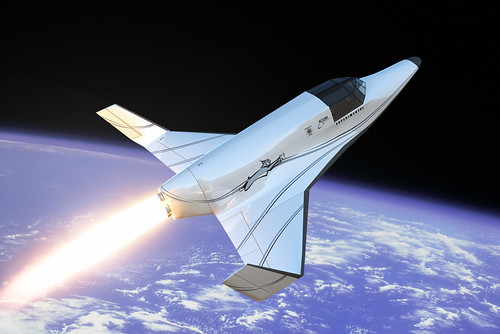
Ok, it’s not really a DIY project. But we were mighty impressed by the news yesterday that Xcor’s Lynx Rocketplane (er, suborbital vehicle) could be bringing people into space within 2 years.


Bringing two people to an altitude of 200,000 feet is as close as you might get to DIY Space Travel — especially if the guy sitting next to you can’t fly.

The LA Times has more: 

Xcor Aerospace Inc. announced Wednesday that it would enter the space tourism market with a rocket plane that would carry passengers for about $100,000 a ride.

The Lynx will take off under its own power, carrying just a pilot and a single passenger, the Mojave, Calif., company said at a news conference in Beverly Hills.

Each flight will reach an altitude of 200,000 feet, close enough to space that passengers will experience about 90 seconds of weightlessness. Flight testing of the Lynx is expected to begin in 2010.

Popular Mechanics notes:

XCOR, however, does not plan to operate the space plane—only to build it, with Air Force Research Laboratory funding allegedly helping to test some of Lynx’s technology. If nothing else, XCOR’s announcement is yet another sign that private-space companies are finding access to funding and engineers, so that NASA won’t be the only agency heading north—way north—anytime soon.  

So what will it be like to fly in the Lynx? Check out the animated video from the company, conveniently posted for us space buffs on YouTube:

Also be sure to read the press release for more information, including a nice diagram (PDF) of the Lynx’s flight profile.  

FCC is Next for Sirius-XM Deal


So we get news the Department of Justice approved of the Sirius-XM deal on Monday. Today’s Washington Time summarizes what the FCC still needs to consider in giving the final OK:

Private equity group Georgetown Partners wants the commission to require a combined XM and Sirius to lease one-fifth of their total channel capacity and infrastructure to a "totally independent and unaffiliated third party, such as Georgetown, to remedy the anti-competitive monopoly that would otherwise result," according to the company’s FCC filing.

HD Radio pioneer iBiquity Digital thinks any new satellite-radio receivers should be equipped to play both over-the-air broadcast radio and HD radio, a requirement it says should last for three years in cars and one year for stand-alone radios.

The nonprofit Media Access Project urges any approval to be contingent on the company relinquishing half its spectrum, which would be used as either a set-aside for educational programing, leased to another commercial firm or returned to the FCC for a federal auction. D.C. public interest group Public Knowledge likewise calls for a set-aside (5 percent of channel capacity) for educational broadcasters, but also urges a three-year freeze on the new company’s combined programming.

Those groups and others endorse a proposal from U.S. Electronics, which makes car devices, that calls for an "open access" condition to force the companies to allow any hardware manufacturer to make a satellite-radio receiver.

Of all the wish lists, Clear Channel Communications’ appears to be the longest. The radio giant wants half of the satellite-radio spectrum to go to a competitor, as well as a 5 percent "public interest set-aside." Clear Channel also wants a prohibition on local programming and local advertising revenues. Like iBiquity, it wants HD radio receivers embedded in satellite-radio receivers.

Clear Channel’s most ambitious request is that satellite-radio content — which unlike broadcast is based on a pay-to-play model — be subject to broadcast indecency standards.

The Justice Department on Monday approved the merger with no conditions, concluding it is not likely to harm consumers. The FCC proceeding is separate, but the agency typically is influenced by the department’s assessment of market conditions.

Alan Dozinger, a professor at Villanova School of Business, said the FCC likely will consider issues affecting satellite subscribers, such as pricing and equipment. The companies have said that no radios will be made obsolete by the merger, but Mr. Dozinger noted that XM uses geosynchronous technology and Sirius uses a low-orbit satellite.

"It won’t be so hard for [Sirius and XM] to satisfy future subscribers, but what are they going to do about the 17 million people who already have these systems? I suspect the FCC will put something down on that," he said.


Professor Dozinger needs a lesson in satellite radio orbits. Sirius uses a variation of a tundra or molniya orbit. Near geosynchronous, but eliptical — lots of hand-offs.

The conditions the FCC attaches will be most interesting. 

Cassini Tastes Organic Material

This isn’t a Whole Foods ad. NASA’s Cassini spacecraft “tasted” a surprising composition of organic materials erupting from Saturn’s moon, Enceladus, during a close flyby on March 12:

New heat maps of the surface show higher temperatures than previously known in the south polar region, with hot tracks running the length of giant fissures. Additionally, scientists say the organics “taste and smell” like some of those found in a comet. The jets themselves harmlessly peppered Cassini, exerting measurable torque on the spacecraft, and providing an indirect measure of the plume density.

“A completely unexpected surprise is that the chemistry of Enceladus, what’s coming out from inside, resembles that of a comet,” said Hunter Waite, principal investigator for the Cassini Ion and Neutral Mass Spectrometer at the Southwest Research Institute in San Antonio. “To have primordial material coming out from inside a Saturn moon raises many questions on the formation of the Saturn system.”

“Enceladus is by no means a comet. Comets have tails and orbit the sun, and Enceladus’ activity is powered by internal heat while comet activity is powered by sunlight. Enceladus’ brew is like carbonated water with an essence of natural gas,” said Waite.

The Ion and Neutral Mass Spectrometer saw a much higher density of volatile gases, water vapor, carbon dioxide and carbon monoxide, as well as organic materials, some 20 times denser than expected. This dramatic increase in density was evident as the spacecraft flew over the area of the plumes.

The food metaphors don’t stop with “Whole Foods.” Apparently we have a “recipe for life:”

“Enceladus has got warmth, water and organic chemicals, some of the essential building blocks needed for life,” Dennis Matson, Cassini project scientist at NASA’s Jet Propulsion Laboratory in Pasadena, California, said in the statement. “We have quite a recipe for life on our hands, but we have yet to find the final ingredient, liquid water.”

Saturn’s moons have long been of interest to scientists, who say the largest, Titan, may resemble an early version of Earth, providing clues to how the planet developed. Enceladus, the sixth-largest moon, had already surprised scientists when in 2005 they detected a “significant atmosphere.”

Sox Fans Say, Where’s the Sat?


Boston Red Sox fans woke up at 6 am this morning to tune in the first pitch of the Major League baseball season opener (held this year in Tokyo) only to find — nothing:

I’ve been getting emails from DirecTV customers, who’ve said that their packages (ESPN2 and NESN) are out. Not sure if this is affecting all customers, or just some, but apparently there are some very unhappy early risers.

It’s been our general experience that it’s best not to anger Red Sox fans first thing in the morning — or any time of the day, for that matter. 

The customer service phone line said there was a system outage, according to the comments  the Extra Bases blog.

Turns out, the Standard Definition NESN Channel was out but NESN HD continued working. ESPN2HD was out, too, on DirecTV.

It was a dangerous situation, with one Boston fan warning, "I’m gonna go flip some cars."

Bobby Valentine himself thought the timing (of the game, not the outage) was "ludicrous." 

The Red Sox ended up defeating Oakland 6-5. No official word yet on what caused the broadcast out(r)age.