Archive for the ‘Astronomy’ Category

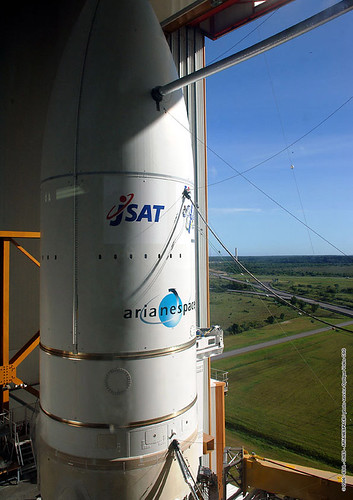
ArianneSpace To Launch Two Satellites Tonight

Friday, August 11th, 2006

European commercial space transportation company Arianespace is launching not one but two satellites into orbit this evening. From Europe’s space center, the Guiana Spaceport in Kourou, French Guiana, Arianespace’s Ariane-5ECA will take to the skies for its 28th time, marking the 172nd mission for the Ariane fleet, at some time between 6:15 pm and 7:52 pm EST. The launch can be watched starting 20 minutes before launch time, at Arianspace’s Video Corner.

The Ariane-5ECA is 50.5 meters tall and will weigh in at about 780 tons at lift off, requiring over 400 tons of fuel to ramp the beast up to over 2900 pounds of fource to lift-off.

The payload, a Japanese television (JCSAT-10) and French military communications (SYRACUSE 3B) satellites, is expected to be in operation for between 15 and 12 years, respectively.

For those looking for even more information, download the launch kit in English or French and you’ll have more data on this evening’s than you ever thought you wanted.

We Got Your Rocket Scientsts Right Here

Wednesday, August 2nd, 2006

Here’s an interesting tidbit. Here in DC, I’m surrounded by rocket scientists. OK, not surrounded but it turns out the metro-DC area is home to a large percentage of the rocket scientist population. Higher than most cities, I bet.

The latest issue of The Washingtonian pulls some data from the Greater Washington Initiative’s latest regional report, which puts the percentage of rocket scientists in the area at 32% of the population. (12% of the nation’s physicists).

Rocket Scientists in DC

Impressive. But that’s only about a third of the country’s rocket scientists. Where are the rest of them? Where are most of them?


A Closer Look At GeneBox

Monday, July 31st, 2006

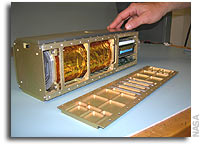
SpaceRef has a bit more about the NASA GeneBox I posted about last week, that’s on board Robert Bigelow’s Genesis I spacecraft. Including a tiny little photograph.

GeneBoxNamed "GeneBox", this small payload was developed by NASA Ames Research Center to test out new ways to perform in-flight genomic analysis of living systems. Indeed, much of what is being flown aboard this satellite is cutting edge biotech – the likes of which have yet to fly aboard the International Space Station. Future versions will be even more capable.

NASA developed the GeneBox payload and Bigelow Aerospace integrated and launched GeneBox – at no cost to NASA. ARC estimates that GeneBox cost approximately $1 million to fabricate, test, and prepare for flight. GeneBox is an adaptation of the "GeneSat" free flyer nanosatellite. NASA ARC expects GeneSat to cost approximately $6 million to develop.

GeneBox was funded entirely by NASA. This effort began with the (now disbanded) NASA Office of Biological and Physical Research (OBPR), then by the NASA Exploration Systems Mission Directorate (ESMD), and currently with NASA ARC internal R&D funds.

Of course, NASA’s collaboration with Bigelow is even more interesting in light of news that the agency is thinking about canning its space station research.


Send Your Junk Into Space

Thursday, July 27th, 2006

This might be a good way of getting rid of excess junk that you have lying around: Send it to space. Earlier this month I posted about the launch of Robert Bigelow’s inflatable spacecraft, Genesis I. Well, via Space Pragmatism comes news of Bigelow’s next big plan. When Genesis II goes up, he’s gonna let you fly your stuff into space, and send you pictures too.

Whereas space was once the domain of only the privileged, Bigelow Aerospace is offering the public an exciting new opportunity to reach the final frontier. For the first time, you can actually send an item of your own into space. Your personal selection will be floating inside a spacecraft hundreds of miles above the Earth. If all systems function properly, your personal treasure (be it a photo, ring, bottle-cap or toy) will be floating in space for years.

And here is the best part: You might even be able to see it. That’s right! The Bigelow Aerospace spacecraft known as Genesis II will be carrying multiple cameras. Some of these cameras will be viewing areas inside the spacecraft where your prized possession is floating. Everyday, Bigelow Aerospace will be downloading images and video from these cameras to its Website. If you log onto the Bigelow Aerospace Web portal, you will have a chance to actually see your item floating by! And who knows? If the Genesis II spacecraft stays in orbit for several years as we expect, you may see your face (or item) many times over!

Inside Genesis I

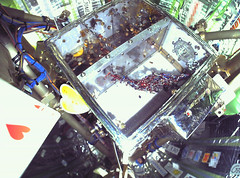
You can also look inside Genesis and see what’s already gone up (besides NASA’s GeneBox, that is). The picture above, by the way, is a box of Mexican jumping beans sent up in Genesis I by Bigelow Aerospace employees.

For $295 a pop, you can send up anything you want as long as it’s:

  • smaller than a golf ball;
  • less than 1 oz. in weight;
  • doesn’t contain any magnets;
  • doesn’t contain power-operated devices, liquid, or powder.

I’m not sure what options that leaves or whether the price beats a similar program from Masten Enterprises, but at least there’s now another way to send more junk into space.


Looking for the Killer WiMAX App

Friday, July 21st, 2006

Rumors have been going on for months about the two big U.S. satellite TV providers (DirecTV and EchoStar) merging. The buzz grew louder earlier this week after the Los Angeles Times quoted EchoStar CEO Charlie Ergen at the Allen & Company annual media-mogul-fest in Sun Valley, Idaho saying that combining the two largest satellite TV providers could save $3 billion in expenses.

The comment set off a renewed flurry of press speculation of a potential merger. The Rocky Mountain News (EchoStar is based in Englewood, CO) reported yesterday:

EchoStar Communications Corp. shares were raised to "buy" from "sell" at Citigroup Inc. because of an increased chance that the No. 2 satellite television provider may combine with rival DirecTV Group Inc….

"It reflects our belief that there is a greater chance that EchoStar and DirecTV may attempt to merge," Bazinet said
of his rating change.

A merger is more likely since EchoStar and DirecTV formed a joint venture to bid for wireless spectrum in an auction next month, Bazinet said in the note. Satellite TV companies are also facing rising competition from cable companies such as Comcast Corp. as well as from telephone companies such as Verizon Communications Inc. that are starting TV services.

Propelling the talk is the growing awareness that IPTV will fundamentally change the media landscape and the balance of power between satcom- and telco-delivered content, as well as growing evidence that Rubert Murdoch’s News Corp is set to receive approval for a project that could create a national WiMAX network. As The Hollywood Reporter writes:

Approval is imminent for the project that could take at least two years and $2 billion, providing News Corp. and DirecTV a valuable wireless interactive broadband loop with consumers to directly sell content, advertising, goods and services. WiMax is a wireless a broadband technology often referred to as "WiFi on steroids" with a much wider 30-mile range than the more limited access offered by WiFi services. WiMax, which is short for World Interoperability for Microwave Access, also promises to provide more security and speed than traditional wireless connections.

"If we can pull something off … there is no reason why that shouldn’t link in with everything," News Corp. chairman and CEO Rupert Murdoch said in a recent interview….

High-level sources say the unprecedented undertaking will involve strategic equity partners that bring WiMax spectrum, equipment and other expertise to the mix. In one of the most likely scenarios, News Corp. and DirecTV have been in advanced talks with Clearwire Corp., a WiMax venture of Craig McCaw, in which chipmaker Intel Corp. and equipment manufacturer Motorola Inc. recently invested $900 million.
McCaw has been amassing one of the largest stables of licensed radio spectrum to build his own national wireless WiMax network. Intel, which has a vested interest in the commercial success of WiMax, particularly for PC users, has been one of Clearwire’s partners from the start….

Some sources say that EchoStar could join DirecTV in providing a united domestic satellite-backed WiMax alternative to cable and to telephone competitors such as Verizon, Cingular and Sprint Nextel. Sprint Nextel is working with a consortium of cable operators including Comcast and Time Warner to assist them with a much-needed wireless out-of-home extension.

Still, not everyone is convinced that the coming WiMAX wars will lead to consolidation on the SatCom side. Al Lewis in the Denver Post says that "anybody who believes EchoStar and DirecTV are about to merge should remember the forgotten tome "The Essential Guide to the Echo- Star/DirecTV Deal:"

Australian media mogul Rupert Murdoch had his team of lobbyists canvass Washington with this 123-page diatribe in 2002.

It argued, in exhaustive detail, why Douglas County-based EchoStar should not be allowed to acquire DirecTV from Hughes Electronics….

In October 2002, the Federal Communications Commission [sic– it was the FTC] blocked Ergen’s deal. The Justice Department blocked it too.

Then Murdoch’s News Corp. acquired a controlling stake in DirecTV for $6.6 billion…

And now – four years later – there are continuing rumors that DirecTV, the nation’s No. 1 satellite-TV provider, will acquire EchoStar, No. 2.

EchoStar and DirecTV are working on several joint projects that involve the two-way transmission of voice, video and data. But if Murdoch were to bid on EchoStar, he’d have to argue against his previous arguments. Or he’d have to argue that the satellite-TV business has changed significantly over the past four years.

The results of the August auctions for additional WiFi spectrum will give observers a clue as to who is coming out ahead in the inevitable rush to bring WiMAX to market. And whether the DirecTV and EchoStar rumors are just rumors or not, we’d expect to hear more talk of consolidation on both sides as emerging technology further alters the old divisions between cable, satcom and telcos.
 

GeneBox on Board

Wednesday, July 19th, 2006

It turns out that private spacecraft launch I blogged last week wasn’t exclusively a private entrepreneurial affair. NASA was along for the ride in Bigelow’s balloon, in the form of an experimental micro-lab the agency calls a GeneBox.

Bigelow

The space agency sent up a so-called GeneBox, a micro-lab, with Bigelow Aerospace’s Genesis I last week, piggybaggying a ride on the commercial spaceflight test.

The Genebox is about the size of a shoebox and is attached to the internal structure of Bigelow’s 14-foot inflatable spacecraft, which the company launched from Russia as a demonstration of an affordable human space complex it hopes to launch by 2015. NASA’s GeneBox contains a miniature laboratory of sensors and optical systems that can detect proteins and specific genetic activity. In two weeks, the Bigelow ground control station in Las Vegas, Nev., will activate the GeneBox, and once its tests are complete, data from GeneBox will be relayed to the ground for analysis.

According to NASA, GeneBox will analyze how the near weightlessness of space affects genes in microscopic cells and other small life forms. "During this mission, we are verifying this new, small spacecraft’s systems and our procedures," John Hines, the GeneBox project manager at NASA Ames Research Center in California’s Silicon Valley, said in a statement.

Global IPTV Set to Make Huge Leap

Monday, July 17th, 2006

We’ve written before about the incredible growth potential of IPTV and mobile TV — both of which, after all, were all the buzz at this year’s NAB conference— but this snippet from Digital Trends really caught our eye:

Recent reports suggest that global IPTV subscriptions are expected to jump from 2 million to 34 million between 2005 and 2010. North America is expected to see the quickest growth with a forecasted 14 million households by 2010 accounting for 80% of these subscriptions….

What’s suprising is the slow IPTV deployments taking place in Asia as TDG predicts that Asia will only account for a mere 5.6 million subscriptions. This is primarily due to the impending launch of Digital Terrestrial Television (DTT)….

The Chinese government has stated publicly that this new standard (dubbed ‘Digital Multimedia Broadcasting – Terrestrial/Handheld’ or ‘DMB-T/H’) will eventually serve more than half of China’s TV viewers, especially those in suburban and rural areas. Until then, analog and broadband based services may well find a healthy market for the few years to come.

"IPTV market conditions vary widely depending on the country or geography in question, entailing that individual markets will evolve and behave in very unique ways," added Dixon. He also noted that a handful of individual service operators will account for 75% of the deployed volume with the remaining 25% split between hundreds of other operators. "These conditions will pose a challenge to all types of IPTV solutions vendors, one that requires detailed and flexible implementation and go-to-market strategies." 

IPTV will radically change the broadcast communications market– from technology to content. It truly is a new frontier, with the potential to be as transformative for video content as cell phones have been for telecommunications.

More on Bigelow, Genesis

Thursday, July 13th, 2006

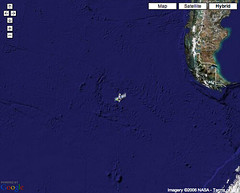
Via Space Pragmatism, here are not one but two interviews with Robert Bigelow, the man responsible for yesterday’s launch of an experimental inflatable spacecraft. There’s also a pretty neat Google Maps site for tracking Genesis in orbit.

Tracking Genesis

Bigelow’s Balloon

Thursday, July 13th, 2006

Commercial spaceflight took a big leap forward recently. You might even say it sent up a test balloon, in the form of Robert Bigelow’s inflatable spacecraft.

Bigelow

An experimental inflatable spacecraft bankrolled by real estate magnate Robert Bigelow rocketed into orbit Wednesday to test technology that could be used to fulfill his dream of building a commercial space station.

The Genesis I satellite flew aboard a converted Cold War ballistic missile from Russia’s southern ro Mountains at 6:53 p.m. Moscow time. It was boosted about 320 miles above Earth minutes after launch, according to the Russian Strategic Missile Forces.

The launch was a first for the startup Bigelow Aerospace, founded by Bigelow, who owns the Budget Suites of America hotel chain. Bigelow is among several entrepreneurs attempting to break into the fledgling manned commercial spaceflight business.

Bigelow’s balloon was bankrolled to the tune of about $75 million, out of about $500 million dedicated to having an entire fleet of similar modules circling the earth like sausage links. Mars Blog notes that, even allowing for unexpected costs adding up to $3 billion or more, private entrepreneurs might actually be able to get to the point of having manned spacecraft servicing manned space stations faster and cheaper than, say, NASA.

That’s interesting, given that Bigelow’s balloon could lead to hotels and sports arenas in space by 2015, if all goes according to plan. With the price tag for building ’em, though, I can only imagine what the ticket price will be.

Bezos Goes Orbital

Wednesday, July 5th, 2006

There’s a new player in the tourism-fueled race for space.

As we mentioned back in FebruaryAmazon founder Jeff Bezos has been fueling Blue Origin’s New Shepard Reusable Launch system, according to Space.com.

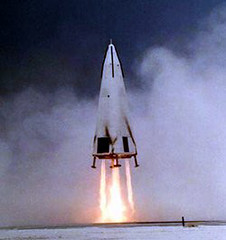
[The] Blue Origin rocket concept is patterned after the DC-XA that was operated by NASA and the Department of Defense under the Reusable Launch Vehicle program. The flight vehicle was tested at White Sands during the summer of 1996, and demonstrated a 26-hour turnaround between its second and third flights, a first for any rocket. 

Evidence that Blue Origin is moving forward with the project came when the company filed a draft Environmental Assessment with the FAA for the company’s launch site north of Van Horn, Texas:

The more than 200-page draft EA is a necessary step required by the FAA/AST for Blue Origin to get the needed permits and/or licenses to fly their rocket hardware.

Blue Origin proposes to launch its reusable launch vehicles (RLVs) on suborbital, ballistic trajectories to altitudes in excess of 325,000 feet (99,060 meters) from a privately-owned space launch site in Culberson County, Texas.

As outlined in the EA, the Blue Origin launch site would be approximately 25 miles (40.2 kilometers) north of Van Horn, Texas. It lies within a larger, privately-owned property known as the Corn Ranch. Access to the proposed launch site is from Texas Highway 54, which is approximately five miles (8 kilometers) west of the proposed project’s center of operations.

Also on the group’s to do list at the site is putting in place a vehicle processing facility, a launch complex and vehicle landing and recovery area, as well as an astronaut training facility, and other minor support amenities…

"The strategy is to build the New Shepard suborbital vehicle incrementally, starting with low-altitude tests, progressing to higher-altitude testing, and culminating with commercial flights. Early testing would use prototype vehicles that are smaller and/or less capable than the proposed final design," according to the Space.com report.