Archive for the ‘Front Page’ Category

Satellite-based Bar Game Provider Offers New Game

Thursday, August 24th, 2006

Even the best rocket scientists need a beer from time to time, so that’s why we were heartened to find out one of our favorite bar game vendor and satellite-based, interactive game provider, Buzztime, has announced a new product, Crazy Golf.

For those that haven’t gotten to use Buzztime products in the past, the company’s most popular games (by far) are trivia-based, spicing up the standard pub quiz by automating the process and pitting you against fellow booze-hounds around the country and the world via satellite. Those that are really into the trivia can form a team, keep the name, and log on to the company’s player’s forum and trash talk that team in Tucson that kept on demanding Lord of the Rings questions to their heart’s content.

Pique your interest? Use Buzztime’s website to find a bar near you that has the service. For those of you who are already Buzztime junkies, you might want to consider subscribing via Dish Network, it only costs $3.99/month and it’ll definitely save you on your bar tab. As for your dating opportunities? Well, it’s probably not going to help — but that’s why you took up bar trivia, right?
DIY Friday: Solar Satellite Dish Cooker

Friday, August 18th, 2006

Here’s a true story. A few weeks ago, my gas grill was stolen from my backyard. I went outside one Friday afternoon with a spatula and some burgers and — there was nothing there.

I can’t say I was disappointed that the grill was gone. There was a certain satisfaction knowing that whoever had taken the thing had some arduous scrubbing ahead of them if they wanted to remove several years’ worth of crispy cheese and hamburger fragments that had ossified onto the grill. Losing the grill to theft, I reasoned,  had at least spared me from that long-avoided chore.

But replacing the grill did present me with another problem — that ancient dilemma that has plagued mankind for, oh, three generations now:

Gas, or charcoal? 

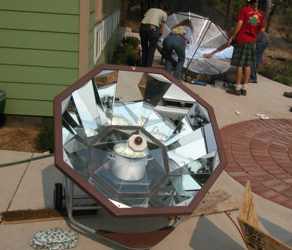
But now I learn that there is a new, third option for outdoor cooking: solar. A group of smart cookies from the Durango Renewable Energy Group have crafted a solar cooker made from a recycled satellite dish.

Reports have it that this fine addition to any suburban patio will bake cookies in under 15 minutes. Instructions on how you can create your own solar oven using mirrors (or a "cheaper" and lower-powered version using aluminum foil) can be found here.

My decision on how best to replace my grill has been further complicated by a neighbor who swears that the fourth option for grilling is pretty much the greatest invention in human history. I’m dubious about his assertion, and the clouds today raise my doubts about crafting my own solar cooker.

Which leaves me, metaphorically at least, still holding that spatula and a plate of uncooked burgers and wondering: gas, charcoal, solar, or George? 

Air Force Guardian Challenge This Week

Thursday, August 17th, 2006

This week, the yearly battle between American space warriors is taking place at Peterson Air Force Base, Colorado. Known as the Guardian Challenge this competition "pits the best-of-the-best space warfighters against each other, determining the top space wing teams in the Air Force." But what do you get if you win the Air Force’s only space wing competion? The Airforce has the scoop:
"Awards are presented to the best Space squadron Wing Team team in in each mission area on the final day of the competition. The Blanchard Trophy is presented to the Best Space ICBM Wing Team; the O’Malley Trophy goes to the best Space Warning Team; the Arnold Trophy goes to the best Space Surveillance Team; the Aldridge Trophy goes to the Best Space Operations Wing Team; and the Best Space Launch Wing Team receives the Schriever Trophy."

Top Gun awards also go to the best Missile Operations Crew, best Space Operations Crew (selected from among the best Space Warning, Space Surveillance, and Satellite Operations crews), and best Spacelift Operations Crew. Additionally, functional area awards are presented to the best maintenance, security police, communications, helicopter, code controller and chef elements."

Not only does the Challenge represent a great place for space warriors to test their meddle in combat-like situations, but, according to U.S. Space Commander, Air Force Gen. Kevin Chilton, these soldiers probably need as much training as we can throw at them. According to Chilton, military satellite-based "eyes" and "ears" are major assets in modern conflicts and, in the future, may prove to be major targets for opponents looking to "level the playing field."  Knowing that — Good luck with the Challenge, guys!

Move Over Pluto?

Wednesday, August 16th, 2006

12 Planets

That was quick. Just days ago Sebadoh brought news that Pluto might be on its way out of the solar system, at least as far as being considered an actual planet is concerned. Now it looks like Pluto may get some company and keep its out at the far end of the solar system

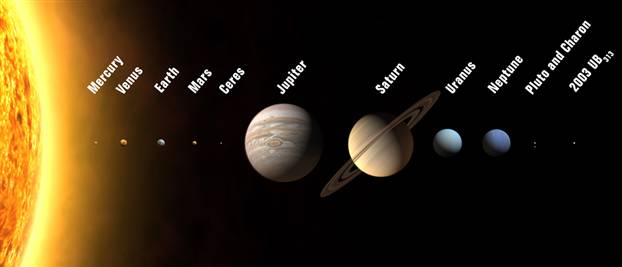
The tally of planets in our solar system would jump instantly to a dozen under a highly controversial new definition proposed by the International Astronomical Union.

Eventually, there would be hundreds of planets, as more round objects are found beyond Neptune.

The proposal, which sources tell Space.com is gaining broad support, tries to plug a big gap in astronomy textbooks, which have never had a formal definition for the word "planet." It addresses discoveries of Pluto-sized worlds that have in recent years pitched astronomers into heated debates over terminology.

  • The asteroid Ceres, which is round, would be recast as a dwarf planet in the new scheme.
  • Pluto would remain a planet, and its moon Charon would be reclassified as a planet. Both would be called "plutons," however, to distinguish them from the eight "classical" planets.
  • A far-out Pluto-sized object known as 2003 UB313, currently nicknamed Xena, would also be called a pluton.

It’s not a popular idea, but it’s an interesting one. Should someone start a contest for the best mnemonic for the new solar system? "Mary Very Easily Makes C_____ Jam Saturday Unless No Plums C_____ X_____"?

The Laptop Go Boom! Echo

Tuesday, August 15th, 2006

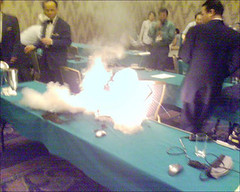
Loyal readers will recall our assiduous reporting earlier this summer on the explosion of a Dell laptop computer at a  business conference in Japan.

Now, it is evident, our remarkable editorial instinct has once again been proven correct, forcing the Washington Post, New York Times, USA Today and the AP into a desperate scramble to catch up to the new and vaunted journalism embodied by Really Rocket Science.

(When you read breathless news stories about how blogs are changing the media, they are, of course, referring to us.)

Never the sort to gloat, our hearts brim with pity as we think of the strained and perspiring editors of the Gray Lady and the nation’s wire services, clumsily stabbing their porcine fingers at their keyboards, trying to figure out this Google thing in a vain attempt to stay apace with the very edge of the new media vanguard, to break the news that we have invariably already broken — ney, smashed to pieces, exposed for the world to see and understand, then meticulously reconstucted by the nimble prose and dazzling insights of the writers of Really Rocket Science, who selflessly offer their beacon of hope and reason in a world too frequently perceived as chaotic and incomprehensible by journalists of a lesser caliber.

 We do it because we care. We do it because we believing that exploring the vast interiors of ignorance is our small and humble way of contributing to a more civilized world. We are not journalists, nor mere bloggers. We are cartographers of the human spirit, and though others follow to fill in the details of roads and bridges and recalled laptop batteries and so on and so forth, we remain at the front, always, bringing you the news even before the masses have grasped it as news — outlining, as it were, the shapes of new continents that lie at the edge of this vast informational sea known as the Internet.

Land ho! we cry, through the lonesome gale, as the rest of the crew sleeps dreaming of their childhood cribs below the deck. 

We will persist. And we will continue to peer out into the darkness, to alert you of the shape of things to come. To find, as is our burden and fate, safe passage through the ongoing storm.

Send us your tips to [email protected]

Creating “Test Bed” Spectrum

Thursday, August 10th, 2006

Yesterday the Federal Communications Commission (FCC) began its most recent auction of radio spectrum, a move that could bring over $15 billionFCCLogo into Federal coffers and, potentially, major advancements to tomorrow’s communications devices, including new high-speed internet offerings from satellite television providers, more vivid video on mobile phones, better cell coverage, and rapid advances in IPTV.

But while opening up more of the nation’s airwaves might bring greater access to better gadgets, it also could limit spectrum space for engineers and scientists looking to experiment with and develop new technologies.

(Currently, only a tiny fraction of the radio frequency spectrum is unlicensed (e.g. the 2.4 gighertz band used for cordless phones, baby monitors, and Wi-Fi).)

To leave space for future experimentation, the National Association of Broadcasters (NAB) and The Association for Maximum Service Television (MSTV) are lobbying the FCC for the creation a band of frequencies specifically for testing purposes.

If approved, new "test bed" frequencies would serve as a virtual sandbox for those looking to develop devices that might otherwise endanger the frequencies of other, more established devices. 

Google’s Astronomy Picture of the Day

Wednesday, August 9th, 2006

Astronomy buffs who use Google Desktop to organize their computers can now download a cool plugin that delivers an Astronomy Picture of the Day. The plugin allows users to easily share the daily picture with friends using Google Talk:

Discover the cosmos! Each day a different image or photograph of our fascinating universe is featured, along with a brief explanation written by a professional astronomer.

If Google Talk is installed on your system, you can share the sheer beauty of our universe with your friends. If neither Google Talk is available nor any friends are online, the service and its button are unavailable.

With eye candy, transparency and smooth animations for your viewing pleasure. Undocking recommended!

Click here to download the plugin. 

It’s a Bird, It’s a Plane, It’s a… WiFi Balloon?

Wednesday, August 9th, 2006

Across the pond, The University of York is reporting that an effort to bring wireless through the skies to people in areas that typically don’t have access to the super-fast Internet is near completion.

By the end of October, researchers on York’s CAPANINA project — which uses everything from solar powered, unmanned aircrafts to giant ballons and airships to relay wireless signals back to planet Earth — will finish its main research and present their findings a couple of week’s later during the University’s conference on High-Altitude Platforms (HAP), York HAP Week.

According to a press release the school put out about the research, the system developed could bring low-cost broadband speeding along at rates 100 times faster than ADSL networks to remote regions of the world and high-speed trains. As the project’s lead scientist, Dr. David Grace says:

"The potential of the system is huge, with possible applications ranging from communications for disaster management and homeland security, to environmental monitoring and providing broadband for developing countries. So far, we have considered a variety of aerial platforms, including airships, balloons, solar-powered unmanned planes and normal aeroplanes — the latter will probably be particularly suited to establish communications very swiftly in disaster zones."

The CAPANINA project may rely upon the "paint-on" antenna technology we mentioned a few weeks ago, and clearly indicates a growing interest in looking to the skies to solve connectivity issues that plague many of the world’s least connected and least connectible areas.

Music via Wifi

Tuesday, August 8th, 2006

I haven’t listened to the radio regularly in years, but I’ve spent a bit of time lately covering the goings-on in the world of satellite radio, including the latest lawsuit-inducing players. I haven’t yet been convinced to replace my trusty iPod with such a set-up. That is until I saw a couple of items that caught my eye with the ability to deliver music via wifi.

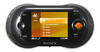
Gizmodo has a tantalizing review (including video) of the new personal communicator from Sony, which (among other things) let’s users wirelessly stream music to other users in the area if there’s a wifi hotspot nearby.

MyloCompared to most Sony gear we’ve seen over the past few years, the mylo is a breath of fresh air. The media player does MPEG-4, digital audio, and pictures. But it also has a WiFi connection and a QWERTY keyboard, for chatting on Google Talk and Yahoo Messenger (No AIM support, sorry.) Wait, wait, wait! It also works as a wireless Skype phone! And it has an Opera browser. And it can wirelessly stream music to other mylo owners in the area, ala iTunes. Without cellular connectivity, its not going to best a Hiptop, but we love the open standard support. Full Stats and a video review after the jump.

Sounds tempting. Yet, there’s more. I’m not the kind person who requires a lot of arm twisting to go out and buy the latest gadget, but coming across this wifi music delivery meme twice in one day seems like the universe is trying to tell me something. After reading the Gizmodo piece I happened across the June issue of OMMA, "the magazine of online media, marketing & advertising," and thumbed through their article on "10 Sites Worth Watching." That’s where I learned about Music Gremlin, which OMMA describes as follows:

Music Gremlin uses web intelligence and storage to deliver music through wifi hotspots to consumers in real time. Better yet, the stream is so smart it can customize stream to a user, in effect creating a personal radio station.

Gremlin offers its own player, but you can also use the service with other players. (The article also mentions that Sirus.Com and XMRadio.Com have become popular music content destinations in their own rights, as users sample both sites’ streamed content.)

Like I said before, I haven’t been a regular radio listener in years; since I bought my first Walkman, really. My attitude has been that I’d rather listen to what I want to hear than what they want to play. But with all the satellite and wifi-capable players ready to stream customized music to me, I might be in for an attitude adjustment in the near future.

Parking Robot Gone Wrong

Tuesday, August 8th, 2006

Every think it might be cool to have a robots take over some of the mundane tasks of life, like parking your car? Sounds good, at least in theory, right? And maybe it is when it works. But if the robot’s software has a glitch, or the owner neglects to renew the software license? Well, then it’s not pretty.

Car Parking RobotThe robot that parks cars at the Garden Street Garage in Hoboken, New Jersey, trapped hundreds of its wards last week for several days. But it wasn’t the technology car owners had to curse, it was the terms of a software license.

The garage is owned by the city; the software, by Robotic Parking of Clearwater, Florida.

In the course of a contract dispute, the city of Hoboken had police escort the Robotic employees from the premises just a few days before the contract between both parties was set to expire. What the city didn’t understand or perhaps concern itself with, is that they sent the company packing with its manuals and the intellectual property rights to the software that made the giant robotic parking structure work.

The Hoboken garage is one of a handful of fully automated parking structures that make more efficient use of space by eliminating ramps and driving lanes, lifting and sliding automobiles into slots and shuffling them as needed. If the robot shuts down, there is no practical way to manually remove parked vehicles.

It took a few days to iron everything while car owners pined for the imprisoned vehicles, but the city and the software company came to an agreement for a three year software license. (If I were a car owner who parked in that garage, I’d mark the date on my calendar.) It’s an amusing story if you didn’t have a car in that garage, but it underscores that with new technology comes issues that earlier adopters — both cities and citizens — may not have fully considered in their rush to embrace the new tech. Sometimes for every old problem solved a new one is created.