Archive for the ‘Front Page’ Category

Closing the Digital Gap: A Laptop for Every Child

Thursday, April 6th, 2006

It’s been just over a year since Nicholas Negroponte announced at the World Economic Forum in Davos, Switzerland the goal of developing a $100 laptop not for the marketplace, but to be distributed to schools globally to provide "children around the world with new opportunities to explore, experiment, and express themselves."

What does the initiative have to do with satellites or rocket science? Indirectly, everything. Such initiatives excite interest in technology in general– and the opportunities for education and discovery provided to so many children by the $100 laptop will play a critical role in bringing a creative and educated individuals to the next generation’s workplace, regardless of industry.

But for today, we’ve filed this under "cool stuff," because the technology itself is cool:

The proposed $100 machine will be a Linux-based, with a dual-mode display—both a full-color, transmissive DVD mode, and a second display option that is black and white reflective and sunlight-readable at 3× the resolution. The laptop will have a 500MHz processor and 128MB of DRAM, with 500MB of Flash memory; it will not have a hard disk, but it will have four USB ports. The laptops will have wireless broadband that, among other things, allows them to work as a mesh network; each laptop will be able to talk to its nearest neighbors, creating an ad hoc, local area network. The laptops will use innovative power (including wind-up)

A wind-up option would be great on my own PC, which always seems to die on long flights just when I’ve decided to turn away from Minesweeper and try to get some work done.

We’ll be tracking the latest news on the $100 Laptop project as news becomes available, because the potential is huge for the technology to "trickle up" to consumer laptops and for the project itself to unlock creativity in millions of children around the world.

 (Be sure to check out additional design concepts here.)
Robot Video

Saturday, April 1st, 2006

For your Saturday viewing pleasure, here’s a video from the Robot-One 9 competition in Tokyo. Check out the related videos for more!

Playing a Small Part in Understanding Small Things

Friday, March 31st, 2006

The Cern Courier reports on a grassroots project that utilizes the power of the web– and the unused computing power of personal PCs– to help analyze the interstellar dust particles brought back by the Stardust space capsule in early January:

Finding the tiny interstellar dust particles in the Stardust Interstellar Dust Collector will be extremely difficult. The impacts created by interstellar dust can only be found using a high-magnification microscope with a field of view smaller than a grain of salt….. Stardust@home enables public volunteers to help in this task, which is done more accurately by humans than by any pattern recognition software. After a web-based training session, passing a test and registering, volunteers download a virtual microscope (VM). The VM automatically connects to the Stardust@home server and downloads stacks of images created by an automated microscope at the Cosmic Dust Lab at the Johnson Space Center. Each field can then be searched for interstellar dust impacts by focusing up and down with a focus control. The first images for scanning should become available in April and the project should be completed by October.

For more information on on Stardust@home, click here.

iPod-from-Space Mystery Unfolds?

Wednesday, March 29th, 2006

After getting some comments from our readers on the iPod-from-Space post, concerning the accuracy of the dates in the Terrabyte screenshot, we dropped an email to TerraServers to see if we could get any further answers. Here’s what they sent us:

You can’t get the whole planet shot all in one day, so it is made up of various collection dates in 1999. When you have a large date range over a big mosaic like this, the company that took it will often just give the month or year taken. In cases like this, to specify a date, we use the first of the month or first of the year. So, all of the 1/1/1999 pictures would be made up of shots taken during 1999 or possibly some in 1998 or 2000. They’d probably go with the year with the majority. This 15m satellite mosaic covers most or all of the earth’s surface and is the last full collection that we know of. That’s partly because one of the Landsat satellites failed or crashed a couple of years back. It is the main baseline imagery that us and the rest of the major imagery sites use to show basic coverage worldwide. That’s why you’ll see the same picture between us because it’s all coming from the same original imagery.

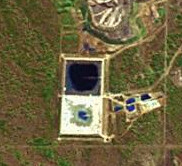
I was able to pick off the coordinates from the image at full size on Flickr and get to it on our site. My best guess from looking at the area just north of it is that it’s part of a strip mining operation. The “screen” of the iPod might be a big holding pond or quarry pond

 Anywhere from 1998 to 2000, huh? Strip mine? Quarry pond? Sounds feasible, given the original post, but still doesn’t nail down an absolute date. So perhaps it still remains a mystery.

iPod From Space Falls to Earth

Tuesday, March 28th, 2006

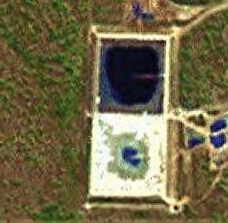
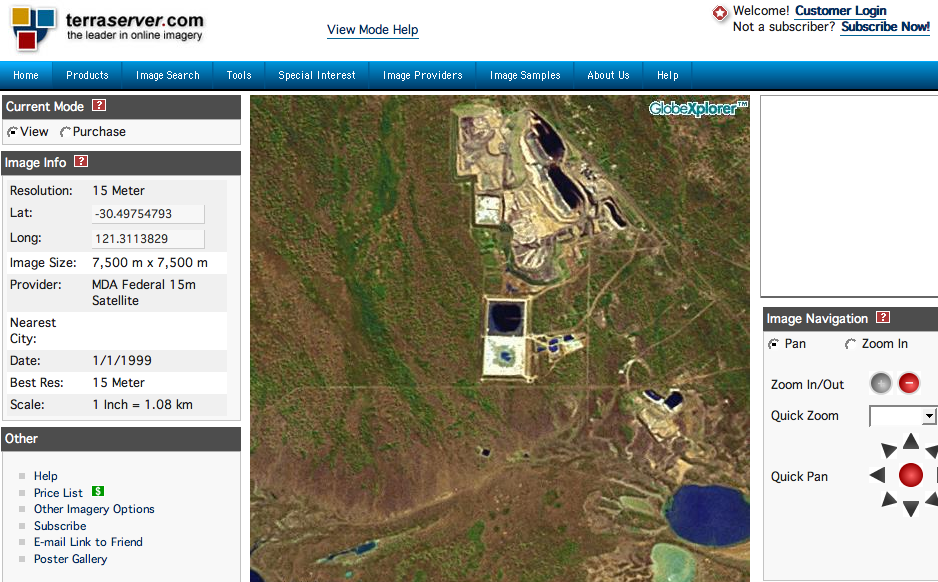
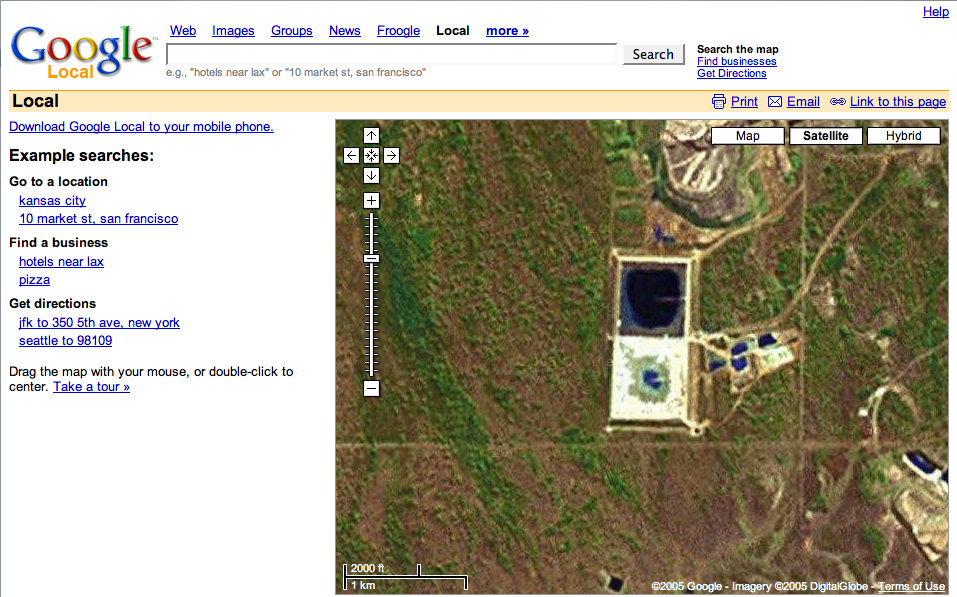
It was fun while it lasted, huh? We saw the Gizmodo post yesterday, about the iPod advertisement that’s viewable from space, and filed it away for future reference. Turns out that, after rocketing around the blogosphere, it’s probably not what it looks like. Some intrepid bloggers noted that the Terrabyte satellite image for that location on January 1, 1999 — before the iPod launched — looks the same  as it does Google Earth today.

We’ve got both images. Care to guess which is which?


It gets better. The Terabyte server’s been rather busy, so when we got a chance we grabbed a screenshot of the whole page. (Note the date.)


terrabyte1999

And we grabbed a shot of Google Earth as well. 


googleearth

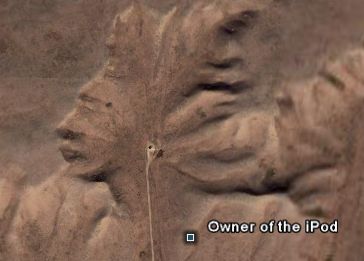
And fun would it bit of snark? The author of the the original post suggests he knows the identity of the legendary space-iPod’s owner.

It is just me? Do things not always look like what they are when seen from space? Or is am I seeing ancient Egyptian royalty here? 

So, is there anything else that looks like an iPod from space? How many can you find?

NASA & Sweden in Moonbase Race?

Monday, March 27th, 2006

The history book on the shelf,
Is always repeating itself…

Abba – “Waterloo” 

We’ve already been to the moon (unless you believe that the whole thing was done on a movie lot), but it looks like we’re going to stay a while the next time we go back. There just one question. Who’s gonna get there first? I experienced a little brain tickle this morning when I saw the news item that NASA is quietly planning a moonbase

For the first time since 1972, the United States is planning to fly to the moon, but instead of a quick, Apollo-like visit, astronauts intend to build a permanent base and live there while they prepare what may be the most ambitious undertaking in history — putting human beings on Mars.

It sounded vaguely familiar, and not because the presdient announced a plan to return to the moon a couple of years ago. I felt that brain tickle because I remembered hearing just a week or so ago that someone else was planning to do the same thing.

A quick search through my bookmarks, and I had the answer. In the race to colonize the moon, NASA has at least one competitor: Sweden.

The proof comes in the form of the innocent-looking SMART-Centre which, according to various reports, has assembled a consortium of more than 50 partners – including Japan’s Shimizu Corporation, US NASA contractor Orbitech and the UK’s Cranfield University – to turn the centre’s Dr. Niklas Järvstråt’s dreams of extraterrestrial conquest into reality.
 You won’t find much about a moonbase at the SMART-Center homepage. For that you’ll have to dig into their projects for the vision statement.

We have already taken the one small step for mankind and landed on the moon. We have seen it, we have conquered it, we have explored it – but our presence has not been sustained. For the benefit of mankind, the survival of our natural resources on Earth and for the proliferation of space exploration, it is now time for the next logical step – an international lunar colony. A colony where men, women and children can live without the need of a continuous supply of materials and technology from Earth; a self-supporting colony where the great circle of life can be sustained in its entirety by lunar raw materials and where all life-sustaining products will be manufactured in situ.

The Swedes have some other big plans in mind beyond moon — including exploring Mars, asteroids, other solar systems, etc., and trying their hand at world peace — but will it be more than they can handle? Then again, as the article linked above notes, NASA has its hands full with emptying its already-tapped-out pocketbook for space shuttle repairs, with a 2020 back-to-the-moon deadline looming over it. The Swedes have a deadline for lunar construction and immigration to happen sometime between 2018 and 2024.

So, it’s not a question of if human beings will return to the moon, but a matter of when and under which flag. Anyone care to lay bets?

Making MobTV Work

Friday, March 24th, 2006

I’ve decided to try my hand at coining a new phrase: mobTV. I figure if mobile blogging can become "moblogging", then mobile television can become "mobTV." Besides, as I’m learning more about it and writing more about it I’m going to need a more efficient way to refer to it if I want to keep up, given the way its spreading and the number of terms I have to learn. 

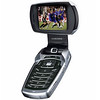
Since my last post on the mobTV taking off in Korea, it looks like mobTV is coming to China next, if Radioscope has its way.  And on a pretty cool looking phone, if you ask me.

Samsung MobTV PhoneRadioscape has won contracts to supply five more Digital Multimedia Broadcast (DMB) and Enhanced Packet Mode (EPM) transmission systems for mobile TV operators in China, bringing the total to nine in the past few months.

 The company says the contracts are the fruits of at least two years of courting Chinese authorities about its DAB-based mobile TV technology and helping them evaluate the most appropriate technologies for the service, and choosing between DMB, DVB-H and DMB-T.

From there it gets interesting. Qualcomm announced last year that it was bringing mobTV to the states via a  technology called MediaFLO, which Verzion also adopted late last year. For the curious, Mobile Content News has video of MediaFLO in action. (Found via Engadget, and I believe that’s Shrek on the small screen.)  The question is, can it work? The experts aren’t  exactly in agreement. Depending on who you ask, MediaFLO and another technology called DVB-H are doomed because EV-DO already gets the job done and new networks are too expensive to build and support, or DVB-H will be the de facto standard once spectrum allocation problems are solved.

Got all that? Good, because I’m about to add some French to the mix. Alcatel just announced that it’s overcome the spectrum allocation issue by using a satellite frequency.

With the help of satellites, Alcatel aims to overcome a key hurdle in rolling out broadcast television services over mobile phones: the lack of available spectrum. 

The French telecommunications-equipment manufacturer proposes using the widely available S-Band frequency reserved for satellites to transmit broadcast signals both terrestrially and via satellite to mobile phones based on the DVB-H (digital video broadcasting – handheld) standard, instead of the UHF band. 

… The Alcatel proposal calls for equipping base stations with S-Band repeaters and, in addition, using satellites capable of transmitting in the S-Band to deliver content to 3G (third-generation) phones enabled with DVB-H technology in three different ways: base-station streaming, base-station broadcasting and satellite broadcasting.

The article also does a good job of explaining the drawbacks of the three delivery systems. Streaming offers unlimited channels and great indoor coverage, but only for a limited number of users on a network. Broadcast matches it on indoor coverage, and supports unlimited users, but only 27 channels. Satellite matches them on channels and user support, but falls short on indoor coverage. Alcatel claims the answer is an "intelligent content-management system" that seamlessly chooses the right delivery system. 

Leave it to the French to come up with an elegant solution. I just hope it works well enough to eventually get picked up in the U.S. It would be great to catch up on Desperate Housewives reruns on the subway, and get all the way up the street to my office without losing the signal.

Hunting for Stars, Through the Light

Wednesday, March 22nd, 2006

This is a great effort:

Join thousands of other students, families, and educators by participating in GLOBE at Night – an international event designed to observe and record the visible stars as a means of measuring light pollution in a given location. Participation is open to anyone – anywhere in the world – who can get outside and look skyward during the week of March 22-29, 2006! There is no cost to participate in GLOBE at Night. Help us reach our goal of 5000 observations from around the world!

 The National Optical Astronomy Observatory, which is sponsoring the event, also has a cool online tool that allows you to witness the changes in the night sky that result from light pollution.

For more information, download the GLOBE Family Activity Packet PDF (in English and Spanish) or subscribe to the GLOBE email list. 

Robots on the Road

Monday, March 20th, 2006

Here’s another post about people building the darndest things. On March 28th, thanks to the folks at Darpanet, you’ll be able to watch a dozen driverless vehicles — created by people ranging from entreprenuers to students and hobbyists — attempt to successfully navigate 130 miles of Mojave desert terrain on NOVA’s The Great Robot Race. NOVA’s companion site features background on the dozen teams competing for the $2 million prize, as well as videos of their vehicles, and a preview of the upcoming show. 

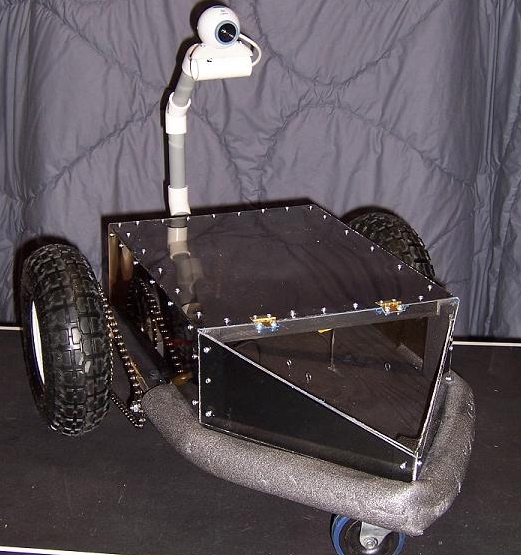
Sounds impressive, and you can bet that with $2 million at stake a lot of time and resources went into building these prototypes. However, my favorite robot vehicle of the day won’t qualify for the competition. It’s a wi-fi rover I found via Make  magazine, built at a cost of $103 by a high school student who won second place in a local science fair with his creation.


He’s got plans to add GPS, and other neat gadgets. After building a robot on just over $100, I wonder what this kid could do with even a fraction of the Great Robot Race prize money.

The (Private) Race for Space

Monday, March 20th, 2006

We’ve written before about the incipient space tourism industry; yesterday the AP released a story that summarizes the gathering momentum of what was, not too long ago, a "sleepy industry":

Two years after the first privately financed space flight jump-started a sleepy industry, more than a dozen companies are developing rocket planes to ferry ordinary rich people out of the atmosphere.

Several private companies will begin building their prototype vehicles this summer with plans to test fly them as early as next year. If all goes well, the first tourist could hitch a galactic joy ride late next year or 2008 – pending approval by federal regulators….

"This time, it’s personal. This space race is about getting ‘us’ into space," said space historian Andrew Chaikin.

For now, commercial space travel remains an exclusive club.

Over the past few years, three tourists have paid a reported $20 million each to ride aboard a Russian rocket to the orbiting international space station.

Instead of days in space, the commercial spaceships under development will only reach suborbital space, a region about 60 miles up that is generally considered the beginning of the rest of the universe. Since the private spaceships lack the speed to go into orbit around Earth, the flights are essentially up and down experiences – lasting about two hours with up to five minutes of weightlessness.

The article includes a summary of the major contenders in the space-tourism arena:

The biggest name is Virgin Galactic, a space tourism firm founded by British billionaire tycoon Richard Branson. Branson has partnered with Burt Rutan, whose SpaceShipOne in 2004 became the first private manned craft to reach space, to build a fleet of suborbital commercial spaceships called SpaceShipTwo….

_Oklahoma-based Rocketplane Kistler is one of Virgin Galactic’s biggest competitors. Rocketplane Kistler, whose main investor is American businessman George French, hopes to start test flights next January and fly commercially by next summer. French owns several businesses including a space education company in Wisconsin….

_Space Adventures, a Virginia-based space travel agency best known for brokering three tourists to the international space station, is the latest entrant.

Last month, Space Adventures announced a partnership with members of the Ansari family – the major funders of the $10 million X Prize won by SpaceShipOne – to develop Russian-designed suborbital rockets that would launch from a proposed spaceport in the United Arab Emirates by 2008.

You can check out Rocketplane here and Virgin Galactic here.