Archive for the ‘Around the Blogs’ Category

Happy Anniversary

Tuesday, April 11th, 2006

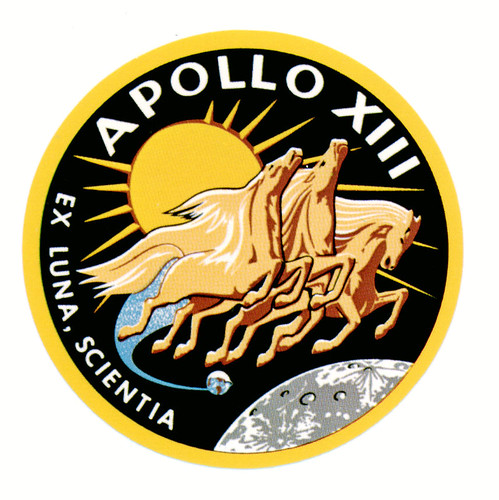
Apollo 13

apollo13

It was yesterday. Did you remember? I didn’t until until Transterrestrial Musings reminded me, but I usually don’t remember anniversaries. At least this time I don’t have to buy flowers on my way home, but a movie night may be in order. 

Boeing Orbital Express Passes Major Milestones

Friday, April 7th, 2006

SpaceDaily reports:

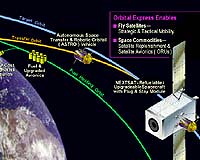
 The Boeing Orbital Express system, a Defense Advanced Research Projects Agency (DARPA) program aimed at demonstrating fully autonomous on-orbit satellite servicing, last month completed two major test milestones.

The program completed its Baseline Integrated System Test (BIST) of the Autonomous Space Transport Robotic Operations (ASTRO) spacecraft and a series of electromagnetic interference and compatibility tests to verify component operation in the spacecraft’s actual electromagnetic environment….

 The Orbital Express System consists of two satellites: Boeing’s ASTRO servicing spacecraft and NextSat, a prototypical, modular next-generation serviceable client satellite developed by Ball Aerospace.

The Orbital Express launch is scheduled for October, when the system will demonstrate for the first time: fully autonomous rendezvous out to 7 km with a capability that could support rendezvous at separation distances up to 1,000 km; soft capture and sub-meter range autonomous station-keeping; on-orbit refueling and component replacement as well as other robotic operations. Upon a successful demonstration, Orbital Express will provide the foundation for developing an operational system that can provide routine on-orbit servicing of existing and future space assets.

The full article can be found here

Brazil Joins Astronaut Club

Thursday, March 30th, 2006

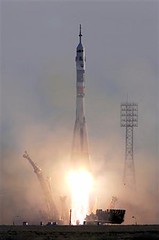
"Brazil’s first astronaut blasted off from earth on a cloudless day on Thursday with a Russia-U.S. crew bound for the orbiting International Space Station," Reuters reports:

Marcos Pontes, a 43-year-old Brazilian Air Force pilot, was hunched inside the spacecraft with Russian cosmonaut Pavel Vinogradov and U.S. astronaut Jeffrey Williams, both of whom were starting a six-month rotation in space….

Pontes, who packed a Brazilian soccer team shirt, returns to earth in 10 days with the outgoing crew, American Bill McArthur and Russian Valery Tokarev.

The Russian Soyuz rocket took off at 0230 GMT (3:30 a.m. British time) from the Baikonur cosmodrome, on a piece of Kazakh steppe rented by Russia from its ex-Soviet neighbour. It is scheduled to dock in two days’ time.

Soon after launch the first stage of the rocket fell away and tumbled back to earth, still glowing orange, while the Soyuz sped higher and higher into space.

"It’s beautiful, absolutely beautiful," said Michael Baker, a NASA international space station programme manager.

Russian spacecraft bear the responsibility for shipping crew and supplies to the station after NASA grounded its shuttle fleet in July when it failed to fix a technical problem that killed seven astronauts in 2003.

Soyuz rockets have proved safer than the shuttle despite their 1960s heritage.


New Falcon 1 Rocket Destroyed on Maiden Voyage

Monday, March 27th, 2006

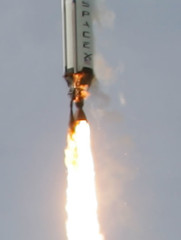
An engine fire destroyed Space-X’s Falcon 1 rocket on its maiden voyage today, according to reports.

Close up of Falcon 1 Engine Fire The International Reporter has early details:

The US vehicle, developed by the Space Exploration Technologies Corp, was destroyed soon after take-off from the Marshall Islands in the Pacific Ocean. The vision of Elon Musk, co-founder of the electronic payment system PayPal, the Falcon was designed to cut the cost of current satellite launches.

An onboard camera appeared to show the rocket rolling out of control shortly before the video signal was lost….

The rocket was attempting to carry a 19.5kg satellite to a low-Earth orbit of 450km. The satellite, FalconSat-2, was built by US Air Force Academy cadets to investigate the phenomenon known as "space weather".

Elon Musk has additional details on the Space-X blog

The good news is that all vehicle systems, including the main engine, thrust vector control, structures, avionics, software, guidance algorithm, etc. were picture perfect.  Falcon’s trajectory was within 0.2 degrees of nominal during powered flight. 


However, at T+25s, a fuel leak of currently unknown origin caused a fire around the top of the main engine that cut into the first stage helium pneumatic system.  On high resolution imagery, the fire is clearly visible within seconds after liftoff.  Once the pneumatic pressure decayed below a critical value, the spring return safety function of the pre-valves forced them closed, shutting down the main engine at T+29s. 
 

It does not appear as though the first stage insulation played a negative role, nor are any other vehicle anomalies apparent from either the telemetry or imaging.  Falcon was executing perfectly on all fronts until fire impaired the first stage pneumatic system.
 

Our plan at this point is to analyze data and debris to be certain that the above preliminary analysis is correct and then isolate and address all possible causes for the fuel leak.  In addition, we will do another ground up systems review of the entire vehicle to flush out any other potential issues.
 
The company says it is too soon to determine when the next flight will take place. 


The (Private) Race for Space

Monday, March 20th, 2006

We’ve written before about the incipient space tourism industry; yesterday the AP released a story that summarizes the gathering momentum of what was, not too long ago, a "sleepy industry":

Two years after the first privately financed space flight jump-started a sleepy industry, more than a dozen companies are developing rocket planes to ferry ordinary rich people out of the atmosphere.

Several private companies will begin building their prototype vehicles this summer with plans to test fly them as early as next year. If all goes well, the first tourist could hitch a galactic joy ride late next year or 2008 – pending approval by federal regulators….

"This time, it’s personal. This space race is about getting ‘us’ into space," said space historian Andrew Chaikin.

For now, commercial space travel remains an exclusive club.

Over the past few years, three tourists have paid a reported $20 million each to ride aboard a Russian rocket to the orbiting international space station.

Instead of days in space, the commercial spaceships under development will only reach suborbital space, a region about 60 miles up that is generally considered the beginning of the rest of the universe. Since the private spaceships lack the speed to go into orbit around Earth, the flights are essentially up and down experiences – lasting about two hours with up to five minutes of weightlessness.

The article includes a summary of the major contenders in the space-tourism arena:

The biggest name is Virgin Galactic, a space tourism firm founded by British billionaire tycoon Richard Branson. Branson has partnered with Burt Rutan, whose SpaceShipOne in 2004 became the first private manned craft to reach space, to build a fleet of suborbital commercial spaceships called SpaceShipTwo….

_Oklahoma-based Rocketplane Kistler is one of Virgin Galactic’s biggest competitors. Rocketplane Kistler, whose main investor is American businessman George French, hopes to start test flights next January and fly commercially by next summer. French owns several businesses including a space education company in Wisconsin….

_Space Adventures, a Virginia-based space travel agency best known for brokering three tourists to the international space station, is the latest entrant.

Last month, Space Adventures announced a partnership with members of the Ansari family – the major funders of the $10 million X Prize won by SpaceShipOne – to develop Russian-designed suborbital rockets that would launch from a proposed spaceport in the United Arab Emirates by 2008.

You can check out Rocketplane here and Virgin Galactic here.
Rocket Launch Tonight

Thursday, March 9th, 2006

Arianespace is launching two satellites: HOT BIRD 7A and SPAINSAT. I plan to watch it live — on Saturday night.
 
Launch window opens 22:05 GMT  on 11 March 2006 (7:05 p.m. local time in Kourou, French Guiana; 5:05 p.m. in Washington, D.C.). Webcast begins 20 minutes prior.

Kourou is known as Europe’s Spaceport. First settled by the French in 1604, French Guiana was the site of notorious penal settlements (see Devil’s Island) until 1951.

Blackstar System Shelved?

Tuesday, March 7th, 2006

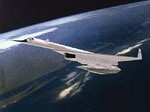
Aviation Week and Space Technology reports on the recently-shelved Blackstar system, a two-stage-to-orbit system designed to place a small military spaceplane in orbit:


This two-vehicle "Blackstar" carrier/orbiter system may have been declared operational during the 1990s.

A large "mothership," closely resembling the U.S. Air Force’s historic XB-70 supersonic bomber, carries the orbital component conformally under its fuselage, accelerating to supersonic speeds at high altitude before dropping the spaceplane. The orbiter’s engines fire and boost the vehicle into space. If mission requirements dictate, the spaceplane can either reach low Earth orbit or remain suborbital.

The manned orbiter’s primary military advantage would be surprise overflight. There would be no forewarning of its presence, prior to the first orbit, allowing ground targets to be imaged before they could be hidden. In contrast, satellite orbits are predictable enough that activities having intelligence value can be scheduled to avoid overflights.

Exactly what missions the Blackstar system may have been designed for and built to accomplish are as yet unconfirmed, but U.S. Air Force Space Command (AFSPC) officers and contractors have been toying with similar spaceplane-operational concepts for years. Besides reconnaissance, they call for inserting small satellites into orbit, and either retrieving or servicing other spacecraft. Conceivably, such a vehicle could serve as an anti-satellite or space-to-ground weapons-delivery platform, as well.


Read the full story here

Rocket Racing League

Friday, February 24th, 2006

For fans of the X Prize, the Red Bull (ne Reno) Air Races, and rocketry and aviation in general, the future is bright (with a 20 foot flame behind it) and approaching fast.

X Prize founder Peter Diamandis and race car capitalist Granger Whitelaw launched the Rocket Racing League last October, and the first Rocket Racing Team was announced last month.

The Rocket Racing League [will] organize competitions around the United States, with the finals taking place at the X Prize Cup in New Mexico.

"It’s bringing 21st-century racing into people’s personal living rooms. … It’s really the mix of NASCAR excitement and spaceflight," Diamandis told journalists Monday….

"For me, it’s sort of a remembrance of ‘Star Wars’ pod racing," Diamandis said….

"Courses are expected to be approximately two miles long, one mile wide, and about 5,000 feet high, running perpendicularly to spectators," the league said. "The rocket planes, called X-Racers, will take off from a runway both in a staggered fashion and side-by side and fly a course based on the design of a Grand Prix competition, with long straightaways, vertical ascents, and deep banks. Each pilot will follow his or her own virtual ‘tunnel’ or ‘track’ of space through which to fly, safely separated from their competitors by a few hundred feet."

The League also announced a contest allowing fans to name the first X-Racer Rocket Plane. Meanwhile, Sebadoh is accepting donations to pay for travel to the debut of the first X-Racer, this October in Las Cruces. Pony up, Rocco.

EchoStar X is Up

Thursday, February 16th, 2006

After two delays, the EchoStar X satellite was launched yesterday when "a Sea Launch Zenit-3SL rocket lifted off from the Odyssey Launch Platform at 3:35pm PST:"

ll phases of the flight profile performed as expected. The mission ended with spacecraft separation from the Block DM upper stage, placing the EchoStar X communications satellite into a Geosynchronous Transfer Orbit. A ground station in Uralla, Australia acquired the spacecraft signal. All systems are operating nominally.

You can watch an archived webcast of the launch here. Space.com also has a report on the launch.

EchoStar Launch Delayed Again

Tuesday, February 14th, 2006

The Sea Launch of the EchoStar satellite (reported below) was scrubbed again on Sunday. "The Sea Launch team is currently working an issue at the launch site," according to the Sea Launch website. We’ll update our readers when the launch has been rescheduled. Who said Rocket Science was easy?