Archive for the ‘Astronomy’ Category

Satellite News Bits

Saturday, April 4th, 2009

A summary from Bill McDonald (WBMSAT PS – Satellite Communications Consulting Services)…

North Korea steps up threats to retaliate if Japan or Tokyo shoots down the rocket North Korea says will be used to launch a communications satellite – Obama warns the liftoff would be a "provocative act" that would generate a U.N. Security Council response.
[The Washington Post – 04/03/2009]

Rockwell Collins to acquire DataPath Inc., a Georgia company that designs, integrates, manages, and deploys satellite communications systems for military and commercial customers.
[Trading Markets – 04/03/2009]

SES AMERICOM-NEW SKIES announces that NSS-9 enters commercial operation, with all traffic transferred from NSS-5.
SatNews –  04/03/2009] 

Argentinian operator Velconet S.A. initiates nationwide upgrade of ViaSat LinkStar system to DVB-S2 with Adaptive Coding and Modulation and AcceleNet compression and acceleration to increase data rates and improve bandwidth efficiency.
[SatNews – 04/03/2009]

As North Korea moves forward with launch plans, U.S. military officials say United States needs to beef up its "space situational awareness," improving data about what is going on in space, monitoring satellites and debris.
[Reuters UK – 04/02/2009]

RapidEye’s imagery partners with Moscow based Sovzond, who will be only distributor of RapidEye imagery for markets in Russia and a number of other former Soviet states.
[SatNews – 04/02/2009]

BB Sat offically launches satellite broadband service in Japan.
[Satellite Today – 04/02/2009]

GMV provides active ground systems support for European Space Agency’s GOCE mission.
[SatNews – 04/02/2009]

SES ASTRA announces German pay-TV channel Premiere has contracted 1 1/2 additional transponders.to expand HD offerings.
[SatNews – 04/02/2009]

Iridium-based critical safety communications for air carriers on transoceanic flights nearing approval as Radio-Technical Commission for Aeronautics finalizes key documents.
[SatNews – 04/02/2009]

SES AMERICOM-NEW SKIES announces five-year distribution agreement with Gulfcom to use AMC-3 transponder for program distribution in Caribbean.
[SatNews – 04/02/2009]

Infineon, Sky Terra, and TerreStar unveil multi-standard mobile platform based on Infineon’s Software-Defined-Radio technology.
[Satellite Today – 04/02/2009]

U.S. satellite makers may get a "bailout" of their own, as lawmakers revisit export controls which have hampered manufacturers since the Clinton administration and are blamed for American satellite exports having declined from 90% world market share to 50%.
[New York Times – 04/01/2009]

Globecast signs five transponder lease renewal with Eutelsat for broadcasting in Europe, North Africa, and the Middle East.
[Satellite Today – 04/01/2009]

Inmarsat to buy 19% stake in Skywave Mobile Communications of Ottowa, Canada, acquiring assests relating to the GlobalWave satellite low data rate products and services business.
[Wall Street Journal – 04/01/2009]

Alcatel-Lucent to develop satellite base station sub-systems for SkyTerra and TerraStar to support 3G satellite communications.
[EarthTimes – 04/01/2009]

North Korea threatens to shoot down U.S. spy planes sent to spy on Taepodong-2  missile launch site which it maintains will be used to launch a commercial satellite – U.S. and Japan believe it is meant as a long-range missile test and promise robust diplomatic response.
[guardian.co.uk – 04/01/2009]

U.S. space industry not yet seeing economic slowdown, as industry boosts revenues by $6b to $257b in 2008, up from $187b three years ago.
[Reuters – 03/31/2009]

SES Astra signs Croatian Broadcasting Deal with CME Group.
[Satellite Today – 03/31/2009]

SpaceX schedules Falcon 1 Flight 5 launch window for April 20.
[Satellite Today – 03/31/2009]

Global Satellite launches MCG-101, an intelligent Iridium PBX offering versatile iridium communications system for offices, remote locations, military, aircraft, oil and gas, mining, and marine applications.
[SatNews – 03/31/2009]

States not spending grant money intended to improve ability of emergency workers to talk to each other, 18 months after grants authorized.
[Kansas City Star – 03/30/2009]

Globecomm Systems Inc. launches service for GCI Village cellular network for remote villages across Alaska connected by satellite.
[Wireless Business Technology – 03/30/2009]

Stratos executes new distribution contacts with Inmarsat.
[Fox Business – 03/30/2009]

Global Supervisory, Control and Data Acquisition as well as Machine-to-Machine services, largely recession proof, depend on satellite platforms to provide reliable and ubiquitous communications in far-flung areas.
[NSR Report – May 2009}


Space Control

Thursday, April 2nd, 2009


Taxpayers for Common Sense released their "Space Security Database" the other day and some of the numbers are astounding.

Space is crucial to our national security, and we’ve got the skyrocketing budgets to prove it. The United States spends billions on military space programs each year, spread out over the military services as well as myriad offices and agencies. Yet there is no central authority for tracking defense-related space spending, either within the Department of Defense (DOD) or across other federal agencies that provide satellites, sensors and services for use in our national defense.

Without this birds-eye view on spending, those who determine our space and national security policy—in the White House, on Capitol Hill and at the Pentagon—do not have a crucial tool for setting spending priorities. Priorities are necessary to make sure our military is supported and taxpayers’ dollars well spent. A transparent, accountable budget is particularly vital in light of the troubled history of space acquisitions, which has resulted in major programs running so far over budget and behind schedule that many of them still have not deployed after many years and billions of dollars.

Now Taxpayers for Common Sense has for the first time tracked military-related space spending across the federal government. Among our findings:

  • U.S. spending on space programs used for national security is steadily rising, jumping more than 40 percent between Fiscal Years 2005 and 2009;
  • More than 20 percent of military-related space spending now comes from agencies outside DOD, such as the National Aeronautics and Space Administration (NASA), and the National Oceanic and Atmospheric Administration (NOAA);
  • Spending on “space control,” the mission area that protects U.S. space assets, increased 37 percent over the past five years to nearly $1 billion in Fiscal Year 2009. This is notable because of the military’s recent empowerment of space control programs to destroy threatening assets.
  • Space situational awareness programs—an element of space control benefiting from many Congressional earmarks in spending bills—have jumped by 35 percent to $560 million.
  • Space and space-related missile defense programs benefit significantly from earmarks, attracting at least 75 earmarks worth $221 million in Fiscal Year 2008 alone.
  • Twelve programs have seen cost growth of more than 200 percent in the past five years, particularly space control programs such as the Air Force’s Space Control Technologies program element (570 percent) and the Army’s Ground-Based Space Control Systems project (650 percent).

We’ve blogged about many of these government programs. Probably because there’s so much at stake — and the technology is really cool. Here’s their "Top 5" of worst offenders (download the PDF):

1) Space Based Infrared System (SBIRS)
SBIRS was infamously dubbed “a case study for how not to execute a space program” by DOD’s Defense Science Review Board.8 Intended to replace DOD’s decades-old system tf infrared surveillance sensors that warn of incoming missiles , SBIRS was supposed to consist of four operational satellites in Geosynchronous Earth Orbit GEO), sensors on two classified DOD satellites in Highly Elliptical Orbit (HEO), and a ground-based relay station to track missile launches. The Air Force conceived the program in 1994, and it began in earnest with a $2.16 billion contract to Lockheed-Martin in 1996. The next 12 years saw numerous program restructurings, four Nunn-McCurdy breaches and a 175% cost jump. The program is now seven years behind schedule, and the first satellite has yet to

2) National Polar Orbiting Environmental Satellite System (NPOESS)
A joint project between the Defense Department, NASA and the National Oceanic and Atmospheric Administration (NOAA), NPOESS will circle the globe picking up weather and climate data with an array of sensors carried on its chassis . NPOESS was intended to save money by replacing two similar systems operated separately by the Air Force and NOAA. Unfortunately, construction and testing bungles slowed development so significantly that 14 years later, the cost of the program has doubled from $6.5 to $13.5 billion for four instead of six satellites and the initial launch has moved back 39 months to

3) Advanced Extremely High Frequency (AEHF) Satellites
The AEHF satellite system was intended to upgrade the Air Force’s Milstar II satellite communications system, ramping up speed and preventing enemies from jamming its signals. AEHF will itself be replaced by the Transformational Satellite Communications System (TSAT) currently under development, although how and when is still an open question. The program was originally comprised of five satellites, but the fourth and fifth were cut in December 2002 under the assumption that the first TSAT satellite would be ready early enough to make the system work (see below). When TSAT’s schedule began to slip, Congress asked the Air Force to fund a fourth satellite in 2009. Unfortunately, it turns out the fourth satellite will likely cost more than twice as much as the third because of the four-year gap in production and the fact that some of the components are no longer manufactured.

4) Evolved Expendable Launch Vehicle (EELV)
The EELV program began in December of 1996 as an industry partnership aimed at replacing current families of launch vehicles with a newer, more economical launch program. The Air Force contracted with Lockheed Martin and Boeing, who developed the Atlas V and Delta IV expendable launch vehicles, respectively. The two companies gave the Air Force overly optimistic cost estimates based on assumed growth in the commercial launch sector. But the ironic combination of a global recession with the extended life span of successful satellite designs caused a steep dive in launches in the late nineties, and the Air Force paid.

5) Transformational Satellite Communications System (TSAT)
The Air Force’s Transformational Satellite Communications System (TSAT) is slated to become the single most expensive DOD space program over the next decade. TSAT will replace the AEHF system currently under development with five satellites intended to provide the military with vastly expanded communications capabilities with enough bandwidth and data to allow soldiers to view videos and pictures of activity within seconds. The system hasn’t yet formally entered the development phase and has already seen a nine-year slip in the launch of its first satellite to 2019.

Seems the DoD ought to have a top manager whose sole responsibility is "space situational awareness." Clearly, this policy vacuum needs to be filled, and President Obama’s looking into space

There may be plenty of room in space, but there far less room in the Federal budget for this kind of spend.


Good-bye IP-PRIME, Hello ViP-TV

Monday, March 30th, 2009


There it was, a punch in the nose to fans of IPTV in the U.S. back in December when SES announced it was shutting down IP-PRIME

“In line with its plan, IP-PRIME has contracted IPTV signal delivery agreements with 70 small telecom operators, of which 37 have so far reached commercial stage.  However, with a subscriber base of less than ten thousand at the end of November and after more than 2 years of service, the consumer uptake is insufficient to justify continuing operations,” said Rob Bednarek, President and CEO of SES AMERICOM-NEW SKIES.

The IP-PRIME service will continue to operate until July 31, 2009.  This will offer telecom operators an opportunity to orderly transfer their services and SES AMERICOM, in collaboration with third parties involved in the service, to seek the best option to transition the business.

Sure, it was costing lots in resources (people and money) to keep the C-band based service running. It was ahead of all competitors in the U.S., but it was tough to convince SES management it was worth the continuing effort. Inside Americom, people thought the way out of this was to sell the service and related assets to EchoStar, who had their own Ku-band based service, ViP-TV. Ironically, using the AMC-16 satellite they were leasing.

SES may not get to sell it after all. EchoStar launched an IP-PRIME Conversion Program last week:

EchoStar Satellite Services, a division of EchoStar Corporation (NASDAQ: SATS), announced today the company’s IP-Prime Conversion Program, designed to provide continued delivery of video transport services for telco IP headend facilities across the United States. Commercial transport provider IP-Prime has previously announced it will discontinue its video transport service to headend facilities by July 31, 2009. EchoStar’s IP-Prime Conversion Program provides qualified customers with EchoStar’s ViP-TV(TM) transport service, replacement IDC satellite receivers and a standard professional installation, including compatible LNBs, a satellite dish re-point, cabling and connectors.

Interesting development, but not unforeseen. With IPTV subscibers doubling to 3.8 million in North America, EchoStar’s timing is typically very good.

Not surprisingly, Western Europe is still the leading IPTV region in the world, but regions such as North America continue to show their own strong growth paces. That’s the word from research firm Point-Topic and the Broadband Forum, who announced their fourth-quarter 2008 numbers at the IPTV World Forum in London this week.

Western Europe had more than 10.3 million IPTV subscribers at the end of 2008. North America, despite the U.S. being Ground Zero for the recession, saw its IPTV subscriber numbers grow a whopping 113 percent to more than 3.8 million from the end of 2007 to the end of 2008. Worldwide, IPTV subscribers totaled 21.7 million at the end of 2008, representing growth of 63 percent from the previous year.


Three Years Ago

Thursday, March 26th, 2009

Building online communities does not happen overnight. I started building one in October of 2002 for my fraternal group in Ukrainian Scouting. We used YahooGroups to help facilitate communication and information sharing. Pretty active little group, but closed to the public.

In mid-2005, while employed at SES AMERICOM in Princeton, our new CEO’s plan included starting a blog. I didn’t think we needed it, but with help from Mike Ford, I soon came around and became the chief blogger and promoter. I also had responsibilty for keeping our external Web sites current (SES AMERICOM, AGS, REDiSat Network, IP-PRIME, ABN and HD-PRIME), so I was the natural choice. What a great experience it was working with the team at EchoDitto, Joe Trippi and Matt Gross.

Here I am, still editing this blog but no longer employed by Americom. Since we went live in early March of 2006, this blog has logged more than 196,000 visits and 322,000 page views. Not bad for a B2B blog in the satcom business (so they tell me). Besides ILS (who I advised), nobody in our community has built a real blog. Now Intelsat seems to be coming around with their blog, introduced this week.

So far, the posts have been strictly business and one way in nature. Hope they stay active and find their voice online. And let’s see how long it takes for my comment to be published — if ever. 

Blogging is good for you. Go on.

Furious Euros

Wednesday, March 18th, 2009


"The commission process, if it goes ahead, is likely to set an ugly precedent that will ultimately destroy the fabric of international satellite communications and co-operation that has taken several decades to evolve," one satellite operator said. "What is to stop the Russians or other nations in Africa from unilaterally authorising their own systems to provide global coverage without co-ordinating with neighbouring countries? If all nations followed the commission process, then the end result is likely to be such interference that no satellite will be capable of operating."

That quote, from The Guardian, sums it up. If there’s one process all satellite operators respect in the satcom business, it’s making sure frequency coordinations are done properly and honestly. There’s speculation the former Luxembourg Parliament’s social committee president was behind this, so as to strengthen the EU’s regulatory powers.

Chris Forrester reports in Rapid TV News the winners will be Solaris Mobile and Inmarsat, and it could get ugly:

Today (March 18) the EU is expected to announce that Dublin-based Solaris Mobile (a j-v between SES Astra and Eutelsat) and London-based Inmarsat will each receive a slice of S-Band satellite bandwidth which will enable Europe-wide services like DVB-SH mobile TV. But there’s already controversy over the decision, with the powerful ITU arguing that the EU’s decision sets a dangerous precedent.

The ITU is responsible, amongst other things, for ensuring safe and interference-free coordination of various satellite operators and their terrestrial broadcasting counterparts. The complaint raised by the ITU argues that there’s nothing to stop other similar players, like Russia, or African or Middle East groupings now issuing their own – uncoordinated – ‘permissions to operate’.

"We see the EU as an unnecessary level [of regulation]," said Aarti Holla-Maini, secretary general of the European Space Operators Association. The allegation is that the decisions have not been reached fairly and may be uncompetitive, favouring European-based businesses.

You’re not surprised, are you? TerreStar and ICO Global, both U.S.-based, will likely litigate this, and Solaris Mobile has Luxembourg-based SES backing it up. Relationships do matter in business and government.

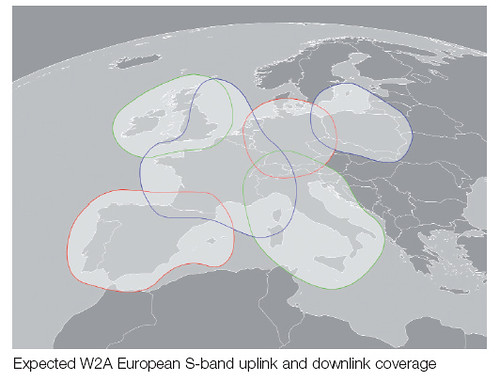
Solaris Mobile will use the S-band payload on Eutelsat’s W2A spacecraft. Launch preparations are in full swing, and the S-band coverage is mostly western Europe…


Get The Shovel Ready

Monday, March 16th, 2009


I don’t know whether this new service announced by CTC and AlphaStar is a project that’s as "shovel ready" as the economic stimulus package requires — or whether we should get the shovel out to bury it.

Here’s the pitch:

AlphaStar International, Inc. and Computers & Tele-Comm, Inc., (CTC) announced today a unique joint venture to provide very high speed WiMAX 4G services for any area anywhere across the entire USA. According to CTC President, Graeme Gibson, "The Digital Divide just got smaller. Today with this announcement, rural areas with no access to broadband fiber finally have a solution to getting connected at 4G speeds. Our mutually developed hybrid model takes advantage of the AlphaStar Teleport, a facility originally built by the U.S. government as part of President Reagan’s Star Wars initiative. AlphaStar (tour) can track any area of the USA including Hawaii and US territories to deliver true 4G speeds. Costs are contained by using the satellite primarily for the backhaul of Internet bandwidth." Bandwidth is then relayed by ground based WiMAX transmitters although the system can also serve to supply Metro WiFi systems or be used for mobile and maritime applications as well as Disaster Recovery and homeland security purposes. Low cost radios can be used rather than a two-way satellite receiver at customer locations. The Teleport can also deliver video and audio streaming. By caching the AV streams and large portions of the internet locally at the WiMAX transmitter performance is dramatically improved at affordable cost.

Great idea and I hope the pricing is right, but I’ve got my doubts. AlphaStar uses AMC-6 (according to their less-than-ideal Web site), which does not cover Alaska and Hawaii. Perhaps my old friends at Americom can persuade them to use AMC-21, which does cover all 50 states (and the Caribbean, which is a bonus).

Excellent combination of technologies for rural broadband and I hope it works out for them.


Great Advertising

Thursday, March 5th, 2009


Is that what the Iridium CEO said after one of his spacecraft collided with a Russian one? Oh, you bet he did:

The dramatic collision of one of Iridium Satellite LLC’s telecommunications satellites with an old Russian military satellite had one main business impact, according to Iridium’s CEO: "Great advertising."

At the same time, Matt Desch called for improved international efforts to monitor the positions of satellites and potentially dangerous space debris.

The collision "didn’t really have any financial impact" on privately held Iridium because it had a spare satellite ready to take over and there was little service disruption, he said.

But the highly reported incident did bring Iridium’s relatively low-profile service into the public orbit.

"I’d say that was some of the best advertising I could have gotten, though I wouldn’t do that again if I could help it," Desch said in an interview.

Desch said the event could generate business for Iridium, which has 66 satellites in orbit providing telecom services to governments and businesses like shipping companies that need communications in remote parts of the world.

One possible opportunity would be to lease out capacity in its next generation of satellites to hold cameras for organizations and governments to help keep better track of other satellites and ever-increasing amounts of space junk.

The Russian satellite involved in the collision with Iridium’s was no longer active.

"We clearly would like to see some better information about satellite positions," he said.

"(We hope) this incident will provide impetus for the international space community to find better ways to do that."

Desch said he expected talks to take place between scientists, governments and satellite companies in coming months about ways to improve and share information.

While the U.S. government does some monitoring, Desch said that tracking every satellite and every piece of debris in space would be a "very very complex, expensive task."

No single entity has that responsibility today, he noted.

"Our satellites are in an interesting orbit to be able to monitor the area around them," he said.

"Perhaps there’s opportunities for secondary payloads in future … to provide a better view of space," he said. "There have been discussions around that."

Desch said he expected Iridium to become part of a publicly traded company through its planned purchase of GHL Acquisition Corp, an affiliate of Greenhill & Co, in the second quarter.

Iridium LLC was initially backed by Motorola Inc but changed hands early 2001 after a group of investors, bought its assets after it filed for bankruptcy in December 2000.


Elliptical C-band Uplink Antennas

Friday, October 24th, 2008

Via Doug Lung’s RF Report:

In some cases, it isn’t possible to install an uplink dish that meets the FCC off-axis antenna pattern envelope. In the past, the FCC allowed operation of uplinks with non-compliant antennas upon a showing by the licensee that the effective isotropic radiated power (EIRP) would be reduced enough to keep the energy in side lobes below the level that would have existed using an uplink with a compliant dish at maximum power. This required a detailed engineering showing that often slowed FCC processing.

In the Eighth Report and Order and Order on Reconsideration (FCC 08-246), the FCC adopted an off-axis EIRP envelope approach as one method for applicants to apply for fixed satellite service (FSS) Earth stations using small antennas operating on conventional C and Ku-band frequencies.

It states, "This off-axis EIRP approach gives earth station applicants the flexibility to reduce their power levels to compensate for a small antenna diameter. Thus, using these envelopes as criteria for licensing should enable us to license more earth station applications routinely, expediting the provision of satellite services to consumers and enhancing the types of services available, without increasing the likelihood of harmful interference to adjacent satellite operators or to terrestrial wireless operators."

The Order adopts rules that facilitate the use of elliptical C-band uplink antennas. While the new rules do not specifically state that the major axis of the elliptical antenna be aligned with the geo-stationary orbit plane, the Order notes that "that starting the off-axis EIRP envelope at 1.5 degrees off-axis within the GSO orbital plane, and at 3.0 degrees outside that plane, has the same effect as requiring elliptical antennas to be aligned with the GSO plane in most cases."

The Satellite Industry Association (SIA) claimed that it is not possible to develop an off-axis EIRP envelope for analog video signals because the power density of such signals fluctuates. SES Americom opposed new analog regulations because the current rules are working well. The FCC decided to retain the current regulatory framework for analog services at this time. It dropped plans for eliminating analog video transmission over satellite entirely, noting, "The record in this proceeding has shown convincingly that requiring the transition from analog to digital video transmissions proposed in the Third Further Notice would be unreasonably expensive and burdensome."


Commercial Launches from Florida

Friday, October 24th, 2008

That’s the live view from Cape Canaveral’s Launch Complex 39, where the Space Shuttle will launch from in November.

Meanwhile, lots of activity at Launch Complex 36 this week, too. The U.S. Air Force announced it will soon host civil and commercial payload launches:

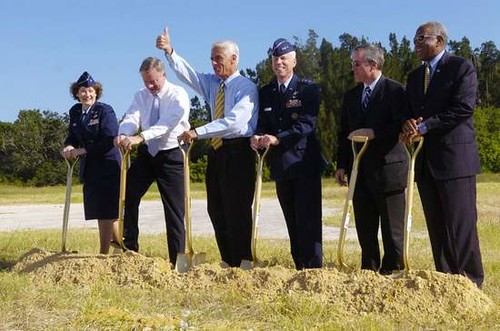
Officials with the Air Force and Space Florida made history during a dedication ceremony held here Oct. 22 when Space Launch Complex 36 officially was made available for operational use by the State of Florida, subject to completion of the environmental impact analysis.

Attending the historic ceremony were Florida Governor Charlie Crist; Florida Lt. Governor Jeff Kottkamp; Space Florida President Steve Kohler; Lt. Gen. William Shelton, 14th Air Force commander; and Brig. Gen. Susan Helms, 45th Space Wing commander.

General Shelton said Air Force leaders supported the initiative because it will make it easier for commercial providers to launch from the U.S.  Having domestic launch options provides the U.S. with solid foundation for national security.

"This is a great partnership that is mutually beneficial to both the Air Force and the state," he said. "We take great pride in helping foster the success of the commercial space sector; I’m confident the spirit of innovation and the cooperation that made this a reality will continue in the years ahead."

Governor Crist also had positive things to say about the agreement.

"Florida has always been home to big ideas. The entrepreneurial spirit is woven into the DNA of Florida’s economy," the governor said. "And thanks to the Air Force’s decision, the door is now open to innovation and space opportunities never seen before. In tough economic times, it is important we do not sit idly by, but that we invest in economic opportunities for the future.

"What a tremendous opportunity to ensure that space exploration is a top priority and that the U.S. remains a leader right here from Florida," he said.

According to Space Florida officials, the reconfiguration of Launch Complex 36 will strengthen not only the state’s aerospace industry but other growing economic sectors such as biotechnology and environmentally friendly energy technology vital to Florida’s future. The launch complex will support light- to medium-lift vehicles that go into low-Earth orbit and beyond.

Space Florida’s president sees this ground-breaking ceremony as a great beginning,  both literally and figuratively.

"The Air Force assignment of Launch Complex 36 is an important next step to extending access to space," said Steve Kohler, Space Florida president.

"We are now making that available to both defense and security initiatives," he said, "with multiple commercial payloads and launch activities for both civil and private space businesses that want to launch from Florida. This direction by the Air Force, together with the tremendous support by the state, opens the door to attracting, supporting and sustaining national and international aerospace business here in Florida."

This effort also is in line with the mission of the 45th SW, according to General Helms.

"Our primary mission here is to assure access to the high frontier," she said. "This proposal better enables us to execute that mission. It’s the ultimate ‘win-win’ situation for both the Air Force and the State of Florida."


Hours later, PlanetSpace announced it is ready to start, spurring Florida Today to report it will generate 350 jobs and a $300 million economic impact:

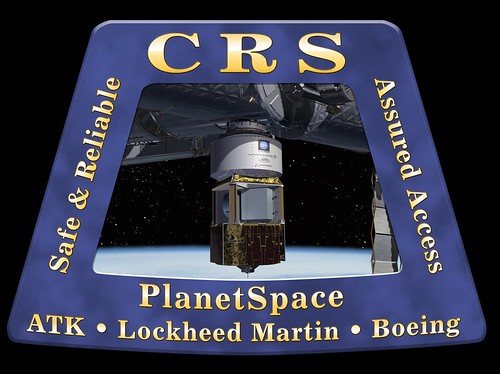
PlanetSpace, a consortium of ATK, Lockheed Martin and Boeing, announced Wednesday a proposal to launch a 158-foot solid-fuel rocket by 2011 from the pad at Cape Canaveral, which the Air Force has agreed to lease to Space Florida. The rocket could carry about 2 metric tons of cargo to the International Space Station.

NASA aims to announce on Dec. 23 whether PlanetSpace, or a competitor, has been chosen to provide the service. The company says its plan would create 350 jobs in Florida, with a potential economic impact of $300 million. PlanetSpace said it has at least two competitors for the NASA award.

Using state money, Space Florida now will start turning the abandoned launch complex into a serviceable launch pad, which it hopes will attract other commercial customers.

"The door is now open to more innovation," said Gov. Charlie Crist, who spoke Wednesday at the groundbreaking of the launch complex upgrade.

Complex 36 is now just a domed bunker beside a concrete slab at Cape Canaveral. The Air Force, which controls the property, intends to lease the site to Space Florida after an environmental impact analysis.

Space Florida, a state economic development agency focused on aerospace projects, then would build a launch facility that could accommodate medium to light rockets. The state plans a commercial launch zone that would reduce bureaucratic requirements and eliminate tariffs, similar to a free trade zone.

"This is a rebirth of a historical launch complex," Space Florida President Steve Kohler said.

Kohler said he is negotiating with several launch companies that may use the pad. The state has appropriated $14.5 million for the project and has bonding authority for another $40 million.

"We hope that the first phase of development could reach $55 million to build it out," Kohler said.

PlanetSpace hopes to be the first to use the new site in 2011. Under NASA’s Commercial Resupply Services program, the group is competing for a $3.1 billion government contract to move 20 metric tons of cargo to the space station with 10 to 12 rocket launches.

We see which bidder will be celebrating on 23 December 2008, with a great big contract under the tree (Solicitation Number: NNJ08ZBG001L).


WorldSpace Ch. 11

Wednesday, October 22nd, 2008

No, we’re not talking about WorldSpace channel 11 ("Radio Voyager") here. We’re talking about Case Number 08-12412, the Chapter 11 bankruptcy filing by WorldSpace, the pioneering satellite radio service available in Africa and Asia. The board of directors voted unanimously to file for it.


In the U.S., we’ve all heard about Sirius XM Radio and their 18 million subscribers. Turns out WorldSpace has yet to break a million, according to the Wall Street Journal report:

The company, which broadcasts its satellite radio services to more than 170,000 paid subscribers in 10 countries throughout Europe, Africa and Asia, sought Chapter 11 protection in the U.S Bankruptcy Court in Wilmington, Del. It listed assets of $307.4 million and liabilities of $2.12 billion.

The bulk of that debt, some $1.8 billion, is a contingent obligation under a royalty deal if the company’s pretax earnings reach a certain level, according to company spokeswoman Judith Pryor.

In court papers, Chief Executive Noah A. Samara said the company was forced to file for bankruptcy after seeking four forbearance agreements with its noteholders since June.

In addition, WorldSpace has failed to pay some of its workers for two months, causing "significant employee attrition," Mr. Samara said. The company owes 50 "critical employees" $1.35 million in back pay.

"As a result of WorldSpace’s growing concern regarding its inability to make timely payments to critical employees and other essential creditors, WorldSpace determined that it is in its best interests and the best interests of its subsidiaries and stakeholders to file these chapter 11 proceedings," said Mr. Samara, one of the key figures in the early stages of XM Satellite Radio Holdings Inc.

The company, which intends to sell off its assets or recapitalize the business, is seeking court approval of a $13 million bankruptcy loan provided by a group of hedge funds to continue operating while under bankruptcy-court protection.

Worldspace was founded in 1990 with the intent to provide satellite radio services to the emerging markets of Asia and Africa. The company has two satellites currently in orbit and a third in storage.

Among the WorldSpace’s so called first-day motions the company is asking to secure the bankruptcy loan and use some of that funding to pay its employees. The company is also seeking the continued use of its bank accounts.

Without the bankruptcy financing, the remaining critical employees will likely depart, which would "impair" WorldSpace’s ability to operate the satellites and continue as a going concern, Samara said.

Yenura Pte. Ltd., a Singapore-based company controlled by Mr. Samara, is WorldSpace’s largest unsecured creditor, owed $55.2 million. Number 2 is Micronas GmbH, owed $18.2 million, and Fraunhofer Institute for Integrated Circuits, owed $4.4 million.

Mr. Samara is the largest shareholder of the Silver Spring, Md. company, owning 47.15% of the firm. Aletheia Research & Management Inc., owning 37% percent, and Natixis Asset Management Advisor LP, owning 5.25%, are the other major shareholders of WorldSpace.


170,000 subscribers? And they’ve paid to build and launch two satellites? AfriStar launch in 1998, so I’m wondering how they could have kept going for the last ten years on so few paying subscribers.  Probably the dedication of Noah Samara, their CEO and founder. His speech before the African Development Forum in 1999 tells you something about what moved him (it’s so good I need to present it all):

The urgent imperative of our time and of this continent is the creation of an affluent African Information Society. I will speak to this need today. And I will be brief.

Over the past 15 years, we have seen the industrialized world shift its focus from connecting people to connecting nodes of information which people can universally access, share and grow. Focus on convergence technologies has brought unprecedented benefit and wealth resulting from net media or, if you will, information affluence.

In contrast, the developing world has focused on teledensity and lines per 1000 in its quest for universal access. The focus has been universal access to telephony and not to the electronic consciousness of mankind, more popularly known as the Internet. Accordingly, the progress in teledensity has not yielded the corresponding benefits and wealth which information affluence has created for the industrialized world.

Indeed, the information gap between nations is going through a quantum leap. It is volatile and threatens to explode into an irreparable gulf between rich and poor nations.

Developing efficient and effective ways to create information-affluent societies is the need for every need. I have pursued this vision with a sense of purpose and urgency; it animates my being and instructs my energies. Information affluence is, in my humble opinion, the sine-qua-non to development. Have it and wealth and development will follow. Without it, our attempt to alleviate poverty, bring health, wealth and education – indeed our attempt to create a sustainable, compassionate, civilization will be without success.

Information is the predicate to everything we know. It is ubiquitous. It is the building block behind the human DNA, the chair you are sitting on, the building you are in, the car you drive.

Look behind the wealth of nations and of individuals and — again — you will find information. Information about processes, techniques and organizations.

Look behind the poverty of individuals and nations and you will find ignorance.

The state of global information is the best allegory for the state of our planet. The gap between poor and rich has been made starker, not better, by the power of information and communications technologies.

While these technologies have liberated lives, created stock market miracles and improved economies, they have only touched a fraction of the world’s population.

An abyss is in the process of formation.

Nearly 2.5 billion people have never made a phone call; yet Manhattan alone has more phones than all those combined in sub-Saharan Africa. While there is a radio station for every thirty thousand people in most OECD countries, on average there is one radio station for every two million people in most of the developing world. There are more Internet hosts in Estonia than all of sub-Saharan Africa. The hardware disparity between poor and rich nations is not nearly as troubling as the scarcity of information which directly undermines the ability of a nation to not only keep its citizens informed and educated, but to simply keep them alive. 11 million people will die of AIDS this year in Sub-Saharan Africa. 40 million children will be orphaned. Either one of those numbers, by any definition, represents the population of an entire country. This is horror we do not really comprehend.

Asked about concerns he might have at the loss of thousands of citizens, Stalin is said to have once remarked that a single death is a tragedy; but a million a mere statistic.

Stalin was a bad man. We all agree he was ruthless, unmoved by human suffering. But does his comment reflect on him or is his an insight about all of us?

Consider the story of Yaguine Koita and Fode Tounkara – two boys from Guinea, ages 14 and 15. Eight weeks ago they tried to escape the turmoil and poverty of their homeland by sneaking on board the landing gear of a Sabena airliner. They died somewhere between Conakry and Brussels in the unpressurized compartment where the temperature at that altitude is 55 degrees below zero.

A letter they were carrying in their clothing read:

"Help us. We suffer a lot in Africa. We have no rights as children. We have no food. We have war and illness. We have schools but lack education. We want to study so we can be like you, in Africa. "

Their story was carried in every newspaper throughout Europe. It even made the Washington Post where I read about it.

A single death is a tragedy. Eleven million people will die this year from AIDS alone in Africa. How many thousand people do you think died in the few minutes I’ve been standing before you? Does it matter? It is after all a statistic!

But Yaguine and Fode’s death – that is eloquent. To me it is more than poignant.

You see, I was born in Africa and left when I was 17, like Yaguine and Fode, in search of education. I did so weeks before a revolution, a period of terror, in Ethiopia killed many of my close friends.

But for the Grace of God, I could have gone the way of my friends.

Instead, I stand before this august assembly of distinction and achievement to speak on the urgency of creating information affluence for the dispossessed. What can I tell you that the death of Yaguine and Fode has not already conveyed? This is an imperative we must address. It is the same imperative that led me to founding WorldSpace fewer than 10 years ago.

The vision of founding WorldSpace was partly driven by a desire to stem the spread of AIDS in Africa. I felt that an efficient, cost effective system could be developed to deliver a variety of information across a whole continent, clearly and consistently. After sketching this idea, literally, on the back of a napkin, I went to my wife to tell her I was quitting my job as an up and coming legal and business advisor in the communications and satellite industry. "Right, Like hell you will" she said.

I said, no, no, no, no; this is important. I want to launch a satellite over Africa," I told her. She obviously thought I was crazy.

So in the hope of getting her consent, I told her this would be a piece of cake — easy and straightforward. You see all you have to do is:

  • Start a company
  • Apply for licenses
  • Raise capital
  • Get 130 countries to allocate frequencies
  • Get great engineers to design the system
  • Get great companies to build/launch the system
  • Get more companies to make/distribute millions of receivers

Needless to say, it took longer than I thought and it cost more than I thought. But we did start the company; got licenses; got 130 countries to allocate the choicest part of the radio spectrum globally for the service; and raised the money needed to build and launch the system. Starting this month, world brand manufacturers are distributing the receivers throughout Africa.

This is the first satellite ever launched specifically to cover Africa — something I am particularly proud of. The service is also the first of its kind and is being introduced in Africa two years before it gets to America.

The second satellite will be launched in a few months over Asia; soon after a third will cover Latin America in the largest footprint for a direct broadcast service ever created by a single company.

Simply stated, these satellites will broadcast 60 plus channels or radio stations directly to a new generation of receivers. No satellite dish is necessary; just a simple antenna on the receiver.

The receivers can also be connected to a computer to deliver a full-blown, internet-like multimedia content. This is important because the growth of internet-capable PC’s in the developing world is outstripping the capacity of the telephone infrastructure. The WorldSpace system can deliver gigabytes of information to computers without the need of a phone, direct via the receiver.

The service will carry music, information and entertainment. And we are dedicating capacity to carry content addressing women’s issues, environmental initiatives, health advisories and distance education. The system’s data delivery capability can be used to :

  • broadcast the entire school curriculum of a whole nation or an entire continent;
  • reach health professionals on a regular basis with information on pandemics, epidemics and share experiences of successes and failures;
  • telecommute agriculture extension programs;
  • reach women with solutions that address their needs in family planing or entrepreneurial training;
  • reach societies at large to think creatively about their environment and its input on the delicate balance of our planet; and
  • help the youth to reach their counterparts with initiatives, with their dreams.

We believe information is the key to change stark realities that are facing the peoples of the developing world.

WorldSpace is a business with a mission: namely, to create an infrastructure that will provide hundreds of millions of people with access to information. WorldSpace realizes there are 20 million households across Africa that are able to afford and utilize its system for a fee here and a fee there that soon adds up to real money.

But we cannot and will not be oblivious to the fact that more than 350 million people on this continent will not be able to access any information unless we do something about it.

At the end of the day, life is somewhat digital. You have either done something, or you have not. The word trying is a euphemism. In the harsh reality of existence the gray dissipates into a stark relief of black and white. I will not belabor the struggle, the lonliness, the humiliation and the failures we faced at WorldSpace throughout this decade-long journey.

But I can unequivocally tell you that I never doubted – even for an instant – that Africa had to have, indeed deserved, an infrastructure specifically tailored to meet its needs.

In the Book of Ecclesiastes it is written that "The race is not to the swift, nor the battle to the strong, neither yet bread to the wise, nor yet riches to men of understanding." In the end life and what we make of it comes down to human will.

It is in our power to bring information affluence to Africa. It is in our hands to make it happen.

Consider the following proposal: Every constituency in this august hall decides to work on a single initiative and this is the initiative: We put 5 million internet terminals in 5 million villages and neighborhoods in 5 fast-paced years. These terminals will have the capacity to deliver primary-to-college education; teach women to become bread-winners for their homes; teach health professionals how to address the pressing health needs in their areas. Maybe the system might even engender understanding between the variagated peoples of this, our beloved continent. It can be done if we want it so badly that we decide to work tenaciously and with a singularity of purpose.

We are doing just that at WorldSpace. We have embarked on a study with the Ethiopian Media Agency to put receivers in every school and attach these receivers to computers and printers. In addition to delivering the curriculum for each school, the units would address the needs of the other constituencies attached to the schools: like women, health professionals, farmers etc…. Each such unit may thus touch the lives of over 200 people — improving their physical well-being, their mental capabilities and their spiritual lives. We are interested in carrying this initiative to other countries in Africa. I once read that Mother Teresa said, "God doesn’t require us to succeed; He only requires that we try." You know she is right. Because in his boundless mercy, the God of big and small things sees into our hearts and souls and judges us by our intent as well as our actions.

History, by contrast, has no compassion whatsoever. Our attempts, and our intent mean nothing to history. Our well-intentioned efforts will not even earn us a footnote.

I am here to speak for industry at this august opening ceremony. Instead, permit me to speak to industry, to governments and to civil society. My message is simple: creating social and economic development in Africa is not about me and it’s not about you. It’s about getting it done. The Prime Minister hit it on the nail at our opening ceremony: by providing for the future of the dispossessed, we will secure our own and that of our families.

Our technology is digital and so is our task. It’s zero or one; we are either on or off; we have gotten it done or we have not.

Here’s what we might see if we get it done, however. Yaguine and Fode’s death will not happen in the next millennium. They would not have to leave their home in search of education. They would find it in the comfort of their village or their homes.

Why can’t we all come together on an initiative that would put us much closer in saying Yaguine and Fode will not die in the next millennium?

We should agree to act, believing that we have a lot more power to effect change, both individually and collectively. I for one have learned never to underestimate where a napkin, a handful of people and commitment can take you.

The great anthropologist Margaret Mead once said: Never doubt that a small group of thoughtful, committed people can change the world. Indeed, she says, "It is the only thing that ever has."

Rainer Maria Rilke said it differently, beautifully:

Again and again in history some special people wake up
They have no ground in the crowd
They move to broader laws
They carry strange customs with them, demand room
        for bold and audacious actions
The future speaks ruthlessly through them
They change the world!

Change, commitment, resolve all center around the courage that affirms our lives or ideas in spite of all that threatens our lives or ideas! True courage or conviction is neither an opinion nor deterred by one. Rather it is a state of being.

I have no fear to stand alone in my conviction that change towards a compassionate sustainable civilization is not only possible, but inevitable. But I know there is a group of us out there and in this room that are rooted in the conviction that the shortest road to our goal is the creation of an information-affluent African society. Together we will honor our ancestors by creating the greatest of patrimony for our progeny.

The question for you, your excellencies, ladies and gentlemen, is not whether the inevitable will happen; but whether your fingerprint will be among that small group of thoughtful, committed people who actually changed the world.

Just as moving today as it was nearly a decade ago. Let’s hope there’s some way this company can right itself and continue on with its noble mission. Maybe they’ll get some help from O3b Networks.

Ethan Zuckerman called him "…one of the most charming and inspiring men I’ve met in recent years" on his My Heart’s in Accra blog last June.

Gunter’s Space Page tells us more about the spacecraft they use, an Alcatel payload using an Astrium bus:

Broadcasters have access to the satellite, via either a small individual station, or a central hub station. Leading edge techniques are used to transmit the digital and compressed programmes to the satellite. The satellite will send these programs directly to the public. Each satellite carries an innovative payload that implement baseband processing – appearing for the first time in a commercial programme – and a more conventional and "transparent" payload.

The dual payload carried by WorIdSpace satellites has been designed by Alcatel Space at its Toulouse premises to supply the highest possible digital broadcasting performance and the highest level of reliability throughout the satellites lifetime. On board base-band processing Authorizes direct satellite access to a multitude of individual stations on one-third of the planet, without having to contribute to costly links towards an access “hub”. Thus, a small local station in Africa can broadcast throughout the continent. The conventional payload enables major radiobroadcasters to pool their resources and reduce operating costs.

The high L band power is achieved by a pair of 150 watt traveling wave tube amplifiers (TWTA) operating in parallel. The ability to set frequencies, in both reception and transmission, makes the System very flexible. In orbit antenna reconfiguration allows antenna coverage optimization and enables one satellite to replace another whenever necessary.