Archive for the ‘Astronomy’ Category

Panasonic to Pursue Broadband at 35,000 Feet

Thursday, May 8th, 2008

We’ve long been fans of inflight broadband, ever since Ed blogged two years ago about his experience watching TV at 35,000 feet while  reflecting on the use of Connexion by Boeing.


Way back in September of 2006, when Boeing shut down Connexion, we reported that Panasonic was looking to get onboard with inflight broadband. It took them longer than we expected to book their flight, as it were, but now Panasonic and Intelsat have announced that they are teaming up to bring broadband to air travelers:

Panasonic, known for delivering state-of-the-art in-flight entertainment technology, is introducing an advanced satellite transmission platform that will allow airline passengers the ability to access Internetbased information and entertainment. The service, Panasonic eXConnect, provides passengers Internet connectivity.

The platform will leverage Intelsat’s existing GlobalConnexSM Broadband service that is available on Intelsat’s global fleet of 53 in-orbit satellites, and regional teleport facilities. By utilizing Intelsat’s existing infrastructure, Panasonic will be able to introduce eXConnect in key regions around the world, providing an efficient and cost-effective means to scale the network capacity as demand grows.

Panasonic eXConnect enables two-way broadband connectivity that provides a wide range of applications useful to both the passengers and crew such as VPN, live TV, shopping, streaming media, tele-medicine, operational applications and personal devices integrated to the airline’s in-flight entertainment systems. With data rates comparable to ground public WIFI hotspots, eXConnect offers airlines the opportunity to further differentiate their in-flight product with a valuable service to their passengers.

ARINC is also working to put a wifi cloud up there with the regular puffy whites. They introduced their own inflight broadband service in Germany back in March

ARINC’s Oi connectivity enables passengers to surf the Internet (by the hour, day, or flight leg), access e-mail during flight, chat over Instant Messenger, watch real-time news and sports flashes, hear bulletins—all on their own personal laptops. They can even watch and download the latest Podcasts. ARINC’s Oi technology makes optimum use of Inmarsat Swift satellite communication services.

Passengers merely switch on their PCs and can connect instantly via a wired or wireless cabin backbone to the Oi Web Portal. The Portal is fully customized to each airline’s requirements, supporting a combination of free view or paid applications. Oi will feature a range of price points to suit most budgets, and ARINC expects webmail prices will be under US$10 a flight, with larger attachments requiring an extra charge.

$10 bucks really isn’t that bad for email access per flight leg, considering Sebadoh recently shelled out $3 for a mere half ounce of peanuts that lasted about 2 minutes. 

What about the other services we’ve blogged about in the past, like the Row 44 platform being pursued by Alaska Airlines? We hear Row 44 is moving up, but it’s not yet full.

Polish Space Program

Wednesday, May 7th, 2008

Came across this in a recent UPI news item that read "Baniak and de Cooker sign agreement" — I know some Polish and the word "baniak" means "cooking pot" so I got a chuckle out of it.  

But seriously, as the European Community expands, will the European Space Agency (ESA) begin enlisting new members? Yes they will, with Poland joining ESA’s PECS (Plan for European Cooperating States) recently:

Europejska Agencja Kosmiczna dokonała ostatecznej selekcji wniosków na projekty w ramach Programu dla Europejskich Państw Współpracujących (PECS), realizowanego na podstawie Porozumienia o Europejskim Państwie Współpracującym między Rządem Rzeczypospolitej Polskiej a Europejską Agencją Kosmiczną (ESA), podpisane w Warszawie w dniu 27 kwietnia 2007 r.

ESA zaakceptowała ostatecznie 18 projektów jako spełniające wymogi włączeniado PECS oraz odnoszące się do jej bieżących lub planowanych działań. Podpisanie Karty działań PECS jest planowane na dzień 25 kwietnia 2008 w Ministerstwie Gospodarki.

Now in English, via the ESA:

On 28 April 2008 Poland reinforced its relations with ESA by signing the Plan for European Cooperating State Charter. This is a direct follow up to the signing of the European Cooperating State Agreement in April 2007.
 
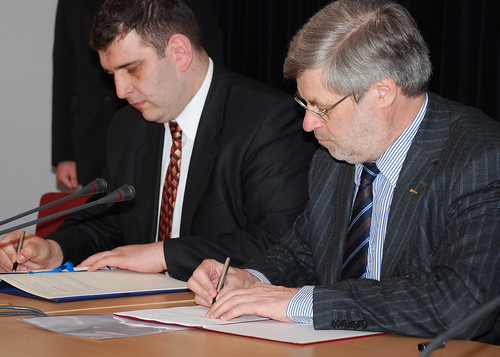
The Plan for European Cooperating State (PECS) Charter was signed in Warsaw by Rafal Baniak, Secretary of State in the Polish Ministry of Economy, and Chris de Cooker, Head of the International Relations Department of ESA.

By signing the Charter, Poland now becomes the fourth European country to subscribe to PECS. Hungary signed the Charter in November 2003, the Czech Republic in November 2004 and Romania in February 2007.

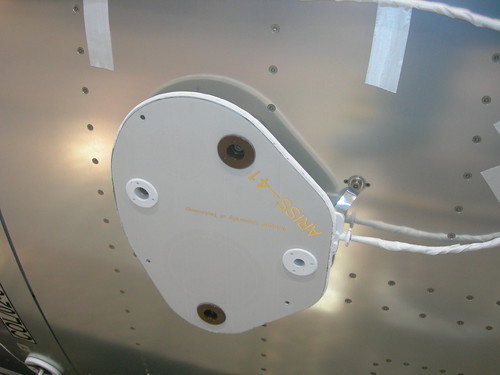
The Polish scientific community has been active in space endeavors, with the most recent contribution was the development of the ARISS antenna on the Columbus module (an amateur radio set-up operating in the 1260 to 2400 MHz bands), mostly from Wrocław University of Technology. The Columbus module, as we blogged back in February, was launched aboard STS-122.

Korean astronaut Yi So Yeon Lee used the ham radio when she was at the ISS. Read and listen here.

Swedish Antenna for Norwegian Oil

Wednesday, May 7th, 2008


One of the better stabilized VSAT antennas built today is being picked up by the oil & gas guys in Norway:

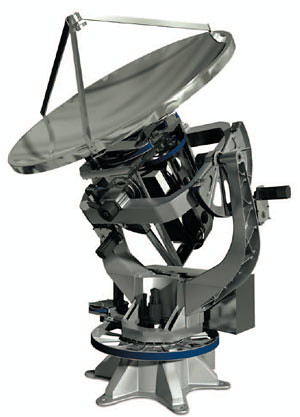
C2SAT has reported a significant sale to the Norwegian Oil and Gas offshore industry. The order refers to C2SAT’s Stabilised VSAT model C2SAT 1.2m Ku.

C2SAT and Trac Networks, in co-operation, have delivered the first stabilised VSAT satellite communication solution in a larger tender. Trac provides the TracSAT service which offers global satellite coverage and functionality.

The strong growth in the off-shore industry originates from a high demand for asymmetric high bandwidth satellite services, which enable transmission of large volumes of data in ship-to-shore applications.

More about the new TracSat bundle, per Per:

"Trac Networks participates in several offshore transmission requests and we are very pleased to proceed to the next level in this business case", says Mr. Per Christiansen, Senior Vice President, Trac Networks.

"The Norwegian Oil & Gas industry is operating in many geographical regions and the need for well performing satellite communication systems, in different kinds of environments, is rapidly growing. This particular system is tailor made according to the customer’s demand. The key features making TracSAT the preferred solution were high reliability and attractive price", says Per Christiansen.

With the price of oil hitting new highs every other day, we know someone’s willing to pay for satcom bandwidth. Whether maritime broadband becomes the norm, as we blogged before, remains to be seen.


Ten Satellites in One Shot

Monday, April 28th, 2008


The ISRO had a nice launch this morning, via Press Trust of India:

India today created history, launching ten satellites in one go with its Polar launch vehicle carrying the heaviest payload of 824 kg.

The ten-pack launch of the Indian Space Research Organisation (ISRO) saw the 230-tonne Polar Satellite Launch Vehicle (PSLV-C9) put into orbit an Indian Mini Satellite and eight foreign nano satellites besides the Cartosat-2A remote sensing satellite.

This is for the first time that ISRO has put ten satellites into orbit in a single launch.

A Russian rocket last year delivered 16 satellites in the outer space but the Russian launch vehicle carried a lesser payload of only around 300 kg.

However, ISRO Chairman G Madhavan Nair told reporters that Russia had tried to launch 13 satellites in a single launch.

"We have showed the world we can have multiple launches carried out in a precise manner. We have set a record. Only Russia had so far tried to launch 13 satellites in a single launch and I am not sure whether that was successful," he told reporters here.

He said there was some anxious moments due to some unusual weather condition over the Bay of Bengal off Andaman coast. "Only at 11 pm last night we decided to go ahead with the launch." Nair expressed happiness that all the mission objectives were achieved with precision and all systems functioned very well.

During the press announcement, the ISRO revealed they’re planning for a manned mission:

India will be in a position to carry out a manned space mission within seven years from now, said a top official of the Indian space agency in Sriharikota on Monday.

Addressing the media after the successful launch of 10 satellites in one go, Indian Space Research Organisation (ISRO) chairman G Madhavan Nair said: "The government has given us pre-project funding of Rs 950 million (for the manned mission) and we have initiated necessary activities."

Asked about the need for a manned mission when tests could be conducted remotely, he said: "Today the US, Russia and China have a capability to have a manned mission. We cannot be left behind in the space race. Further, man’s presence is absolutely necessary in a spacecraft for conducting some experiments."

The manned mission will be in ISRO’s second and more powerful rocket geo synchronous launch vehicle (GSLV).

"We have to study issues like crew module, emergency escape system, provision of all-round outside view from the spacecraft for the crew. These are complex systems that ISRO has to tackle," said K Radhakrishnan, director of the Vikram Sarabhai Space Centre, on the complexities involved.

ISRO will first put out three unmanned rockets to test the systems before sending a rocket with a man.

Here’s the launch video:


Amos & Land Launch

Thursday, April 24th, 2008


There are only eight countries that build communications satellites: France, Germany, Japan, the U.S., India, China, Russia and Israel. Yes, Israel. Who knew?

Built by IAI, the Amos-3 satellite is scheduled to launch on Friday, 25 April 2008, according to Tsenki:

На космодроме Байконур завершаются работы по подготовке к пуску ракеты космического назначения "Зенит-3SLБ" с разгонным блоком "ДМ-SLБ" в качестве третьей ступни и коммуникационным космическим аппаратом Amos 3.

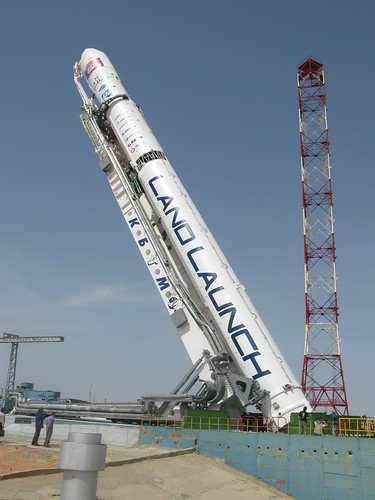
The Amos satellite system is operated by Spacecomm, also based in Israel. Launch service is provided by Land Launch, which uses essentially the same rocket as Sea Launch, only from Baikonur.

The Jerusalem Post is reporting the launch was delayed by 24 hours:

The expected launching of Israel’s Amos 3 communications satellite, which was slated to take place at approximately 8:00 a.m. Thursday in Kazakhstan, was called off due to technical difficulties. The Israel Aerospace Industries (IAI) announced that the launch would be put off by at least a day after a failure was detected in the satellite’s launching system.

As a result of the postponement Beit Hanassi canceled a large reception that was to be hosted by President Shimon Peres to commemorate the launch.

No word yet whether this launch will be webcast, but the launch window opens at 02:00 GMT.

Interesting mission:

AMOS-3 will be deployed to the 4°W orbital slot, where it will join the AMOS-1 and AMOS-2 satellites, eventually replacing AMOS-1. AMOS-3 will offer additional capacity, coverage areas, and advanced capabilities such as two wideband Ka-band beams of up to 500 MHZ each and 12 Ku band 72MHZ transponders with steerable beams for global coverage.


Atlas Launches ICO G1 Satellite

Tuesday, April 15th, 2008

Yesterday at 4:12 pm at Cape Canaveral, an Atlas 5 rocket successfully lifted ICO Global Communications‘ ICO G1 North American geosynchronous satellite, "a mobile communications satellite to assist and entertain Americans on the go."

The launch marked the first commercial flight in two years of an Atlast 5, and the carrying of its heaviest payload ever

 Weighing 14,625 pounds, the ICO G1 spacecraft was the heftiest payload ever launched by an Atlas rocket. Built by Space Systems/Loral, the craft stands over 27 feet tall, features a 39-foot-diameter mesh reflector antenna that will be unfurled in space and a pair of power-generating solar wings to span over 100 feet tip-to-tip once extended in orbit.

It’s a pretty bird, the G1:


 The ICO G 1 satellite belongs to the 2-GHz mobile systems, which are driving a growing segment of today’s satellite manufacturing industry.

ICO’s G 1 satellite is based on SS/L’s space-proven LS-1300 platform, which has an excellent record of reliable operation. Its high efficiency solar arrays and lightweight batteries are designed to provide uninterrupted electrical power. In all, SS/L satellites have amassed almost 1,200 years of reliable on-orbit service.

ICO G1 is a next-generation satellite designed to deliver a wide variety of interactive services to mobile and portable devices using ICO’s Mobile Interactive Media (ICO mim™).

The launch marks the first deployment of DVB-SH service in North America. DVB-SH is short for Digital Video Broadcasting – Satellite services to Handhelds; it’s "a physical layer standard for delivering IP based media content and data to handheld terminals such as mobile phones or PDAs, based on a hybrid satellite/terrestrial downlink."

ICO mim addresses a wide variety of consumers’ entertainment, information and two-way communication needs, including live and stored mobile TV in vehicles, interactive navigation, and roadside assistance, all with nationwide coverage.

ICO mim will also initially provide 10-15 channels of premium television content to portable, larger-screen (4.5- to 10-inch) user devices. Initial partners for the trial phase of ICO mim include Alcatel-Lucent.

For a demo video of ICO mim click here. To see the current state of DVB-H reployments, click here.

Here’s the launch video…

WOW, On My BlackBerry

Wednesday, April 2nd, 2008


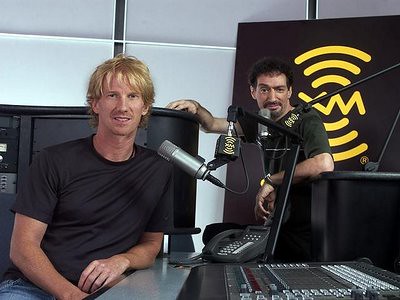
I knew this would happen. Adding satellite radio reception to smartphones is very cool. I subscribe to Sirius, so I’m a little jealous to hear XM will be offered on some BlackBerry models, according to TWICE:

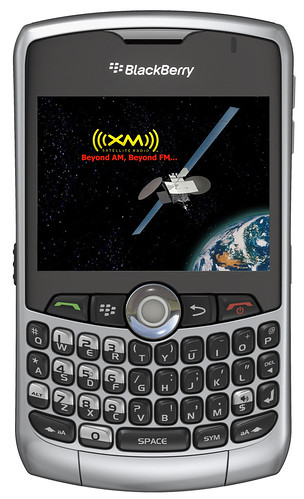
XM Satellite Radio today became available on BlackBerry devices from all leading carriers, broadening the availability of XM’s Radio Mobile service.

Previously XM Radio Mobile, which offers a selection of XM channels, was available only on select phones using the Alltel and AT&T networks.

Research in Motion BlackBerry devices will carry a selection of 20 XM channels on models including the Pearl, Curve, 8700 and 8000 series for a fee of $7.99 per month.

The service is enabled across many carriers through the OpenVideo platform from QuickPlay Media, a leading provider of mobile TV and video solutions. It will operate on BlackBerry devices using the Verizon, AT&T, Sprint Nextel and T-Mobile networks, said an XM spokesman.

The select XM music and comedy channels are accessed via a downloadable application. They appear in a user interface with graphical icons and the software lets users see the song title, artist and album of a song that’s playing as well as the songs playing in real-time on other XM Radio Mobile channels. Subscribers can also listen to XM while performing other BlackBerry tasks.

Does this now open the door for Apple’s iPhone to begin offering the competing satellite radio service? If you read Apple’s patent application from two years ago ("Mobile Me"), it does include satellite reception.

Cool: it includes "The Virus" — the channel featuring O&A. Here’s the channel line up. It might be worth $8 a month after all. Get the download here.


Mars Colony

Tuesday, April 1st, 2008

Screw $200,000 sub-orbital flights, when you can go to Mars. You heard me right – Mars:

Earth has issues, and it’s time humanity got started on a Plan B. So, starting in 2014, Virgin founder Richard Branson and Google co-founders Larry Page and Sergey Brin will be leading hundreds of users on one of the grandest adventures in human history: Project Virgle, the first permanent human colony on Mars.

Using their massive combined wealth, Branson, Page, and Brin will begin settling Mars in 2014. Worried by the coming climate crisis and aided by dramatic advances in spacecraft development and new Mars discoveries, the team is convinced the project is doable in the next 6-8 years. The team’s scientists have already chosen a location:

Our landing site is located on Lunae Planum on the northwest side of Kasei Valles. Lunae Planum marks the transition between the high Tharsis rise, a giant volcanic bulge, and the northern lowland plains. This region shows many signs of significant crustal deformation and other structures that are likely caused by ice. Scientists have hypothesized that this area’s valleys and ridges (called "fretted terrain") may have developed as icy debris flowed onto the northern plains eons ago, during the great Martian flood epoch. It’s an ideal place for our settlement, because of the likelihood of both subsurface water and nearby lava tubes and pits; mild weather (in Martian terms) due to its proximity to the equator; and proximity to Kasei Valles, which, after terraformation, will be highly attractive shorefront property. The Virgle 1 should settle down not far from Chryse Planitia, the Plains of Gold, where the Viking 1 spacecraft landed on July 20, 1976.

Watch Branson’s introductory video:

In other news, G-Mail announced a much anticipated custom time feature, TechCrunch is suing Facebook, and today marks the 500th anniversary of a major holiday.

FCC is Next for Sirius-XM Deal

Thursday, March 27th, 2008


So we get news the Department of Justice approved of the Sirius-XM deal on Monday. Today’s Washington Time summarizes what the FCC still needs to consider in giving the final OK:

Private equity group Georgetown Partners wants the commission to require a combined XM and Sirius to lease one-fifth of their total channel capacity and infrastructure to a "totally independent and unaffiliated third party, such as Georgetown, to remedy the anti-competitive monopoly that would otherwise result," according to the company’s FCC filing.

HD Radio pioneer iBiquity Digital thinks any new satellite-radio receivers should be equipped to play both over-the-air broadcast radio and HD radio, a requirement it says should last for three years in cars and one year for stand-alone radios.

The nonprofit Media Access Project urges any approval to be contingent on the company relinquishing half its spectrum, which would be used as either a set-aside for educational programing, leased to another commercial firm or returned to the FCC for a federal auction. D.C. public interest group Public Knowledge likewise calls for a set-aside (5 percent of channel capacity) for educational broadcasters, but also urges a three-year freeze on the new company’s combined programming.

Those groups and others endorse a proposal from U.S. Electronics, which makes car devices, that calls for an "open access" condition to force the companies to allow any hardware manufacturer to make a satellite-radio receiver.

Of all the wish lists, Clear Channel Communications’ appears to be the longest. The radio giant wants half of the satellite-radio spectrum to go to a competitor, as well as a 5 percent "public interest set-aside." Clear Channel also wants a prohibition on local programming and local advertising revenues. Like iBiquity, it wants HD radio receivers embedded in satellite-radio receivers.

Clear Channel’s most ambitious request is that satellite-radio content — which unlike broadcast is based on a pay-to-play model — be subject to broadcast indecency standards.

The Justice Department on Monday approved the merger with no conditions, concluding it is not likely to harm consumers. The FCC proceeding is separate, but the agency typically is influenced by the department’s assessment of market conditions.

Alan Dozinger, a professor at Villanova School of Business, said the FCC likely will consider issues affecting satellite subscribers, such as pricing and equipment. The companies have said that no radios will be made obsolete by the merger, but Mr. Dozinger noted that XM uses geosynchronous technology and Sirius uses a low-orbit satellite.

"It won’t be so hard for [Sirius and XM] to satisfy future subscribers, but what are they going to do about the 17 million people who already have these systems? I suspect the FCC will put something down on that," he said.


Professor Dozinger needs a lesson in satellite radio orbits. Sirius uses a variation of a tundra or molniya orbit. Near geosynchronous, but eliptical — lots of hand-offs.

The conditions the FCC attaches will be most interesting. 

700 MHz Spectrum Auction

Thursday, March 20th, 2008


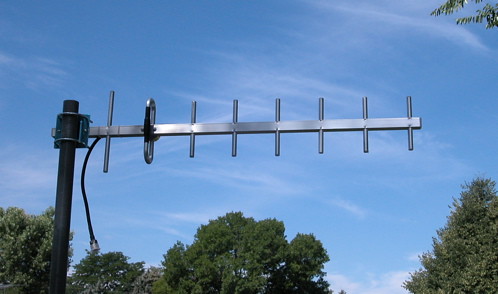
[Antenna image courtesy of DMS Wireless

Very interesting to see EchoStar as one of the winners in the FCC auction, via Multichannel News:

EchoStar won sizable amounts of spectrum in the government’s 700-Megahertz wireless spectrum auction – and Cox Communications emerged as the largest winning cable entity – but the biggest slices went to Verizon Wireless and AT&T, the Federal Communications Commission announced Thursday.

The auction, which closed March 18, generated $19.592 billion in total bids. A portion of the funds will be allocated to the Commerce Department’s digital-to-analog converter box program.

“Even in a difficult economic climate, revenues raised in this auction exceeded congressional estimates of $10.182 billion by approximately 187%– nearly twice the amount Congress had anticipated would be raised to support public safety initiatives, the digital television transition and $7 billion in budget deficit reduction,” FCC chairman Kevin Martin said, in a statement.

However, preliminary FCC data regarding winning bidders indicated that, based on self-reporting, women-owned bidders failed to win any licenses and minority-owned bidders won less 1% of licenses.

In a prepared statement, FCC commissioner Jonathan Adelstein said: “It’s appalling that women and minorities were virtually shut out of this monumental auction… Here we had an enormous opportunity to open the airwaves to a new generation that reflects the diversity of America, and instead we just made a bad situation even worse. This gives whole new meaning to ‘white spaces’ in the spectrum.”

The spectrum in the 700-MHz band is being made available as a result of the government’s mandate that over-the-air broadcasters cease their analog over-the-air signals by Feb. 17, 2009.

EchoStar won 168 licenses in the E block, spectrum covering most of the United States, for a total of $711 million, according to the FCC’s Web site.

Cox, which was bidding as Cox Wireless, will pay $304.6 million for 22 licenses, in the A and B blocks, in California, Virginia, Georgia, Florida, Louisiana, Arkansas, Kansas and Oklahoma. Cox’s largest single winning bid was $84.1 million for an A-block license in San Diego.

Paul Allen’s Vulcan Ventures secured two A Block licenses, in the Pacific Northwest, for $112 million. Analyst firm Stifel, Nicolaus & Co. predicted that spectrum will overlap with his cable holdings.

Comcast and Time Warner Cable did not participate in the auction. Cablevision Systems registered to bid but did not win any licenses.

Verizon Wireless and AT&T—the two largest wireless carriers in the U.S.—accounted for 83% of the total bid in the auction.

Verizon Wireless won the regional licenses in the C block necessary for a nationwide footprint, paying in total $9.63 billion. AT&T will fork over $6.64 billion for 227 licenses, which are all in the B block.

Qualcomm won a total of nine licenses for a total of $1.03 billion, and was the initial – and only – bidder for the D block, with a $472 million bid.

The FCC Thursday issued an order de-linking the D block from the other blocks in the auction. The D Block did not meet its $1.3 billion reserve price established in advance of the auction.

The agency said it “is committed to making this spectrum available for use quickly after the DTV transition on February 17, 2009.” The FCC said it will not re-offer the D block immediately in Auction 76 but will consider its options for how to license this spectrum in the future.”

All told, there were 99 winning bidders for 754 spectrum licenses. The auction had a total of 261 rounds.

Other notable 700-MHz winners and losers:

– Google ended up with no winning bids in the auction. The Internet search giant had pressed the FCC to adopt a rule requiring the winning bidder of the C block to provide “open access” to third-party applications and devices, if a minimum bid price of $4.3 billion was met.

– BendBroadband won a license in the B block in Oregon for $6.7 million.

– Neither Leap Wireless nor Alltel Wireless won any licenses.


Could a national mobile TV service be in the works? PocketDISH and iPod: a comparison.