Archive for the ‘Astronomy’ Category

Backpack, Backpack

Wednesday, November 7th, 2007



When I was a kid in Brooklyn, we never carried backpacks to school. We had bookbags or even brief cases (plastic Samsonite). Sure, I had a backpack as a boy scout and I did find it convenient for hiking and exploring. But for school? We took public transportation. It was easier to let your book bag rest on the floor, between your feet, rather than taking out some 90-year-old woman while you turn around. In fact, I was six years old and getting on a public bus in Brooklyn — by myself. School was a mile away, too.

Things sure have changed since then. Every kid has a backpack now. One of today’s more popular pre-school cartoon characters, Dora the Explorer, has a talking backpack. Parents don’t let little kids out of their sight for a moment. Grown-ups now carry their laptops in backpacks to work. Hikers’ backpack are super high-tech: some generate electricity as you walk.

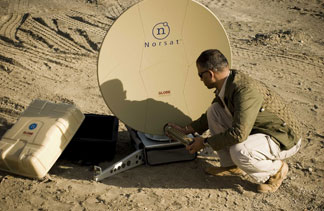
But by far the coolest is a complete satcom terminal — an ultra-portable from Norsat — that fits into two backpacks and can be checked as luggage on most commercial airlines:

The GLOBETrekker is particularly well suited for "grab-and-go" applications and "temporary situations" — wherein broadband communications need to be initiated quickly and on very short notice or on a temporary basis. Its ergonomically designed backpack and overall "quick-connect" design enables users to transport, assemble, operate and disassemble quickly and discreetly. This is particularly appealing to journalists, disaster relief agencies, the military and first responders — all of which are often given very short notice of an impending assignment. This is also of interest to companies seeking an emergency backup system or VIPs seeking to establish a reliable broadband connection while they are traveling.

The GLOBETrekker is equipped with sophisticated "built-in" intelligence. The GLOBETrekker’s Sensor Driven System Manager is housed in a single board computer, which acts as the nerve center of the entire system. It continuously monitors the internal environment of the system and automatically counters harsh weather elements (extreme temperatures, sand and humidity) by engaging built-in defenses.

This latest addition to Norsat’s product portfolio has been designed to withstand harsh transport and operating conditions. The GLOBETrekker sports three physical layers of protection including a hard shell exterior, shock absorbing foam inserts and shock-mounted baseband.

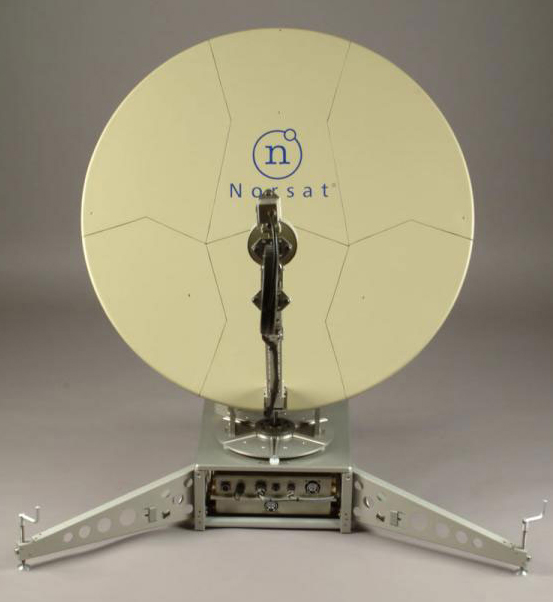
The GLOBETrekker supports data transmission rates of up to four megabits per second. It is capable of operating on multiple bands, including the Ku, Ka and X bands. The GLOBETrekker is a highly integrated system which includes a 1m carbon fiber antenna, RF electronics, motorized azimuth/elevation superstructure, motorized feed assembly, built-in inclinometer, compass, GPS and a baseband unit with a modem, spectrum analyzer, DVB-S receiver, Ethernet switch, DC-DC converter and shock protected chassis.
 

Pretty cool, ey? They just received a patent in Europe:

The European Patent Office notified the company that it intends to grant the patent for the technology, which reduces the weight and footprint of transmit reject filters, one of several elements of the RF transmit chain.

"This patent award is part of our broader and long-term strategy to establish a leadership role in the design, development and marketing of portable satellite terminals," Amiee Chan, president and CEO, Norsat International, said in a statement. "Our frequency selective surface waveguide filter, protected under this patent, allows the weight of transmit reject filters to be reduced 50-fold, significantly decreasing the occupied volume. This is a function that is especially useful for the next generation of milsatcom terminals."

The company could use some good news, given their stock price over the past few years. Good timing on their part, coinciding with the Global MilSatCom conference in London this week.


Satcom EBITDA

Monday, October 29th, 2007

SES is announcing today its financial results for Q3 of 2007, reporting strong recurring revenue And EBITDA growth. Highlights include:

  •  Recurring  revenue of EUR 405 m was up 9.9% on the prior year period
  • Reported revenue was EUR 406.9 m (Q3 2006: EUR 481.8 m)
  • The prior year period included one-time items totalling EUR 83 m (as reported)
  • Recurring1 EBITDA of EUR 290 m was 17.1% ahead of the prior year period
  • Reported EBITDA was EUR 283.2 m (Q3 2006: EUR 323.9 m)
  • The prior year period included one-time items totaling EUR 59 m (as reported)
  • Operating profit was  EUR 175.9 m (Q3 2006: EUR 199.6 m)
  • Net profit was EUR 138.8 m (Q3 2006: EUR 132.0 m)
  • 12 month weighted EPS 0.92 (2006 reported EPS EUR 0.82), favourably impacted by the ongoing share buyback programme

The full report can be read here in PDF.

Romain Bausch, President and CEO of SES, comments in the report:

"Despite the introduction of additional satellite capacity via the move of ASTRA 2C to 28.2 degrees East, the group fleet utilisation rate has remained high, at 75%.  The growth of our operational business, coupled with some financial developments and our ongoing share buyback activities, translates into a strong earnings per share growth through the year.

"This positive trend will continue. We have revised upwards our 2007 guidance for both revenues and EBITDA. In our 2008 guidance, we show revenue growth exceeding 6%. Over the period 2008 – 2010 the revenue CAGR  will equal or exceed the growth rate foreseen in the guidance for 2008, with an infrastructure EBITDA margin of over 81%."

Intelsat has yet to report on their Q3 results, though in Q2 they reported EBITDA at just over $410 million.


More IPTV via Satellite

Tuesday, October 23rd, 2007


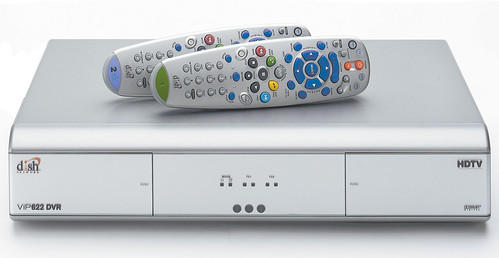
I see a competitor to IP-PRIME® on the horizon. EchoStar’s ViP-TV is an interesting adjunct to it’s direct-to-home DISH Network service. The news, via SatelliteGuys.us, with discussion thread:

EchoStar Communications Corporation (NASDAQ: DISH) and its subsidiary, EchoStar FSS Corporation (EFSSC), today announced the launch of ViP-TV™ service, through which EFFSC has the ability to transport over 300 channels of secure broadcast quality popular television programming via satellite to Telco, private and rural cable operators, municipalities and master planned community video providers that have obtained rights for distribution of programming over their wire-line networks. ViP-TV is EFSSC’s turn-key solution for wholesale multi-channel content transport and distribution, and offers customers affordable, scalable and aggregated MPEG-4 Internet protocol encapsulated radio and television programming channels from a high-powered Ku-band satellite.

ViP-TV’s suite of channels includes ViP-Premier™, which offers over 100 channels of the most popular television programming, ViP-HD™, which boasts 40 channels of industry-leading high definition programming; ViP-Movies™, a menu of 40 of the most popular movie services; ViP-Latino™, offering 30 of the top-rated Spanish-language programming services; and the ViP-International™ programming package, providing over 30 programming channels in 10 different languages.

The ViP-TV service is also offered in connection with transport of local broadcast networks from more than 165 local designated market areas (DMAs) currently provided by EchoStar to over 1,000 cable and Telco systems in standard definition. VIP-TV also offers transport of high definition local broadcast networks in over 30 local DMAs.

EFSSC’s ViP-TV delivers its service using a high-performance, high-powered Ku Band satellite with full continental United Sates coverage, so that the service can be rapidly deployed and is low cost to maintain. In addition, EFSSC offers full-service design, engineering and installation of head-end equipment together with its award-winning ViP™ series set top box technology and applications.

“ViP-TV is one of the most comprehensive video iP transport and distribution platforms available in the marketplace,” said Michael Kelly, executive vice president of Echostar Fixed Satellite Services. “More than just programming, it is a premier service buoyed by industry-leading technology, service and support. With over 12 years of experience in the transport and distribution business, EchoStar can create a true end-to-end solution offering everything from set top box technology to satellite distribution to service and customer support.”

Add this new entrant to AT&T’s U-verse (read about their outage on Sunday) and Verizon’s FiOS-TV, who are also rolling out IPTV. What ever happened to AvailMedia?

Good Morning, Delta!

Tuesday, October 16th, 2007


I love the smell of hydrochloric acid in the morning! That’s what you get when you mix rocket fuel burn-off with the air around the launch pad.

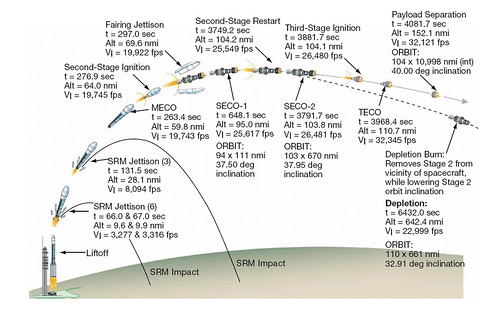
A Delta II rocket will be the sight to see Wednesday morning at the Cape Canaveral Air Force Station (webcast). The details, courtesy of United Launch Alliance:

Rocket/Payload: Delta II launching the U.S. Air Force’s Global Positioning System (GPS) IIR-17M satellite.

Date/Launch Time/Site: Oct. 17, with a launch window of 8:23 – 8:38 a.m. EDT from Space Launch Complex-17A, Cape Canaveral Air Force Station, Fla. If the launch slips, the next launch attempt is set for Oct. 18, 8:19 – 8:34 a.m. EDT.

Description: GPS IIR-17 (M) will be the fourth modernized NAVSTAR Global Positioning System (GPS) military navigation satellite to launch. GPS is a space-based radio-positioning system consisting of a minimum of 24-satellite constellation that provides navigation and timing information to military and civilian users worldwide.

Launch Updates: To keep up to speed with updates to the launch countdown, dial the ULA launch hotline at 1-877-852-4321.

Satellite Feeds:
Test Signal Start Date/Time: 10/17/2007 07:45:00 EASTERN
Program Start Date/Time 10/17/2007 8:00:00 EASTERN
End Date/Time: 10/17/2007 10:00:00 EASTERN

Downlink: Galaxy 26
Transponder – G26C-09
ORBITAL POSITION: 93 DEGREES (W)
BAND-C ANALOG
BANDWIDTH 36 MHz
DOWNLINK FREQ 3880 MHz (V)

All launches from the Cape are supported by the 45th Space Wing, Patrick Air Force Base — and people like Chris Bruce, who was featured in nice piece by Patrick Peterson in Florida Today:

When Chris Bruce isn’t keeping his 19-year-old daughter’s car running, he’s using his considerable mechanical ability to lead the team of technicians preparing the third stage of Delta 2 rockets for launch.

The GPS IIR-17 launch from Complex 17A on Wednesday morning will be the latest of nearly 50 rockets on which the 45-year-old Mims resident has worked.

Weighing 4,540 pounds, the satellite will be the fourth to feature newer GPS technology. It will be able to provide more accurate navigation data for pilots, drivers, boaters, hikers and the military.

Working conditions are tough. The good-natured
ribbing between his colleagues at United Launch Alliance, who also are his golfing buddies, often rises to a level of nastiness that only the thick-skinned and steel-nerved can bear.

There is one consolation.

"What goes around comes around," he said, showing a good-natured grin. "What you’ve dished out the day before, you’re receiving the next day."

The constant needling and trading of verbal jabs keeps the crew on their toes, he added. Oddly, it also makes for a good work environment.

"We’re like a second family," he said. "It’s like hanging out with your brothers."

Long hours at work are required during crunch times, and Bruce’s boss depends on him to make sure people and parts are where they should be.

"He leads with his experience," said Robin Smith, an assembly and test manager with 37 years of aerospace experience. "And I do count on him and rely on him a lot."

Bruce’s easygoing personality makes him a good co-worker.

"He’s very good natured," Smith said.

Bruce is among about 4,000 United Launch Alliance employees who launch government satellites for the company formed by a merger of the rocket divisions of Lockheed Martin Corp. and The Boeing Co. in May 2005.

His crew assembles the launcher’s third stage, which is about six feet tall and will push the GPS satellite to its final orbit about 11,000 miles above Earth. The spacecraft will become one of 30 GPS satellites in orbit.

"We’ve been really good about putting them right where they need to be," Bruce said.

Bruce came to Brevard County 22 years ago, after completing a two-year associate’s degree in electronics at DeVry University in Atlanta.

"I had an uncle who worked for McDonnell Douglas. He got me an interview, and the rest is history," he said.

After several job changes, including working as a roofer for a year during a slowdown, Bruce started working on the Delta program in 1996.

If successful, this GPS launch would be the 77th Delta launch since the last failure in 1997. Consistency has been a hallmark of the program.

"There have been very few changes since I’ve been in this group," Bruce said. "It’s basic, but it’s efficient."

Bruce said the experienced crew is comfortable processing the rocket’s third stage because they have done the job many times before.

"It’s just like clockwork," he said. "Everything gets bolted and torqued. We’ve done it so much, we just know."

Bruce said attention to detail and the determination to do a good job are the personality traits that make his group successful.

"It was the way I was brought up," he said. "My dad always had the philosophy, ‘If you’re going to do it, do it right the first time. Put forth your best effort.’ "

"It’s the whole group. It has to be right," he said. "There’s no room for error."

During Wednesday’s launch, Bruce will follow the countdown even though he doesn’t work with the launch crew.

"I really don’t worry," he said. "I know the system is reliable and it always has been."

Dishes Galore in Tahoe! (And Reno, Too!)

Monday, October 8th, 2007

Call it serendipity: as members of the satellite industry prepare to attend the Satellite and Broadcast Expo West  in Reno at the end of this week, the Tahoe Daily Tribune observes that there are a heck of a lot of dishes in the area:

More and more, satellite dishes are becoming a fixture in the South Shore scenery, in a sign that satellite providers may be gaining ground in the battle for pay-TV subscribers.

Although cable and satellite providers are shy about revealing raw data concerning subscribers, it seems that satellite TV is becoming the choice of more South Shore residents.

Frank Giardina, owner of Frank’s TV and Electronics on Lake Tahoe Boulevard, estimates that he has installed 1,600 satellites dishes in the area. Frank’s serves as an independent contractor for Dish Network, making them the only "local" satellite provider in the area.

SBE West has a number of great special events at the show. We’re particularly intrigued by the John Hack Technician Challenge:

 Imagine digging through a bucket full of change, connectors, bolts and washers just trying to find enough money to buy $5.00 worth of gas to get to your first install of the day!  That task and more is what contestants in the John HackTechnician Challenge will be facing at SBE 2007 in Reno. Consider it a fun and exciting, timed obstacle course for satellite technicians.   How long would it take you to put 50 pages of work orders in the correct sequence for faxing at the end of the week? We will know at the end of the Technicians challenge.

We think John Hack is a great name for a technician. For those unfamiliar with "him," he started as a column in Transmitter News. You can find his full bio and news about his exciting projects here.

Drop The Puck: Here Comes the Hockey Channel

Thursday, October 4th, 2007


The NHL opens its season tonight, with my team, the New York Rangers, taking on the Florida Panthers at Madison Square Garden. The MSG channel will have it in HD, but it would be cool if Dish Network carried the new NHL channel.

Here’s the news, via Multichannel News:

NHL Scores First Carriage Deal

Time Warner Cable to Launches Network on Sports Tier

By R. Thomas Umstead — Multichannel News, 10/4/2007 1:45:00 PM

The National Hockey League has finally joined the three other major pro sports leagues in distributing its own 24-hour sports network.

Time Warner Cable announced Thursday that is offering the NHL Network on its sport tier. The deal marks the first time the network, which launched in Canada in 2001, will be offered to U.S. cable subscribers.

The network will offer 50 live regular-season games, in addition to classic games, documentaries, instructional shows, highlights and more.

NHL executives could not be reached for comment to determine if any other MSOs are expected to launch the service, which officially launched in the U.S. Oct. 1.

The NHL joins the National Football League’s NFL Network, the National Basketball Association’s NBA TV and Major League Baseball’s soon-to-be launched MLB Channel as leagues with 24-hour sports services.


Hockey may be criticized for fighting, but it’s an honorable system. Take this one, for example:


Double-Header Launch for Orbital

Thursday, October 4th, 2007


They’ll be up early in Sydney, Australia, on Saturday morning, watching a rocket launch their new satellite — and the same goes for Intelsat in Pembroke, Bermuda, too.

For the past few weeks, Orbital Sciences has been very busy at Europe’s Spaceport in Kourou preparing for their "double-header:" they built both "passengers" set to be carried by Arianespace. Looks like a "go" for an Ariane 5 (GS configuration) launching Optus D2 and Intelsat 11 on Friday, 5 October 2007:

Arianespace’s fourth mission of 2007 is set for Friday, October 5, with the green light given today after the launch readiness review at Europe’s Spaceport.

This review, which is held before every Ariane flight, verifies the readiness of the Ariane 5 vehicle, its two payloads, the launch infrastructure at the Spaceport in French Guiana, and the downrange network of tracking stations.

The upcoming mission will orbit two medium-sized satellites built by the same U.S. manufacturer, Virginia-based Orbital Sciences Corporation, for Intelsat and Optus.

The Intelsat 11 spacecraft is riding in Ariane 5’s upper payload position, and is to be released first in the mission sequence. To be operated by Washington, D.C.-headquartered Intelsat, the satellite will host Latin America’s premiere video programmers and the region’s largest DTH (direct-to-home) platform. Intelsat 11 is based on the Orbital Sciences STAR 2 spacecraft bus, and carries a hybrid payload composed of 16 C-band and 18 Ku-band transponders. The satellite weighs approximately 2,500 kg. at launch.

Optus D2 also uses an Orbital Sciences STAR 2 bus, and is to be operated by Australian-based Optus to enable the development of new business opportunities for the direct-to-home market, new data services and services bundling. Positioned at an orbital slot of 152 deg. East, the 2,350-kg.

45-minute launch window opening, by city:

  • GMT: 21:28 on 5 OCT 2007
  • Luxembourg: 23:28 on 5 OCT 2007
  • New York: 17:28 on 5 OCT 2007
  • Kourou, French Guiana (local time): 18:28 on 5 OCT 2007
  • Sydney: 07:28 on 6 OCT 2007

Watch the live Webcast here.

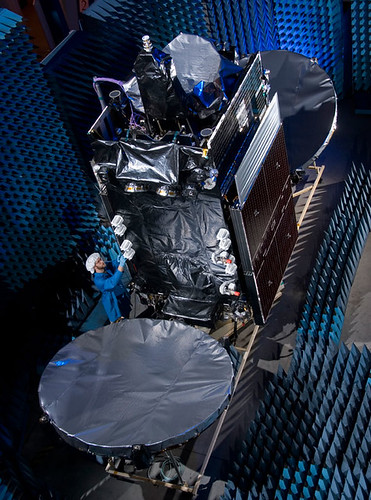
Here’s Intelsat 11 being tested…

AT&T Buying EchoStar

Friday, September 28th, 2007

What, again? It’s been mentioned before, but according to TheStreet.com, AT&T will eventually get the deal done and end up buying EchoStar:

AT&T’s (T) long-running discussions with EchoStar (DISH) seem to be heating up.

The most recent talks have AT&T offering $55 a share with EchoStar hoping to hold out for $65 a share, say people familiar with the companies. Sensing a deal in the works, Oppenheimer analyst Tom Eagan raised his rating on the Dish satellite broadcaster to a buy, speculating in a research note Thursday that AT&T would likely pay about $56 a share for the TV service.

AT&T didn’t comment, and EchoStar declined to comment.

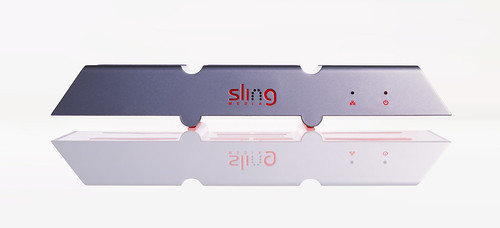
On Tuesday, EchoStar said it would pay $380 million for TV-over-the-Internet device maker Slingbox and possibly split the company into two publicly traded units. One operation would be the consumer TV service that AT&T is interested in, and the second would be EchoStar’s wholesale satellite transmission service.

The Slingbox device would be part of the consumer service and could be a key offering down the road as new radio wave spectrum becomes available to so-called open standard devices, says one person familiar with the companies.

The move would also help AT&T bolster its disappointing video effort. Project Lightspeed, a fiber optic network expansion plan to deliver a triple play of TV, Net and phone service under the U-verse brand, has been plagued by technology glitches including slow channel changing speeds. AT&T says its channel-changing speed is "fast" and "gets high marks" from users.

AT&T has partnered with EchoStar to offer satellite TV as part of a product bundle to battle cable companies that compete with triple play offerings of their own.

Dish shares rose 56 cents to $44.03 and AT&T was up 6 cents to $42.89 in early trading Thursday.

Click here to watch the video.

Personal Distant Locals via Satellite TV

Tuesday, September 25th, 2007


Us rocket scientists love our Slingboxes. Whether at 35,000 feet, at a baseball game or hooked up as a traffic webcam. Our friends at Dish Network like them enough to buy them for $380 million, according to Transmitter News:

EchoStar Communications Corporation has agreed to acquire Sling Media, Inc., a privately-held digital lifestyle products company. EchoStar, through its DISH Network®, is the third largest pay-TV provider in the United States. The transaction values Sling Media at approximately $380 million and is payable in cash and EchoStar options. The transaction is subject to customary closing conditions, and is expected to close in the fourth quarter of 2007.

Established in 2004, Sling Media has been a leading innovator in the digital lifestyle space through the introduction of the internationally-acclaimed, Emmy award-winning Slingbox™ and SlingPlayer™ software. Sling Media’s product line is distributed in over 5,000 retail stores in 11 countries.

In 2006, Sling Media created the Sling Entertainment Group with the mission of developing entertainment experiences and business models that reach beyond the Slingbox. The group also fosters and manages relationships with content creators and owners. Its first initiative, Clip+Sling™, dramatically changes the way consumers socialize around TV by enabling users to clip and share limited segments of their favorite television programming.

“As an early investor in Sling Media, EchoStar has been pleased with the progress and commitment the company has made establishing Sling Media and the Slingbox as powerful and beloved digital media brands,” said Charlie Ergen, CEO and co-founder of EchoStar. “With today’s increasingly mobile lifestyle, EchoStar’s acquisition of Sling Media will allow us to offer innovative and convenient ways for our customers to enjoy their programming on more displays and locations, including TVs, computers and mobile phones, both inside and outside of the home. This combination paves the way for the development of a host of new innovative products and services for our subscribers, new digital media consumers and strategic partners.”

“We are psyched to make this announcement. We have worked closely with EchoStar for more than two years, and have come to realize that both companies have similar entrepreneurial cultures and mutual dedication and passion for creating empowering experiences that benefit the consumer and the media industry,” said Blake Krikorian, co-founder, chairman and CEO of Sling Media. “By combining strategies, resources and technologies with EchoStar, Sling Media will be able to rapidly expand our open multi-platform product offerings, not only for DISH Network subscribers, but for digital media enthusiasts around the globe.”

Scott Greczkowski is asking the right questions: 

Last night’s late announcement that Echostar is acquiring Sling Media did not come as a big surprise to me. And while it did not surprise me it did set off a few flags in my head.

1)      Will DISH Network keep Sling as a separate company or would they bring the technology and the company in house?

2)      Sling Media is a Partner with DIRECTV and the NFL for delivering the NFL Sunday Ticket online, how will this deal affect this setup?

3)      There are a number of other companies who are invested in Sling Media including the soon to be parent company of DIRECTV, Liberty Media. How does this deal affect them?

4)      What is going to happen to unreleased products such as the Sling Catcher?

5)      When will we see the first receiver from Echostar that has built in Slingbox functionality?

I personally hope that DISH continues to allow Sling Media to be Sling Media, a separate company, a company with some amazing thoughts and ideas.

I personally own 3 Slingbox units and I honestly consider it to be the best consumer electronics device made so far in the 21st century! No matter where  I am at I can watch and I can control all of my satellite receivers, I can even watch and control things on my PDA/Phone. Having a 4 year old, the Slingbox has been a godsend, especially when you’re out at a restaurant and your child is being loud. When this happens I pull out my cell phone, log into one of my Slingbox units change the channel to Noggin and give the phone to my son, and now a noisy child is a quiet happy child.

Echostar to spin off?

As I was writing this column I got a press release from Echostar saying that they were considering spinning off its hardware division. The question is what does this mean?

Now I am not a stock guy (and I should state for the record that I own no stock in any satellite company) but what this signals to me is that sometime in the future we could see Echostar selling off it’s Dish Network service to another company, all while continuing to make equipment for Dish Network and while retaining ownership of the Echostar satellite fleet.

Is this what they are planning? Your guess is as good as mine. But it does make you go hmm.


WiMAX is Easy as ABC

Friday, September 21st, 2007


We’ve been writing about "wifi on steroids" — or WiMAX — since the earliest days of the Really Rocket Science blog, when it was but a dream on the technological horizon.

These days, understanding the deployment and growth of WiMAX  is as easy as A-B-C.

A is for Alaska, where AT&T Alascom, which has been using satellites to deliver telecom across Alaska since 1974, is rolling out WiMAX using  Alvarion Ltd.’s BreezeMAX 2.3 GHz TDD equipment:

 Alvarion’s solution is capable of delivering flexible and enhanced coverage even in difficult terrain, such as the hilly and wooded areas. In addition, Alvarion’s nomadic self-install Si CPE can incorporate a patent-pending fast-switching algorithm with six integrated antennas. The Si can is available with a wide variety of options, from multiple POTS interfaces to built-in Wi-Fi.

To deliver WiMAX, AT&T Alascom utilizes SES-Americom’s AMC-8 satellite (also known as Aurora III) exclusively.

Rumors also have AT&T deploying WiMAX in the South soon:

AT&T Inc. is preparing to launch WiMax services during the second quarter of 2008, Unstrung has learned from an industry source. The services will likely be in the South of the U.S. where the operator has suitable licenses for broadband wireless services.

The cellular giant is planning to deploy limited WiMax services in the 2.3 GHz band that could be used as a fixed-wireless alternative to DSL or cable offerings, the source says. AT&T is said to have its suppliers for the service lined up now.


B is for Breezemax; Alvarion of Israel is making real progress in selling their BreezeMAX system for WiMAX apps:


Commercially available since mid 2004, deployed by over 150 operators in more than 30 countries, BreezeMAX is the most advanced, field proven commercial WiMAX solution and the first to offer CPE powered with Intel PRO/Wireless 5116 broadband interface WiMAX chip.


Built from the ground up based on the IEEE 802.16-2004 standard, BreezeMAX supports fixed, nomadic and portable services with a clear path for the emerging WiMAX mobile industry based on the IEEE 802.16e standard. BreezeMAX is designed for a variety of frequencies in both licensed and license-exempt bands from 2GHz to 6GHz spectrum, and operates in both FDD and TDD duplex modes.

Check out this long list of PDF case studies to see how Breezemax is deployed worldwide.

But C isn’t for "check out" — it’s for the Caribbean, where Digicell is rolling out WiMAX using Alvarion products, most recently in Cayman Islands using AMC-6.

Given the continuing rapid growth in WiMAX deployment, we could probably go all the way to Z….