Archive for the ‘Cool Stuff’ Category

It’s Alive!

Monday, June 27th, 2011


Thank you, doctor. Nice piece by Jeremey Hsu at Space.com, calling the new Mars exploration spacecraft “Frankenstein” for all the money-saving shortcuts on the build side…

Take the DNA of the deceased NASA Phoenix Mars Lander, add bits and pieces from several lost Mars missions and you have a “Frankenstein” mission competing for a spot on NASA’s space exploration lineup for the next decade.

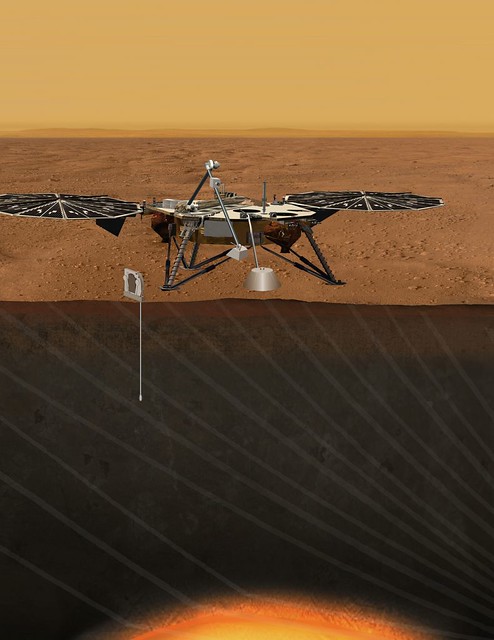
The mission, once called the Geophysical Monitoring Station, is nameless for now. It would carry a seismometer that flew aboard a doomed Mars Surveyor 98 spacecraft, and a burrowing “mole” device based on an instrument lost during the British Beagle 2 mission’s hard landing in 2003.

But the probe’s goal is clear: to learn the early evolution of terrestrial planets such as Earth by tapping a Martian geological record more than 4 billion years old.

“Mars is not an easy place to land on, but we’ve done it a number of times,” said Bruce Banerdt, a planetary scientist at the Jet Propulsion Laboratory in Pasadena, Calif. “We’re going to try and do it exactly like how we did it with Phoenix a few years ago.”

The mission planners’ willingness to cannibalize technologies from other missions has allowed them to put together the Mars mission for relatively low cost. About 77 percent of the spacecraft is lifted from the Phoenix Mars Lander, and another 20 percent has just minor modifications. Only 3 percent of the spacecraft would need to be built from scratch or completely replaced.

Not specific enough for you? Here’s the abstract (PDF) by Bruce Banerdt and Zainab Nagin Cox…

The GEophysical Monitoring Station (GEMS) is a Phase A Discovery mission designed to fill a longstanding gap in the scientific exploration of the solar system by performing, for the first time, an in-situ investigation of the interior of Mars. This mission would provide unique and critical information about the fundamental processes governing the initial accretion of the planet, the formation and differentiation of its core and crust, and the subsequent evolution of the interior.

The scientific goals of GEMS are to understand the formation and evolution of terrestrial planets through investigation of the interior structure and processes of Mars and to determine its present level of tectonic activity and impact flux. A straightforward set of scientific objectives address these goals: 1) Determine the size, composition and physical state of the core; 2) Determine the thickness and structure of the crust; 3) Determine the composition and structure of the mantle; 4) Determine the thermal state of the interior; 5) Measure the rate and distribution of internal seismic activity; and 6) Measure the rate of impacts on the surface.

To accomplish these objectives, GEMS would carry a tightly-focused payload consisting of 3 investigations: 1) SEIS, a 6-component, very-broad-band seismometer, with careful thermal compensation/control and a sensitivity comparable to the best terrestrial instruments across a frequency range of 1 mHz to 50 Hz; 2) HP3 (Heat Flow and Physical Properties Package), an instrumented self-penetrating mole system that trails a string of temperature sensors to measure the planetary heat flux; and 3) RISE (Rotation and Interior Structure Experiment), which would use the spacecraft X-band communication system to provide precision tracking for planetary dynamical studies. The two instruments would be moved from the lander deck to the martian surface by an Instrument Deployment Arm, with an appropriate location identified using an Instrument Deployment Camera.

In order to ensure low risk within the tight Discovery cost limits, GEMS reuses the successful Lockheed Martin Phoenix spacecraft design, with a cruise and EDL system that has demonstrated capability for safe landing on Mars with well-understood costs. To take full advantage of this approach, all science requirements (such as instrument mass and power, landing site, and downlinked data volume) strictly conform to existing, demonstrated capabilities of the spacecraft and mission system.

It is widely believed that multiple landers making simultaneous measurements (a network) are required to address the objectives for understanding terrestrial planet interiors. Nonetheless, comprehensive measurements from a single geophysical station are extremely valuable, because observations constraining the structure and processes of the deep interior of Mars are virtually nonexistent. GEMS will utilize sophisticated analysis techniques specific to single-station measurements to determine crustal thickness, mantle structure, core state and size, and heat flow, providing our first real look deep beneath the surface of Mars.
Space Neighborhood

Wednesday, June 15th, 2011


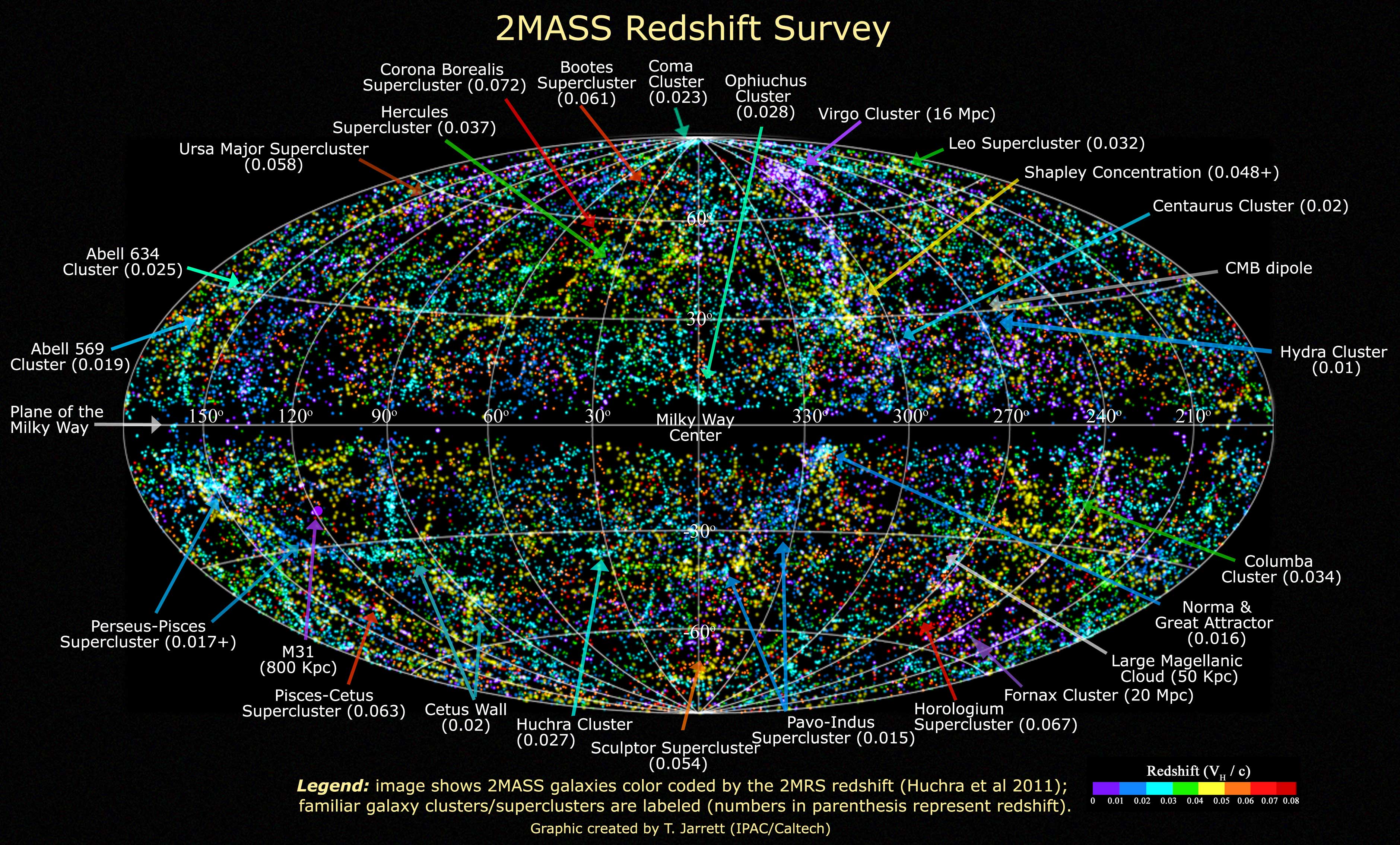
This is a map of the 50,000 galaxies nearest to our own Milky Way. Yeah, there’s billions more. That’s right: billions. The map was featured in NASA’s APOD yesterday.

The Milky Way galaxy has between 200 and 400 billion stars. And estimates on the number of galaxies in the universe go as high as 500 billion.

So this is like a map of downtown Sheboygan.

Go big with the image here.

Moon Over Madagascar

Monday, June 13th, 2011

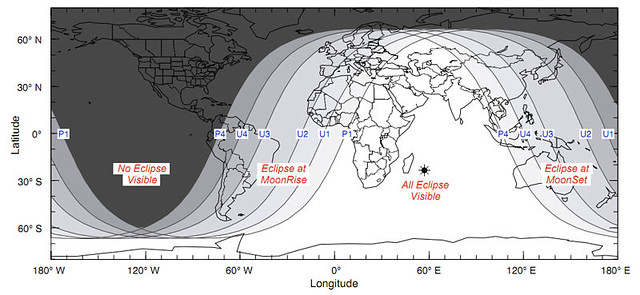
A total lunar eclipse is expected on 15 June 2011, with Madagascar being an ideal place to view it.

Lunar Eclipses occur when the Earth passes between the Sun and the Moon. A Total Lunar Eclipse occurs at night and can be seen from the entire night side of the Earth and looks the same to everyone. A Total Lunar Eclipse occurs when the Sun, Earth and Moon are in perfect or near perfect aligment. The Moon passes behind the Earth and goes into Earth’s umbra shadow – the Earth is now between the Sun and Moon and blocks sunlight directly reaching the Moons suface. A Total Lunar Eclipse can only occur when there is a Full Moon.

Shock Collar

Tuesday, June 7th, 2011

An F/A-18C Hornet fighter jet assigned to Strike Fighter Squadron (VFA) 113 breaks the sound barrier during an air power demonstration over the USS Carl Vinson aircraft carrier and Carrier Air Wing 17 in the Pacific Ocean in this U.S. Navy handout photo dated June 3, 2011 (hat tip, MSNBC photoblog).

What causes this? Let’s turn to the Prandtl–Glauert singularity

The Prandtl–Glauert singularity is the prediction by the Prandtl–Glauert transformation that a shock wave approaching infinite pressure is produced as an aircraft approaches the speed of sound. Because it is invalid to apply the transformation at these speeds, the predicted singularity does not emerge. Nevertheless, extreme atmospheric conditions are produced which may give rise to a vapor cone, shock collar, or shock egg of visible condensation.

The air pressure in the immediate vicinity of a transonic aircraft can be described as an “N-wave,” so named because a plot of pressure against time resembles the letter ‘N’. Observed from a stationary point as a shock wave passes, the pressure profile of the wave is composed of a leading compression component (the initial upward stroke of the “N”), followed by a pressure descent forming a rarefaction of the air (the downward diagonal of the “N”), followed by a return to the normal ambient pressure (the final upward stroke of the “N”). The rarefaction may be thought of as the “rebounding” of the compression due to inertial effects.

Since heat does not leave the affected air mass, this change of pressure is adiabatic, with an associated change of temperature. In humid air, the drop in temperature in the most rarefied portion of the shock wave (close to the aircraft) can bring the air temperature below its dew point, at which moisture condenses to form a visible cloud of microscopic water droplets. Since the pressure effect of the wave is reduced by its expansion (the same pressure effect is spread over a larger radius), the vapor effect also has a limited radius. Such vapor can also be seen in low pressure regions during high–g subsonic maneuvers in humid conditions.

Thanks, I needed that. Pretty exciting in real life…

Looks Like The Milky Way

Thursday, June 2nd, 2011


This galaxy is similar to our own Milky Way. Located 30 million light years away, NGC 6744 was recently observed from the La Silla observatory in Chile.

More about the image via PhysOrg.com

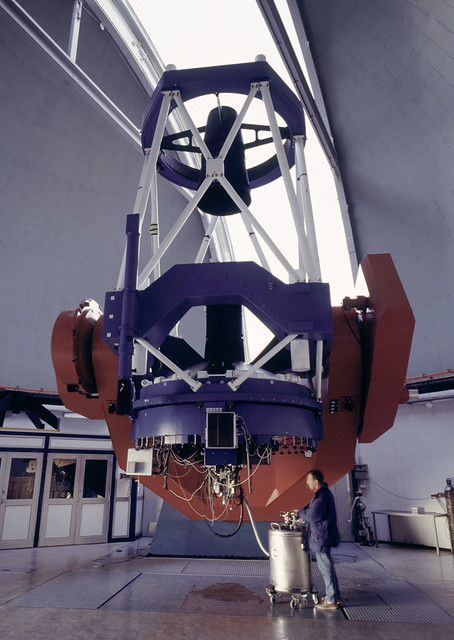
This picture of the nearby galaxy NGC 6744 was taken with the Wide Field Imager on the MPG/ESO 2.2-metre telescope at La Silla. The large spiral galaxy is similar to the Milky Way, making this image look like a picture postcard of our own galaxy sent from extragalactic space. The picture was created from exposures taken through four different filters that passed blue, yellow-green, red light, and the glow coming from hydrogen gas. These are shown in this picture as blue, green, orange and red, respectively.

ESO astronomers have used the Wide Field Imager on the MPG/ESO 2.2-metre telescope to capture an image of NGC 6744. This impressive spiral galaxy lies about 30 million light-years away in the southern constellation of Pavo (The Peacock). But this view could almost be a picture postcard of our own Milky Way, taken and sent by an extragalactic friend, as this galaxy closely resembles our own.

We see NGC 6744 almost face on, meaning we get a dramatic bird’s eye view of the galaxy’s structure. If we had the technology to escape the Milky Way and could look down on it from intergalactic space, this view is close to the one we would see — striking spiral arms wrapping around a dense, elongated nucleus and a dusty disc. There is even a distorted companion galaxy — NGC 6744A, seen here as a smudge to the lower right of NGC 6744, which is reminiscent of one of the Milky Way’s neighbouring Magellanic Clouds.

One difference between NGC 6744 and the Milky Way is their size. While our galaxy is roughly 100 000 light-years across, the galaxy pictured here extends to almost twice this diameter. Nevertheless, NGC 6744 gives us a tantalising sense of how a distant observer might see our own galactic home.

Skylon: The Euro Spaceplane

Wednesday, June 1st, 2011


Thirty years in development. How are they paying for it? With lots of future business.

Well, not really. A committee/panel said go ahead and keep developing it, via UniverseToday.com

The consensus for the way forward is to proceed with the innovative development of the engine which in turn will enable the overall vehicle development.

Still pretty cool.

Archaeology From Space

Wednesday, May 25th, 2011


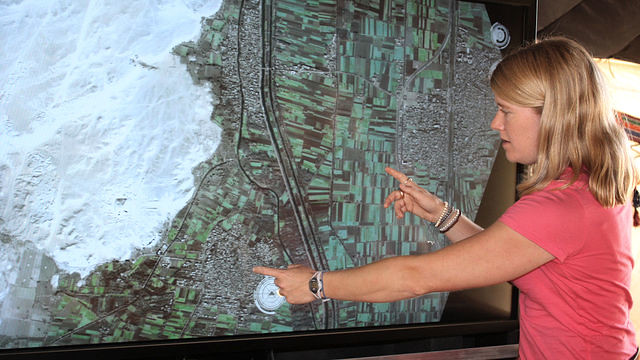
A new program on BBC One, “Egypt’s Lost Cities,” features the work of Sarah Parcak, Ph.D., of the University of Alabama’s Laboratory for Global Health Observation.

She’s using infrared satellite imagery to locate entire cities, some buried for centuries, by studying remnants of mud brick buildings, for instance. They’ve found 3,000 ancient settlements, which includes 1,000 tombs and 17 pyramids. Good show!

Check out her book, Satellite Remote Sensing for Archaeology, so you too can become familiar with her ways.

Grímsvötn Eldfjall frá Geimnum

Tuesday, May 24th, 2011


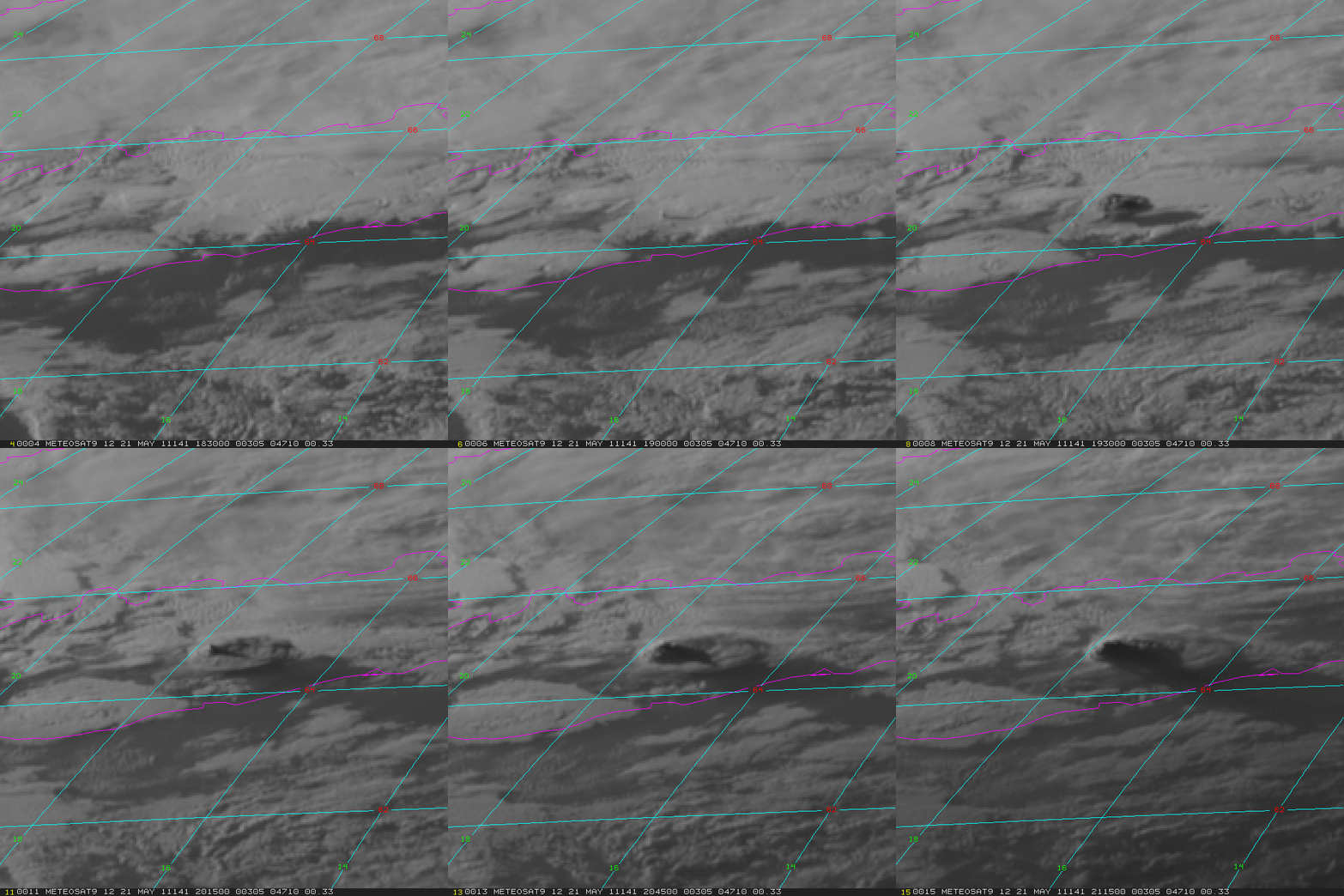
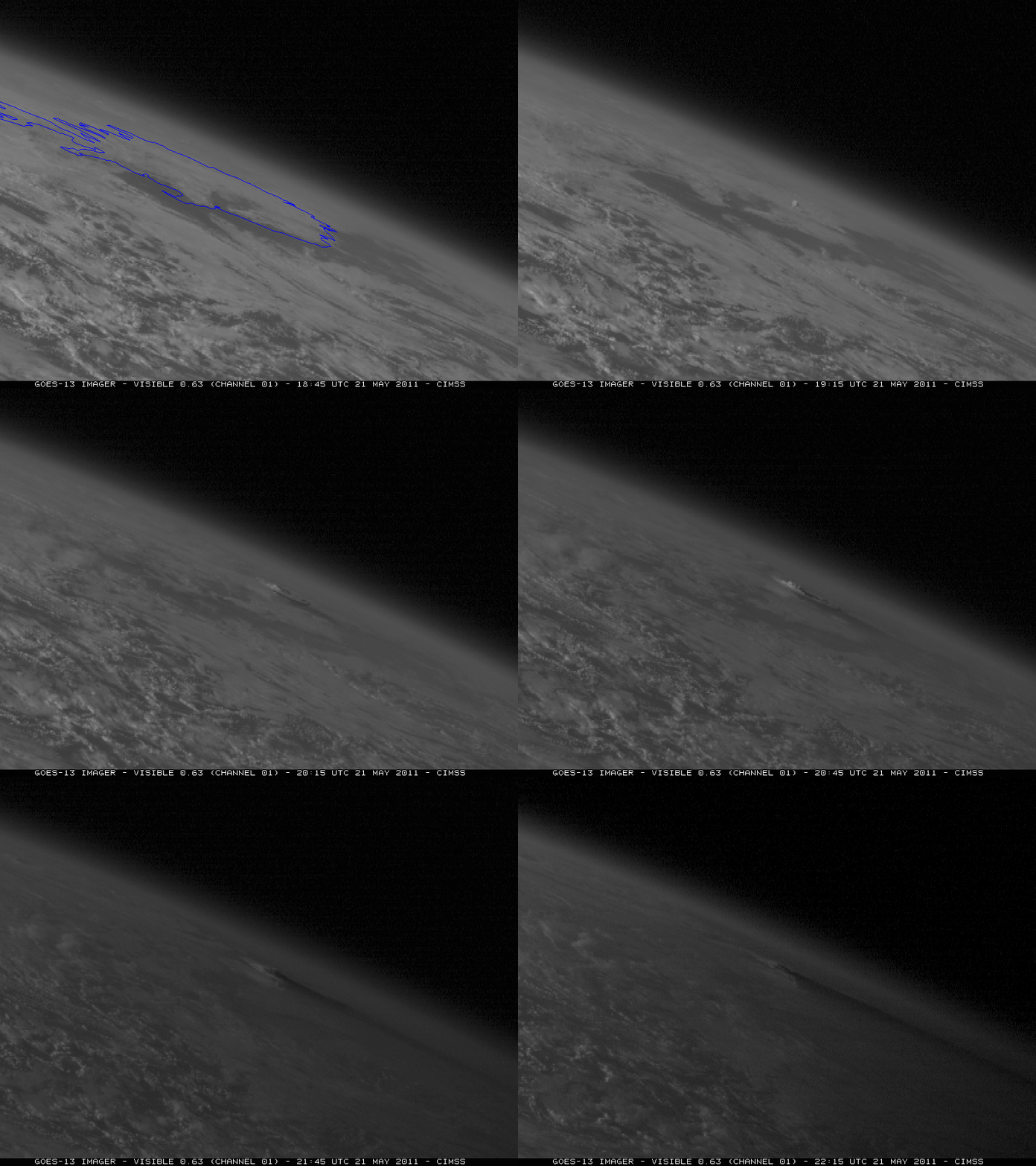
That’s right, rocket scientists, weather spacecraft have seen the erupting Grímsvötn volcano in Iceland and it’s pretty cool. This one’s from Meteosat-9:

The animation shows Meteosat-9 observations from the High Resolution Visible (HRV) channel, providing measurements with a resolution of 1 km at the sub-satellite point, representing roughly a 3-5 km resolution over Iceland. At around 19:15 UTC, a very rapid eruption of the Grímsvötn volcano occurred, which is visible from the animation below. The eruption is transporting a large amount of water vapour and ash significantly higher than the cloud deck heights over Iceland.

Meteosat-9 is located on the Greenwich Meridian, while the GOES-13 spacecraft, also a weather observation satellite, is located at 75º West. So here we have a different angle…

For Sale: Moon Rocks

Monday, May 23rd, 2011


There’s got to be a good story behind this one. Some looney wanted to sell moon rocks. Yeah, she’s from California…

A woman who tried to sell what she said was a rare piece of moon rock for $1.7 million was detained when her would-be buyer turned out to be an undercover NASA agent, officials said Friday.

The gray rocks, which are considered national treasures and are illegal to sell, were given to each U.S. state and 136 countries by then-President Richard Nixon after U.S. moon missions and can sell for millions of dollars on the black market.

NASA investigators and Riverside County sheriff’s deputies detained the woman after she met Thursday with an undercover NASA investigator at a restaurant in Lake Elsinore, about 70 miles southeast of Los Angeles, the sheriff’s office said. The investigation was conducted over several months.
Authorities swooped after the two agreed on a price and the woman, whose name has not been released, pulled out the rock.

NASA planned to conduct tests to determine whether the rock came from the moon as the woman claimed.

“We don’t know if it’s lunar material,” said Gail Robinson, deputy inspector general at the space agency.

Joseph Gutheinz, a University of Phoenix instructor and former NASA investigator who has spent years tracking down missing moon rocks, said a lunar curator at a special lab at Johnson Space Center would carry out the testing. Among the substances the rock could contain is armalcolite, a mineral first discovered on the moon and named for Neil Armstrong, Buzz Aldrin and Michael Collins, who was on the Apollo 11 lunar mission crew.

The woman has not been arrested or charged. It was unknown how she obtained the rock or came to the attention of NASA.

Gutheinz said the woman could face theft charges if the rock is genuine, or fraud charges if it is not.

What would you do with a moon rock if you had one? “That’s my moon rock.”

“You’re a looney!”

Really High Definition TV

Wednesday, May 18th, 2011

Dude, they busted the Dish Network truck. No TV party tonight.

The U.S. Border Patrol is out to get you, via KGBT-TV

More than $2.3 million dollars of marijuana is off the streets after Border Patrol agents learned a cloned Dish Network van was being used to smuggle drugs.

U.S. Border Patrol agents reported tha the seizure happened in the rural Starr County community of La Casita on Wednesday, April 20th.

Court records were not immediately available but Border Patrol agents reported spotted a Dish Network van exiting a brushy area near the Rio Grande River.

Working on a tip that are drug smugglers are now using counterfeit vehicles from well-known companies as a cover, Border Patrol stopped the van.

Border Patrol agents reproted immediately noticing a strong odor of marijuana. Investigators looked inside and found 100 bundles with close to 3,000 pounds of marijuana worth $2.3 million dollars inside.