Archive for the ‘Cool Stuff’ Category

Loral Buying Telesat

Monday, December 18th, 2006

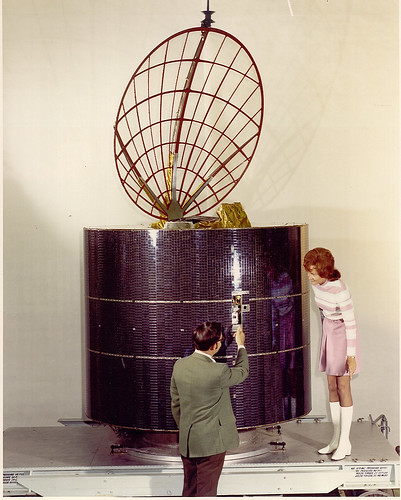
CFRA newsradio read the Wall Street Journal this morning and announced Loral and PSP were buying Telesat from BCE. Telesat was the first domestic satellite operator (Anik A, pictured below, was the first satellite).
Here’s the scoop from WSJ (subscription):

Loral Space & Communications Inc., in partnership with a Canadian pension fund, is expected today to announce a deal to acquire the Telesat satellite unit of Canada’s BCE Inc. for more than three billion Canadian dollars (US$2.59 billion), according to people familiar with the details.

As part of the transaction, Loral will contribute cash as well as all of its own satellite assets to form a new company, based in Canada, that will own and operate the combined satellite fleet, these people said. The structure is intended to create the fourth-largest global commercial fixed-satellite operator, with 11 satellites in orbit and four more under construction, while complying with Canadian laws restricting foreign ownership of such firms.

A Loral spokesman declined to comment, as did a spokesman for Telesat. It was unclear which pension fund was participating in the deal. The combined company would have an order backlog of more than C$5 billion for leasing in-orbit capacity to customers who use it to transmit video and data for applications ranging from television service to Internet connections. For the first nine months of this year, Telesat reported revenue of C$351 million.

By combining Telesat’s existing coverage over North America with Loral’s international business and longstanding ties to large customers and other operators, the new entity would be designed to compete more effectively against global satellite behemoths such as Intelsat Ltd. and SES Global SA of Luxembourg.

A deal would pave the way for BCE to follow its strategic plan to exit the satellite business. And the pension fund will have two-thirds of the voting rights in the new entity, the people familiar with the matter said. But Loral, which also had been toying with the idea of bailing out of what is known as the satellite-services sector, is expected to have control over two-thirds of the economic assets, these people said. Loral’s satellite-manufacturing business won’t be affected.

Consolidation among smaller satellite operators has picked up momentum following a spate of larger acquisitions over the past few years. Daniel Goldberg, who became president and chief executive of Telesat in September, will become chief executive of the newly formed company. Since the summer, BCE has been weighing an initial public offering of the unit in the U.S. and also inviting alternative bids from private-equity groups and others. Loral took part in the auction despite comments from Chief Executive Michael Targoff earlier this year that the New York company was considering exiting the segment because its fleet was too small to compete against larger global rivals.

Private-equity groups have invested nearly US$10 billion in various satellite-related acquisitions and mergers over the past few years, pledging to reduce capital expenditures and improve profitability. But the latest deal signals that the next industry trend may feature consolidation among regional and second-tier and third-tier operators, hoping to gain size and coverage to compete with global rivals.

ILS Launches Malaysia’s MEASAT3 Communications Satellite

Wednesday, December 13th, 2006

International Launch Services successfully lifted Malaysia’s third and most powerful communications satellite — MEASAT3 — via a Proton rocket from ILS’s launch facility at Baikonur Cosmodrome in Kazakhstan yesterday.

On hand to witness the launch in person were Tai Kai Xin, age 10, and Izza Azreenah binti Azizan, 17 — winners of a launch drawing contest (link opens in PDF) that MEASAT Satellite Systems held for schoolchildren across Malaysia.

New Straits Times provides the details from the chilly launch pad: 

Cheers, sighs of relief, and even tears of joy flowed freely among most of the over 50 officials and invited guests who braved icy conditions and temperatures of -17 degrees Celsius to witness the lift off at 5.28am Kazhak time (7.28am Malaysian time).

As the countdown hit zero, the 5.5- tonne rocket, propelling the Measat 3 to its orbit in outer space, tore off almost silently from the launch installation with a huge ball of fire from burning fuel below propelling its upward trajectory.

Only seconds later did the blast off register to witnesses on the ground with a major tremor that jolted the surrounding areas and a delayed, deafening thud to sound the lift off.

Measat 3, which carries a payload of 24 C-band and 24 Ku-band, is the biggest satellite launched so far by owners Measat Satellite Systems Sdn Bhd which also has Measat 1 and Measat 2 already in operation.

The new satellite has a 15-year orbit mission life and will change the lives of Malaysians and alter the landscape of the regional satellite business.

The launch of Measat 3 was telecast live in Malaysia by sister firm and pay TV operator Astro, which will be a big user of the new satellite in future.

The event was also telecast live globally on the Internet by US-Russian joint venture firm International Launch Services (ILS) and top officials of ILS and Boeing, the makers of the satellite.

The ILS broadcast of the launch can be viewed (in its full 51-minute glory) here. Also be sure to check out ILS’s Launch Blog for additional details, as well as their photo gallery for some cool shots of the Proton rocket.

NASA has the BEST WEEK EVER! Oh, and wins a Nobel Prize…

Monday, December 11th, 2006

Sure, shuttle disasters and budget cuts have left a chip on its’ shoulder, but many are arguing that NASA has had, in the words of that timeless Vh1 show, the best week ever! Between the surprisingly successful shuttle launch, the announcement of the agency’s plan to return to the moon, and now a Nobel prize, the AP explains, NASA is having a week better than the one you spent in Cabo with Heidi Klum.
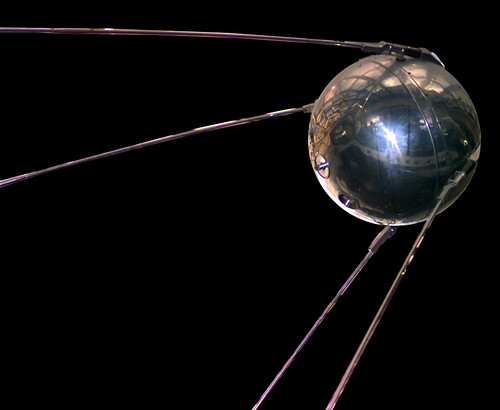
The Nobel, of course, went to John C. Mather whose study of cosmic background radiation works to confirm much of the big bang theory. From the Nobel Committee:

"This year the Physics Prize is awarded for work that looks back into the infancy of the Universe and attempts to gain some understanding of the origin of galaxies and stars. It is based on measurements made with the help of the COBE satellite launched by NASA in 1989.

The COBE results provided increased support for the Big Bang scenario for the origin of the Universe, as this is the only scenario that predicts the kind of cosmic microwave background radiation measured by COBE. These measurements also marked the inception of cosmology as a precise science. It was not long before it was followed up, for instance by the WMAP satellite, which yielded even clearer images of the background radiation. Very soon the European Planck satellite will be launched in order to study the radiation in even greater detail."

Take a look at some of the photos tied to the announcement (rhetorical question: are all nobel prize-winning physicists not photogenic or does the Nobel prize committee actually seek out individuals who look odd in front of the lens?) and Mather’s acceptance speech.


DIY Friday: Satellite Monitoring for Next to Nothing

Friday, December 8th, 2006

Any satellite geek with a lick of imagination has imagined what it might be like to work at one of the dozens of American intelligence organizations utilizing top-secret government satellites and communicating and transmitting information around the world. It sounds like a sweet deal: a nifty chair, your own spot in the control room, all space-news you can eat — how could it not be awesome?

Well, if you’re anything like me, you’re probably forgetting that making satellite monitoring your job would mean, well, making it your job. All of a sudden, the vision of a job among the stars crashes to reality and, before you know it, that position playing with satellites becomes just another 9-to-5 with the requisite paper pusing, confused middle mangers, and brown-bag lunches on synergy.

So what’s a geek to do?

Easy. Make satellite monitoring your hobby. Today’s DIY Friday link brings us to steettech.com and shows us how with a couple antennas, a radio scanner, and short-wave tuner anyone can make their own mission control.

Sure, it might not set you up with a sweet government 401K, but at least a DIY Sat Monitoring rig means you don’t have to seek congressional approval to amp up your transmitter, right?

NASA to Make Major Mars Announcement at 1 PM EDT

Wednesday, December 6th, 2006

We’re eagerly awaiting NASA’s live briefing this afternoon at 1 p.m. Eastern, while keeping our enthusiasm in check with memories of Geraldo Rivera opening Al Capone’s vault.

That said, the rumors that water may have been found on the Red Planet are enticing.

You can watch the briefing live on NASA TV, or check back here this afternoon for the full story. 


What SpaceTime is It?

Tuesday, November 28th, 2006

The New York Times Review of Books takes a look at Jean-Claude Carrière’s new novel, Please Mr. Einstein:

In its uncounted hours of conversation, “Please, Mr. Einstein” touches down lightly and charmingly on some of the thorniest philosophical consequences of Einstein’s genius and, by extension, the scientific preoccupations of the 20th century — the nature of reality, the fate of causality, the comprehensibility of nature, the limits of the mind — while scrolling through Einstein’s life. It’s easy to see this novel as the germ of a future playlet or movie along the lines of Steve Martin’s “Picasso at the Lapin Agile” or the play and movie “Insignificance,” which featured a mythical Einstein in a hotel room with Marilyn Monroe.

I like Carrière’s Einstein. He’s frank, down to earth and not prone to cosmic mustiness. He’s actually worn an Einstein T-shirt and admits he’s happy to be talking to a woman, especially a woman from the 21st century, because that means his godchild, the atomic bomb, hasn’t destroyed civilization — yet. “I think better when eyes like yours are looking at me,” he tells her, “and when I’m talking to them.”…

Among the features of Einstein’s unusual office are doors he seems able to open on any time and place. At one point, discussing his years in Germany, he and his visitor step out into a Nazi book-burning. Another excursion provides the surprising climax to an amusing side plot about Newton, who just doesn’t get relativity and quantum theory and keeps pestering Einstein to explain what was so wrong with the clockwork world he described in the 17th century. Finally, exasperated, Einstein calls Newton over and opens a door on the atomic blast that destroyed Hiroshima. Newton’s wig flutters in the wind from the shock wave. He stares, aghast, then slowly turns transparent and disappears. Newton’s universe is truly, undeniably dead, and so his sojourn in this intellectual aerie is over.

Carrière’s novel relies upon spacetime as a literary device. But what is spacetime? This "Spacetime 101" page explains the history of spacetime from Pythagoras to Einstein. 

No You Ditn’t: NASA’s Hanley Responds to Blog’s Diss

Tuesday, November 21st, 2006

Maybe NASA Watch didn’t mean any disrespect when it said in an editors note a couple of weeks ago that,

"Sources inside the development of the Ares 1 launch vehicle (aka Crew Launch Vehicle or "The Stick") have reported that the current design is underpowered to the tune of a metric ton or more. As currently designed, Ares 1 would not be able to put the present Orion spacecraft design (Crew Exploration Vehicle) into the orbit NASA desires for missions to the ISS. This issue is more pronounced for CEV missions to the moon."

But Jeff Hanley, the manager of NASA’s Constellation Project which is responsible for developing the rockets and spacecraft the United States is building to replace the space shuttle and return to the Moon, took it as a "Yo Mama" joke gone too far and responded to the allegations as if the blog had broken his slide ruler just for the fun of it.

As he said in an email sent Nov. 13 and circulated far beyond NASA in the hours that followed:

"[M]any who carp from the sidelines do not seem to understand the systems engineering process. They instead want to sensationalize any issue to whatever end or preferred outcome they wish."

Ooooo, how do you like ‘dem apples NASA Watch?

According to a Nov. 15 Space News Interview, Hanley wanted to make sure that the critics of the program (e.g. that trash talking NASA Watch) got his message.

"I thought it was important that we set the record straight on some of the external stuff that’s been going around. I don’t want people to think that because they don’t see us responding to it on a regular basis that has any basis in truth."

For their part, Space Watch editor recognized the effort Hanley went to to make sure they got his message… and see it as a pretty chump move.

"Jeff Hanley went to great lengths to make certain that I got his email. The way he did so (I have the original distribution list) makes me wonder why he was so eager to use other people to get his thoughts to me – but not do so himself – either directly – or through PAO. Moreover, if Hanley holds PAO- accredited news sources such as NASA Watch in such distain, one wonders why he’d even bother to reply in the first place. Just one of life’s little mysteries, I suppose."

Awww, snap. Who said NASA wasn’t a little like high school?

Al Jazeera English Makes It to the U.S. with Globecast

Thursday, November 16th, 2006

Infamous Dubai-based news network, Al Jazeera announced today that it would be making its programming availablie to the U.S. using Globecast, according to an AP story.

While we here at Really Rocket Science choose to ignore the politics have Al Jazeera’s U.S. debut, we are all about giving you access to the coordinates for the satellite should you choose to take a look. Just the same, your Al-TV is not going to be free, Globecast’s website says news from the gulf is going to cost you a a one-time fee of $179.

Al Jazeera English Makes It to the U.S. with Globecast

Thursday, November 16th, 2006

Infamous Qatar-based news network, Al Jazeera announced today that it would be making its programming availablie to the U.S. using Globecast, according to an AP story.

While we here at Really Rocket Science choose to ignore the politics have Al Jazeera’s U.S. debut, we are all about giving you access to the coordinates for the satellite should you choose to take a look. Just the same, your Al-TV is not going to be free, Globecast’s website says news from the gulf is going to cost you a  one-time fee of $179.

Despite the costs and the politics, if you get a chance to to check the Al Jazeera out it’d certainly be worth your time.  While you have some differences of opinion with the news editors, there’s no doubt that the network is one of the few outlets for free speech in the Middle East and interesting way of seeing the region from the inside out.  Not sure you want to pay $179 to watching the network on your TV 24/7?  At the very least, check out the stellar 2004 documentary Control Room which chronicles the lead up to and the beginning the Iraq War from the inside of Al Jazeera.


Earth-Wide A/C?

Monday, November 6th, 2006

The great science blog, Science-a-go-go, posted in an interesting story last night about an interesting last ditch solution to global warming problems, should the ice caps melt and, as Al Gore predicted, the sea start filling up lower Manhattan. The great idea? Some "sun parasols," according to University of Arizona’s Roger Angel.

"Angel’s plan involves launching a flotilla of trillions of small free-flying spacecraft a million miles above Earth into an orbit aligned with the sun, called the L1 Lagrange orbit. The spacecraft would form a long, cylindrical cloud about 4,000 miles in diameter and 60,000 miles in length. About 10 percent of the sunlight passing through the length of the cloud would be diverted away from Earth, uniformly reducing sunlight by about 2 percent over the entire planet. Enough to balance the heating caused by a doubling of atmospheric carbon dioxide in Earth’s atmosphere, believes Angel."

Not a half bad plan, but, if you ask me, I think we might be a little better off beating this problem to the pass, parking our harms, and enjoying a few crisp, fall bike rides.