Archive for the ‘Cool Stuff’ Category

DIY Friday: Make an LED Mooninite Shirt (and Don’t Get Arrested)

Friday, February 2nd, 2007



While NPR has said its the first sign of cross-generational warfare, the arrest of two twenty-something Guerilla Marketers in Boston Wednesday for leaving lite-bright-based ads for the upcoming Aqua Teen Hunger Force Movie in subways and on bridges strikes when they set off city-wide terrorist alerts strikes yours truly as a simple misunderstanding with enough blame to go around.

The reality: Boston’s entire police force (not to mention the Department of Homeland Security) showed that they need to get in touch with American pop culture and modern advertising techniques, but Cartoon Network and the guerrilla marketers they hire have to be sensitive to the realities of a post-9-11 world where circuit board filled boxes (regardless of what’s on the outside) on subway platforms should cause some concern when marketing their fine wares. In the end, what the world needs is a little more peace and understanding… and a cool how-to on how to make your own Mooninite shirt and look like an object of terror (I guess).
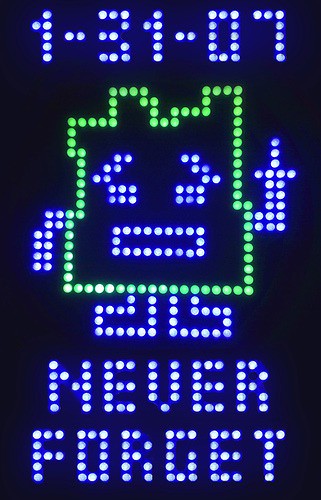
 

Thankfully our pals over at MAKE have the guide and, while I’m not sure I’d like to wear the shirt (one wonders how you’re supposed to clean it) it might be a fun geeky way to spend a cold winter’s weekend in the great indoors.

Head Off to Titan!

Thursday, February 1st, 2007

If you’re looking for cool images from space on the web today, there’s probably no more interesting place to be than the Cassini-Huygens homepage, which has newly-released images of a huge cloud system covering the north pole of Titan.

The images can also be seen on the Visual and Infrared Mapping Spectrometer instrument homepage, which also has detailed information on the technology behind Cassini’s observations:

VIMS has several unique capabilities. It is able to identify the chemical composition of a surface, atmosphere, or Satrun’s rings by measuring the visible and infrared energy. VIMS is, in essence, a color camera that takes pictures in 352 different wavelengths between 300 nm and 5100 nm. This range, coupled with the ability to discern different wavelengths (called spectral resolution), allows the VIMS instrument to be able to very accurately quantify the light it detects.

It’s also well worth checking out the flash animation that NASA’s Jet Propulsion Laboratory has up on their website, summarizing what is known about Titan, largely throught the observations of Cassini.


Jamming Your Satellite

Monday, January 29th, 2007

While the idea of satellite jamming might conjure up some old lines from Spaceballs you thought you forgot years ago, it is serious business in the world of future satellite development. According to a report in the NewScientist, Parisian satellite company Eutelsat blamed "unidentified signal interference" for a service interruption last Tuesday that kept several European, Middle Eastern, and northeast African television and radio stations off the air until their transmissions could be transferred to another satellite.

"Theresa Hitchens of the Center for Defense Information think-tank in Washington DC, US, says there have been cases of deliberate satellite jamming in the past, but it is hard to see what motivation there would be in this instance.

"It’s really puzzling to me," she told New Scientist. "If it was accidental, why would they be so secretive about saying what the source was and if it’s deliberate, you’ve got to wonder why – it just seems to me to be an odd target, unless someone’s ticked off at the French," she says.

While no one appears to know whose responsible for the blockage quite yet, last week’s jamming seems eerily similar to those China experienced not too long ago and is now working to prevent (although the project is currently stalled).

Those interested in how this jamming works should check-out the great report dailywireless.org did about the technology and the process back in October.

DIY Friday: Play-doh FM Radio

Friday, January 19th, 2007

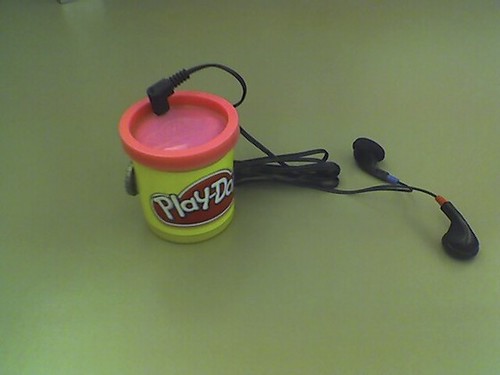
So maybe you got a little Play-doh® in your stocking during the holiday season and now, with winter finally upon us, you’re looking for something to do with it in the great indoors. Well, when I get out my playdough one potential use quickly leaps to mind… turning it into a Play-doh-based FM radio.

This a relatively easy project that only really requires a mini-radio, some playdough, a bottlecap, and some manual dexterity, but it’s sure to be a real conversation starter at the Gym.

"Oh, what’s this?" you reply stepping on to the treadmill. "This old thing? It’s just my playdough radio." Take that, Mr. Grunts-alot.

In all seriousness, you also might want to take some time checking out the Instructables site this weekend as well. It’s a really neat site that lets users easily create their own step-by-step instructions (with photos) of almost any project or activity.

Northrup Grumman Opens High-Energy Laser Facility

Thursday, January 18th, 2007

Via Air Force Online comes the news that Northrup Grumman has opened the "first of its kind by private industry in the US” high-energy laser facility dedicated solely to military systems at Redondo Beach.

The Daily Breeze has the details:

The Directed Energy Production Facility, part of Northrop’s Redondo Beach-based Space Technology sector, represents the first of its kind by private industry in the United States and probably the world, company officials said.
Sword Medical

The new facility has three large laser laboratories to produce solid-state lasers, which use electric power to create an intense beam of light. The site also will be used to integrate lasers into larger defense systems….

Northrop is building on the laser technology it inherited from TRW Inc. when it bought the company in 2002….

The Joint High-Power Solid State Laser program will be the first work conducted in the new facility, Northrop said. In its third phase, this Department of Defense program will build and demonstrate the first 100-kilowatt solid-state laser.

The Northrop Grumman press release can be found here; far more interesting, however, is this animated and live video from Northrop Grumman of the defensive and tactical applications of laser technology on land, sea and air.

While you’re watching video and thinking about lasers and unexploded ordinance, be sure to check out this video from the White Sands Missle Range in southern New Mexico. The High Energy Laser Systems Test Facility  is located at White Sands.

I didn’t write this! Sounds more like Dickens

Thursday, January 11th, 2007

While some might say it reminds them of a game of "Spot the Looney," there seems to be some confusion across the pond about whether or not the U.K. is going to venture to the moon or not.

According to the BBC, the UK’s astronomy funding agency, the PParc, is planning on taking the country’s first mission to the moon by 2010. The proposed craft, named Moonlight, would be designed to orbit the satellite and shoot four "suitcase-sized darts containing various instrumentation into the lunar surface.

"The darts could carry a small suite of instruments, such as seismometers to listen for ‘Moonquakes’. Analysing these tremors would give scientists new insight into the make-up of the lunar interior.

According to Dr Andrew Coates, of the Mullard Space Science Lab and who has contributed to the concept study, the impactors would represent the first time there had been a detailed study of the Moon’s sub-surface."

Another proposed designed, code-named Moonraker, would be designed to land on the surface of the moon.

"Its scientific goal would be to study the lunar surface, perhaps at the poles or in the giant impact crater that resides on the far side of the Moon. It might also provide useful information for space agencies searching for suitable sites for eventual human habitation."

Cool ideas, so what’s the problem? Well, it turns out key British Science officials are saying that its pretty unlikely that the UK is going to go it alone on a project of this magnitude.

According to science blog Physorg.com, David Parker, director of space science at the British National Space Centre (BNSC), the plans the BBC reported on are the "’most unlikely outcome’ of Britain’s space plans."

D’Oh!

Comet McNaught Streaks Towards Sun

Monday, January 8th, 2007

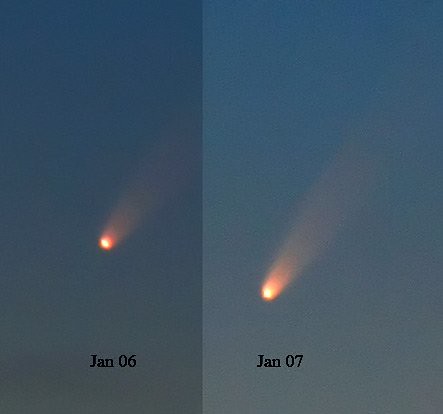
It’s our esteemed scientific opinion that global interest in astronomy would skyrocket (pun somewhat intended) if all comets and space objects had names as cool as Comet McNaught.

The comet was only recently discovered — on August 7th of last year

When Australian astronomer Robert McNaught announced Aug. 7 that he had discovered a faint comet on a photograph taken at the Siding Spring Observatory in New South Wales, it was a distant and inconspicuous object.  But its orbital motion at once made it clear that this comet, officially catalogued as C/2006 P1, might grow very bright right about now.

Comet McNaught’s orbit indicates that it will sweep to within just 15.8 million miles (25.4 million kilometers) of the Sun on Jan. 12.  This rather close approach—less than half the average distance of Mercury, the closest planet to the Sun—suggests the comet has the potential to briefly evolve into a bright object. The big question is, just how bright?

Recent estimates have ranged widely from magnitude +2.1 (about as bright as Polaris, the North Star) to a dazzling -8.8 (about 40 times brighter than Venus)!  

Just how brilliant McNaught gets remains to be seen over the next 4 days…. but it’s already dazzling the naked eye around the world:


A series of images of Comet McNaught can be found here; or click here for a video of McNaught’s orbit.

We encourage you to bring binoculars and a camera when viewing the comet, but never fear if you miss that great shot: 

Regardless of just how bright Comet McNaught becomes, beginning on Friday, Jan. 12 and continuing through Monday, Jan. 15, it will be passing through the field of view of the Solar and Heliospheric Observatory ("SOHO"); a spacecraft that was launched in 1995 to study the Sun.

Astronomers hope to get spectacular views of the comet by utilizing SOHO’s LASCO C3 camera, whose images can also be viewed in real time here.  

We’ll have more on McNaught when it’s closest to the sun on the 12th of this month. 


DIY Friday: WiFi Signal Amplifier

Friday, January 5th, 2007

This rocket scientist has recently discovered the joys of a Verizon Aircard while traveling. No more dropping $10 extra bucks in a $200 a night hotel just to get online, or wrestling with the credit card at the airport to check your email between flights. It’s liberating, and wonderful, and somewhat akin to magic.
That said,  my personal plan is $50+ per month, and whenever I use the wireless broadband these days, it seems there’s a freely availably wifi service just out of reach. If only my wifi receiver were better, I might be able to save even that dough.

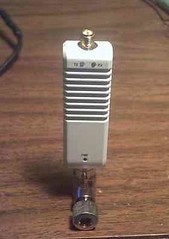
Which brings us to today’s edition of DIY Friday, and that rugged little gizmo to the left, which looks like a cross between a Glade Plugin and the valve on my gas grill:


Most laptops nowadays have a mini PCI Wi-Fi card hooked to an antenna which is located inside a screen plastic cover on the laptop. I was browsing eBay recently and noticed that there were some Wi-Fi amplifiers available that promoted themselves as improving the reception of the signal. Sadly most of those amplifiers are designed to be hooked to a PCMCIA type card or a router! None of them seemed to be specifically made for a mini PCI card.

I decided to buy a Wi-Fi amplifier and hook it to my laptop. I have an ASUS A2H laptop with a Dell 1470 a/b/g Wi-Fi mini PCI card inside, I bought the card for $20 off of eBay. I bought the amplifier for $118, it is a 500 mw bi-directional amplifier called "turbo tenna", the amplifier was shipped from Hong Kong and I received it shortly after ordering on eBay.


 A nip and tuck of a wire here and there, and the author of the piece found "a dramatic increase in signal strength! More than -80dBm, and the speed of the connection is 24Mbps with signal strength 34% as compared to the same connection at 1% previously tested. You can also see more Wi-Fi connections around you, though of course they’re all password protected."

 But hey — it’s not $50 a month, either.

2007: The Year of the Moon?

Tuesday, January 2nd, 2007

Is 2007 going to be the year of the moon?

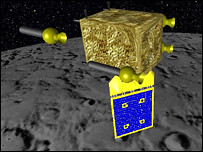
In one respect, yes. A slate of robotic lunar explorers are set to head for our lone satellite in 2007 — though not from the United States.

Space.com reports: 

This year, China is set to launch its first lunar orbiter, followed by the summer sendoff of a mega-powerful mooncraft from Japan.

Both nations are kick-starting a barrage of robotic survey ships that shoot for the Moon, including lunar missions by India and the United States in 2008.

As global interest in the Moon grows, so too does the call for multi-nation collaboration in robotic and future human exploration of Earth’s neighboring natural satellite.

China is wrapping up fabrication next month of Chang’e I to be sent spaceward atop a Long March 3A rocket.

The lunar orbiter design—based on their Dongfanghong III satellite platform—is reportedly headed for an April departure from the Xichang Satellite Launch Center in Sichuan Province.

According to Chinese news services, once Chang’e I circles Earth for nearly 8 hours, the spacecraft will then depart on its journey, taking 114 hours to reach Moon orbit.

While precise specifications about onboard science gear is not widely known, Chinese space planners have explained in broader terms the goals of the mission. The craft will yield 3D images of the Moon’s surface, probe the distribution of 14 “usable elements” on the Moon, gauge the temperature of the Moon, estimate the depth of the lunar crust, as well as study the space environment between the Earth and the Moon. The lunar orbiter is designed to carry out a one-year mission.


Satellite Internet Coming to Saskatchewan

Tuesday, December 19th, 2006

Say that three times fast, eh?

We’ve written before about the challenges of bringing broadband access to remote, rural regions of Canada (in communities like Black Tickle, Labrador) — and the resulting lack of Internet access options for rural residents in the north.

But there’s good news today for those who want broadband in Saskatchewan:

Saskatchewan Communications Network (SCN) Minister Glenn Hagel and OmniGlobe Networks, Inc. (OGN) Chair Julian Costley today signed a Memorandum of Understanding to form a long-term strategic alliance.  The two companies will work together to deliver a satellite-based wireless broadband Internet service capable of supporting video-conferencing, Voice over Internet Protocol (VoIP) and other e-solutions to rural and remote communities across Canada….

Earlier this year, SCN and OGN undertook a six-month project together to deliver wireless broadband Internet service to several remote communities in northern Quebec.  The success of the Quebec project demonstrated large-scale interest for a national service combining satellite with terrestrial wireless access, inspiring the two organizations to jointly extend the model across Canada.

Omniglobe has years of experience delivering VSAT services (such as distant learning) to rural Canada. But delivering true broadband to Canada is going to require far more spectrum (bandwidth) then VSAT. Where will that spectrum come from?

The most likely answer is Ciel Satellite Group, which recently filed applications for 9 licences in Canada: 

On November 15, the Ciel Satellite Group filed nine applications with Industry Canada for multiple satellite orbital positions across several frequencies. The applications were submitted in response to Industry Canada’s Call for Applications to License Satellite Orbital Positions, the largest in Canadian history. Applicants who are awarded licences from the Call will have the opportunity to build and launch satellites to bring new spectrum into use for DTH, HD and broadband services, for the benefit of Canadians in all regions of the country….

David Lewis, President and CEO of Ciel, noted, "This is a key event in Ciel’s history and, at the same time, a defining moment in the history of Canadian telecommunications."