Archive for the ‘Front Page’ Category
Robonaut’s Crush?
Thursday, February 17th, 2011
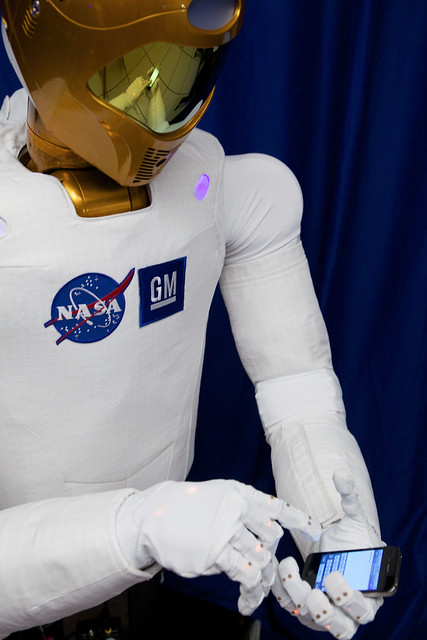
NASA JSC’s Robonaut-2 is mostly all business. JAXA’s HRP-4C is chatty and more communicative. Tweets, too.
Well, Robonaut-2’s been Tweeting already, so that’s not new. But can he sing? Not like this…
DIY Friday: Captain America Shield
Friday, February 4th, 2011
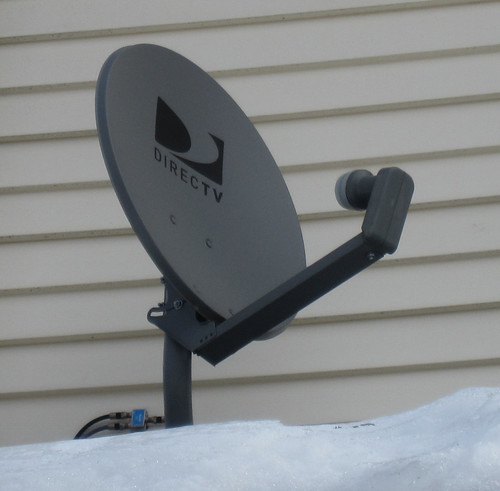
I had cable TV for many years, then switched to Dish Network for a few. Along comes HDTV and I went back to cable just so I could get MSG-HD (Let’s Go Rangers!). Dolan says forget you (check the Cee Lo Green song for proper pronunciation), so I get a deal on DirecTV bundled with Verizon Phone+DSL. Waiting for FiOS-TV, thought that would be a good idea. That’s not happening in my neighborhood, and DirecTV’s signal attenuation (rain fade) was driving me nuts, so back to DISH I west. Brilliant move as they’re now splitting the U.S. up into and East & West scheme: east coast capacity is at 61.5 West, and the west coast is using 129 West et. al. Better look angle for me and the signal is super — no loss at all and plenty of HD content. Price is right, too.
So now what am I supposed to so with the old reflector? We’ve featured quite a few DIY projects that recycle or re-use old satellite antennas. From using an old Primestar reflector to improve WiFi, to the wireless Internet cantenna, to more physical structures such as this BUD gazebo and the ever-popular solar cooker. Not to mention one for the birds.

With the Captain America movie set to release this summer (Hollywood’s run out of ideas again), it was inevitable somebody would get to taking an old dish and making it into a shield, via Instructables contributor seamster…
I’m not really into comics and the like, but I had been wanting to make a Captain America shield for some time.
I originally tried using an old plastic sled, but it gave me all sorts of grief. The type of plastic would not take paint very well (not even Krylon Fusion for plastics), or any type of adhesive that I tried.
I eventually came across a used satellite dish, and with a little bit of modifying this turned out to the be best option for a Captain America shield. It will make a great gift for someone this year.
If you are interested in making one of these, you may have to do a bit of searching and asking to find a used satellite dish. I’ve seen them show up at thrift stores from time to time. Keep your eyes open, and you should be able to find one.
Great idea — and execution, too.


It’s All Greek TV in Portsmouth
Thursday, February 3rd, 2011

£1,000 per month for English Premier League football? Are you out of your bloody mind?
That may or not have been Karen Murphy’s sentiment when she balked at paying B-Sky-B that much to show English soccer matches in her pub in Southern England, The Red White & Blue. You’d have to sell a lot of draught beer & ale to make ends meet, mate.
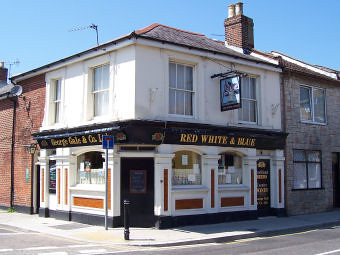
So she did what many Europeans do: get a satellite receiver from another country and watch their channel for the content you want. It’s true some go further and pay a one-time purchase and get a black-market decoder card and watch thousands of channels, FTA and premium, for nothing, forever (or until they change their encryption). I’ve seen it myself; happens all the time.
She gets a satellite receiver from Greece, points her antenna at Eutelsat’s Hotbird location (13° East) and that’s where she found Nova Sports, the channel with Premier League broadcast rights in Greece. Good move as the signal’s pretty hot in Southern England. B-Sky-B and the Premier League got pretty hot themselves and she was fined quite a few quid. She decides to take them to court — in Luxembourg.
Not exactly a Luxembourgish court, rather the European Court of Justice, which happens to be located there. Who else is based there? Why, ironically, it’s SES S.A., owners of the ASTRA Satellite System and arch rival to Eutelsat. Oh, and you should know, they also became as successful as they are today thanks to B-Sky-B, the anchor tenant on the 28.2 East orbital location. You’ll also recall B-Sky-B owes their success to gaining the exclusive rights to Premier League broadcasts in the U.K.
The legal opinion, prepared by a senior ECJ figure known as an Advocate General, is submitted in advance of a court ruling that usually follows several months later. The ruling will serve as a guideline for how European law should be applied to the case.
The announcement Thursday could have big implications for BSkyB, which has become Britain’s biggest pay-TV operator by owning the exclusive rights to show live Premier League matches in the U.K.
"In the view of Advocate General [Juliane] Kokott, territorial exclusivity agreements relating to the transmission of football matches are contrary to European Union law," the ECJ said in a statement.
"European Union law does not make it possible to prohibit the live transmission of premier league matches in pubs by means of foreign decoder cards."

Good show! Poetic justice, anyone?
Voyager-1 Continues
Tuesday, January 18th, 2011
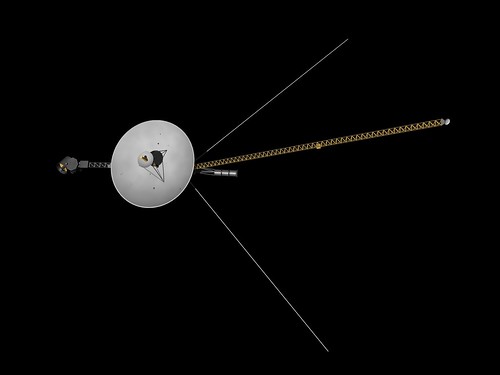
Nice piece by Frank Roylance in the Baltimore Sun on Voyager-1. Love the closing…
Sometime around 2025, the two craft will fall silent. In 40,000 years, Voyager 1 will sail as Earth’s ambassador among the stars of the constellation Camelopardalis — the Giraffe — in the northern sky. Voyager 2 is headed for Sirius, the brightest star in the sky. It should arrive in 296,000 years.
Awesome.
Lego Antikythera Mechanism
Wednesday, January 5th, 2011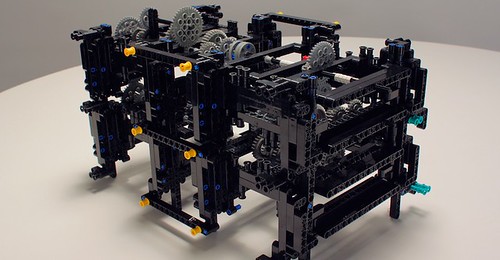
Think you can build cool things in Lego? Ha!
Apple engineer Andrew Carol just wrecked your thinking. He built a working Lego replica of the famous Antikythera Mechanism, created by ancient Greeks in 100 B.C. as a way of predicting astronomical events like eclipses, and probably the oldest known analog computer.
My machine uses about 110 gears, and 7 complete differentials, to do most of what the original one did. But their calendar and ours are completely incompatible, so I also had to add complexity to make the eclipse predictions understandable. My machine has two extra indicators: one for the decade and one for the year. That way, as you turn the crank on the machine, you can read the dials and say "OK, a solar eclipse will happen in April of 2024."
New Scientist reported on a recreation a couple of years ago. Here’s that video…
Winter Solstice Lunar Eclipse
Tuesday, December 21st, 2010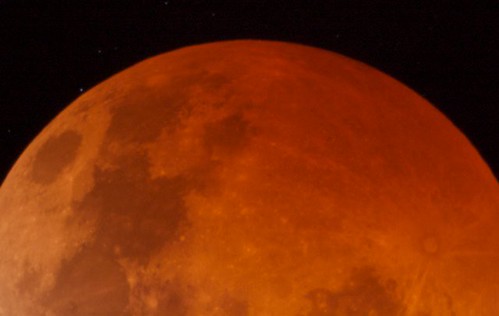
Here’s the video…
It’s gonna be a long night.
Pwanet Season
Thursday, December 16th, 2010
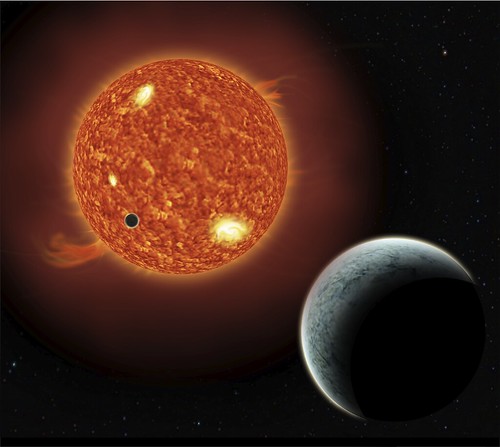
I can almost see this as a new TV show on Discovery Channel: Planet Hunters. Not as easy as you think…
Finding Earth-size planets is a difficult task because the transit-signals, the dimming of the star’s light caused be a planet moving in front of the star, are so shallow. For a Jupiter-size planet, the transit depth is ~1% of the star’s brightness. For an Earth-size planet transiting a Sun-like star the decrease in brightness is less than .001%. Ground-based surveys have not reached the sensitivity to detect such planets around stars similar to our Sun, but with NASA’s space-based Kepler mission, launched in March 2009, astronomers are primed to start a new era in the study of exoplanets. Even with the exceptional data from the Kepler telescope, finding these Earth-sized planets will be extremely difficult, but in the age of Kepler, the first rocky planets will likely be detected including the potential to find Earth-like planets residing in the habitable zone, warm enough to harbor liquid water and potentially life on their surfaces.
Get started here, rocket scientist.
Be vewy, vewy quiet. I’m hunting pwanets!

Geminid Meteor Shower
Monday, December 13th, 2010
Get up early on Tuesday! Why? Because, via StarDate Online…
The Geminid meteor shower will be at its best a few hours before dawn on Dec. 14, according to the editors of StarDate magazine.
The Geminids are one of the most reliable meteor showers. This year, skywatchers can expect to see dozens of meteors per hour, rising to more than 100 meteors per hour at the shower’s predicted peak at 5 a.m. CST.
Skywatchers will also be able to see meteors on the night of Dec. 13, but viewing will improve after midnight when the waxing gibbous Moon sets.
Geminid meteors appear to fall from near the star Castor, one of the “heads” of the constellation Gemini, the twins. The meteors are not related to Castor. They are debris from an asteroid called Phaethon. The shower recurs each year when Earth passes through this debris strung along Phaethon’s orbit around the sun.
The Geminid shower was the first to be linked to an asteroid. Most meteor showers occur when Earth crosses the orbit of a comet. Though the Geminid shower was discovered in the 1860s, it was in 1983 that astronomers identified Phaethon as the shower’s source.
For your best view of the Geminid meteors, get away from city lights. Look for state or city parks or other safe, dark sites. Lie on a blanket or reclining chair to get a full-sky view. If you can see all of the stars in the Little Dipper, you have good dark-adapted vision.
Heard Over Haiti
Thursday, December 9th, 2010
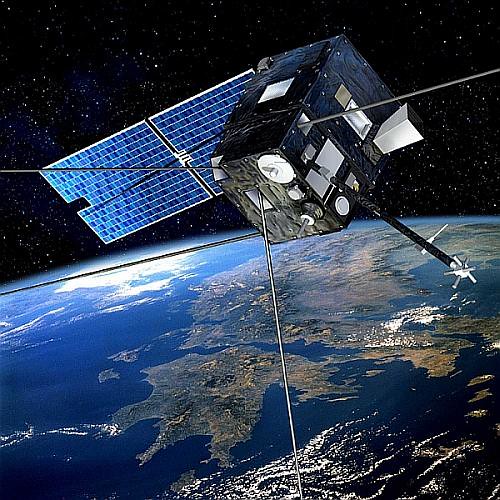
The DEMETER spacecraft’s instruments assisted geophysicists with their analysis of ultra-low frequency electromagnetic waves before and after the Haiti earthquake in January, 2010. DEMETER stands for Detection of Electro-Magnetic Emissions Transmitted from Earthquake Regions.
You can download the paper here and read for yourself. Personally, I like MIT’s Technology Review and how they explain it to us…
The anecdotal evidence of electromagnetic effects associated with earthquakes is legion. Various accounts link earthquakes with mysterious light and heating effects. Then there is the widespread evidence that certain animals can sense impending quakea, possibly because of a sensitivity to low frequency electric fields.
But good data is hard to come by. Geoscientists have been measuring the currents that flow through Earth beneath our feet for over 100 years. These so-called telluric currents are thought to be generated by friction and piezoelectric effects within rock. And the flow of electrons they cause has been linked to various atmospheric phenomena such as thunderstorms.
But the role these currents play in earthquake physics is unknown. It makes sense that any currents generated by friction and piezoelectric effects should be dramatically influenced by the relative movement of different parts of the crust.
But these effects occur over vast distances and at frequencies that are hard to measure and difficult to separate from background noise. Which is why DEMETER was launched , (DEMETER stands for Detection of Electro-Magnetic Emissions Transmitted from Earthquake Regions).
Now Michael Athanasiou at the Technical University of Serres in Greece and a few buddies say that DEMETER spotted good of evidence of a change in ultralow frequency radio waves in the ionosphere above Haiti in the run up to the quake. "The results reveal a significant increase of the energy of ULF waves, up to 360%, for a period of one month before the main earthquake compared with the energy of the background," they say. That’s a dramatic increase. These emissions dropped gradually in the month after the quake.
The implications are interesting. Athanasiou and co say: "The results of this paper clearly indicate that ULF electromagnetic waves can be very useful in revealing possible precursor seismic phenomena."
That’s carefully worded and for good reason. Any talk of earthquake prediction needs to be qualified with a good deal of hedging. It may well be that the crust generates more low frequency waves in the build up to an earthquake but there may be other mechanisms that produce a similar signal but are not linked to quakes.
These effects would have to be teased apart before a forecast of any use could be made.
Then there is the problem of the timescale over which these emissions are produced. The increase in pressure that causes earthquakes occurs over geological timescales. It’s not yet clear how this process changes the emission of low frequency em waves.
That means the predictions from this kind of data may be never be any better than the ones geophysicists already make, ie giving the percentage likelihood of a big ‘un in the next 50 years, for example. That helps with things like building standards (in developed countries that can afford to implement them) but it is not much use in preventing the kind of catastrophe that hit Haiti in January.
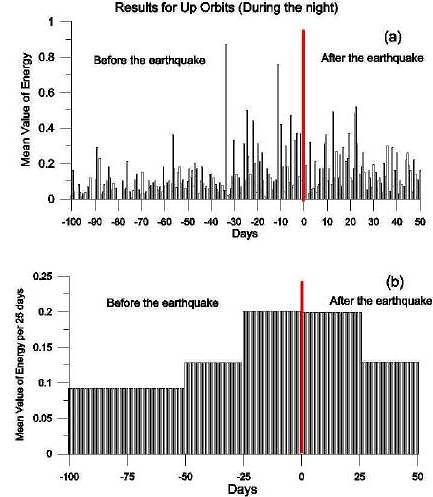
(a) The average energy of the pre-earthquake signals recorded by the satellite during night-passing, for 100 days before the main earthquake as well as for the aftershock signals for 50 days. (b) The average energy per 25 days of the observed signal during the night, for 100 days before and 50 days after the earthquake.