Archive for the ‘NASA’ Category

DIY Friday: Park & Watch Satellite TV

Friday, February 19th, 2010


On the road again? Tailgating? No TV where you are? Bet you’re bummed you missed Anja Paerson’s crash in the downhill at the Winter Olympics in Vancouver. If you’re RVing across North America (or caravaning in Europe), you’re got a few options.

In the U.S., there’s Backseat TV from Sirius XM, but that’s for kids (although they’re potentially entertaining for some adults). For real "on the move" satellite TV, be prepared to spend a few thousand dollars for a KVH Tracvision A7. Sadoun has them at discount, as well as others. You could also pay half that for a VuQube, essentially a portable contraption with an antenna inside that’s nearly self-pointing. There are other motorized solutions out there, but it won’t be cheap.

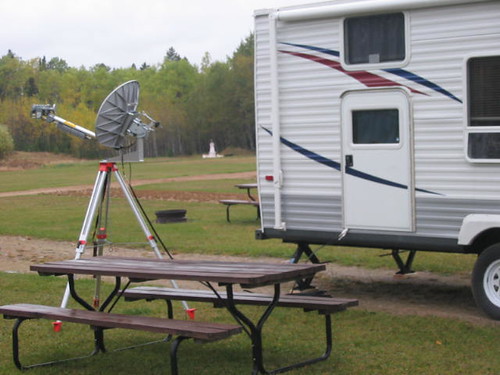
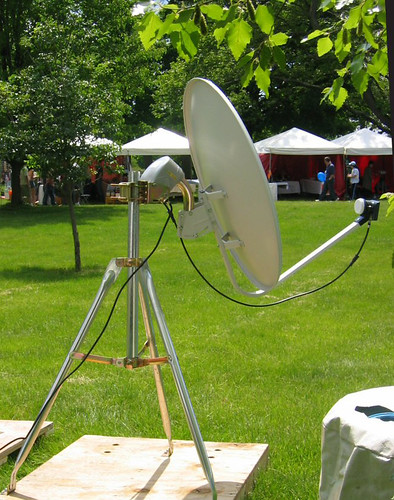
What about doing it yourself? Get an extra antenna, mount it on a tripod, grab your home satellite receiver and hit the road. You’re only going to watch TV after you park your vehicle, right?


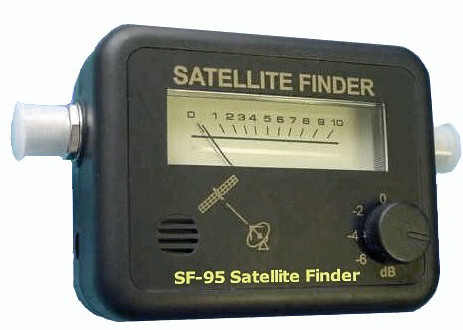
For some, this may sound simple, but it gets complicated in a hurry. The satcom techs who do home installs are trained and get it done quickly, after they do their homework. The spacecraft orbits at 22,300 miles (36,000 km), so you’ve got to know where to point that antenna. You can probably get yourself a signal meter (like the SF-95), calculate your look angle (elevation & azimuth) and point your antenna. Sure, you’ll need a compass and your geographic coordinates (long/lat). You may not know that when you’re "out there."


How do you know whether you can "see" the satellite from where you decided to park? What if you didn’t do your homework ahead of time? Get yourself a good app phone like the Apple iPhone or Google Android, then download the DishPointer Pro AR app. Launch the app, then point it toward the southern horizon if you’re in the northern hemisphere, and toward the northern horizon if you’re in the southern hemisphere. On the equator, point straight up. Like magic, using the phone’s camera, shows you what you can see and whether any obstacles on in the way. Hit compass lock and you’ve got elevation, azimuth and skew (polarization).


Is that awsome or what? $20 gets you the app, available via the Apple iTunes App Store and Android Market. And it totally works.

Free HDTV in Canada / Libre TVHD au Canada

Wednesday, February 17th, 2010


That’s right, Nanook: the Canadian Radio-television and Telecommunications Commission (CRTC) gave the approval to FreeHD Canada to provide 100 local and 150 national channels for, uh, FREE. I like that price. The summary, via the Globe and Mail:

A satellite TV upstart has won limited approval to do business in Canada. The new company, FreeHD Canada Inc., applied in August for permission to offer a package of local television channels for free – if customers agree to buy the equipment necessary to pick up the company’s satellite signal. BCE Inc. and Shaw Communications Inc., which operate Bell TV and Shaw Direct respectively, have made similar proposals. FreeHD is also planning to offer an additional package of 150 pay and specialty channels. Yesterday, the Canadian Radio-television and Telecommunications Commission approved the licence, but said that FreeHD will have to operate under the same rules as other satellite providers. That means its basic package cannot include local stations only; such providers are required to include certain channels, such as at least one CBC station and one Radio-Canada, APTN and the Weather Network. The larger pay package must also follow rules requiring services like adult channels to be optional to consumers. 

 Read all about the "approval, in part" on the CRTC site.

Since Dave Lewis is running things at FreeHD Canada, I suspect he’ll be using some capacity on the Ciel-2 spacecraft. If the box and dish cost $300 or less, this ought to sell like waffles on a Sunday.

Almost as exciting as Maelle Ricker’s gold medal at the Winter Olympics in Vancouver.


DIY Friday: Satellite Site Survey

Friday, January 22nd, 2010

Us rocket scientists and satnuts know that to get a signal from an orbiting spacecraft, the satellite antenna must be pointed directly at the satellite, without obstructions between the two. This means no trees and no buildings. Generally, you ought to take into consideration future tree growth, house remodeling or additions and new construction.The satellite signal will not pass through leaves or branches — or houses and buildings.

DirecTV’s self-installation guide (PDF) starts with these pointers:

The satellite is always located south of Texas. That means if you live in Miami, you must have a clear line of sight to the southwest; if you live in San Francisco, you must have a clear line to the southeast. How High Up in the Sky is the Satellite? Depending on where you live, the satellite will be at an elevationangle between 30 and 60 degrees. Southern states point more toward 60 degrees; northern states point more toward 30 degrees.

Elsewhere, the guide suggests you use a map. In Europe, ASTRA’s installation assistant does a decent job of taking you through the process. For most, taking the free installation (see DISH Network) is a good idea.

Before you go out and buy a $500 BirDOG gadget, better make sure you can see the satellites. The Flash animation on ASTRA’s site can help you when you’re in the field, unless you calculate your look angle ahead of time.

On-site and need help with your site survey? There’s an App for that (both for iPhone and Android).


I’ve got one location where the trees grew since installation, so this has ongoing practical use. DigitalTrends selected it as one of the best augmented reality apps.

If guys in Afghanistan can use it, so can you.


2 Minutes for Interference?

Tuesday, January 12th, 2010

Canadian upstart Ciel Satellite Group is in a battle with DirecTV over the 103° West orbital slot, via the Ottawa Citizen:

In a war of words at the U.S. Federal Communications Commission, the two companies are accusing each other of threatening effective operation of broadcast satellites and undermining global industry rules. But behind the rhetoric is the deadly serious business of building investor confidence to finance satellites that cost $300 million each to construct, insure and launch.

Ciel is working with an undisclosed manufacturer on the Ciel 6 satellite, scheduled for launch in 2012.

DirecTV got FCC approval in July to launch the RB-2A satellite. Now called DirecTV-12, it was shipped earlier this month to Kazakhstan for launch in the near future.

Combined with two other DirecTV satellites, it will deliver 200 high-definition channels. The FCC said the new satellite "will stimulate competition in the United States and provide consumers more alternatives in choosing communication services." The FCC must consider major issues in the dispute.

In theory, the two satellites can co-exist in the same orbit path. But that would involve technology compromises to avoid signal interference. The changes could limit the markets each seeks to tap.

With consumers and business demanding more bandwidth-hungry high-definition television, video and Internet services, the battle for spectrum and satellites to support the market is growing.

DirecTV is the biggest U.S. satellite direct-to-home service company with 18 million subscribers, plus another six million in Latin America.

It said recently that two-thirds of new subscribers signed up for high-definition TV and related hardware services in the September quarter, the highest level in company history.

DirecTV generated $5.47 billion U.S. in revenues in the September quarter, 10 per cent more than a year earlier.

Ciel has only one satellite in service but it has some powerful allies. Its investors include Borealis, an arm of the giant Ontario Municipal Employees Retirement System (OMERS), and SES Americom, one of the world’s biggest satellite operators.

It won its first Canadian licence in 2004 and launched its first satellite last year to serve an orbital slot off the coast of B.C. It is developing business plans for six more slots awarded by the federal government last year.

It also has a big customer in DISH Network, which is a direct competitor to Direct TV. Calian Technologies manages the Ciel satellite under a long-term contract.

I’m relatively certain Telesat is in this fight, too. EchoStar is on the bench, ready to jump over the boards if required.

As they say in hockey, it’s part of the game.


“Spots On The Wall” by Hu Flung Sat

Thursday, January 7th, 2010


Now we’re getting somewhere with this "TV everywhere" concept.

With it’s ubiquitous coverage, satellite TV is already "everywhere." Now DISH Network, and it’s Sling Media technology, is truly flinging its signals around. The critical summary, via Light Reading’s Cable Digital News:

Dish, which bought Sling Media in 2007 for $380 million and later folded it into its EchoStar Technologies LLC set-top and technology division spinoff, is basing its TV Everywhere strategy on a combination of new hardware and software products that enable customers to "sling" video from the set-top to PCs, mobile handsets, and other video displays with broadband connections. (See EchoStar to Buy Sling Media and Sling Media Slings at CES.)

That all starts with the ViP 922, an HD-DVR that features a 1-terabyte hard drive with Sling’s technology built in. Dish, which was expected to launch that box last year, is matching that with the "TV Everywhere Adapter," a sleeker version of the old Slingbox that gives place-shifting capabilities to a number of Dish HD-DVR receivers using a USB connection. According to Dish’s Website, six existing receivers are compatible with the new place-shifting adapter: the 522, 625, ViP 612, ViP 622, ViP 722, and ViP 722k.

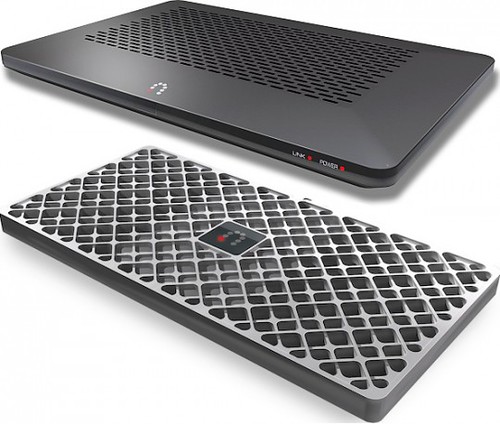
Dish’s new hardware also includes a free-standing, 16×9 WiFi Monitor, also developed by Sling, that is capable of wirelessly transmitting an HD video signal from a set-top to another device on the home’s wireless network. The display itself renders video in 720p and can be used to access the functions of the connected Dish receiver, including the ability to manage DVR recordings.

Dish has also developed a Web-based "Remote Access Mobile App" so customers can manage their DVR recordings on multiple receivers. It also has the ability to transform an iPhone or iPod Touch device into a remote control for TVs connected to compatible Dish boxes. Although Dish’s TV Everywhere hardware components won’t be out until the second quarter, it’s already offering the Remote Access Mobile App for free download.

Dish hasn’t announced any pricing on its TV Everywhere offerings, including the fancy WiFi monitor, but intends to reveal those details closer to the official launch, a company spokeswoman said.

With Sling at the core of this strategy, Dish should find itself ahead of its cable competitors when it comes to TV Everywhere, a term that the satellite-TV giant has since trademarked (it reportedly filed for the trademark last fall), at least in terms of the types of screens it will support at the get-go.

Comcast Corp. (Nasdaq: CMCSA, CMCSK) launched its initial TV Everywhere product, Fancast Xfinity TV, last month, providing authenticated PCs access to a walled garden of on-demand content. Comcast plans to add support for mobile devices later this year. Dish’s version already supports mobile devices, as well as access to the subscriber’s lineup of linear programming. (See Comcast’s ‘Xfinity’ Goes Live and Comcast’s ‘Xfinity’ to Go Mobile in 2010 .)

However, cable MSOs will have an opportunity to offer much of what Dish is introducing in the second quarter. EchoStar, Dish’s tech spinoff, is also marketing a lineup of Sling-loaded boxes for U.S. and European MSOs, but has yet to announce any cable deals. EchoStar officials have also expressed interest in selling Slingboxes directly to MSOs, and it would appear that Sling’s latest standalone box, the 700U, would fit the bill.


Great idea and excellent use of in-house technology. Who knows, maybe I’ll go back to DISH for this?

Having a mobile app for your DVR has some practical use, as we’ve noted before.

Meanwhile, DirecTV is all about 3-D TV at CES. I don’t know, man. Didn’t we just accept HDTV as the "OK, I got it now" technology? Now 3-D? Seems a little early for that, but the "Avatar" movie is out to change that.


More HD for DirecTV

Monday, January 4th, 2010


Beautiful launch from the Baikonur Cosmodrome last week, putting DirecTV 12 into orbit:

The new satellite will boost DIRECTV’s High-Definition capacity by 50 percent, to more than 200 HD channels, increase the number of local HD markets DIRECTV will serve and significantly expand movie choices on the DIRECTV CINEMA™ and DIRECTV on DEMAND services. DIRECTV offers more than 130 HD channels today and delivers local HD programming to 138 markets, representing 92 percent of U.S. TV households. Click here to see which HD channels DIRECTV currently carries.

D12, a Boeing 702 model satellite, lifted off on an International Launch Services Proton Breeze M vehicle at 4:22 p.m. PT yesterday from the Baikonur Cosmodrome in Kazakhstan. Controllers at the ground station in Hartebeesthoek, South Africa, have made contact with the satellite and confirmed that all systems are functioning properly. 


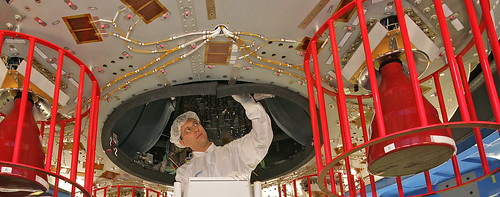
Here’s the integration work…


…and the traditional 6:30 a.m. roll-out (yeah, it was cold) …


…and finally, the launch itself…


Sports TV Loophole Closed

Thursday, December 17th, 2009


Shopping around for HD sports programming options in New York, you’re sure to find out you can’t get MSG-HD on Verizon’s FiOS TV. Why? It’s Jimmy’s channel and he wants it exclusively on Cablevision. Looking to add Comcast SportsNet HD to your DirecTV package in Philadelphia? No, sorry, not available.

How can they shortchange their viewing customers with this tactic? A 1992 law’s loophole. But not anymore as the FCC is looking to close it up quick, via WSJ

 The FCC’s Media Bureau will circulate an order Wednesday that would close the so-called terrestrial loophole used by companies including Comcast Corp., Cox Communications Inc. and Cablevision Systems Corp. to withhold local sports channels from rivals, an FCC official said.

If approved, the proposal would mean consumers could soon have more choice in pay-TV services. Sports fans who want to watch local baseball, hockey and other games at home wouldn’t be forced to subscribe to the largest local cable provider anymore.

In Philadelphia, for instance, fans of the Philadelphia Flyers, Phillies and Sixers can’t get games broadcast on Comcast’s SportsNet channel on DirecTV or Dish Network. In San Diego, subscribers to AT&T Inc.’s U-Verse television service can’t get San Diego Padres games, which are carried on a channel owned by Cox Communications.

The FCC’s move would be a victory for Dish Network Corp., DirecTV Group Inc., Verizon Communications Inc. and AT&T, all of whom have had difficulties at one point or another trying to get programming—mostly regional sports channels—from a local cable provider.

"Consumers shouldn’t be forced to stick with their incumbent cable provider in order to have access to their local teams’ games, or to watch those games in high definition," a Verizon spokesman said in a statement.

The National Cable & Telecommunications Association, the cable industry’s lobbying group, argued that exclusive distribution of channels "can be a pro-competitive tool."

"Exclusivity allows competing providers to invest in new services that have dramatically changed the marketplace, as can be witnessed by DirecTV’s overwhelming success with the NFL Sunday Ticket package," association spokesman Brian Dietz said.

The FCC requires cable operators to offer access to channels they partially or wholly own to rivals at reasonable rates, but some have used a loophole in a 1992 law to exclude local sports programming.

The loophole allows cable operators to withhold a channel from rivals if it is sent over a cable instead of beamed by satellite. Other pay-TV providers, including satellite TV and now phone companies, have complained to the FCC about the practice for years.

Last year, AT&T filed a complaint against Cox for denying it permission to air San Diego Padres games. Verizon filed a similar complaint against Cablevision for denying it access to a high-definition feed of games from Madison Square Garden.


IP-PRIME, the IPTV service scuttled by SES last year, had the same problem: they couldn’t get carriage rights to MSG-HD

With FiOS-TV moving in on Philly in a big way, we’ll finally get to see what competition will mean for us — the customers.

Too bad the FCC can’t do anything about the Rangers playing badly lately. Fire Sather?

Satcom HDTV Rules!

Monday, December 14th, 2009

So who has the most HD? Dish Network, according to MedizBiz


Buy European

Monday, November 30th, 2009


According the Space News, SES was set to announce a very large contract with Astrium to purchase several spacecraft:

Satellite fleet operator SES has selected Astrium Satellites to build four direct-broadcast television spacecraft in a contract valued at around 500 million euros ($753 million) and expected to be signed the week of Nov. 30, industry officials said.

It will be the biggest single satellite order ever made by Luxembourg-based SES, which is also negotiating with Astrium on the sale of SES’s ND Satcom unit, a satellite ground-hardware supplier whose recent financial performance has been disappointing.

One industry official said the satellite order and the ND Satcom negotiations are not related, and that the satellite deal does not depend on Astrium’s purchase of Friedrichshafen, Germany-based ND Satcom, which is the biggest company inside what SES calls its services division.

This ought to ensure the viability of Europe’s space business for at least another decade. And if the shake-up at ND Satcom continues, it will confirm SES is truly concerned with space segment, first and foremost.


Sure enough, they made the formal announcement today:

“This important investment in new satellite capacity will enhance the prominence of SES ASTRA’s 28.2 degrees East position, mainly for the UK and Irish markets, and improve coverage of Eastern Europe from 31.5 degrees East,” said Romain Bausch, President and CEO of SES. “It will also allow SES WORLD SKIES to extend its offer to the African and Middle Eastern markets. By adding significant flexibility and improved functionality, these new satellites will allow SES to further drive its DTH, DTT, enterprise and broadband businesses while consolidating space assets and strengthening the international reach of the group. Also, we are pleased to be working again with Astrium. SES has appreciated the quality of their products and their customer dedication in recent and ongoing contracts, and this is exactly what we are looking for in this multi-satellite contract.”

What they were not looking for was Orbital, Lockheed, Boeing or SS/Loral. SES stands for Société Européenne des Satellites, after all.


WBMSAT Satellite Industry News Bits for November 20, 2009

Friday, November 20th, 2009

Iran plans to launch its own satellite by 2011, since no one seems willing to help; Iran claims it is a communications satellite – Israel says it is a spy satellite.
[Fox News – 11/20/2009]

SMOS satellite with MIRAS instrument deployed

The MIRAS instrument on the European Space Agency’s SMOS satellite launched earlier this month, has been switched on and is operating normally – it will map soil moisture and ocean salinity.
[Space Mart – 11/20/2009]

Russia may delay maiden launch of the new Angara carrier rocket, designed to put heavy payloads into orbit, for at least one year due to shortage of funds from the Defense Ministry.
[Space Travel – 11/20/2009]

DirecTV announces completion of merger with Liberty Entertainment following Liberty Media stockholders’ OK for split of Liberty Entertainment; acquisition by AT&T or Verizon is a possibility.
[iStockAnalyst – 11/19/2009]   –   [Wall Street Journal blog – 11/20/2009]

NSR industry briefing sees the satellite-based earth observation market entering a phase of impressive growth, expected to generate $6.2B in satellite manufacturing, commercial data, and value added services in 2018.
[NSR – 11/19/2009]

Long March satellite with Shenzhou payload being prepared for launch

President Obama and Chinese president Hu Jintao agree to expand and formalize U.S.-Chinese discussions on new cooperative space efforts at Beijing summit.
[Spaceflight Now – 11/18/2009]

Quick-thinking Chinese ground controllers able to maneuver high-value Chinese spacecraft out of path of space debris, marking first such save by China, and emphasizing the mounting orbital debris hazards faced by space-faring nations.
[Spaceflight Now – 11/18/2009]

DirecTV chooses Michael white, former vice chairman of PepsiCo, as new CEO; Echostar elevates Michael Dugan to CEO as Charley Ergen vacates the post.
[CED Magazine – 11/18/2009]

Iridium teams with three new partners to expand satellite services offering in Mexico.
[CNN Money – 11/18/2009]

Shuttle Atlantis successfully docks with International Space Station.
[Spaceflight Now – 11/18/2009]

ViaSat offers new Ethernet Service Expansion Module for its Enhance Bandwidth Efficient Modem that promotes Frequency Division Multiple Access across Department of Defense satellite networks.
[SatNews – 11/18/2009]

Sri Lanka signs agreement with Surrey Satellite Technology Limited of the UK to obtain an Earth Observation satellite, representing Sri Lanka’s first communications satellite.
[Space Mart – 11/18/2009]

NASA chief is ready to work with China on space exploration, as Beijing aims to send a manned mission to the moon by around 2020.
[Space Daily – 11/17/2009]

SES invests $75M in O3b to become a key shareholder, aiming to support development of the O3b high-speed satellite internet network.
[Satellite Today – 11/17/2009]

Gilat reports third quarter revenue decline, and announces hiring of former Intelsat General president Susan Miller as SIGS CEO.
[Satellite Today – 11/17/2009]

Spot LLC responds to budget conscious holiday shoppers by offering a $50 Holiday Rebate for the SPOT Satellite Personal Tracker, the award-winning personal and portable satellite-based communications messenger.
[CNN Money – 11/17/2009]

SatMax completes installation of Iridium satellite communications repeater systems for ITT Corporation; the Defense Department plans to use SatMAX systems indoors to provide non-line-of-site access to Iridium satellites.
[CNN Money – 11/17/2009]

Stratos Global is recognized by the World Teleport Association as the world’s largest independent teleport operator again in 2009.
[PR Newswire – 11/17/2009]

SpaceX protests U.S. Air Force contract award to Orbital Sciences Corp. for missile hardware.
[Satellite Today – 11/17/2009]

KVH TracPhone V7 and mini-VSAT Broadband service will be deployed by the United States Coast Guard on its 110 ft. and 225 ft. cutters.
[SatNews – 11/17/2009]

Spot Image Corporation and the U.S. Geological Survey have begun to distribute, over the internet, SPOT satellite data collected over North America between 1986 and 1998.
[SatNews – 11/17/2009]

Eutelsat and Asia Broadcast Satellite strike strategic agreement for cooperation at 75 Degrees East position in satellite orbital arc.
[PR Newswire – 11/16/2009]

Stratos Global expands its line of Stratos MobileLink fixed-to-mobile calling services, enabling fast, affordable connectivity from fixed locations to Iridium and Inmarsat mobile satellite terminals, to help customer avoid high tariffs charged by local telephone companies.
[SatNews – 11/16/2009]

Newtec’s Sat3Play and ASTRA2Connect internet connection rated EXCELLENT by leading independent German consumer organization group.
[SatNews – 11/16/2009]

TCS acquires substantially all of the assets of Sidereal Solutions, Inc., a satellite communications technology engineering, operations, and maintenance support services company.
[SatNews – 11/16/2009]

Atlas rocket on launch pad at Cape Kennedy

Atlas launch of Intelsat 14 is halted due to power interruption to Ordnance Remote Control Assembly; launch will be rescheduled following the space shuttle Atlantis launch.
[Universe Today – 11/15/2009]

NSR report – Global Satellite-Base Earth Observation – the industry has taken rapid strides in the last decade, reinventing itself by expanding application base from military and weather to industries including infrastructure, energy, and insurance.
[NSR Report – November 2009]

NSR Report – Global Assessment of Satellite Supply & Demand, 6th Edition – was Intelat’s purchase of ProtoStar-1 for $210M a good deal or not?
[NSR Report – November 2009]

FCC claims that cable and satellite set-top-boxes may be impeding the growth of broadband internet connectivity into homes.
[Washington Post blog Post Tech – November 2009]

WBMSAT PS – Satellite Communications Consulting Services