Archive for the ‘Observation’ Category

Map of the Known Universe

Tuesday, May 16th, 2006

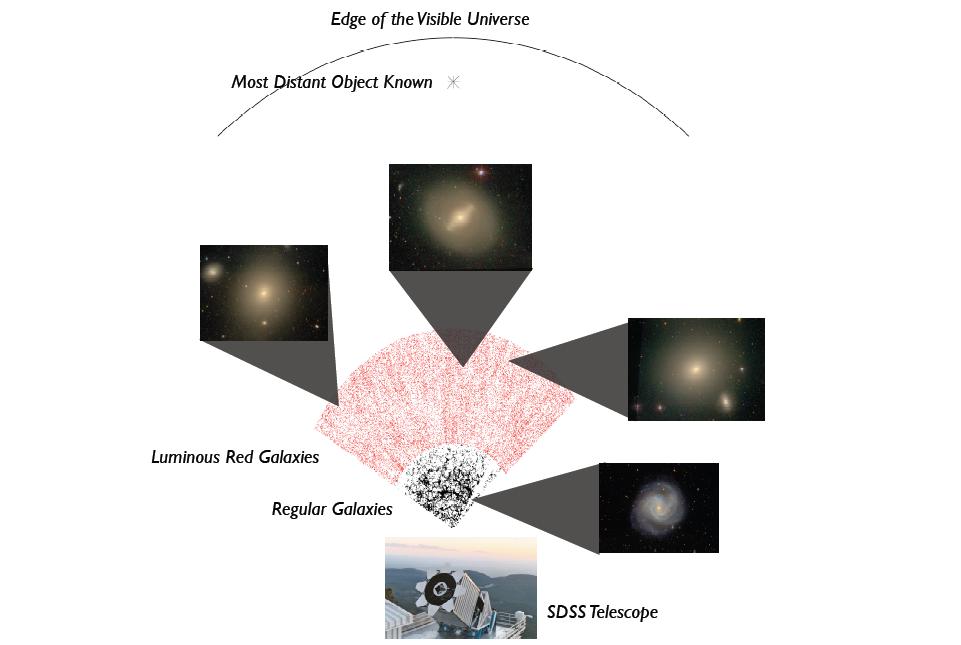
Astronomers have released the largest-ever atlas of the cosmos — and it’s coming soon to the world wide web.

The Royal Astronomical Society reports:

Traditionally, astronomers have needed to take a "spectrum" of each galaxy to determine [the distance between galaxies], splitting its light into many components to reveal sharp features with which to measure the amount of redshifting. This requires a time-consuming, individual observation of each galaxy.

The new cosmic map has been constructed using a novel technique focusing on a special class of galaxy whose intrinsic colour is very well known. For these ‘Luminous Red Galaxies’ researchers can measure the amount of colour distortion, and hence the approximate distance of the galaxy, just by looking at digital images of the sky, without the need to obtain a full spectrum.


What is most striking is that the new study and atlas have revealed that "the ordinary matter our bodies are made of and that we experience in everyday life only accounts for a few percent of the total cosmic budget:"

Our Universe contains billions of galaxies of all shapes and sizes. In recent years astronomers have used increasingly large surveys to map out the positions of these galaxies, stepping their way out into the Cosmos.

The new cosmic map unveiled today is the largest to date — a three-dimensional atlas of over a million galaxies spread over a distance of more than 5 billion light years. The findings confirm that we live in a Universe filled with mysterious dark matter and dark energy.
"We have analyzed the patterns in this map and discovered waves of structure over a billion light years across," said Dr. Chris Blake of the University of British Columbia, principal author of the study. "These waves were generated billions of years ago and have been vastly stretched in size by the expanding Universe."
 
The full findings of the report can be found here.

Cellular Love Detector

Tuesday, May 9th, 2006

It’s an idea I’ve had knocking around in my head for a while, or at least since I started writing for this blog. And it may be an idea whose time has come. But given my somewhat limited technological abilities, someone else is gonna have to make it happen.

While pondering the various ways technology might be employed to improve the life of the everyday man or woman on the street, it occurred to me that while exploring the various uses for mobile technologies affairs of the heart were being overlooked. Since scores of people carry mobile phones these days, that allow them to do everything from playing their favorite music via satellite radio to watching their favorite shows, it seems like a no-brainer to use the same technology to track down potential candidates for significant-other status. If I thought of it, surely someone out there with greater technical acumen than me has thought of it and tried to make it a reality. 

Enter the Cellular Love Detector.  It works like this: dial the access number, the number of your latest crush, and talk as you would normally do while the Love Detector does it’s magic and spits out a report. 

Using the Love-Detector Cell Service is as simple as dialing the access number, and your friend’s phone number right after… Once the conversation starts, all you need to do is have a NORMAL conversation. Speak about work, homework, movies or any other thing. …

During the call, our server will monitor the excitement levels and other related parameters your friend is demonstrating, and will calculate the "Love-Level" as detected in the conversation. Once the conversation has ended, the final report will be sent to your cellular phone using SMS or audio message! The final report is not only about the "Love-Level", and includes other parameters, like "Concentration", "Embarrassment" and even "Anticipation".

Sounds like an interesting idea, and one that may be useful to folks who are impaired when it comes to detecting mutual admiration. But I don’t think it goes far enough. 

Look, we already know how easy it is to track someone down using various technologies. We can use GPS to track down lost pets and roving gang members. We can use GPS and cell phones to track down wandering teenagers. And I just read that it’s pretty easy to track anybody who’s carrying a cell phone, whether they make calls or not. 

Most people know that when they make a mobile call—during a 911 emergency, for example—authorities can access phone company technology to pin down their location, sometimes to within a few feet.

A lesser-known fact: Cell phone companies can locate you any time you are in range of a tower and your phone is on. Cell phones are designed to work either with global positioning satellites or through “pings” that allow towers to triangulate and pinpoint signals. Any time your phone “sees” a tower, it pings it.

Here’s a more straightforward explanation

Real-time tracking of cell phones is possible because mobile phones are constantly sending data to cell towers, which allows incoming calls to be routed correctly. The towers record the strength of the signal along with the side of the tower the signal is coming from. This allows the phone’s position to be easily triangulated to within a few hundred yards.

The technology is already within reach of consumers. You can sign up for services like AccuTracking, World Tracker, or ULocate. For that matter you can build your own. So, the genie is out of the bottle and unlikely to go back in. 

Why not put it all together in the service of matchmaking? The Google Earth Blog had the same premonition I did, upon hearing news of at least one dating service letting customers use Google Earth to locate prospective dates.

It can only be a matter of time before other dating services implement a Google Earth interface for showing approximate locations for prospective dates. It would be a smart move in my opinion and not too difficult to implement technically.

Exactly. At least one dating service already uses GPS to alert customers to potential dates in their vicinity, if the prospective date is on the customer’s "hotlist." Another popular online dating service was considering a similar move earlier this year. Even the practice of "toothing" — meeting potential dates via Bluetooth-enabled mobile phones — started as a hoax and blossomed into reality. 

So, I guess my idea isn’t all that far fetched, but would just take things one step further. Here’s how it would work, at least as I imagine it. You register with the service, and fill out a profile indicating your interests, the type of person you’re seeking, etc. You don’t have to do much more than that to start getting matches, except to indicate that you’d like to be "trackable" via your mobile phone.

Then some computer in some warehouse in the middle of nowhere runs through it’s database to find potential matches that are also "trackable." When you’re out and about with your phone, you’d get a message from the service when there’s a good match in your vicinity, with a link to their profile. At that point, you’d be asked to decide whether you want to make contact or not. At the same time, your potential match would see the same message with your profile and the option to make contact.

You and your match would get, say, three contact options. First, chatting via SMS or a chat client. Second, talking via mobile phone (with numbers masked, of course). And finally, if you’ve opted to have your location tracked and chosen to make contact and your match has done the same, you could get one another’s approximate location via GPS, and meet in person.

I haven’t seen anything quite like that available, but if I did and I were single I’d sing up for it. With all that technology at your disposal, who needs Cupid?

Unstoppable Flying Robots

Tuesday, May 9th, 2006

What’s that in the sky? A bird? A plane? No, it’s a flying robot. An unstoppable flying robot, according to some experts. 

The technology for remote-controlled light aircraft is now highly advanced, widely available — and, experts say, virtually unstoppable.

Models with a wingspan of five metres (16 feet), capable of carrying up to 50 kilograms (110 pounds), remain undetectable by radar.

And thanks to satellite positioning systems, they can now be programmed to hit targets some distance away with just a few metres (yards) short of pinpoint accuracy.

Security services the world over have been considering the problem for several years, but no one has yet come up with a solution.

The article quotes a number of experts who suggest flying robots may be a security threat, includes a photo of the U.S.-built "Predator" unmanned aerial vehicle, and cites development of similar technology in other countries. 

But the discussion in the blogosphere is tinged with doubt. Over on Dvorak Uncensored, at least one commenter rattles off a laundry list of pitfalls between having the technology and making it work, including everything from getting a decent engine to finding an open channel. Meanwhile, Bruce Scheiner pegs the article as tipping the" movie-threat hype meter." 

On the other hand the DefenseTech post mentioned in the article ends with the statement "How great the threat is this time remains to be seen."

Geocaching Hits Yosemite

Tuesday, May 9th, 2006

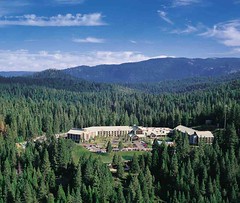
The popularity of geocaching– a high-tech scavenger hunt conducted using handheld GPS units– is not likely to be a surprise to readers of the Really Rocket Science blog. But the AP has an interesting report on how a lodge in Yosemite National Park is capitalizing on the sports’ popularity to bring visitors to its luxurious surroundings:


 [T]he Tenaya Lodge, just outside Yosemite National Park near Wawona, began offering a geocaching program along with its nature hikes and horseback riding outings last year….

Built 15 years ago and renovated recently, the 244-room Tenaya Lodge is the grandest of Yosemite’s perimeter "gateway" hotels catering to the park’s overflow and visitors who prefer to put a little distance between themselves and Yosemite Valley’s bustle….

Essentially, the sport is a cross between orienteering and a treasure hunt using high-tech navigation. Someone hides a "cache" – typically a plastic or metal bucket with a lid – with a logbook and some goodies in it and publishes the precise latitude and longitude on the Web. The goal is to dial those coordinates into your handheld GPS unit and have it lead you to the stash.

Since the sport began in 2000, it has grown exponentially. According to Geocaching.com, there are currently 202,735 caches in 218 countries…..

When I switched on the unit, it locked onto four satellites in geostationary orbit – meaning they appear to hover over one point on the globe – and spat out our elevation (5,288 feet) and our exact location (37 degrees, 26.402 minutes by 119 degrees, 36.237 minutes.) Depending on how well it linked up with the satellites, it was accurate to anywhere from 25 to 100 feet. With various "waypoints" pre-programmed, the GPS unit directed my wife, Jeri, and me down a series of increasingly rough dirt roads – the last was four-wheel-drive territory _ and beeped to alert me at various junctions. Or at least it was supposed to. The hotel is still working the kinks out of the system.

Read the full report on the author’s geocaching adventure in Yosemite here.


GPS for Gangs

Monday, May 8th, 2006

It works for finding lost pets and kids out past curfew, so it makes perfect sense to use GPS in fighting crime. I’ll be interested to see how California’s plan to track gang members using GPS works out.

 Under an arrangement between prison officials and San Bernardino, high-risk parolees known to belong to street gangs will be released from custody on the condition that they wear a GPS bracelet on their ankles at all times.
They appear as moving dots on a map and if they try to remove the anklet or enter unauthorized areas the device sends an alert to a base station monitored by law enforcement officials. 

I suppose it’s nothing new. According to the article, it’s already used by some California counties to monitor sex offenders. But when you combine that story with the ability to track wandering teenagers (or spouses) via GPS, it starts to sound like an episode of Wild Kingdom. It’s just that the tag is on a tasteful bracelet instead of being fastened to an ear. 

One question arises in my mind, however. How secure is this tracking system? In the cases of people who might be subject to retaliation or other attacks if identified — like sex offenders and gang memvers — how easy would it be for someone with enough technical knowledge, and an intent to do harm, to hone in on their tracking device and  locate them?

Science Mythbusting

Monday, May 1st, 2006

Over on Newsvine, I came across an interesting post by someone who claims to be busting the myths about science, and found a couple of interesting items on the list.

Myth 2. The Great Wall of China is the only manmade structure visible from space

There are several variations on this folkloric statement, and they’re all quantifiably false. Astronauts can spot the Great Wall from low-Earth orbit, along with plenty of other things like the Giza pyramids and even airport runways. But they can’t see the Wall from the Moon. 

Myth 12. There is no gravity in space

Blame the term "zero-gravity" for this common misconception. Gravity is everywhere, even in space. Astronauts look weightless because they are in continuous freefall towards the Earth, staying aloft because of their horizontal motion. The effect of gravity diminishes with distance, but it never truly goes away. It is also untrue that space is a vacuum. There are all kinds of atoms out there, albeit sometimes far apart. 

I don’t know about the gravity question (any physicists out there?), but apparently our mythbuster is dead on about the Great Wall.

“You can see the Great Wall,” Lu says. But it’s less visible than a lot of other objects. And you have to know where to look.

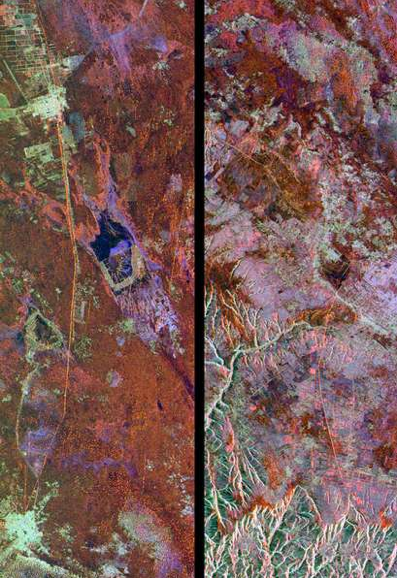
In fact stretches of the wall aren’t even visible from China. They’ve been buried by sand for centuries. NASA has used space-based radar to map out hidden parts of the ancient structure. [Astronaut Ed] Lu is trying to get a picture of it, too, with a digital camera. 

I don’t know if Lu every got his picture, but I did track down the pictures NASA took with its "space-based radar." 

The mythbuster also takes on some common myths about asteroids.

Weather Satellites Launch After Weather Delays

Monday, May 1st, 2006

Seventh time’s the charm, right?


After six tries over eight days, NASA launched a Delta 2 rocket Friday and a pair of satellites that will give planet Earth its newest health checkup by examining the secrets of clouds.

The 12-story-tall rocket built by Boeing rumbled off Space Launch Complex-2 at 3:02 a.m. into foggy skies at Vandenberg Air Force Base.

The approximately $515 million mission placed two satellites into orbit: CloudSat and CALIPSO (Cloud-Aerosol Lidar and Infrared Pathfinder Satellite Observations). About 90 minutes later, officials confirmed that the satellites had arrived in space.

“With the successful launch of CloudSat and CALIPSO we take a giant step forward in our ability to study the global atmosphere," said David Winker, CALIPSO principal investigator from NASA’s Langley Research Center, Va. "In the years to come, we expect these missions to spark many new insights into the workings of Earth’s climate and improve our abilities to forecast weather and predict climate change."

 We wrote about the launch in anticipation on the 20th of April; Rocco kept us updated in the comment threads ("CloudSat can’t launch because of clouds. Go figure."); but now the wait is over, and you can view Friday’s successful launch here.

The Kon-Tiki Sails Again!

Friday, April 21st, 2006

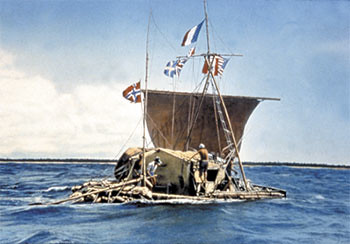
"Nearly 60 years after Thor Heyerdahl’s Pacific Ocean crossing aboard the balsa raft Kon-Tiki, a Norwegian team is in Peru putting final touches on a new vessel to repeat the journey," the AP reports.


                                                    The original Kon-Tiki in 1947.

"I think we are mentally prepared and we are really, really anxious to put this raft in the ocean," said Olav Heyerdahl, 28, the adventurer’s grandson and one of the six-member crew.

Behind him in a dry-dock in Lima’s port of Callao loomed the balsa raft Tangaroa — named for the Polynesian god of the ocean — which is scheduled to set sail April 28.

The expedition had been set for last year, but was postponed after key sponsors diverted funds to help victims of the 2004 Southeast Asian tsunami.

In 1947, Thor Heyerdahl and his team sailed their primitive raft 5,000 miles from Peru to Polynesia in 101 days to support Heyerdahl’s theory that the South Sea Islands were settled by ancient mariners from South America. Heyerdahl, who died in 2002 at age 87, documented his voyage in the best-selling book "Kon-Tiki" and in an Oscar-winning documentary film.

The adverturer’s 67-year-old son, Thor Heyerdahl Jr., came to Peru to see the new vessel and cheer on his own son. "I’m very happy for him that he gets this opportunity," he said.

The new 56-foot vessel is larger than the Kon-Tiki, with eight crossbeams lashed to 11 balsa logs from Ecuador and covered by a bamboo deck. Atop a hardwood cabin, the crew fitted a thatched-reed roof made by Aymara Indians.

The Kon-Tiki carried only the most basic equipment, even by 1947 standards. But the Tangaroa features abundant modern technology, including solar panels to generate electricity and satellite navigation and communications gear.

We’re not sure if the expedition has Internet access while adrift in the South Pacific, but it is possible if they contacted Connexion by Boeing, which uses SES-Americom’s AMC-23 satellite, which is the only satellite that they can use for Internet based on their route.

Consider that a modern factoid for an ancient journey.

The Kon-Tiki Sails Again!

Friday, April 21st, 2006

"Nearly 60 years after Thor Heyerdahl’s Pacific Ocean crossing aboard the balsa raft Kon-Tiki, a Norwegian team is in Peru putting final touches on a new vessel to repeat the journey," the AP reports.

The original Kon-Tiki in 1947.

"I think we are mentally prepared and we are really, really anxious to put this raft in the ocean," said Olav Heyerdahl, 28, the adventurer’s grandson and one of the six-member crew.

Behind him in a dry-dock in Lima’s port of Callao loomed the balsa raft Tangaroa — named for the Polynesian god of the ocean — which is scheduled to set sail April 28.

The expedition had been set for last year, but was postponed after key sponsors diverted funds to help victims of the 2004 Southeast Asian tsunami.

In 1947, Thor Heyerdahl and his team sailed their primitive raft 5,000 miles from Peru to Polynesia in 101 days to support Heyerdahl’s theory that the South Sea Islands were settled by ancient mariners from South America. Heyerdahl, who died in 2002 at age 87, documented his voyage in the best-selling book "Kon-Tiki" and in an Oscar-winning documentary film.

The adverturer’s 67-year-old son, Thor Heyerdahl Jr., came to Peru to see the new vessel and cheer on his own son. "I’m very happy for him that he gets this opportunity," he said.

The new 56-foot vessel is larger than the Kon-Tiki, with eight crossbeams lashed to 11 balsa logs from Ecuador and covered by a bamboo deck. Atop a hardwood cabin, the crew fitted a thatched-reed roof made by Aymara Indians.

The Kon-Tiki carried only the most basic equipment, even by 1947 standards. But the Tangaroa features abundant modern technology, including solar panels to generate electricity and satellite navigation and communications gear.

We’re not sure if the expedition has Internet access while adrift in the South Pacific, but it is possible if they contacted Connexion by Boeing, which uses SES-Americom’s AMC-23 satellite, which is the only satellite that they can use for Internet based on their route.

Consider that a modern factoid for an ancient journey. 


Good Job: Atlas V Rocket Launches ASTRA Satellite

Thursday, April 20th, 2006

This afternoon’s launch was a complete success.

Lift-off occurred at 4:27 p.m. EDT and initial contact with the satellite, called acquisition of signal, was confirmed at 5:43 p.m. EDT from a satellite tracking station in Uralla, Australia.

Atlas V launches from The Cape

Some really nice photos are on the SpaceFlightNow.com site. 

The video footage is impressive.