Archive for the ‘Satellites’ Category

NSS-8 Satellite to Launch on Saturday

Thursday, January 25th, 2007

The NSS-8 satellite is set to launch from a converted oil platform anchored on the equator in the Pacific Ocean, approximately 1,500 miles south of Hawaii. The launch video will be streamed live via the Sea Launch Web site. Here’s an image from the launch platform’s live webcam (remember to refresh often for changes):

The satellite itself is impressive:

The high-power, state-of-the-art NSS-8 satellite is a Boeing 702 spacecraft that carries 56 C-band and 36 Ku-band transponders designed to replace the existing NSS-703 satellite as the centerpiece of NEW SKIES’ strategic Indian Ocean contribution to SES’ global communications network. The successful launch of NSS-8 will subsequently also allow for NSS-703 to be re-deployed to the Atlantic Ocean region at 340° East, further boosting the global coverage and connectivity provided by the 40 plus strong fleet of satellites in the SES Group. NSS-8 will support a wide range of functions, including corporate communications, government and military operations, Broadband Internet services and broadcast applications.

The satellite will provide coverage to two-thirds of the world’s population, serving countries in Europe, Africa, the Middle East, the Indian subcontinent and Asia. Designed for a 15-year lifespan, NSS-8 will have 18 kilowatts of total power at the beginning of life on orbit.
India Recovers Space Capsule

Tuesday, January 23rd, 2007


The Hindustan Times reports…

India has for the first time successfully brought a space capsule back to earth. Until now, only the United States, Russia and China had similar expertise in re entry technology. The success also takes the Indian Space Research Organisation (ISRO) a step closer to its goal of putting an Indian in space some years from now.

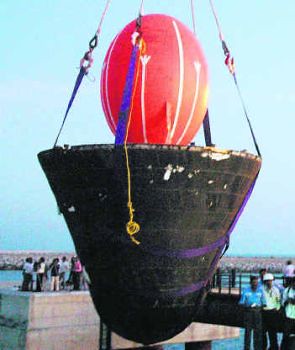
On Monday, ISRO officials said the 550-kg recoverable space capsule — called Space capsule Recovery Experiment (SRE-1) — that was launched on January 10 had returned to the earth’s atmosphere, splashing down in the Bay of Bengal, about 140 km east of the Sriharikota coast at 9.46 am, exactly as planned.

It demonstrated ISRO’s ability to build a capsule that could endure temperatures of more than 1,200 degrees Celsius while re-entering the earth’s atmosphere after a space expedition.

Retrieved by a Coast Guard team, SRE-1 will be taken to the Sriharikota Range by road on Tuesday for ISRO scientists to take a close look at the heat-resistant tiles that protected it during the re-entry phase.

ISRO chairman G Madhavan Nair said, “SRE-I is an important beginning for providing a low-cost platform for micro-gravity experiments in space science and technology and the return of specimen from space.” Dr SC Chakravarthy, programme director (space science), ISRO, who monitored the touchdown from ISTRAC (ISRO’s Telemetry, Tracking & Command Network) station on the outskirts of Bangalore, said, “We are very happy with the outcome of this experiment because it will lead to new things — certainly to a manned mission into space.”

Beware the Chinese Satellite Killer

Thursday, January 18th, 2007

Read the Reuters report via the Irish Examiner earlier today and was relieved to see the target satellite they smacked into was only 500 miles away, prompting the U.S. to object:

"The U.S. believes China’s development and testing of such weapons is inconsistent with the spirit of cooperation that both countries aspire to in the civil space area," National Security Council spokesman Gordon Johndroe said. "We and other countries have expressed our concern regarding this action to the Chinese."

Using a ground-based medium-range ballistic missile, the test knocked out an aging Chinese weather satellite about 537 miles above the earth on January 11 through "kinetic impact," or by slamming into it, Johndroe said.

For those of us who watch TV, we need not be alarmed. Communications satellites that provide video services, either direct-to-home or to cable systems, operate in the geosynchronous or Clarke orbit. That’s 22,236 miles up. Can’t smack that down.

Talk about a Payload…

Tuesday, January 16th, 2007

The Stanford Daily last week reported on a joint venture between NASA and Stanford University that would putting E. coli into space.

The project, which has been dubbed GeneSat-1, has involved the launching of a new non-harmful strain of E. coli bacteria into orbit in an attempt to observe the impact that zero gravity and space radiation have on the DNA of living organisms. By studying the data that is being transmitted to Earth from the shoebox-sized project satellite, the GeneSat-1 team believes that the mission could offer insight into the health risks of prolonged manned space missions. Spearheading the GeneSat-1 mission is a host of Stanford-affiliated technologists and NASA researchers.

I wonder if this is the first time blasting the bacteria commonly found in excrement into space might actually help humanity? I don’t know, but the mission appears to have been a part of the payload in the first launch from the Mid-Atlantic Regional Spaceport. Talking about some history making bacteria … hey, at least its not in my Spinach. 🙂


DIY Friday: Paint That Satellite Dish

Friday, January 12th, 2007

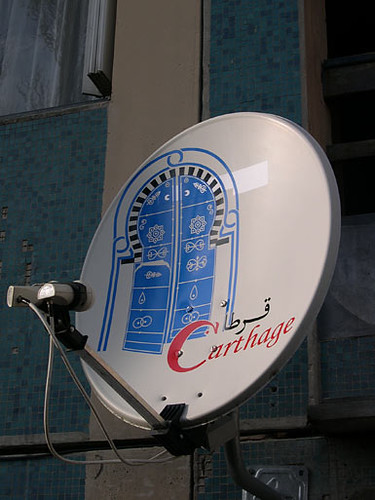
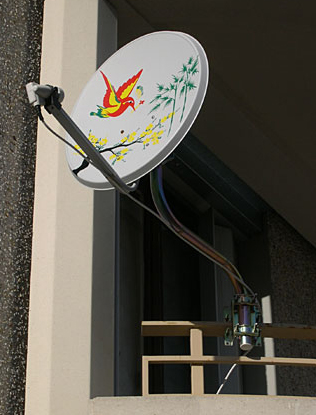
We’ve blogged about unobtrusively installing your own dish — but most satellite TV customers rarely decorate their antennas by painting them.

After coming across this site, showing beautifully painted and decorated satellite antennas in North Africa, we may want to reconsider.

Before we run out and start painting, we need to keep in mind the reflector serves a purpose, and never paint the LNB. Check ehow.com for details.


DISA Issues RFI for TCA to Industry, With Help from the Comms FIO and NSSO

Thursday, January 11th, 2007

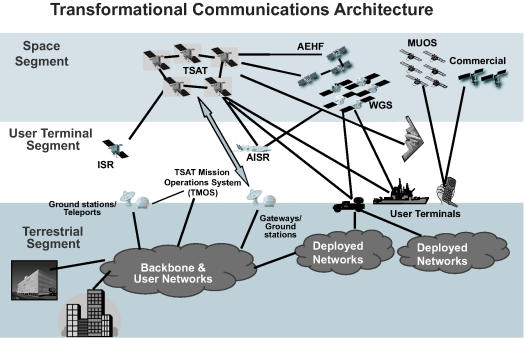
DISA (Defense Information Systems Agency) is turning to the commercial satcom community for what appears to be a huge undertaking: the TCA (Transformational Communications Architecture). It includes satcom systems serving NASA, DoD and the Intelligence Community. Like I said: HUGE.

Federal Computer Week has the story:

Transformational Communications Architecture will address the potential for an expanded role for commercial satellite communications to meet the requirements of DOD, NASA and the intelligence community through the year 2020, according to the request for information released Jan. 9.

The Communications Functional Integration Office (FIO) of the National Security Space Office (NSSO) is overseeing the project.

According to the RFI, the agency wants to assess the ability of the commercial satellite industry to meet a wide range of requirements, including wideband and narrowband communications provided by satellite systems operating in L, S, C, X, Ku, and Ka bands.

DISA also needs to know how well commercial services can support various communication platforms, such as handheld, airborne (including unmanned aerial vehicles) and shipboard communications. Replies to the RFI are due Jan. 26.

Bernie Skoch, a consultant with Suss Consulting who worked for DISA as director of customer advocacy, said it makes sense to bundle future NASA requirements with DOD because NASA has a lot of satellite assets that lie fallow between space missions.

Skoch said that the RFI indicated that DOD does not have enough in-house expertise to develop its own architecture and needs to reach across the table for help from industry.

In a briefing delivered to a Satellite Industry Association conference late last year, Cmdr. Allan Assel of the FIO said DOD needs a new architecture to address potential shortfalls in the coming years as the demand for satellite communications exceeds capacity.

Assel said next-generation communications architecture should also leverage IP-based communications, which can support interoperable voice, video and data streams, memory in space, and information assurance. The new TCA should also work in concert with DISA’s Global Information Grid to help synchronize multiple acquisitions.

NSSO, in cooperation with the Transportation Department, is also developing an architecture for satellite-based positioning, navigation and timing services.

FCC Authorizes New NGSO Satellite System

Friday, January 5th, 2007


Several years ago, there were several companies who wanted to use the Ku-band in operating non-geosynchronous satellites (NGSO’s), causing an uproar among established GEO operators at the time.  As proposed, they’d interfere with high-value satellite services around the world. That wasn’t gonna happen.

Most of those interference issues were resolved via an agreement at the ITU. Now, via Doug Lung’s RF Report, we see the FCC authorizing one of those original applicants:

The commission allowed Virtual Geosatellite LLC to begin building a non-geostationary satellite system that will use a network of satellites with highly elliptical orbits. The system is composed of three sub-constellations, each with five satellites. Two of the sub-constellations track the Earth’s northern hemisphere and the third tracks the southern hemisphere. Each sub-constellation will have one spare satellite. To eliminate interference with satellites in geostationary orbits and terrestrial microwave systems using the same frequency band, Virtual Geo terminals and gateway stations will communicate with the satellites only when the satellites are above a certain elevation angle and the satellites in each sub-constellation will actively communicate with earth stations only when they are at an orbital position that is at a latitude greater than 45 degrees away from the equator in their respective operating hemisphere.

Virtual Geo was allowed to use 5925-6725 MHz, 12.75-13.25 GHz and 13.8-14.5 GHz for uplinks and 3700-4200 MHz and 10.7-12.7 GHz for downlinks. User-to-satellite links will use the 14.0-14.5 GHz band and satellite-to-user links will use 11.2-11.7 GHz.

Is this what’s left of Teledesic?

DIY Satellite Radio Merger

Wednesday, January 3rd, 2007

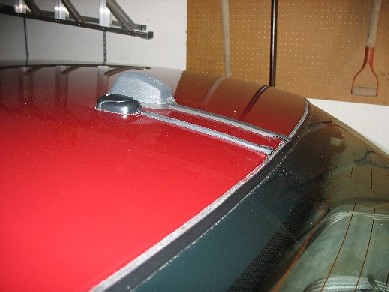
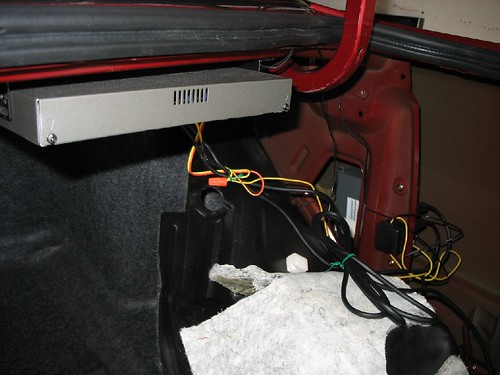
While the NYTimes confirmed rumors that the two were headed towards mergers-ville Monday, some hackers over in the XM fan forums have been discussing a joining of Sirius and XM that even the FTC can’t shut down. As with most two headed consumer electronic beats, the rig requires ignoring manufacturer claims that the doing so is impossible and leaving a mess of cables and random boxes in your trunk.


Hey, who said you needed to put groceries in there anyway.

[Adding XM to Sirrus]

Satcom: The Fiber Cut Remedy

Tuesday, January 2nd, 2007

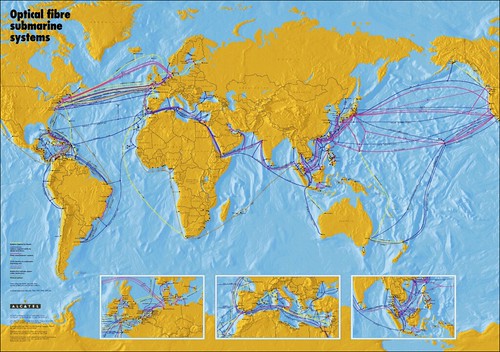
Heard about that Pacific earthquake near Taiwan while taking a break last week. Read in the New York Times how data and Internet traffic was significantly distrupted:

The quake disrupted services in Taiwan, Singapore, Hong Kong, South Korea and Japan, but a ripple effect was felt in other parts of the world. Many phone subscribers could not get through to Europe, regional telecommunications operators reported, as they raced to reroute their traffic to alternative lanes.

How prepared was everyone with mission-critical operations suddenly stopping? How vulnerable are these undersea fiber optic cables?


Was it really that bad? Seems like it was. The Korea Times reported that 6 of Korea’s 7 cables were cut, disrupting banking operations:

LG Dacom, which provides Citibank Korea’s dedicated data cables, said that the bank’s lines were cut by the 6.7-magnitude quake that struck the southern part of Taiwan.

Citibank Korea said the disruptions would not have happened if the bank had its own communication network in Korea.

"A network systems team in Taiwan oversees Citibank transactions in Korea. Severance of the submarine cable cut our connections with them, causing all the problems,’’ an official said, requesting anonymity.

HSBC Korea also relies on a foreign carrier for dedicated data lines, which are managed by its Asia-Pacific headquarters in Hong Kong.

Officials at KT and Dacom, Korea’s fixed-line operators, which jointly manage with foreign partners the cables damaged by the quakes, said other data lines were affected.

"A total of 92 dedicated data lines were severed, partially disrupting the operations of 32 of our corporate customers,’’ a KT official, Park Hae-dong, said.

KT’s clients include the Ministry of Foreign Affairs and Trade, Reuters, AT&T Korea, Posdata and SK Telink. Among financial clients are Metlife Korea, Korea Exchange Bank and Kookmin Bank.

Dacom, Citibank’s service provider, said the quake cut 26 of its lines.

Fortunately, satellites over the Pacific act as back-ups for some, while others rely exclusively on space-based redundancy for their critical communications. Several intra-Asian satellites, such as those operated by AsiaSat, came to the rescue. You can bet you sweet bippy trans-Pacific satellites such as Telstar 18, NSS-5, IS-701, AMC-23 and PAS-8 got some business from this outage.

 With communications returning to normal, we may not know the extent of the damage for another 2 weeks.  I can tell one thing we’ll know in a couple of weeks. THE hot topic at the Pacific Telecommunications Council’s annual conference in Honolulu will be the race to build another cable across the Pacific.

Solar Storms

Thursday, December 21st, 2006


We wrote yesterday about the challenges a hostile space environment presents to satellite technology; last week we were all reminded of those challenges when a solar flare disrupted satellite signals:

An "energetic" storm on the sun disrupted signals in space and forced mission controllers to shut systems down to avoid damage to spacecraft orbiting Earth, the European Space Agency said.

The sun on December 13 expelled a solar flare after a buildup of magnetic energy near its surface triggered an explosion, the agency said today in an e-mailed statement. The flare caused a so-called coronal mass ejection, which sent a stream of fast-moving atomic particles toward Earth…

The flare was the strongest of five categories for such ejections and was one of a series of eruptions this week that emanated from a region of active sunspots. 

The flare even affected the ISS:

 It may also have caused a fault in the system controlling the space station’s orientation in space.

The ISS usually relies on four large gyroscopes that spin to control its "attitude" without consuming copious amounts of propellant.

Space station flight director Joel Montalbano told reporters in Houston, US, that the unusual solar activity had caused the density of Earth’s atmosphere to increase.

"We’re seeing some problems with our software converging on a nice stable attitude for attitude control," Space.com quoted him as saying.

Last week, astronauts were forced to sleep in protective areas of the station and shuttle as a precaution against the storm.

What do satellite operators like SES AMERICOM do in a case like this? Nothing, really, other than ride it out. 

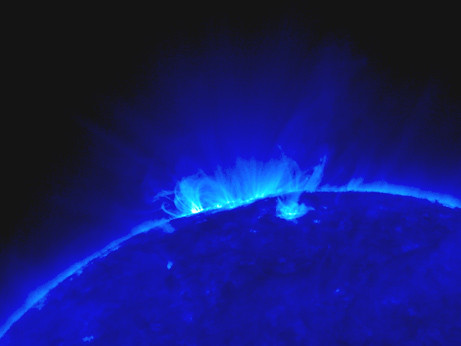
But all that solar activity can be beautiful. The image at the top of this post is from NASA’s twin Solar Terrestrial Relations Observatories (STEREO), which sent back their first images of the sun ‘s growing activity. And some musicians at Berkeley are even making music inspired by "the breeze of electrons from the sun."

Zamfir, eat your heart out.  

But as beautiful as the images of the sun are from last week, some impatient people may wonder what the sun looks like right now. For that, bookmark SolarMonitor.org, which provides nearly real time images of the sun.