Archive for the ‘Satellites’ Category

Ramen in Space… Again, but Now for Longer

Thursday, February 15th, 2007

According to one of my favorite space sites, SpaceDaily, Japan is Koichi Wakata, whose a veteran astronaut at the ripe old age of 43, will be the country’s first citizen to stay long-term in space begining in the fall of 2008 a three month stint on the International Space Station (ISS).

On his third mission into space (the first happened in 1996, the second in 2000) Wakata will be spending much of his time running a series of experiments in a small laboratory, Kibo (meaning "Hope"), on the multi-national space station. While excited about the opportunity his trip represents, Wakata is even more excited about bringing his nation’s noodles into space.

"’Since I believe that the chances will increase for Japanese astronauts’ long-term stays, I want to check things out such as the clothing, food and accommodation" for future astronauts,’ [Wakata] said.

‘I especially want to try Japanese foods like delicious ramen,’ he said."

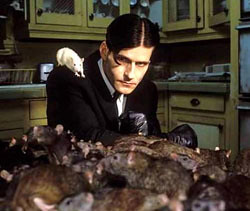
Those tasty noodles, invented by the recently deceased Mr. Noodle (right), were originally flown into space on a 2005 US Discovery flight with Japanese astronaut Soichi Noguchi.

Oh, and for those keeping count, according to the Wikipedia, currently 14 of the 193 countries on earth have had representatives visit the ISS so far. Looks like we got 179 to go!

SES Buying Out GE

Wednesday, February 14th, 2007

Reuters reports:

European satellite company SES (SESF.LU: Quote, Profile , Research) (SESFd.PA: Quote, Profile , Research) said on Wednesday it had agreed to buy back a 19.5 percent stake in the company from General Electric (GE.N: Quote, Profile , Research) in a deal worth 1.24 billion euros ($1.62 billion).

SES shares shot up to an 11-month high of 14.80 euros and were up 6.4 percent at 14.50 euros at 1600 GMT, with investors relieved of the prospect of GE releasing shares onto the market.

"SES will contribute certain assets and cash to a new company and exchange shares of that new company for GE’s entire holding of 103,149,900 shares in SES," the company said in a statement of a deal it expected to boost earnings.

In a presentation, SES said it expected its earnings per share to rise by over 13 percent in 2007.

SES Chief Financial Officer Mark Rigolle described the deal as "made in heaven" by removing the overhang of GE’s holding that has been depressing SES shares and by restructuring SES’s portfolio after its 2005 acquisition of New Skies.

SES, one of the world’s largest commercial satellite operators, said it would pay the equivalent of 12 euros for each exchanged share, resulting in a total transaction value of 1.238 billion euros.

This could rise by 45 million euros depending on the closing date. SES said the deal was expected to close in the second quarter of 2007.

GE took the stake in 2001 when SES bought GE’s satellite business Americom.

KBC Securities said in a research note that the valuation of the assets appeared fair, and the disposal of certain assets made sense, with some overlap following SES’s purchase in 2005 of New Skies.

"The transaction should be earnings accretive, will increase financial leverage and bring the free float up to 70 percent," KBC said.

In the credit derivatives market, the cost of insuring SES debt against default edged higher, up 2 basis points to 30.5 basis points, a trader said, on fears that the deal could make the company more attractive in a leveraged buyout.

GE will swap its SES shares for shares in the new company, SES International Holding Inc, comprising assets including one satellite, a variety of stakes in related businesses and 588 million euros in cash.

SES will seek to cancel some 86 million of the 103 million C shares it buys back and convert the remainder to FDRs to pay B-shareholders.

CFO Rigolle said the deal would simplify the shareholding structure, with the cancellation of around one in five of its shares.

SES also set new revenue and core earnings (EBITDA) guidance for 2007 to reflect the GE transaction. It sees revenues of 1.568 billion to 1.608 billion euros and EBITDA of 1.041 to 1.081 billion euros.

SES agreed to buy New Skies in December 2005 to boost its presence in Latin America and the Indian Ocean region.

Separately on Wednesday, Asia Satellite Telecommunications Holdings Ltd (1135.HK: Quote, Profile , Research) said its major shareholder Modernday Ltd planned to take the company private for $282 million. Modernday is jointly owned by CITIC and General Electric Capital Corp. (Additional reporting by Richard Barley in London)
 

Here’s the official news release:

SES (Euronext Paris and Luxembourg Stock Exchange: SESG) announces that it has agreed with GE a EUR 1.2bn split-off transaction in which SES will contribute certain assets and cash to a new company and exchange shares of that new company for GE’s entire holding of 103,149,900 shares in SES, subject to satisfaction of certain closing conditions. As disclosed in March 2006, SES has been discussing with GE a number of options to achieve a structured exit from its remaining shareholding.

GE will exchange its shareholding in SES for shares in a new company, SES International Holdings, Inc. (“SIH”), comprising assets and EUR 588 million in cash, subject to certain closing adjustments. SES has agreed to pay an equivalent of EUR 12 for each exchanged share1, resulting in a total transaction value of EUR 1,238 million. The cash amount and the transaction value may be increased by approximately EUR 45 million depending on the closing date.

The assets of SIH will be:

  • The AMC-23 satellite and its related business
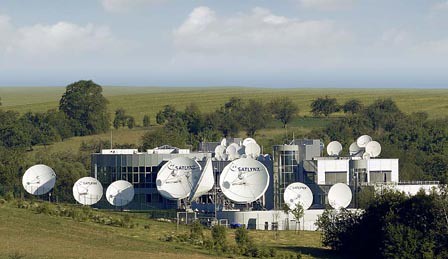
  •  100% of SATLYNX
  •  49.5% of Bowenvale (representing a 34.1% interest in AsiaSat)
  •  19.99% of Star One
  •  5.5% of Orbcomm

Due to the intended US tax treatment of the transaction, third party valuations of the assets were secured.

The transaction announced today allows SES to achieve two important business objectives: to restructure and optimise SES’ portfolio of assets following the SES NEW SKIES acquisition and to remove the GE share overhang.

The acquisition of SES NEW SKIES in March 2006 added to the SES fleet five 100% owned satellites over Asia, Africa and Latin America (NSS-806, NSS-7, NSS-703, NSS-6 and NSS-5). These satellites are in addition to the spacecraft already owned through participations in AsiaSat and Star One, as well as the three other 100% owned assets (AMC-12/ASTRA 4A, AMC-23 and AAP-1), which have comparable coverage and serve similar business purposes to some of the NEW SKIES satellites. This created an opportunity to restructure and optimise SES’ business assets and portfolio of minority participations which led to the decision to divest from the shareholdings in AsiaSat and in Star One as well as to dispose of the AMC-23 satellite operated over the Pacific Ocean Region (POR).

With SES NEW SKIES generating most of its revenues in the government and enterprise infrastructure segment, SES has also re-evaluated the relevance of certain of its satellite end-to-end managed service activities in the enterprise market. As a result, SES decided to divest from SATLYNX, the group’s end-to-end managed service entity. There will now be an increased focus of the SES service business on media and government applications.

SES expects to derive significant corporate benefits from the transaction as it removes the GE overhang which had created the perception of a cap on the SES share price since the announcement that GE intended to divest its interest in SES.

The transaction is expected to close by Q2 2007 subject to the satisfaction of the closing conditions (which include, among others, receipt of certain approvals from SES’ shareholders, a tax ruling regarding the tax treatment of the transaction for GE, and required regulatory approvals).

An Extraordinary General Meeting will be scheduled for March 15th, 2007, in order to allow the Company to buy back all 103,149,900 C-shares, of which 85,958,250 will be canceled. As the B-shareholders have elected to be paid in FDRs in lieu of cash, the remaining 17,191,650 C-shares will be converted into FDRs in order to pay the B-shareholders for their 42,979,125 B-shares. As a result of the transaction, and while maintaining the number of B-shares at 1/3 of the total, the shareholder structure of SES will be simplified.


Detecting Debris in Space

Tuesday, February 13th, 2007


Just last week we wrote about the International Space Station needing to manuever to dodge junk in space — or, specifically, the debris from the disused satellite that the Chinese recently shot down in a military experiment.

Thus it’s a bit ironic, as NewScientistSpace points out, to learn that the "only experiment designed to survey and trace the origin of space debris too tiny to be tracked by radar has been cancelled:"

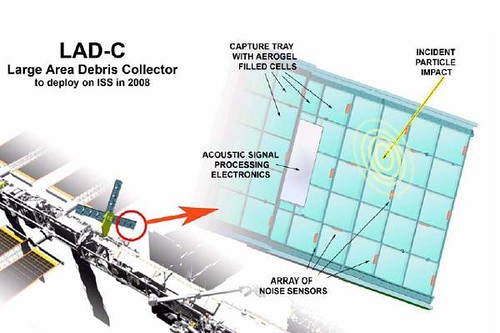
An international team of scientists had been planning to capture and catalogue this dust from outside the International Space Station with an experiment called LAD-C (Large Area Debris Collector). Meant to be launched on a shuttle in 2008, LAD-C was going to catch the debris in a sponge-like aerogel mounted on a 10-square-metre aluminium grid.

When a piece of space debris hit the aerogel, it would have sent vibrations along the metal grid, where piezo sensors similar to the ones in electronic drum kits would have picked up the signal.

A computer would have registered the location, impact speed and timing of the strike, and based on the orientation of the space station, this would have given the particle’s orbital trajectory. Researchers would then know whether it came from space junk, an asteroid or a comet, and would be able to study its composition when the experiment was brought back to Earth in 2009…

The cancellation of LAD-C collector (additional details of which can be found here, in this PDF) comes at a strange time, NewScientist argues:

The cancellation coincides with the most dangerous orbital debris event in the history of space launches. On 11 January, China destroyed one of its own weather satellites with a ground-launched ballistic missile, creating more than 900 objects larger than 10 cm across and an estimated 35,000 smaller objects spanning at least 1 cm. The debris spread throughout low-Earth orbit, from altitudes of 200 to nearly 4000 kilometres, and is expected to stay in space for hundreds of thousands of years. 

Without the LAD-C, how will rocket scientists keep up with all the debris in space?

Why, by reading the Orbital Debris Quarterly, of course.

Meanwhile, this rockets scientist has been told by his supervisor (at home, not in the office) that our own personal LAD-C is operational and should in fact be deployed. 

PBS HD on Satellite TV

Monday, February 12th, 2007


We read today in TVPredictions.com satellite TV operators may soon need to carry the Public Broadcasting Service’s HDTV feeds:

Public Broadcasting officials say satellite TV operators should be required to carry their High-Definition signals.

PBS executives from across the country are coming to Washington this week to urge Congress to change the Communications Act to include a must-carry provision.

"DIRECTV and EchoStar use scarce public airwaves to beam their signals to and from satellites," says John Lawson, president and CEO of the Association of Public Television Stations (APTS). "They use highly valuable international orbital slots for these satellites. It’s outrageous that they won’t carry the new digital channels from local public stations, but find a way to carry the big four commercial network stations."

DIRECTV and EchoStar have expanded their local HD service over the last year, but do not offer the PBS high-def signal in most cities.

APTS says the Communications Act should state that the satcasters must carry PBS’ "entire multicast digital programming," which would include the high-def signal and other digital feeds.

Satellite TV services are required to carry the analog feed of the local PBS station under the Satellite Home Viewer Improvement Act.

APTS says DIRECTV is considering carriage of PBS digital feeds, but talks are at an early stage. EchoStar, the group says, is refusing to carry the PBS digital feeds.

In January 2005, the PBS group signed an agreement with the National Cable and Telecommunications Association for carriage of all PBS digital signals on large cable TV systems. APTS says it hopes to sign a similar agreement with smaller cable systems in the near future.

The Association of Public Television Stations Web site gets into the details:

Specifically, APTS seeks to amend Section 338 of the Communications Act to make clear that the digital signals of Public Television stations are subject to the carry-one carry-all provisions related to carriage of local broadcast signals via satellite. This action would clarify that the entire multicast digital programming transmitted by a Public Television station is subject to mandatory carriage.


Gotta love Variety’s witty headlines:

Public broadcasters lobby on carriage

Networks plea to Congress for satellite TV signal

By WILLIAM TRIPLETT

Local pubcasters are set to launch a lobbying blitz to convince Congress to mandate carriage of all their digital signals by satcasters DirecTV and EchoStar.

As the Assn. for Public Television Stations hosts its "Capitol Hill Day" this week, reps from local noncommercial broadcasters from around the country will converge on Congress to express their frustration that "the high-definition signals of commercial stations are carried by satellite distributors, while public television stations’ new digital signals are kept off," according to an APTS statement.

They will therefore ask in the coming days that Congress support legislation requiring that DirecTV and EchoStar carry all local pubcasters’ HD and other digital programming during the transition to all-digital TV and after it is completed in February 2009.

Satellite Phone System Troubles

Wednesday, February 7th, 2007

If you’re out in a truly remote location, especially at one of the poles, your options for connectivity are limited. First, it probably isn’t wired. Second, geosynchronous communications satellite orbit approximately 36,000 kilometers (22,300 miles) above the equator. This means that once you get to the extreme northern or southern latitudes, your options includes geo satcoms in inclined orbits and low-earth orbit satellites (LEOs). The two leaders in this field are Iridium and Globalstar.

Iridium had their financial troubles years ago and has since recovered, thanks in part to the U.S. Department of Defense. When Iridium went into bankruptcy, it was the DoD that realized they needed Iridium’s network for diversity. In this context, the word “diversity” means a diverse path of communications. Today, a restructured Iridium is holding its own.

Globalstar’s prospects have taken a turn for the worse, as we read in the Silicon Valley/San Jose Business Journal:

Globalstar Inc. said Tuesday its satellite amplifiers are wearing out faster than expected threatening its ability to support two-way communications by as early as 2008.
Milpitas-based Globalstar (NASDAQ:GSAT) said it is trying to launch its next generation of satellites in 2009. In a filing with the Securities and Exchange Commission, the company said that its amplifiers are degrading faster than expected, and it may not be able to fix the problem in time.
The problem may be linked to radiation exposure, Globalstar said.
Globalstar, which went public in November, saw its shares drop almost 26 percent to $10.75 in midday trading. The stock has traded between $12.45 and $17.68.


Concerned yet? Read their Form 8-K filing with the U.S. Securities and Exchange Commission (SEC) and you’ll find this:

As previously disclosed in the Company’s public filings, a number of its satellites have experienced various anomalies over time, one of which is a degradation in the performance of the solid-state power amplifiers of the S-band communications antenna.  The S-band antenna provides the downlink from the satellite to a subscriber’s phone or data terminal.  Degraded performance of the S-band antenna reduces the quality of two-way voice and data communication between the affected satellites and the subscriber and may reduce the duration of a call.  If the S-band antenna on a satellite ceases to function entirely, two-way communication is impossible over that satellite, but not necessarily over the constellation as a whole.  The root cause of the degradation in performance of the amplifiers is unknown, although the Company believes it may result from irradiation of the satellites in orbit.
The S-band antenna amplifier degradation does not affect adversely the Company’s one-way “Simplex” data transmission services, which utilize only the L-band uplink from a subscriber’s “Simplex” terminal to the satellites. 
To date, the Company has managed the degradation of the S-band antenna amplifiers in various technical ways, as well as by placing into service spare satellites already in orbit and moving unimpaired satellites to key orbital positions.  To maintain the highest possible capacity and best possible quality of service in light of this problem and to prepare for the integration of the eight satellites to be launched in 2007, on February 2, 2007, the Company completed the reconfiguration of its satellite constellation to combine two different “Walker” configurations, which continue to operate as a single constellation of 40 satellites plus in-orbit spares.  When launched, the eight satellites will be utilized to replenish the constellation over time as necessary until the second generation satellites are available for service, which the Company currently projects will be in late 2009. 

Fortunately, they’ll be using Inmarsat’s BGAN service at the upcoming Baffin Island expedition, along with Globalstar. Sir Richard Branson, his son Sam and Ed Viesturs will join the team on the last leg of the journey, from late April to the end of the expedition in May 2007.

Satellite Executive of the Year

Monday, February 5th, 2007

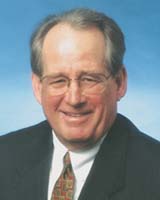
Via Satellite has named Pat Dewitt, CEO of Space Systems/Loral, the Satellite Executive of the Year:


"We had to decide between a number of exceptional executives that lead their companies to new successes in 2006," said Jason Bates, editor of Via Satellite magazine. "However, what set Pat DeWitt apart from the rest was how quickly he turned the company around after such a difficult period. There was consensus at Via Satellite that this was the year to recognize Pat’s achievements."

In 2006, under DeWitt’s leadership, SS/L won a total of seven new satellite construction awards, from a wide array of customers, including Fixed Satellite Service (FSS), Mobile Satellite Service (MSS), Digital Audio Radio Service (DARS) and Direct-To-Home (DTH) service providers. The company also saw the successful launch of five SS/L-built satellites during the year.
 
"SS/L’s success today is a result of the leadership and vision put forth by Pat DeWitt," said Michael Targoff, chief executive officer of Loral Space & Communications. "Pat led the company through a difficult period and has positioned the company as the world’s premier provider of commercial satellites. Congratulations to Pat and all of SS/L on this well-deserved recognition."

Pat DeWitt has held management positions with SS/L and its predecessor companies for 34 years. He started at the company when it was Western Development Labs of Ford Aerospace in 1973, as a financial analyst, and was promoted to positions of increasing responsibility over the years. He was named executive vice president in 1996 and in that role was responsible for finance, information systems, procurement, facilities, and human resources. He became president of the company in 2001 and was named chief executive officer in 2006.

"It is a great honor to receive this award," said DeWitt. "I would like to extend my thanks to the editors of Via Satellite magazine as well as to the employees of Space Systems/Loral and most of all I want to thank our many loyal customers who are the ultimate reason for our success."

The award will be presented at SATELLITE 2007, the premier global event for satellite-enabled communications, which runs February 19-22 at the Washington Convention in Washington, D.C.

EGOGRAM 2007

Wednesday, January 31st, 2007

Friends, Earthlings, ETs — lend me your sensory organs!

I send you greetings and good wishes at the beginning of another year. I’ll be celebrating (?) my 90th birthday in December – a few weeks after the Space Age completes its first half century.

When the late and unlamented Soviet Union launched Sputnik 1 on 4 October 1957, it took only about five minutes for the world to realise what had happened. And although I had been writing and speaking about space travel for years, the moment is still frozen in my own memory: I was in Barcelona attending the 8th International Astronautical Congress. We had retired to our hotel rooms after a busy day of presentations when the news broke — I was awakened by reporters seeking comments on the Soviet feat. Our theories and speculations had become reality!

Notwithstanding the remarkable accomplishments during the past 50 years, I believe that the Golden Age of space travel is still ahead of us. Before the current decade is out, fee-paying passengers will be experiencing sub-orbital flights aboard privately funded passenger vehicles, built by a new generation of engineer-entrepreneurs with an unstoppable passion for space (I’m hoping I could still make such a journey myself). And over the next 50 years, thousands of people will gain access to the orbital realm – and then, to the Moon and beyond.

During 2006, I followed with interest the emergence of this new breed of ‘Citizen Astronauts’ and private space enterprise. I am very encouraged by the wide-spread acceptance of the Space Elevator, which can make space transport cheap and affordable to ordinary people. This daring engineering concept, which I popularised in The Fountains of Paradise (1978), is now taken very seriously, with space agencies and entrepreneurs investing money and effort in developing prototypes. A dozen of these parties competed for the NASA-sponsored, US$ 150,000 X Prize Cup which took place in October 2006 at the Las Cruces International Airport, New Mexico.

The Arthur Clarke Foundation continues to recognise and cheer-lead men and women who blaze new trails to space. A few days before the X Prize Cup competition, my old friend Walter Cronkite received the Foundation’s Lifetime Achievement Award. I have known Walter for over half a century, and my commentary with him during the heady days of the Apollo Moon landings now belong to another era. A space ‘pathfinder’ of the Twenty First Century, Bob Bigelow, was presented the Arthur C. Clarke Innovator Award for his work in the development of space habitats. With the successful launch of Bigelow Aerospace’s Genesis 1, Bob is leading the way for private individuals willing to advance space exploration with minimum reliance on government programmes.

Meanwhile, planning and fund raising work continued for the Arthur C. Clarke Center "to Investigate the Reach and Impact of Human
Imagination", to be set up in partnership with the University of Nevada, Las Vegas. Objective: to identify young people with robust imagination, to help their parents and teachers make the most of that talent, and to accord imagination as much regard as high academic grades in the classroom – anywhere in the world.  The Board members of the Clarke Foundation, led by its indefatigable Chairman Tedson Meyers, have taken on the challenge of raising US$ 70 million for this project. I’m hopeful that the billion dollar communications satellite industry I founded 60 years ago with my Wireless World  paper (October 1945), for which I received the astronomical sum of £15, will be partners in this endeavour.

I’ve only been able to make a few encouraging noises from the sidelines for these and other worthy projects as I’m now very limited in time and energy owing to Post Polio. But I’m happy to report that my health remains stable, and I’m in no discomfort or pain. Being completely wheel-chaired helps to concentrate on my reading and writing – which I can once again engage in, with the second cataract operation restoring my eyesight.

During the year, I wrote a number of short articles, book reviews and commentaries for a variety of print and online outlets. I also did a few carefully chosen media interviews, and filmed several video greetings to important scientific or literary gatherings in different parts of the world.

I was particularly glad to find a co-author to complete my last novel, The Last Theorem, which remained half-written for a couple of years. I had mapped out the entire story, but then found I didn’t have the energy to work on the balance text. Accomplished American writer Frederik Pohl has now taken up the challenge. Meanwhile, co-author Stephen Baxter has completed First-born, the third novel in our collaborative Time Odyssey series, to be published in 2007.

Members of my adopted family — Hector, Valerie, Cherene, Tamara and Melinda Ekanayake — are keeping well. Hector has been looking after me since 1956, and with his wife Valerie, has made a home for me at 25, Barnes Place, Colombo. Hector continued to rebuild the diving operation that was wiped out by the Indian Ocean Tsunami of December 2004. Sri Lanka’s tourist sector, still recovering from the mega-disaster, weathered a further crisis as the long-drawn civil conflict ignited again after more than three years of relative peace and quiet. I remain hopeful that a lasting solution would be worked out by the various national and international players engaged in the peace process.

I’m still missing and mourning my beloved Chihuahua Pepsi, who left us more than a year ago. I’ve just heard that dogs aren’t allowed in Heaven, so I’m not going there.

Brother Fred, Chris Howse, Angie Edwards and Navam Tambayah look after my affairs in England. My agents David Higham Associates and Scovil, Chichak & Galen Literary Agency deal with rapacious editors and media executives. They both follow my general directive: No reasonable offer will even be considered.

I am well supported by my staff and take this opportunity to thank them all:
Executive Officer: Nalaka Gunawardene
Personal Assistant: Rohan De Silva
Secretary: Dottie Weerasooriya
Valets: Titus, Saman, Chandra, Sunil
Drivers: Lalith & Anthony
Domestic Staff: Kesavan, Jayasiri & Mallika
Gardener: Jagath

Let me end with an extract from my tribute to Star Trek on its 40th anniversary – this message is more relevant today than when the series first aired in the heady days of Apollo: “Appearing at such a time in human history, Star Trek popularised much more than the vision of a space-faring civilisation. In episode after episode, it promoted the then unpopular ideals of tolerance for differing cultures and respect for life in all forms – without preaching, and always with a saving sense of humour.”

Colombo, Sri Lanka
28 January 2007

 

Rats Jam XM Radio

Tuesday, January 30th, 2007

The warm weather on the East Coast has kept rodents outdoors, but now that colder temperatures have arrived, they’re in where it’s warmer. Maybe in your house. This author recently trapped 3 mice within 24 hours of deploying a few Victors

Well, rodents don’t discriminate between commercial and residential properties. Today’s Washington Post has the full story:

Rats! XM Radio Scurries to Address Rodent Infestation

By Amy Argetsinger and Roxanne Roberts

If you hear some scratching noises on XM radio, it’s probably not static — but it might be rats. The satellite radio’s District headquarters is so infested with the furry little critters that the company has gone to the rat-eradication equivalent of DefCon 1.

"Those of you familiar with DC rodents know that we’re looking at the size of small house cats," writes XM senior veep Dan Turner in an internal memo sent to employees on Friday.

Turner goes on to describe the gnawing dread: "Currently we have lost the functionality of Production Room 8 as the rodents have discovered that the cover on our fiber optics cables makes good nesting material. A couple of weeks ago it was one of the multi-function studios that was taken out of commission. Tomorrow it could be a cable to a satellite uplink. It is that serious."

The Beltway, rat-wise, appears to be on the second floor of the XM building, a beautifully restored former printing factory on New York Avenue NE, reports our colleague Paul Farhi. The crawl space under the raised floors "represents an eight-lane superhighway to anywhere the rats want to go," writes Turner.

The broadcaster has summoned Orkin, according to spokesman Chance Patterson, and has enlisted the building’s 600 employees in "immediate and very aggressive eradication measures" — that means no food and drink in the studios (not even coffee? Eeeekk!) and all those magazines, posters and other junk must be tossed because rats like to use them to build nests.

No shock and awe here — Turner’s ready for a long siege. "Eventually, they’ll get the building back," he concludes his memo, "but we ain’t done with it yet."


If you can’t afford a house call from The Orkin Man, you can consult the National Park Service’s "Integrated Pest Management Manual."


Grand Prize: A Trip in Space

Sunday, January 28th, 2007

From USA Today, a great piece on space tourism being used as prizes:

There are no free rides to outer space

Brian Emmett’s childhood fantasy came true when he won a free trip to outer space. He was crushed when he had to cancel his reservation because of Uncle Sam.

Emmett won his ticket to the heavens in a 2005 sweepstakes by Oracle Corp., in which he answered a series of online questions on Java computer code. He became an instant celebrity, giving media interviews and appearing on stage at Oracle’s trade show.

For the self-described space buff who has attended space camp and watched shuttle launches from Kennedy Space Center, it seemed like a chance to become an astronaut on a dime.

Then reality struck. After some number-crunching, Emmett realized he would have to report the $138,000 galactic joy ride as income and owe $25,000 in taxes. Unwilling to sink into debt, the 31-year-old software consultant from the San Francisco Bay area gave up his seat.

"There was definitely a period of mourning. I was totally crestfallen," Emmett said. "Everything you had hoped for as a kid sort of evaporates in front of you."

With commercial spaceships still under development, it’s uncertain when the infant space tourism industry will actually get off the ground. Still, ultra-rich thrill-seekers are already plunking down big — though refundable — deposits to experience a few minutes of weightlessness 60 miles above Earth.

And in recent years, space tourism companies have teamed with major corporations to stage contests with future suborbital spaceflights as the grand prize.

The partnerships have interstellar hype — but as Emmett found out, they can get mired in that most earthbound hassle: taxes.

"From a consumer perspective … I’d be wary," said Kathleen Allen, director of the University of Southern California’s Marshall Center for Technology Commercialization. "I’d check to see the fine print."

Since the Internal Revenue Service requires winnings from lottery drawings, TV game shows and other contests to be reported as taxable income, tax experts contend there’s no such thing as a free spaceflight. Some contest sponsors provide a check to cover taxes, but that income is also taxable.

"I don’t see how an average person can swing that kind of tax payment. It’s a big, big bite," said tax attorney Donna LeValley, contributing editor for J.K. Lasser’s annual tax guide.

To reduce the financial burden, winners can argue that they don’t owe any taxes until their flight lifts off. Another option is working out an installment plan to pay taxes over time, said Greg Jenner of the American Bar Association.

The IRS declined to comment, saying it does not talk about individual matters.

Despite Emmett’s cancellation, Oracle said its contest was a success. The software giant is in the process of naming his replacement and still has two other winners on board from Asia and Europe.

That spaceflight will be provided by Space Adventures Ltd., the same company that brokers deals for trips on Russian rockets to the orbiting international space station for a reported $20 million per customer.

Eric Anderson, the company’s chief executive, insists that contests are the best way for most people to get into space. He said Space Adventures has given away about 20 reservations through competitions, and the majority of winners are satisfied.

Space contest rules vary widely but generally require winners to undergo astronaut training before the trip and sign a waiver freeing the sponsors from any liability if there’s an accident.

Microsoft Corp. is the latest company to dangle a free space ride. This month it launched an elaborate online puzzle game as part of its promotional campaign for its new Vista PC operating system. The grand prize winner — to be named this week — gets a seat with Rocketplane Ltd., which is building a souped-up Lear jet it hopes will ferry passengers to space in late 2009.

The $50,000 check that comes with the prize, which is valued at $253,500, should cover the winner’s taxes, said Brian Marr, group marketing manager for Vista.

It’s common for contest winners to have to play a waiting game.

Virgin Galactic customer Doug Ramsburg won his ticket in a Volvo sweepstakes during the 2005 Super Bowl. His family and friends often hound him about when he’ll reach the cosmos. After all, Virgin Galactic doesn’t have any spacecraft yet.

Even without an itinerary, Ramsburg says he’s not worried. He said he’s confident in the man tasked to build Virgin’s commercial spacecraft — aerospace designer Burt Rutan, whose SpaceShipOne became the first privately manned rocket to reach space in 2004.

Ramsburg considers the prize a "blessing" but declined to talk about the financial arrangements, except to say the $100,000 check that came with the prize should make him the first free Virgin Galactic passenger.

"You don’t have to be a superhero in order to go to space," said Ramsburg, 43, who works in the admissions office of the University of Colorado at Denver.

Back on Earth, Emmett said he has no regrets about turning down his trip and doesn’t blame anyone.

"I was, however briefly, a potential astronaut," he wrote last fall in a blog entry titled "Clipped Wings."

NSS-8 Satellite Launch Updates

Thursday, January 25th, 2007

The NSS-8 satellite is set to launch from a converted oil platform anchored on the equator in the Pacific Ocean, approximately 1,500 miles south of Hawaii. The launch video will be streamed live via the Sea Launch Web site.

The satellite itself is impressive:

The high-power, state-of-the-art NSS-8 satellite is a Boeing 702 spacecraft that carries 56 C-band and 36 Ku-band transponders designed to replace the existing NSS-703 satellite as the centerpiece of NEW SKIES’ strategic Indian Ocean contribution to SES’ global communications network. The successful launch of NSS-8 will subsequently also allow for NSS-703 to be re-deployed to the Atlantic Ocean region at 340° East, further boosting the global coverage and connectivity provided by the 40 plus strong fleet of satellites in the SES Group. NSS-8 will support a wide range of functions, including corporate communications, government and military operations, Broadband Internet services and broadcast applications.

The satellite will provide coverage to two-thirds of the world’s population, serving countries in Europe, Africa, the Middle East, the Indian subcontinent and Asia. Designed for a 15-year lifespan, NSS-8 will have 18 kilowatts of total power at the beginning of life on orbit.