Space Tether Experiment Launches Today

If you were up with the sun (or the clouds, if you’re in the eastern portion of the US) this morning, you might have caught the report on NPR on Space Tethers and Tethers Unlimited efforts to change the way satellites are transported.
While science fiction, Victoria’s Secret, and long-woven ropes are rarely mentioned in the same breath (unless of course you’re in some bizarre John Waters movie), the work of Dr. Robert P. Hoyt and Dr. Robert L. Forward have brought the two strangely together to solve a real problems posed by simply moving obejcts around space.


"For 50 years, people have relied on rockets to move things around in space. But rocket fuel is expensive and heavy. [Hoyt with the help of Forward realized how] much easier it would be to just fling things around using orbiting tethers.

‘It’s sort of like using the techniques of Tarzan to move around in space,’ explains Hoyt. ‘You’re basically grabbing onto a long, high-strength rope and using it to swing you from one place to another.’"

The problem, of course, was how you got those ropes to last in an environment where they were being constantly pounded by the debris that litters our orbit. And that’s where the underwear comes into Tethers Unlimited business plan…

"The company makes tethers by starting with light but strong fibers, like Kevlar. Then the strands are woven together using a computerized machine.

‘[That machine is] normally used for fabricating things like lacy edgings on Victoria’s Secret undergarments," says Hoyt. "We’ve developed ways to use that to braid the multi-line tether structure that we’re testing in space.’"

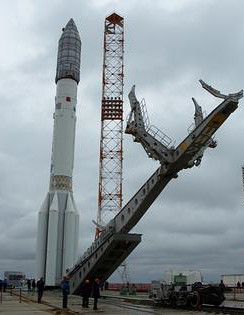
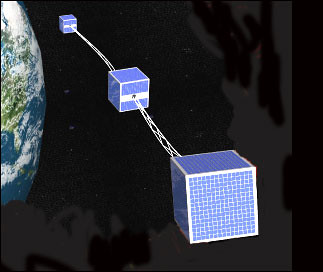
That testing begins imminently, a Dnepr rocket blasting off from Baikonur Cosmodrome today contains, within its payload, three mini-satellites that will deploy a half-mile tether, two of the satellites anchoring either end. The third, dubbed, according to a recent Engadget report, Inspector Gadget (Ted and Ralph make up the other two members of the trio), will move up and down the tether taking pictures that will allow those on the ground to learn how many cuts or tears the rope takes on over the next few months.

While it might be awhile until we see tether’s in action, propelling satellites in space, this initial experiment is an important first step in a lot of new space technology, possibly including space elevators.

DIY Friday: Using a Basic Stamp (Video Podcast)


Click To Play

If you’ve been around here long enough, you probably already know how much we love MAKE Magazine. Well now they’re featuring Video Podcasts to buttress they’re already damn awesome audio offerings.

This week we wanted to direct you towards a video on using a BASIC Stamp that might be useful to anyone (like myself) just becoming an electronics hobbist. In the video, Bre Pettis and Joe Grand explain the basics of the Basic Stamp and a little on how to use it, ultimately directing you back to the MAKE website to get more information about the technology, which, by the way, would work really well if you’re still trying to make that LED T-Shirt we talked abut a few weeks ago.

Canadian Condo Dish Discrimination Case Dismissed

A Halifax man who asserted that his condo board’s ordering him to take down his satellite dish amounted to discrimination has had his case dismissed by the Nova Scotia Human Rights Commission, the CBC reports.

A report from the hearing in August gives us the background information on Ahmed Assal’s case:

Assal, a condo owner in Clayton Park, is a Muslim originally from Egypt. Through his satellite dish, he gets 18 channels of religious and cultural programming in Arabic.

Without it, he says his children could not get the programs essential to their education.

"I have a family, I have children, and the serious matter is that it is for culture, religion, language," he told reporters after the hearing.

Assal acknowledges he knew about the condominium board’s bylaw that prohibits satellite dishes before he bought the condo.

The dismissal came down last week: 

Board chairman Royden Trainor said he wasn’t satisfied that Assal met the necessary burden of proof to show he was discriminated against.

Trainor concluded that the absence of satellite service would not have the same impact on the family’s faith and cultural identity as being denied traditional ethnic food, for example.

"The [Assal] family’s ongoing devotion to the practices and tenets of their faith and cultural identity will continue unimpeded, uninterrupted and undiminished with or without access to a particular satellite dish and service," he wrote in his April 3 decision.

We’re not familiar enough with the Nova Scotia Human Rights Commission to say definitively what sort of presidence this would set for other condo owners in Canada. Other cases have gone the other way when condo boards and dish owners have locked horns; this case, for example, is a good reminder of the need for specific language when HOAs try to control exterior modifications to condos. We will suggest, however, Canada’s most famous condo lawyer as counsel if you find yourself in a legal snafu, trapped between your desire for satellite TV and a pesky HOA constraint.

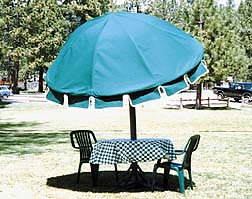
Here in the United States, the FCC has declared that Federal law supercedes any local or HOA zoning constraint. But you can avoid many of these legal hassles simply by following our DIY Friday guide to disguising your dish (especially this one for condos). As the photo above illustrates (yes, that’s a satellite dish acting all incognito), all you need is a patio and some patio furniture, and the next thing you know you’re surreptiously watching your favorite satellite shows and keeping the neighbors happy.

Next: Google Selling Ads for DirecTV

Another scoop via VentureBeat:

VentureBeat is hearing that Google is negotiating an advertising deal with  DirecTV, the nation’s largest satellite broadcast service with 16 million subscribers.

Dish, the nation’s second largest satellite TV company, announced a deal with Google last week. (VentureBeat was first to report the Dish deal a month ago).

This is just the latest move by Google to sew up the entire advertising world. Google is pushing into newspapers, magazines, radio, cable and now satellite.

The DirecTV deal is taking more time than Dish’s to close because DirectTV is managing the ownership change announced last last year (when News Corp said it would sell its ownership stake to Liberty). More details on DirecTV here. The deal with Google will go through eventually, says a source who wants to remain anonymous. [Update: Google says “no comment,” and DirecTV says: “We are always looking for ways to increase our ad sales revenue but we have nothing to comment regarding any new partnerships.”]

Here’s our blog post + comments on the Google deal with Dish Network.


If you think about it, a Google deal with DirecTV would give advertisers reach into more than 25% of U.S. TV households. Honk the horn on Madison Avenue like some truck is double-parked and you can’t get through: Google is a player in TV advertising. Yes, the household count is greater than Comcast on paper, but how effective will it be? Here’s a clue: interactivity. EchoStar and DirecTV have national interactive TV advertising capabilities in place and are actively working with advertisers to deploy them — especially automotive and financials. Stay tuned.

High-Speed Internet for Movin’ Military

Is this the future of acquisition procedures for the U.S. government’s satcom needs?

The Wall Street Journal (subscription required) reports that the U.S. Defense Department has formed an unusual partnership with Intelsat Ltd., Cisco Systems Inc., and private investors to bring high speed internet connections to military units on the go:

 The demonstration project requires private investors led by a fledgling private-equity fund to shoulder the entire cost of a networking system for directing messages, a sort of Internet router in the sky for soldiers and intelligence gatherers…..

Private investors are gambling that the U.S. military will make long-term commitments to support technical breakthroughs and new acquisition procedures….

Claire Fairfield, managing director of venture fund Concerto Advisors Inc., said his group is looking to raise as much as $200 million to fund four total satellites involving Intelsat or other commercial operators.

Cisco top executive for the program, Rick Sanford, says the project is "really a business approach, not a government program." By acting like a consumer, the DoD hopes to overcome the delays and cost overruns that have frustrated their more traditional attempts to meet the military’s soaring demand for satellite IP connections. (Cisco is providing software integration for the project.)

By developing and deploying such technology in about two years — dramatically faster than traditional military-satellite programs — such shared commercial-government payloads could pave the way for providing lower-cost, more flexible digital-communications links to fighting forces and intelligence operatives in the field. If successful, the model also will help the military, along with users of navigation, homeland-security and other civilian applications better coordinate future satellite needs.

In this case, "We get to test something for a fraction of what it would cost" if the Air Force funded it, said Mike Florio, the military’s lead manager for the program. "And we’ve got some stars of industry trying to make this work." 

The deal marks another milestone in Intelsat’s history. Intelsat was established in 1964 by 11 countries as an international intergovernmental agency to provide satellite services to member countries; by 1973, more than 80 countries had joined the consortium. In 2001, Intelsat became a private company, opening up new avenues of business — including deals like this one with the DoD. Still, vestigal problems remain from its days as the satcom provider to a broad spectrum of political organizations (see here and here,  as well as this odd entanglement between Sri Lanka, Amnesty International, and the International Cricket Council (whose Cricket World Cup is taking place now.)


As in the civilian world, the U.S. military’s need for faster and more reliable IP communications has grown exponentially as the convergence between IP technology and two-way and broadcast communications accelerates. AMERICOM Government Services’ C2OTM (Comms-on-the-Move, pictured above) for example,  provides "real time support for a full range of IP applications including VOIP, two way video surveillance, warfighter coordination tools such as common operational perspective and force tracking, and a full range of logistics and training applications" by integrating with ArcLight(r) modem technology from ViaSat

Anik F3 Launch Update


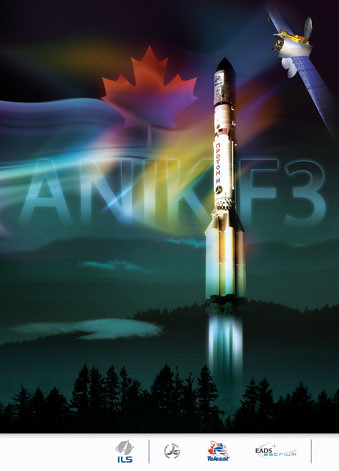
As you probably know those of us here at Really Rocket Science love a good launch, especially that of a big GEO satellite.

The Anik F3 will be launching tonight (04:54 April 10 Baikonur, 22:54 April 9 GMT, 18:54 April 9 EDT) this from launch pad 39 of the Baikonur Cosmodrome in Kazakhstan. You can, of course, catch the launch live via streaming, although hopefully we’ll be able to find on YouTube sometime tomorrow for those looking to beat a wicked case of the Mondays by heading to Happy Hour early.

Those nerdier than us might want to catch a live feed of the launch via satellite or over the phone at the following locations.

Live Broadcast
North America: Telstar 6 @ 93° West, transponder C11, downlink 3920 MHz (vertical), analog NTSC. Test signals start at 18:00 EDT.

Live Broadcast
Europe: NSS-7 @ 338° East, transponder WHL4/EUH3 CH1, Ku-band, 338 degrees West downlink 11098.9 MHz (horizontal), digital PAL symbol rate 6.1113, fec: 3/4. Test signals start at 22:00 GMT.

U.S. domestic Launch Hotline at 1-800-852-4980.

What does Anik F3 do? Basically its a comm sat for Telsat Canada, but since you asked:

"Multipurpose communications satellite with payloadsin Ku-, C- and Ka-band. The Ku- and C-bands will carry a wide range of broadcasting, telecommunications, business and Internet-based services throughout North America"

See you at the launch!

Simonyi in Space via Soyuz Rocket: It’s A Good Thing


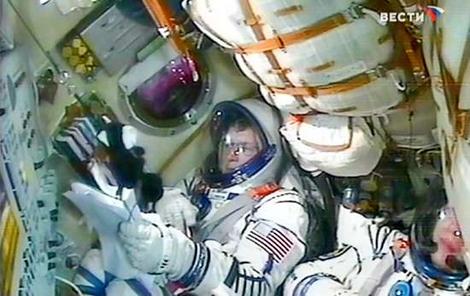
Microsoft billionaire Charles Simonyi was thrust into space today, with a meal prepared by Martha Stewart (quail roasted in wine, duck breast with capers and rice pudding, among other courses). They’ll be celebrating Cosmonauts Day on 12 April 2007. Check his blog later this week to see how much they all liked it.

RSC Energia’s statement:

At 21:31:14 Moscow Time a launch vehicle Soyuz-FG with Soyuz TMA-10 spacecraft was launched from the Baikonur launch site to the International Space Station.

The Increment 15 (ISS-15) crew and visiting crew 12 (VC-12) are on board the Russian transport manned vehicle. Soyuz TMA-10 is carrying a crew consisting of Russian cosmonauts Oleg Valeriavich Kotov (Gagarin CTC test cosmonaut) and Fyodor Nikolaevich Yurchikhin (S.P. Korolev RSC Energia test cosmonaut), as well as a spaceflight participant of the ISS visiting crew, USA citizen, Charles Simonyi. The objective of the launch is the scheduled replacement of two ISS-14 crewmembers and of the Soyuz TMA-9 spacecraft that has been serving within the space station as its crew rescue vehicle since September 20, 2006.

And it only cost him $25 million. By the way, he’s ham radio’s first space tourist, too (KE7KDP).

DIY Friday: Vacuum Tube Amplifier


Our friends over at the MAKE Blog linked to it a few days ago, but when I saw it I knew it’d be perfect link for our own DIY Friday feature.

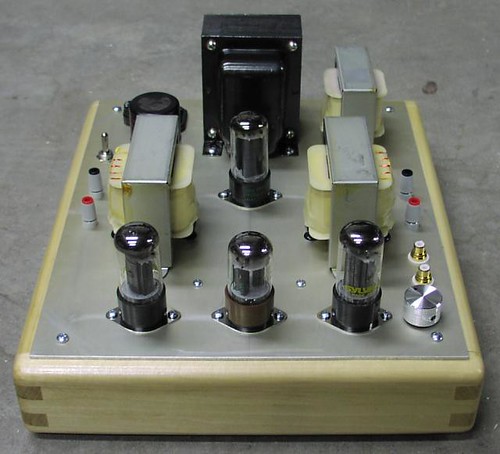
Boozehound Labs is obsessed with tubes — no, not the ones that run these here Internets — the vacuum kind. Often forgotten in the digital age, most good audiophiles get a little weepy talking about the "warmth" vacuum tubes give to music when amplifying, recorded or live music. The folks over at Boozehound Labs have dedicate most of their site to honoring the Vacuum Tube and teaching visitors how to bring a 19th century technology into their modern life.

Those looking to get started should check out the site’s awesome Vacuum Tube Hi- Fi Primer, which not only gives you the low-down on how to make the kick-ass amp you see above, but also provides an excellent explanation of vacuum theory and the technology behind the tube.

Those already familiar with the tech should check out Boozehound Lab’s show-and-tell pages on microphone and guitar amps the "scientists" have already put together. If you want to get started on a project right now (well, actually, as soon as the materials can be shipped to you), make your way over to Triode System’s page and check out some of their cool kits. While you might not save as much as you’d like, you guaranteed to get all you need to create the amp of your dreams.

Jet Man!

This is one of the coolest videos we’ve seen in a long time.


One could say Yves Rossy has distilled rocket science down to its essence, and created the perfect blend of man and machine:

His dream became reality mainly because of 4 model-engines which were built under his wings. With these, he can fly at over 200km/hr and conquer mountain summits. During the flight, Yves’s body becomes the likes of a bird and, other than a gas handle, Yves does not ride his wings but truly flies them, using various light body movements that he has learned to handle with perfection. These body movements are equal to those that birds use to fly…

Satcom, Chicago


As Robert Johnson wrote… 

Now, one and one is two, two and two is four
I’m heavy loaded baby, I’m booked, I gotta go
Cryin’ baby, honey, don’t you want to go
Back to the same old place, my sweet home Chicago

70 years later, still sounds good. In fact, Amazon has a nice box set available.

Last month, it was one and one and one is "no go:" the FCC dismissed (PDF) an application from the City of Chicago’s Office of Emergency Communications to operate a small satellite communications network consisting of a hub and two remote VSAT stations using sub-one-meter antennas. Besides not including a radiation hazard study, which is standard for earth station applications, the FCC found other details lacking:

Section 25.220(e)(1) of the Commission’s rules, 47 C.F.R. § 25.220(a)(1), requires applicants proposing non-routine earth stations to include with the application a certification from each target satellite operator that the target operator has reached agreements with adjacent satellite operators regarding the non-routine operations.

Chicago also wanted to be able to connect with any available satellite over the U.S. during an actual emergency. I’m sure they’ll refile their application, but they should probably consider using a pre-engineered, commercially-licensed emergency communications system such as REDiSat — which uses a the AMC-6 satellite’s Ku-band payload (which is actually pretty hot over Chicago) to connect to a fully-licensed earth station in Maryland. It uses an antenna that’s approved for two-way communications anywhere in the lower 48, typically a 1.2m Patriot antenna and an iDirect modem.

Los Angeles County installed an extensive VSAT network years ago, as did the State of Florida. But these are "hot spots" for these types of networks and they went to great lengths in designing and installing them. Other large cities have done likewise since 9/11. With simpler configurations such as the type REDiSat offers, smaller municipalities can now begin considering a communications network that uses the ultimate diverse path: through space.

Hey, it worked in Biloxi.