The NSS-8 satellite is set to launch from a converted oil platform anchored on the equator in the Pacific Ocean, approximately 1,500 miles south of Hawaii. The launch video will be streamed live via the Sea Launch Web site.
The high-power, state-of-the-art NSS-8 satellite is a Boeing 702 spacecraft that carries 56 C-band and 36 Ku-band transponders designed to replace the existing NSS-703 satellite as the centerpiece of NEW SKIES’ strategic Indian Ocean contribution to SES’ global communications network. The successful launch of NSS-8 will subsequently also allow for NSS-703 to be re-deployed to the Atlantic Ocean region at 340° East, further boosting the global coverage and connectivity provided by the 40 plus strong fleet of satellites in the SES Group. NSS-8 will support a wide range of functions, including corporate communications, government and military operations, Broadband Internet services and broadcast applications.
The satellite will provide coverage to two-thirds of the world’s population, serving countries in Europe, Africa, the Middle East, the Indian subcontinent and Asia. Designed for a 15-year lifespan, NSS-8 will have 18 kilowatts of total power at the beginning of life on orbit.
The NSS-8 satellite is set to launch from a converted oil platform anchored on the equator in the Pacific Ocean, approximately 1,500 miles south of Hawaii. The launch video will be streamed live via the Sea Launch Web site. Here’s an image from the launch platform’s live webcam (remember to refresh often for changes):
The high-power, state-of-the-art NSS-8 satellite is a Boeing 702 spacecraft that carries 56 C-band and 36 Ku-band transponders designed to replace the existing NSS-703 satellite as the centerpiece of NEW SKIES’ strategic Indian Ocean contribution to SES’ global communications network. The successful launch of NSS-8 will subsequently also allow for NSS-703 to be re-deployed to the Atlantic Ocean region at 340° East, further boosting the global coverage and connectivity provided by the 40 plus strong fleet of satellites in the SES Group. NSS-8 will support a wide range of functions, including corporate communications, government and military operations, Broadband Internet services and broadcast applications.
The satellite will provide coverage to two-thirds of the world’s population, serving countries in Europe, Africa, the Middle East, the Indian subcontinent and Asia. Designed for a 15-year lifespan, NSS-8 will have 18 kilowatts of total power at the beginning of life on orbit.
"Driveway moments," for those who don’t know, is a term used by NPR and other radio stations to describe those radio stories (or songs) that are so rivetting that you sit in the driveway listening to it after you’ve arrived home.
A variation that I’m familiar with is provincially known as "parking lot eternity" — when you sit and scream at the DJ for not telling you the name of the artist who did that awesome song two or three segments earlier.
Such experiences would come to an end, we’ve known, if and when Tivo for Radio ever showed up in our vehicles.
The luxuries of owning a PVR for watching TV shows may soon show up in automobiles. The European Space Agency, or ESA. is working on a new satellite radio system that requires little changes to automobiles but will allow listeners to perform the same PVR functions, but to their favorite radio stations. Pausing, rewinding and time shifting will all become usable features for in-car radio.
The ESA’s system employs what it calls "cache" memory for radio — essentially either a hard drive storage medium or some form of solid state memory such as flash memory. When released, the ESA’s system will more than likely employ solid state flash memory for storing audio data, which will better withstand bumps and jolts while driving around.
While satellite radio already exists from Sirius and XM, ESA’s system’s claim to fame is its cost which, according to the ESA, will be a lot cheaper to implement. Because the new system does not require the use of local transmission towers for assistance — like Sirius and XM — there are costs associated with setting up a local ground infrastructure. The ESA’s system will also use existing communications satellites that are already in place. This will require flat satellite dishes to be installed on automobiles, but the ESA claims that the system is small enough to be integrated well.
India has for the first time successfully brought a space capsule back to earth. Until now, only the United States, Russia and China had similar expertise in re entry technology. The success also takes the Indian Space Research Organisation (ISRO) a step closer to its goal of putting an Indian in space some years from now.
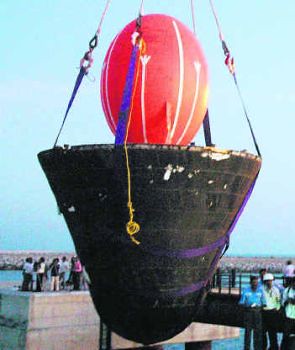
On Monday, ISRO officials said the 550-kg recoverable space capsule — called Space capsule Recovery Experiment (SRE-1) — that was launched on January 10 had returned to the earth’s atmosphere, splashing down in the Bay of Bengal, about 140 km east of the Sriharikota coast at 9.46 am, exactly as planned.
It demonstrated ISRO’s ability to build a capsule that could endure temperatures of more than 1,200 degrees Celsius while re-entering the earth’s atmosphere after a space expedition.
Retrieved by a Coast Guard team, SRE-1 will be taken to the Sriharikota Range by road on Tuesday for ISRO scientists to take a close look at the heat-resistant tiles that protected it during the re-entry phase.
ISRO chairman G Madhavan Nair said, “SRE-I is an important beginning for providing a low-cost platform for micro-gravity experiments in space science and technology and the return of specimen from space.” Dr SC Chakravarthy, programme director (space science), ISRO, who monitored the touchdown from ISTRAC (ISRO’s Telemetry, Tracking & Command Network) station on the outskirts of Bangalore, said, “We are very happy with the outcome of this experiment because it will lead to new things — certainly to a manned mission into space.”
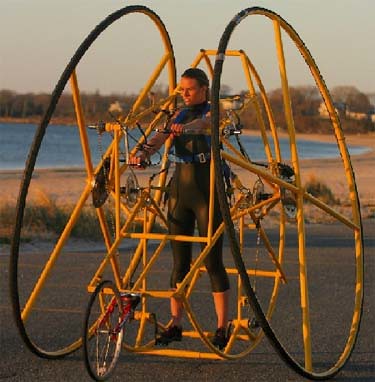
What is it, you ask? It’s a hyperbike — and NASA has put up a little cash to see where it goes (pun intended):
The Hyperbike is a working prototype created by inventor Curtis DeForest for a human-powered vehicle that will be faster than a traditional bicycle and much safer…
In creating the HyperBike, DeForest tried to remedy the flaws of the standard bicycle. For one thing, it has no seat; the rider stands upright. Also, the arms are used for additional power. DeForest describes pedaling the HyperBike as "swimming on dry land." Motor vehicle speeds of at least fifty miles per hour are easily attained….
One of the most interesting differences lies in the greater stability of the HyperBike. A conventional bicycle has the center of gravity higher than the spinning axis of the wheels. The HyperBike positions the rider in such a way as to put the center of gravity below the wheel axis.
Apparently, it is the stability and balance of weight relative to spinning forces that has NASA interested. These factors would make the Hyperbike a good choice for low gravity environments. The NASA-funded Space Alliance Technology Outreach Program has invested some capital in the development of the next model.
Now, I’ll admit to a tendency to get overly excited about these things — don’t even ask me about the Segway — but don’t you think this is pretty cool?
Every been curious about what comes after rockets? While the explosive lift-offs are awesome and have been helping NASA (and pretty much everyone else) do heavy lifting at incredible speeds throughout all of the space race, rockets require a great deal of hevy fuel (and Oxygen) to get up into space and don’t allow the manuverability we expect in a next generation space craft. For these reasons (and a bunch of others typically tied to safety), NASA has tied its plans for future superfast, ultrasonic transportation Scramjet (Super Combustion Ramjet) technology.
Current scramjet test vehicals reach over 7,000 mph (10x the speed of sound), going from 0 to 165 mph in .75 seconds. Check out the following video for even more information (note the selection of background music here):
The problem? While Scramjets may be able to overcome manuverability obstacles, it doesn’t seem likely that they’re going to be able to do it without rockets. In order to reach their ultrasonic speeds, most scramjets that have been tested, plagued with supersonic minimum speeds, need to be rocketed to 2.5-5 times the speed of sound by rockets in order to start their engines and reach their top speeds. Unless, of course, those electromagnetic catapults can start getting scramjets to their required speeds.
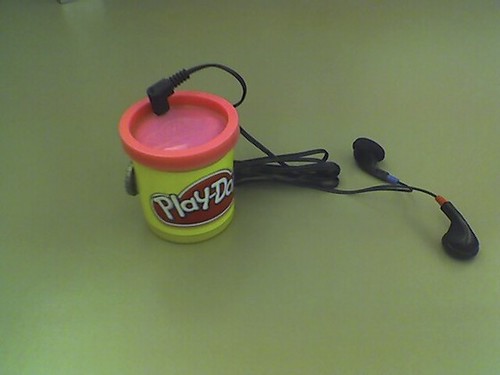
So maybe you got a little Play-doh® in your stocking during the holiday season and now, with winter finally upon us, you’re looking for something to do with it in the great indoors. Well, when I get out my playdough one potential use quickly leaps to mind… turning it into a Play-doh-based FM radio.
This a relatively easy project that only really requires a mini-radio, some playdough, a bottlecap, and some manual dexterity, but it’s sure to be a real conversation starter at the Gym.
"Oh, what’s this?" you reply stepping on to the treadmill. "This old thing? It’s just my playdough radio." Take that, Mr. Grunts-alot.
In all seriousness, you also might want to take some time checking out the Instructables site this weekend as well. It’s a really neat site that lets users easily create their own step-by-step instructions (with photos) of almost any project or activity.
Read the Reuters report via the Irish Examiner earlier today and was relieved to see the target satellite they smacked into was only 500 miles away, prompting the U.S. to object:
"The U.S. believes China’s development and testing of such weapons is inconsistent with the spirit of cooperation that both countries aspire to in the civil space area," National Security Council spokesman Gordon Johndroe said. "We and other countries have expressed our concern regarding this action to the Chinese."
Using a ground-based medium-range ballistic missile, the test knocked out an aging Chinese weather satellite about 537 miles above the earth on January 11 through "kinetic impact," or by slamming into it, Johndroe said.
For those of us who watch TV, we need not be alarmed. Communications satellites that provide video services, either direct-to-home or to cable systems, operate in the geosynchronous or Clarke orbit. That’s 22,236 miles up. Can’t smack that down.
Via Air Force Online comes the news that Northrup Grumman has opened the "first of its kind by private industry in the US” high-energy laser facility dedicated solely to military systems at Redondo Beach.
The Directed Energy Production Facility, part of Northrop’s Redondo Beach-based Space Technology sector, represents the first of its kind by private industry in the United States and probably the world, company officials said. Sword Medical
The new facility has three large laser laboratories to produce solid-state lasers, which use electric power to create an intense beam of light. The site also will be used to integrate lasers into larger defense systems….
Northrop is building on the laser technology it inherited from TRW Inc. when it bought the company in 2002….
The Joint High-Power Solid State Laser program will be the first work conducted in the new facility, Northrop said. In its third phase, this Department of Defense program will build and demonstrate the first 100-kilowatt solid-state laser.
The Northrop Grumman press release can be found here; far more interesting, however, is this animated and live video from Northrop Grumman of the defensive and tactical applications of laser technology on land, sea and air.
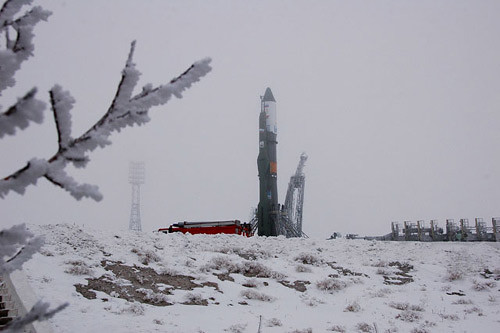
That snowy rocket you see is a Russian Soyuz rocket at Kazakhstan’s Baikonur Cosmodrome, which is set to launch tonight at 9:12 p.m. EST (0212 Jan. 18 GMT) and which sheds a light on the chores that go into keeping the International Space Station running.
Space.com explains what goes into a space station shopping list:
Riding aboard the Progress 24 space freighter will be more than 1,720 pounds of propellant, 110 pounds of oxygen and about 3,285 pounds of dry cargo – which includes new equipment, experiments and spare parts. The fresh supplies are expected to arrive at the space station’s Russian-built Pirs docking compartment Friday at 10:03 p.m. EST (0303 Jan. 20 GMT) .
To prepare for Progress 24’s ISS arrival, the station’s Expedition 14 crew and their flight controllers on Earth will cast off an older cargo ship – Progress 22 – from its berth at the Pirs compartment at about 6:29 p.m. EST today (2329 GMT).
Fragments of a Russian cargo ship carrying garbage and used equipment from the international space station (ISS) have crashed into the southern Pacific Ocean ahead of the arrival of a new cargo ship, a Russian official said.
Engineers undocked the Progress M-57 at around 2.29am (1029 AEDT) and sent it hurtling toward Earth, said Vera Medvedkova, a spokesman for the Federal Space Agency.
Much of the ship burnt up as it re-entered the atmosphere, and fragments crashed in a vast area of the Pacific, some 4,200 kilometres east of New Zealand, just under four hours later, she said.
Funny. It seems like it takes more than four hours just to get my trash out to the curb.

 Via
Via