Author Archive

Canadian Condo Dish Discrimination Case Dismissed

Thursday, April 12th, 2007
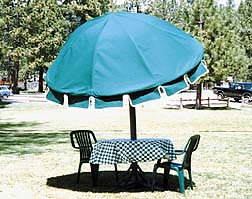
A Halifax man who asserted that his condo board’s ordering him to take down his satellite dish amounted to discrimination has had his case dismissed by the Nova Scotia Human Rights Commission, the CBC reports.

A report from the hearing in August gives us the background information on Ahmed Assal’s case:

Assal, a condo owner in Clayton Park, is a Muslim originally from Egypt. Through his satellite dish, he gets 18 channels of religious and cultural programming in Arabic.

Without it, he says his children could not get the programs essential to their education.

"I have a family, I have children, and the serious matter is that it is for culture, religion, language," he told reporters after the hearing.

Assal acknowledges he knew about the condominium board’s bylaw that prohibits satellite dishes before he bought the condo.

The dismissal came down last week: 

Board chairman Royden Trainor said he wasn’t satisfied that Assal met the necessary burden of proof to show he was discriminated against.

Trainor concluded that the absence of satellite service would not have the same impact on the family’s faith and cultural identity as being denied traditional ethnic food, for example.

"The [Assal] family’s ongoing devotion to the practices and tenets of their faith and cultural identity will continue unimpeded, uninterrupted and undiminished with or without access to a particular satellite dish and service," he wrote in his April 3 decision.

We’re not familiar enough with the Nova Scotia Human Rights Commission to say definitively what sort of presidence this would set for other condo owners in Canada. Other cases have gone the other way when condo boards and dish owners have locked horns; this case, for example, is a good reminder of the need for specific language when HOAs try to control exterior modifications to condos. We will suggest, however, Canada’s most famous condo lawyer as counsel if you find yourself in a legal snafu, trapped between your desire for satellite TV and a pesky HOA constraint.

Here in the United States, the FCC has declared that Federal law supercedes any local or HOA zoning constraint. But you can avoid many of these legal hassles simply by following our DIY Friday guide to disguising your dish (especially this one for condos). As the photo above illustrates (yes, that’s a satellite dish acting all incognito), all you need is a patio and some patio furniture, and the next thing you know you’re surreptiously watching your favorite satellite shows and keeping the neighbors happy.


High-Speed Internet for Movin’ Military

Tuesday, April 10th, 2007

Is this the future of acquisition procedures for the U.S. government’s satcom needs?

The Wall Street Journal (subscription required) reports that the U.S. Defense Department has formed an unusual partnership with Intelsat Ltd., Cisco Systems Inc., and private investors to bring high speed internet connections to military units on the go:

 The demonstration project requires private investors led by a fledgling private-equity fund to shoulder the entire cost of a networking system for directing messages, a sort of Internet router in the sky for soldiers and intelligence gatherers…..

Private investors are gambling that the U.S. military will make long-term commitments to support technical breakthroughs and new acquisition procedures….

Claire Fairfield, managing director of venture fund Concerto Advisors Inc., said his group is looking to raise as much as $200 million to fund four total satellites involving Intelsat or other commercial operators.

Cisco top executive for the program, Rick Sanford, says the project is "really a business approach, not a government program." By acting like a consumer, the DoD hopes to overcome the delays and cost overruns that have frustrated their more traditional attempts to meet the military’s soaring demand for satellite IP connections. (Cisco is providing software integration for the project.)

By developing and deploying such technology in about two years — dramatically faster than traditional military-satellite programs — such shared commercial-government payloads could pave the way for providing lower-cost, more flexible digital-communications links to fighting forces and intelligence operatives in the field. If successful, the model also will help the military, along with users of navigation, homeland-security and other civilian applications better coordinate future satellite needs.

In this case, "We get to test something for a fraction of what it would cost" if the Air Force funded it, said Mike Florio, the military’s lead manager for the program. "And we’ve got some stars of industry trying to make this work." 

The deal marks another milestone in Intelsat’s history. Intelsat was established in 1964 by 11 countries as an international intergovernmental agency to provide satellite services to member countries; by 1973, more than 80 countries had joined the consortium. In 2001, Intelsat became a private company, opening up new avenues of business — including deals like this one with the DoD. Still, vestigal problems remain from its days as the satcom provider to a broad spectrum of political organizations (see here and here,  as well as this odd entanglement between Sri Lanka, Amnesty International, and the International Cricket Council (whose Cricket World Cup is taking place now.)


As in the civilian world, the U.S. military’s need for faster and more reliable IP communications has grown exponentially as the convergence between IP technology and two-way and broadcast communications accelerates. AMERICOM Government Services’ C2OTM (Comms-on-the-Move, pictured above) for example,  provides "real time support for a full range of IP applications including VOIP, two way video surveillance, warfighter coordination tools such as common operational perspective and force tracking, and a full range of logistics and training applications" by integrating with ArcLight(r) modem technology from ViaSat

Jet Man!

Thursday, April 5th, 2007

This is one of the coolest videos we’ve seen in a long time.


One could say Yves Rossy has distilled rocket science down to its essence, and created the perfect blend of man and machine:

His dream became reality mainly because of 4 model-engines which were built under his wings. With these, he can fly at over 200km/hr and conquer mountain summits. During the flight, Yves’s body becomes the likes of a bird and, other than a gas handle, Yves does not ride his wings but truly flies them, using various light body movements that he has learned to handle with perfection. These body movements are equal to those that birds use to fly…

100 MPG X-Prize

Monday, April 2nd, 2007

It’s no secret that those of us here at Really Rocket Science were big fans of the original X Prize and the X Prize Foundation.

For the uninitiated, the original Ansari X Prize, according to Wikipedia:

… was a space competition in which the X PRIZE Foundation offered a US$10,000,000 prize for the first non-government organization to launch a reusable manned spacecraft into space twice within two weeks. It was modelled after early 20th-century aviation prizes, and aimed to spur development of low-cost spaceflight. The prize was won on October 4, 2004, the 47th anniversary of the Sputnik 1 launch, by the Tier One project using the experimental spaceplane SpaceShipOne.

How could we not be obsessed with such a competition? Not only did the winning craft give us an opportunity to rekindle our long-held admiration for the aerospace designs of Burt Rutan — but the prize helped launch the X-Prize Cup and our beloved X-Racers.


The second X Prize, the Archon X Prize, is "$10 million for the first non-governmental organization to sequence the complete genomes of 100 humans in 10 days time."

And now, in accord with our obsession with speed and technology, comes the Automotive X Prize.

From the website:

People love their cars. They are vital links to our jobs, our community, ourselves. For everything we love about them, cars are chained to the most severe global crises of our time: oil dependence and climate change.

We aim to break this deadlock through the most radical approach to innovation yet – the X PRIZE.

The Automotive X PRIZE will invite teams from around the world to focus on a single goal: design viable, clean and super-efficient cars that people want to buy.

This will be a race for the ages, with major publicity and a big sack of cash waiting for the champion, and perhaps our future hanging in the balance.

How’s that for gripping PR copy? It sure makes us want to channel our inner De Lorean and get to work.  (Guidelines for entry can be found here.)

We’ll be keeping you up to date on the progress (and cool designs) of the Automotive X Prize as well as future X Prizes in other fields and technologies. Becuase we, too, believe in "revolution through competition." And one never knows what form of locomotion the winning design might use.


Nortel, MSV to build Hybrid Satellite-Terrestrial Network

Thursday, March 29th, 2007

We’ve seen the future, and it contains uninterrupted service.

Mobile Satellite Ventures (MSV) and Nortel this week announced that they are partnering to deploy the first integrated 4G and satellite broadband network:

"This trial is a significant step toward next-generation mobility," said Drew Caplan, MSV chief network officer. "Nortel’s 4G and IMS expertise will help us demonstrate our transparency network architecture to support hybrid satellite-terrestrial communications on the basis of a 4G broadband platform, enabling new dimensions of service for our customers."

The trial with Nortel, which will be conducted in the Reston, Virginia area, will initially feature high-speed wireless voice, data and Web access, file sharing, and VoIP connectivity using residential gateway devices and PC Cards for users in fixed and portable modes of use. Subsequently, MSV expects to incorporate push-to-talk, video calling, picture-caller ID, and presence capabilities, full MSS/ATC integration, and support for a range of mobile devices. Nortel will integrate its WiMAX and IMS connectivity as well as devices and ASIC technology from Kyocera, WiNetworks, and Runcom Technologies.

The Ottawa Business Journal also has coverage of the joint venture, which was announced this week at the CTIA Wireless 2007 Conference in Orlando, Florida. (Some other interesting and hip tidbits from CTIA: Nokia had one of the cooler displays, and AT&T’s COO was spotted with an iPhone.)

Although MSV  was the first company to get an Ancillary Terrestrial Component license from the FCC, which provides the legal permit for the hybrid system, they’re certainly not the only company pursuing the promise of a network that combines the best of tower and satellite mobile communications. TerreStar Networks is building "North America’s first all-IP enabled, next generation mobile communications network over an integrated satellite-terrestrial system" that "will provide universal access and tailored applications to millions of users throughout North America via mass market commercial wireless devices." Low-Earth Orbit satcom company LeoTerra is also involved.

Whichever company gets there first with a hybrid system, however, the 4G broadband marketplace is likely to be tumultous in the coming years, as we wrote earlier this month. In January of 2008, the FCC will be auctioning off "the last beachfront-property" spectrum in the nation — the 60 megahertz spectrum being vacated by television broadcasters when they cease analog broadcasting in 2009 — and there are some big names — including Yahoo! and Google — that are lobbying the FCC to allow bidders to aggregate enough licenses to create new national 4G networks.

It truly is a brave new world.

Spacesuit Riot (Riot!)

Tuesday, March 27th, 2007

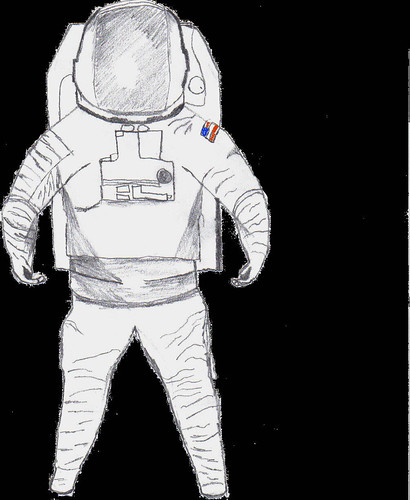
At Johnson Space Center, scientists are hard at work building the next generation of spacesuits for American astronauts’ return to the moon.

And at least one scientist there seems to have been destined to do this work; his name, appropriately enough, is Joe Kosmo.

The Associated Press explains:

Developing the new suits is easier than in the Apollo era, when designers had to rely on slide rules and drafting tables. The suits are designed and re-designed on computer screens before any hardware is used.

"There’s a lot more capable tools and technology to get the job done – a lot more knowledge, as well – so we can capitalize on them," said Joe Kosmo, who participated in the design, development and testing of suits from the Mercury, Gemini, Apollo, Skylab and shuttle eras.

At the top of the list is making the next spacesuit smaller and lighter – engineers are hoping to halve the 200-pound weight of the suit and life support backpack that Apollo astronauts lugged around.

NASA plans to use new, lightweight composite materials and take advantage of smaller electronics to shrink the life support backpacks. NASA also wants the astronauts to be able to move around easily.

Terry Hill, who’s developing the new spacesuit, recalled the robotic-like hops of the Apollo astronauts broadcasting from the moon.

"Mostly, that was because of mobility – they just didn’t have it," he said. 

(An interesting aside found in the AP’s report is that Russian spacesuits, unlike American ones, are only designed to be worn a few times before being thrown away. We reckon that’s how we ended up with Suitsat, the ad-hoc communications "satellite" that we blogged so enthusiastically about last year (here and here).)

Scientists at Johnson Space Center aren’t the only ones working on new spacesuits, however. Students at the University of North Dakota and four other schools are testing their design in the Utah desert, according to another AP report. And scientific advancements in other arenas could quickly find their way into the next generation of space suits, as this New Scientist Space article on "power skin" technology suggests.


For ourselves, we’re looking forward to seeing more of the next iteration of the Joe Kosmo line (sketched above). But we know without a doubt that, as with any summer line of fashion, lightweight is in.

DIY Friday: Your Own Home Theater System!

Friday, March 23rd, 2007

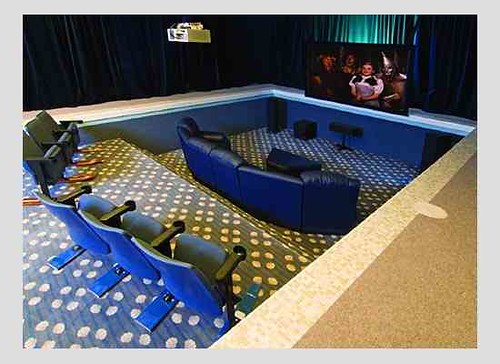
For today’s Do It Yourself activity, all you need is some wood, carpeting, a TV set with DVD and a surround sound system, and… oh, yeah…. an indoor pool.


Electronic House provides the details: 

Swimming pools, even indoor ones, just aren’t all that tempting in regions where the mercury rarely reaches above 80 degrees.

So when the owners of this Wisconsin home purchased their residence, they decided to convert the indoor in-ground pool that came with the property into a fully functional home theater. Flooring and carpeting were added to the concrete bottom of the 20-by-40-foot area, and draperies were hung over the room’s windows and metal walls to soften up the space. However, not all signs of the building’s former life were removed. Wiring for the audio and video components was pulled through the pool’s existing plumbing systems, and the slope of the pool floor was maintained to create a stadium-style seating arrangement.

The concrete sides of the pool precluded speakers from being built in, so the homeowners opted for Klipsch floorstanding models. The 106-inch Draper screen was suspended from the room’s existing rafters using aircraft cabling and secured at the edge of the pool to keep the material taut. Last but not least, the Marantz video projector was mounted to the ceiling, and the audio and video components were stowed inside an equipment rack at the back of the room.

Sound like too much work for a simple DIY Friday project? Or, more to the point — don’t have a high-falutin’ indoor pool? 

Well, luckily there are options for the more proleteriat among us.

DIY Home Theater Design provides a good run down of all your different options, walking you through the pros and cons of LCD, DLP and LCOS screens, as well as a summary of what you’ll want in your sound system:

 The basic surround sound setup consists of 5 speakers plus a subwoofer, known as 5.1 surround. The center speaker, called the center channel, is positioned just above or below the television and is intended to handle dialog. A pair of left and right speakers are placed to the sides of the television about 6 to 8 feet apart; wider if you have a very large screen. The left and right speakers handle the heavy lifting of the soundtrack like music and sound effects. A pair of satellite speakers are placed on each side of the viewing audience to add atmospheric sound effects like the sound of a crowd or bullets whizzing by. The "point one" in 5.1 is for the subwoofer. The sub handles low frequency sound and adds emphasis to explosions or to a dramatic music score.

The only bad advice from DIY Home Theater Design comes when they advise: "Don’t let the new terms and acronyms spook you because it’s really not rocket science."

We, of course, beg to differ. It is rocket science.

An even cheaper mini-home theater system can be created using your existing television components and a Mac (details here), but if you really want to combine your computer and home theater system into one seamless operation (and solve the "last 50 feet" problem that must be overcome before non-rocket-scientists really start to embrace the nexus of IP and broadcast technology) and chuck the whole DIY concept out the window in the process, then check out the just-released Apple TV.

The New York Times has a good review:

So what is Apple TV? Basically, it’s an iPod for your TV. That is, it copies the iTunes library (music, podcasts, TV shows, movies) from one Mac or Windows PC on your wired or wireless home network to its 40-gigabyte hard drive and keeps the copy updated.

The drive holds about 50 hours’ worth of video or 9,000 songs; if your iTunes library is bigger than that, you can specify what subset you want copied — only unwatched TV episodes, for example.

At this point, you can play back videos, music and photos even if the original computer is turned off or (if it’s a laptop) carried away. (Photo playback requires iPhoto on the Mac, or Photoshop Album or Photoshop Elements on Windows.)

A tiny white remote control operates Apple TV’s stunning high-definition white-on-black menus, which are enlivened by high-resolution album covers and photos. You can see the effect at apple.com/appletv.

The integration of iPod, iTunes and Apple TV offers frequent payoffs. For example, if you paused your iPod partway through a movie, TV show or song, Apple TV remembers your place when you resume playing it on your TV. Cool.

Cool indeed.

These Old Eyes Need New Glasses

Tuesday, March 20th, 2007

An aging satellite that has been in operation for seven years but was expected to last for only five is putting America’s hurricane forecasting ability at risk, according to a story from the Associated Press.


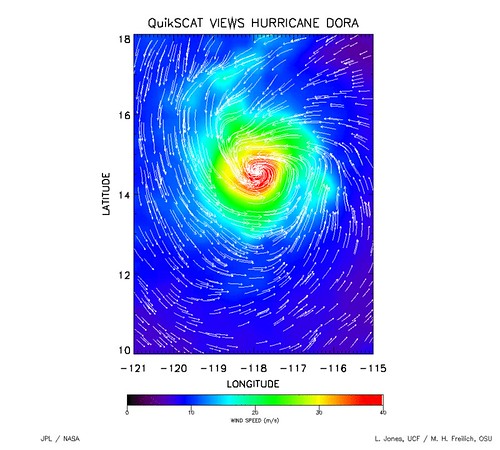
The QuickSCAT satellite "conducts daily surveys of 90 percent of the ice-free oceans, using a so-called radar scatterometer to measure surface wind speed and direction."

The resulting images are not only visually compelling — they provide scientists with fresh information about our planet’s weather patterns.

(For example, this set of images helped scientists understand that the Santa Ana winds that dry out coastal and interior regions of California and help fan the flames of wildfires produce a previously unknown benefit to the region’s fisheries.)

But the cause celebre of QuickSCAT are images like the one above, showing the wind speeds of Hurricane Dora back in 1999.

But scientists may have to attempt hurricane forecasts without the aid of QuickSCAT, according to the AP report:

Certain hurricane forecasts could be up to 16 percent less accurate if a key weather satellite that is already beyond its expected lifespan fails, the National Hurricane Center’s new director said Friday in calling for hundreds of millions of dollars in new funding for expanded research and predictions….

One of Proenza’s immediate concerns is the so-called "QuikScat" weather satellite, which lets forecasters measure basics such as wind speed. Replacing it would take at least four years even if the estimated $400 million cost were available immediately, he said.

It’s in its seventh year of operation and was expected to last five, Proenza said, and it’s only a matter of time until it fails.

Without the satellite providing key data, Proenza said, two- and three-day forecasts of a storm’s path would be affected. The two-day forecast could be 10 percent worse, while the three-day one could be affected up to 16 percent, Proenza said.

That would mean longer stretches of coastline would have to be placed under warnings, and more people than necessary would have to evacuate, he said.

We’ll keep you updated (as we always do) on efforts to replace QuickSCAT and other observation satellites that help bring people the accurate forecasts (we’re not joking here!) that they’ve come to expect.

A Boatload of Bandwidth

Thursday, March 15th, 2007

Have you ever contracted the annoying song virus?

You know, you’re minding your own business in the office when someone says to you, "I can’t get this annoying song out of my head."

And proceeds to tell you what is is — or sings it. 

And then you’ve got that thing stuck in your head for the rest of the day?

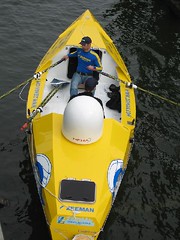
Well we contracted that virus via the Internet this morning when we saw the photo to the left.

We’ll let you guess the song (we won’t be cruel), but what the heck is that a photo of? 

It’s the Zeeman Ocean Challenge, an attempt to do what no one has ever done before: row across the Pacific Ocean at its widest point with no support at all. (9 people have done it with support.)

That’s 16,000 kilometers, and a pretty amazing thing to attempt. But what really caught our eye was the white umbrella on the stern deck.

We’ve written before about the use of satellite communications to keep in touch on maritime adventures (such as when the Kon-Tiki sailed again). It’s worth taking a moment to look at the marketplace again.

How does one stay in touch while in the middle of the ocean?

First, one needs a good maritime satellite antenna — such as this new C2SAT antenna. Then, if you’re not going to subscribe to Direct to Sailor TV, you’ll need to subscribe to a service for phone and internet connections.

So you can surf while you drift, as it were.

Eutelsat offers always on net capability, whether you’re in a rowboat or something bigger or something bigger still. Their maritime service is available on their W3A satellite (7 East), which is good for the Mediterranean and coastal Europe as well as coastal sub-Saharan Africa, or on Atlantic Bird 1 (12.5 West), which covers the Western European coast, North Sea, and the coastal waters off eastern North America.

But the "King of the Hill" in maritime communications is Inmarsat, which provides flexible pricing plans for the little guy in the rowboat but also the bandwidth to broadcast a rare Marathon in Antarctica.

Now if we could just get that song out of our head.

IP Radio Comes to Indonesia

Tuesday, March 13th, 2007


Last week’s announcement of the deployment of an integrated IP-based radio network in Indonesia isn’t the first time that Indonesia has been an early adopter of the latest communications technology.

ND SatCom, an SES ASTRA company, partnered with Studio Hamburg Media Consult International (MCI) GmbH to deploy the IP-based radio contribution and distribution network for Radio Republik Indonesia (RRI).

The Jakarta-based, state-owned radio broadcast is operated by the Indonesian government and consists of 21 regional stations. (You can find frequencies here, or — if you’re not in Indonesia — you can listen online here.)

Back in the 1970s, Indonesia was one of the first countries (following Canada and then the United States) to realize the importance of satellite communications for networking, and to deploy a satcom network for telephone and fax communications.

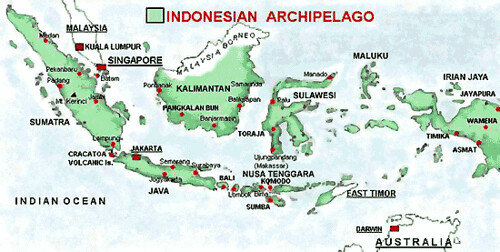
It’s no wonder that Indonesia has been an early adopter of communications technology, when one considers the hundreds of islands that it must connect: