Author Archive

The ‘Rocket Docket’ for EchoStar

Thursday, May 31st, 2007

If this post’s title doesn’t confuse you, EchoStar’s legal battles sure will.

While other Cable and Satellite operators that use DVR technology (including Time Warner, Comcast, and DirectTV) settled with Forgent Networks, which owns a patent on a specific DVR-playback technology, EchoStar didn’t back down. And, last week, EchoStar won:

A team of Morrison & Foerster attorneys and their co-counsel have won dismissal of a patent infringement case brought against client EchoStar Communication Corp. after a Texas jury took just over an hour to find the plaintiff’s patent invalid. It was only the second time on record that a jury in the Eastern District of Texas had handed down a defense win in a patent case by finding the patent at issue invalid.

The court ruled that Forgent’s patent claims against EchoStar were all invalid as anticipated, obvious, and lacking proper written description. The jury instructions describe the legal parameters for "obviousness," but Forgent’s CEO, Richard Snyder, summarizes it best in his company’s recent earnings call: "The outcome of many of these events relating to intellectual property are complex and uncertain."

"Complex" is right. For clarification I turn to Wikipedia: "The inventive step and non-obviousness reflect a same general patentability requirement present in most patent laws, according to which an invention should be sufficiently inventive, i.e. non-obvious, in order to be patented." It appears Forgent’s computer controlled video system that allows playback during recording is not valid for a patent as it is an obvious extension of existing technology. If we have any lawyers in our community, please weigh-in.
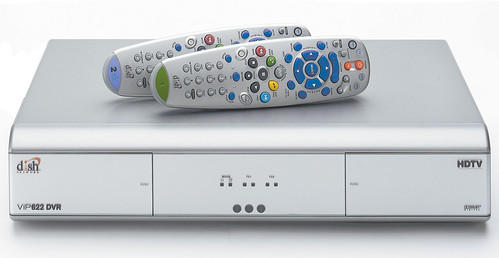


By not settling, EchoStar took a big risk. The company faced the prospect of over $200 million in damages if it lost and it’s legal arena was daunting. The Denver Post describes the case’s context:

EchoStar’s hard-line approach isn’t surprising, given its history. The company is known as being litigious, and only rarely does it back down from a legal fight. Founder Charlie Ergen bet the company on a lawsuit in 1997, when he sued Rupert Murdoch’s News Corp. for $5 billion over a failed merger of satellite-TV operations. News Corp. settled.

Drapkin and others called the Forgent verdict an unusual outcome in the Eastern District of Texas, known as the "Rocket Docket" for the speed with which patent cases are handled.

"It’s rare that a defendant would win a jury case in that district … particularly a large company," said Kirstin Stoll-DeBell, of Merchant & Gould in Denver, who represented a client there who settled a patent case. "I think jurors down there are biased against corporate America."

Where does this leave other cases in the DVR-patent war, mainly the TiVo/EchoStar saga which is currently pending in the Federal Circuit Court of Appeals? (Until it considers the case, the court gave EchoStar a stay on an earlier injunction that would force it to turn-off all of its customers’ DVR capabilities.) To be true to this post’s theme, I would have to say…well…unclear.

EchoStar and TiVo both see the light after this Texas ruling and a recent regulatory review of TiVo’s patents. Last week, as part of an ongoing lawsuit filed by TiVo against EchoStar, the U.S. Patent and Trademark Office reviewed 61 of TiVo’s patents and ruled that most (as many as 59), but not all, were valid.

EchoStar spins this their way:

"We are pleased that the United States Patent and Trademark Office yesterday rejected many of TiVo’s patent claims as invalid. That re-examination ruling, together with the favorable decision from the Court of Appeals earlier this month…are steps in the right direction as we prepare our response to TiVo’s recently filed injunction motion,"

TiVo’s CEO, Tom Rogers, argues that their case against EchoStar is:

moving closer to resolution at the Federal Circuit Court of Appeals. AT&T recently attempted to file an Amicus brief [which was denied] supporting EchoStar which speaks to how others perceive the importance of this case. We are actually pleased with EchoStar’s recent victory in another patent case, the Forgent litigation. I say pleased because EchoStar cited as a key defense one of TiVo’s important patents.

Still a little confused? Me too. We will keep you updated as this legal mess unravels in the courts.

DIY Friday: Tech Grilling

Friday, May 25th, 2007

Memorial Day Weekend Edition

In preparation for this weekend’s festivities, we bring you three Do-It-Yourself BBQ ideas—from the useful to the absurd.

Can-in-Can Grill

Originally designed as an efficient wood stove for developing countries (see: Vesto Stove), one DIY’er pulls together a similar version using household trash: 2 empty paint cans of differing sizes and a handful of rivets.

The complete step-by-step directions for this high-efficiency BBQ are here but the process is remarkably simple.

  1. Find two paint cans, one slightly smaller than the other—providing enough space to create an air chamber that will pre-heat the incoming air to increase the efficiency of the fire.
  2. Drill vent holes on the sides.
  3. Construct a top that the small can can be mounted to, allowing for an air chamber below the smaller can but within the larger can. This is done by taking the larger can’s lid, cutting out an inner circle about an inch smaller than the dimensions of the smaller can, then folding-in the excess material to attach the smaller can to.

A grill with an IP-Address

Rock’s BBQ has developed a piece of hardware that will monitor the temperature of your grill or smoker, including a probe to monitor the temperature of your meat. The hardware connects to fan that can throttle the temperature to your desired level. But what if you are slow smoking a pork leg for 17 hours and need to go to work?

Simple: monitor the BBQ "vitals" on the Internet. The "Stroker" has a built-in ethernet connection and web server that lets you control your grill from anywhere you have Internet access (see: large image).

Since this is DIY-Friday, try connecting the Stroker to a homemade smoker built from an inexpensive terracotta flower pot. Directions on building the pot-smoker are here and you can learn how to get your pot "online" here.

Now for the absurd: a USB BBQ

For the nerdiest of carnivores: by connecting 30 USB cords to a hotplate you can grill without ever needing to leave your desk or cubicle! The complete directions are in Japanese but you can read the translated page. And if you can stomach it, check out the video.

Tagging an Asteroid — how hard can it be?

Thursday, May 24th, 2007

So a massive asteroid is coming our way… And, yes, I’m serious. As SatNews Daily reminds us this morning, in just 22 years, Apophis-99942 will be at its closest distance to the Earth (in about 200 years).

At its worst, the asteroid—identified as Apofiz-99942—should smash into the Earth by 2036. At the least, it should wipe out practically all civilian and military satellites in geostationary orbit, which is about 42,000km above the planet. […] Apofiz (spelled Apophis in the West) will pass the Earth at a distance of 30,000 to 40,000 km. Whatever happens, the Earth will suffer from the effects of the close encounter with this asteroid.

Before we start to panic, the odds of a 2036 collision are very small—about 1 in 24,000. But scientists want to know more. That’s why the California-based non-governmental group, The Planetary Society, has launched the "Apophis Mission Design Competition." The contest offers $50,000 in prize money for the winner who designs a mission to "tag" the asteroid. So far, more than 100 teams and individuals from 25 nations are developing plans.

You may be wondering: how will tagging the asteroid help?image of Apophis in orbit

Tagging may be necessary to track Apophis accurately enough to determine whether it will impact Earth, and thus help decide whether to mount a deflection mission to alter its orbit. Apophis is a Near Earth object (NEO) some 400 meters in size. If Apophis passes through a several hundred-meter wide "keyhole" in 2029, it will impact Earth in 2036. While current estimates rate the probability of impact as very low, Apophis is being used as an example to enable design of a broader type of mission to any potentially dangerous asteroid. Very precise tracking may be needed to determine the probability of a collision. Such precise tracking could require "tagging" the asteroid, perhaps with a beacon, transponder, reflector — or some other method. Exactly how an asteroid could best be tagged is not yet known, nor is it obvious.

What if we find out that the worst case scenario is taking shape? While NASA currently has no plans to study methods of asteroid deflection, Russia has made some claims:

Russia, however, has said it is prepared to repel asteroids to save the Earth. Viktor Remishevsky, deputy head of the Russian Federal Space Agency (Roscosmos) was reported to have said that if necessary, Russia’s rocket-manufacturing complex can create the means in space to repulse asteroids threatening Earth. He also noted that saving the Earth from the threat of asteroids demands international cooperation.

Rest easy. We have at least 22 years to figure it out.

Comet Crushed Clovis Culture?

Thursday, May 24th, 2007

There is something oddly compelling about doomsday scenarios in which an asteroid or comet tumbles to earth and destroys an entire civilization. Maybe it is the religious element or the “hero that saves the world” drama we see in movies (there are a lot of flicks out there).

So what better place to discuss a sexy topic like this than the beach paradise of Acapulco?


This week, geologists will convene at the American Geophysical Union’s Joint Meeting in Acapulco to discuss a controversial new theory: that an extraterrestrial impact, possibly a comet, impacted North America nearly 13,000 years ago, setting off a 1,000-year-long cold spell and wiping out entire species.

The BBC summarizes the evidence:

The evidence comes from layers of sediment at more than 20 sites across North America.

These sediments contain exotic materials: tiny spheres of glass and carbon, ultra-small specks of diamond – called nanodiamond – and amounts of the rare element iridium that are too high to have come from Earth.

All, they argue, point to the explosion 12,900 years ago of an extraterrestrial object up to 5km across.

No crater remains, possibly because the Laurentide Ice Sheet, which blanketed thousands of sq km of North America during the last Ice Age, was thick enough to mask the impact.

Another possibility is that it exploded in the air.

Researchers have for some time proposed that a reversal in the world’s ocean currents and a corresponding global cooling was responsible for the rapid geological change that led to the extinction of multiple species of animals and the end of the Clovis Culture. A comet could explain the shift:

According to the new idea, the comet would have caused widespread melting of the North American ice sheet. The waters would have poured into the Atlantic, disrupting its currents. This, they say, could have caused the 1,000 year-long Younger Dryas cold spell, which also affected Asia and Europe.

This geological rap session may be just sexy enough to keep the scientists from laying on the beach all-day.

DIY Friday: Six-Axis Playstation 3 Controller

Friday, May 18th, 2007

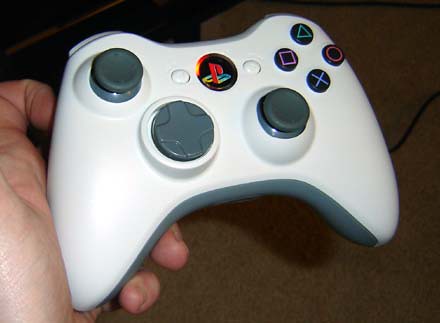
I haven’t had the opportunity (read: hundred of dollars of extra cash) to get my hands on one of the new Playstation 3s, but, according to some people, the controller on the beast of a console leaves a little to be desired. Don’t get me wrong, it’s still damn cool with its six-axis control functionality (as we saw demoed at last year’s E3), but the design is over a decade old and could stand to be a little changing.

Enter DIY master Ben Heck.

Notorious for backwards engineering and recreating (himself!) portable versions of just about every video game console in recent memory, Heck, also frustrated with the new Playstation controller’s old design, last month announced that he had figured out how to stuff the cutting edge electronics into the (supposedly) more hand-pleasing Xbox form factor. It turns out Heck’s announcement released pent up demand for a modified Playstation paddle that it quickly outpaced his ability to produce the mod-ed controllers even at "consignment" rates.

So rather than keep the details himself, like a dedicated DIY aficionado, Heck, just a couple of weeks ago on Engadget, released an easy to follow how-to guide for the project that’s a lot less complicated then you would think.

More committed DIYers (especially those who don’t like to deal with consoles) should take a look at this post on building your on 6-axis controller for your PC and check out the fan-boy produced video below. It’s undoubtedly a harder project, but at least you’ll have bragging rights.

Nigeria’s NigComSat1 Launches in China

Monday, May 14th, 2007

 Nigeria’s NigComSat1 (which we reported on just a couple of weeks ago) lifted off successfully from the Xichang Satellite Launch Center in southwest China’s Sichuan Province just after midnight this morning. The Nigerian paper The Guardian had some of the most extensive coverage of the launch:
True to prediction, the much awaited launch of the Nigerian communication satellite, the first of its kind in Africa, took place and went on the 20 to 30 – minute trip into orbit where it is expected to provide robust and reliable satellite services to citizens in Africa and Europe.

The excitement at the site, according to Nigerian officials at the launch, was "electrifying."

Head of Corporate Affairs and Media at the National Space Research and Development Agency (NASRDA), Mr. Felix Ale, told The Guardian on phone that the launch was successful.

He quoted the agency’s Director General Prof. Robert Ajayi Boroffice, as saying that the 30-minute movement of the satellite went on without delay.

According to Ale, "Prof. Boroffice has also called President Olusegun Obasanjo to inform him of the success of the launch. The President was impressed and full of praises for NASRDA.

NASRDA is, of course, Nigeria’s national space agency, who, incidentally, also has a pretty cool PowerPoint presentation available about NigComSat1 online.

In addition to be the first communications satellite launched on behalf of an African country, the launch of NigComSat1 also marks a significant first for China, as the first time a foreign buyer has purchased a Chinese satellite and its launching service. The Chinese news service, Xinhua, also points out that the launch represents the culmination and beginning of a relationship between Nigeria and China that will likely continue throughout the life-span of the satellite (about 15 years)…

The satellite will be monitored and tracked by a ground station to be built in Abuja, the capital of Nigeria, by Chinese firm Great Wall Industry Corporation, and a ground station in Kashgar, in northwest China’s Xinjiang Uygur Autonomous Region.

The satellite’s ground facility in Abuja "had the potential of making Nigeria a major traffic hub in the west and central African region" and will prompt Nigeria and neighboring countries to "expand their switching facilities to be able to handle international traffic", according to a Nigerian communication official.

The Chinese company will offer support services and training for Nigerian technicians.

China was awarded the deal in 2004 after it outbid 21 international rivals to secure the 311 million U.S. dollar deal.

And also, may point to China’s expanding relationship with the developing world.

The satellite represents China’s wish to cooperate with developing countries in the peaceful use of outer space and to promote a closer relationship between China and African countries, observers say.

China has signed several cooperative contracts offering commercial launching services for foreign satellites, said an official on space development, citing a similar satellite contract with Venezuela in November 2005 and adding that China has been commissioned to send about 30 foreign satellites into space.

Want more info on NigComSat1? Check out the photo gallery over at Xinhua and the Google Map’s powered realtime tracking at n2yo.com.

DIY Friday: Build Your Own DVR

Friday, May 11th, 2007


I love my TiVo. My roomates love my TiVo. Pretty much everyone that has met it loves my TiVo. But TiVo isn’t cheap (especially if you want to record HD content) and I’m sure the $12/month I pay to keep up access to the TiVo service is going to get old when I start living on my own. So what’s a good RRS reader who loves TiVo — but just can’t fit the bill for it — to do?

Well, Duh. Make our own, of course.

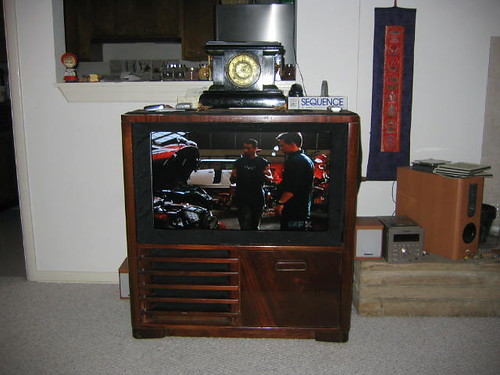
Forutunately for us, plenty of people have beat us to the punch and begun building their own DVR (digital video recorder), whether its to save money or build the ultimate, tricked out HD-ready, multi-tuner beast they always wantend… that also just happens to fit into an antique television console (as seen above).

The best place to start your efforts to build your own DVR is Build Your Own PVR (the P stands for personal, but basically means the same thing) which has tons of how-tos, construction guides, and forums for sharing tips and tricks about building your own TiVo-like device. If you want to build something this weekend and have an old (but not too old) computer lying around, check-out this how-to to figure out how to build your own homebrew PVR for less than $200 and a couple of hours. The site also has a pretty cool wiki (although it could stand a little fleshing out).

Be prepared, however, to get a DVR you can really write home about (i.e. brag about to your neighbors), you’re going to need to spend some real money on a nice hardware decoder (Hauppauge WinTV PVR 250/350 seems to be the favorite) and some time tinkering with whatever software you chose run your box of digital delight (MythTV, is, of course, the free standard bearer, but other options — Sage TV, Snapstream BeyondTV — do exist).

But if you’re willing to put in the time (and a little dough), I’m sure anything you build will have even the most hardcore TiVo enthusiats asking for a spec sheet.

You Can Always Go Home Again (Unfortunately)

Monday, May 7th, 2007

An interesting article over on ABC News website, explains that most cosmonauts love their job so much they actually don’t look forward to coming back to earth.


"’The hardest thing is coming back to Earth,’ [Cosmonaut Vladimir Dezhurov] said. The problem is not so much the mundanity of earthly existence — bills to pay, food to buy, chores to complete.

‘The muscle fabric degrades very much. It’s hard to walk. You have to learn how to walk again, like a small child.’

Astronauts train daily aboard the orbiting space station to prevent the atrophy of their legs and feet which are under-used in weightlessness. It takes several weeks under medical supervision to recover from a long stay in space.’"


But then again, any real space geek probably already knew that…

What might be interesting for those of us who know a little more is the information the article provides about Star City, Moscow’s tightly secured 1960s area Cosmonaut space center and the surrounding community, as seen above.

While supposedly time has kind of stopped in area, most cosmonauts never really feeling the full-effect of the collapse of the Soviet Union, what has changed is who is doing a lot of the blasting off in the environs… most notably in the increased presence of tourists.

While we all saw Stephen Hawking have a zero-g experience last week, in Star City, Russia the zero-g experience has you (and for just $3400-4000).

TO SAVE MY COUNTRY, I NEED TO BORROW THE SUM OF $200 MILLION

Tuesday, May 1st, 2007

Nigeria is a country best known for its email marketing scams. You know, the ones written in all caps and started off something like…

"Dear Friend,
It is with heartfelt hope that I write to seek your co-operation and assistance in the context stated below, I am Barrister Fenner Mark Elvis, the personal Attorney to the late Mr. Nobert Spagele. I got your contact through the help of my brother-in-law that works with the American Chambers of Commerce and Tourism, though I did not disclose to him my humble intention for an honest foreigner like you, having noted the confidence reposed on your person by the sponsor of the recommendation…

Well, according to SpaceMart, last January a Chinese Bank fell for a similar line and, at present, is financing the construction of Nigeria’s first communications satellite, NigComSat, which is now set to launch before the end of this month.

While this is not Nigeria’s first satellite, a title held, according to allAfrica.com, NigeriaSat-1, launched in 2003 to take photos of Nigeria’s environs, it does mark the first time a Sub-Saharan African country has launched and retained control of their own communications satellite.

Recently "replaced" Nigerian President General Olusegun Obasanjo said that the satellite is a part of his country’s commitment to development:

"This commitment has informed our embarking on programmes and initiatives that would effectively address the challenges of poverty, food security, infrastructural development, sustainable energy, affordable health and housing, and protection from natural and man-induced disasters.

Space technology is key to the realization of the Millennium Development Goals (MDGs) and the objectives of our holistic reform agenda as encapsulated in the NEEDS document. It guarantees the availability and speedy access to real-team data and geo-partial information, as well as the availability of relevant infrastructure and backbone for information communication"

The Chinese, who are financing, building, and launching the project, are also proud of the effort, the first step in a move to develop a satellite design and construction export business. The launch will take place at the Jiuquan Satellite Launch Center, which has launched some 30 satellite since 1990, 24 of which were commercial launches for overseas clients.


The satellite itself is being constructed by China Great Wall Industry Corp., based on China’s latest model of satellite platform, DFH No. 4, and will feature 28 transponders, including 4 C band, 18 Ku band, 4 Ka band and 2 L bands. The whole thing weighs somewhere around 5000 kg and has an anticipated life-span of 15 years.

Blast Me Off, Scotty

Monday, April 30th, 2007


The earthly remains of the one and only Scotty from Star Trek, Canada’s own James Doohan, beamed himself into outer-space from just outside of Truth or Consequences, NM this weekend in one of the first successful launches from America’s first commercial spaceport, Spaceport America.

The ashes of Doohan and 200 other space enthusiasts, including Astronaut Gordon Cooper, were launched into outer space Saturday aboard a Spaceloft XL rocket (made by UP Aerospace) for 15 minute, 72 mile high flight. The flight, which cost each "passenger" $495, was arranged by the Houston-based, Space Services, Inc. (the same company that put the ashes of Star Trek creator Gene Roddenberry in to the sky in 1997) and ended in a parachute ride back to earth. According to Reuters, "Capsules containing the ashes are retrieved, mounted on plaques and given back to relatives."

The coverage of Scotty’s lift-off has been pretty wide, including some coverage in Scottish papers and, not surprisingly, a bevy of stories from the area surrounding America’s spaceport.

We’re working to find a YouTube of the lift-off, but, for now, be sure to check out the QuickTime version of the launch on the UP Aerospace website.