Author Archive

DIY Friday: Quantum Eraser Experiment

Friday, April 27th, 2007

I’ll be the first one to admit that I don’t REALLY get the ideas behind quantum mechanics. Sure, I have a loose idea of what it is, somehow managing to bring complexity and relativity into the precise world of classic, Newtonian physics — you know, something to do with light being both waves and particles at the same time — but if you ask me to go into any more depth I’ll either fake it or redirect your attention to a funny cartoon I saw in the New Yorker last week.

But my lack of knowledge shouldn’t mean that you should be deprived on an excellent DIY Friday that focuses like a laser beam (ha ha, RFLMAO) on one of the central cases for the necessity of quantum theory, the double-slit experiment, that you can do it home.

First and foremost, before you even try the experiment I’ll link to below, do yourself a favor and check out the Dr. Quantum YouTube video below to get a basic handle on the experiment. The visualizations mean that, even if you’re a dolt like me, you’ll understand just why you’ll want to do this experiment yourself.

If you’re interested in the larger question of observer effects in quantum theory and you don’t mind delving a bit into the philosophy of science (the only way I had stumbled into this whole quantum theory business before), do a little reading on the famous Schrödinger’s cat thought experiment… its good fun and it’ll, again, make the DIY experiment a little more thought provoking.

Finally, if you’re ready to go for the good stuff, check out Scientific American’s DIY Quantum Erasure experiment page and learn how to do the double-slit experiment on your own all while working through the paradox posed by Schrödinger’s work. Also be sure to check out the awesome slide show SA has for the experiment (which shows how to conduct the experiment in a little more detail) and some other neat online extras.

Not looking to delve that deeply into the major problems of contemporary physics this weekend? Well, just watch the video below and laugh comfortably knowing that now you have the knowledge necessary to make your own video on a physics superhero too.

The Quantum EraserThe funniest bloopers are right here

Breakout Your 3-D Glasses… the First STEREO Pictures are In

Monday, April 23rd, 2007


With you kind of coverage you’d expect from RRS, we’ve been following NASA’s stereo since its launch last October and some of the first non-3-D photos were released in late February.

As seen in the photo above, NASA is releasing the first 3-D photos taken by the STEREO project at a press conference taking place in the next few minutes. According to the NASA press release, these photos represent a significant advance in astronomy, allowing those who study the heavens an opportunity to finally really see what they’re observing.

"In the solar atmosphere, there are no clues to help us judge distance. Everything appears flat in the 2-D plane of the sky. Having a stereo perspective just makes it so much easier," said Dr. Russell Howard of the Naval Research Laboratory, Washington, the Principal Investigator for the SECCHI (Sun Earth Connection Coronal and Heliospheric Investigation) suite of telescopes on the spacecraft.

‘With STEREO’s 3-D imagery, we’ll be able to discern where matter and energy flows in the solar atmosphere much more precisely than with the 2-D views available before. This will really help us understand the complex physics going on,’ said Howard."

Oh, and the knowledge gained by the observation will do more than look pretty, helping scientists better gauge changes in space weather patterns and forecasts by helping them better understand Coronal Mass Ejections (CMEs).

"CMEs are eruptions of electrically charged gas, called plasma, from the sun’s atmosphere. A CME cloud can contain billions of tons of plasma and move at a million miles per hour.

The CME cloud is laced with magnetic fields, and CMEs directed toward Earth smash into our planet’s magnetic field. If the CME magnetic fields have the proper orientation, they dump energy and particles into Earth’s magnetic field, causing magnetic storms that can overload power line equipment and radiation storms that disrupt satellites.

Satellite and utility operators can take precautions to minimize CME damage, but they need an accurate forecast of when the CME will arrive. To do this, forecasters need to know the location of the front of the CME cloud. STEREO will allow scientists to accurately locate the CME cloud front. ‘Knowing where the front of the CME cloud is will improve estimates of the arrival time from within a day or so to just a few hours,’ said Howard. ‘STEREO also will help forecasters estimate how severe the resulting magnetic storm will be.’"

Those interested in seeing more will definitely want to check out the STEREO mission page following the press conference (11:00am EDT) when additional photos will be released.

(Don’t have a pair of 3-D Glasses on you?  Check out the NASA Guide on how to make your own 3-D specs.)

DIY Friday: Getting Started with HDTV

Friday, April 20th, 2007


Just because its going to be a beautiful weekend through much of the country doesn’t mean you have to spend the days outdoors — after all, there’s a lot of TV you’d be missing if you did. The fact is, even if you are planning on spending the next weekend as a couch potato, if you don’t have HDTV you’re missing the big picture… literally.

The problem is, for most of us, while we know HDTV could give us a better viewing experience, purchasing a television that operates under the new standard is a rather daunting task. HD-Ready, HD-Card-Ready, HD-TV Receiver reuired? Ugh! What does it all mean?

Fortunately, for you, we’ve dug up a few sources of information, on this week’s DIY Friday, that will help you answer your most pressing questions about choosing and setting up the right HDTV selection for you.

The best place to start is this awesome How-to over at ZD, "Don’t by an HDTV without reading this first" that takes you through the pros and cons of the different types of displays (LCD, Rear Projection, and Plasma) and helps you avoid some of the common mistakes first time HDTV buyers make. An example? How about the Monster Cable rip-off:

"Consumers need to get the concept of "monster cables" out of their minds since they DO NOT apply to the digital world. There is zero difference in quality between the cheapest $12 HDMI to DVI cable versus the $100 gold-plated "monster cable." Monster cables are a holdover from the analog era, where signal leakage results in a degraded image or sound. In the digital world, a data cable either works 100% or it doesn’t work at all, and there is no degraded middle ground. Since nearly all digital cables work (return the rare ones that don’t), there isn’t a shred of difference between the cheap cable or the expensive monster cable. If you can’t find an HDMI to DVI cable for less than $30 in a retail store, you can google "HDMI to DVI cable" and there will be plenty online vendors selling them for $12-$16 plus shipping. Don’t be shocked to find HDMI cables that cost $60 to $150 in a typical retail outlet; just don’t fall for it. The only place monster cables have any use is for the transmission of analog signals, such as the connection between your amplifier and your speakers."

Talk about money saving advice.

Those who are purchasing their new idiot box with their refund from the IRS and looking to write off the purchase as business expense next year might want to check out the HDTV Tutorial at Hardware Secrets (a great little site for electronic hardware geeks like myself) which demystifies the process of hooking your television to your computer.

Finally, if you recognize the irony of purchasing a new television to watch the HD-presentation of Planet Earth on a beautiful day like Sunday and are planning, like me, to get outdoors this weekend, don’t worry, you can have your cake and eat it to: Just buy yourself one of those new HD Tivos and get HD glory whenever you want it.

Space Tether Experiment Launches Today

Monday, April 16th, 2007

If you were up with the sun (or the clouds, if you’re in the eastern portion of the US) this morning, you might have caught the report on NPR on Space Tethers and Tethers Unlimited efforts to change the way satellites are transported.

While science fiction, Victoria’s Secret, and long-woven ropes are rarely mentioned in the same breath (unless of course you’re in some bizarre John Waters movie), the work of Dr. Robert P. Hoyt and Dr. Robert L. Forward have brought the two strangely together to solve a real problems posed by simply moving obejcts around space.


"For 50 years, people have relied on rockets to move things around in space. But rocket fuel is expensive and heavy. [Hoyt with the help of Forward realized how] much easier it would be to just fling things around using orbiting tethers.

‘It’s sort of like using the techniques of Tarzan to move around in space,’ explains Hoyt. ‘You’re basically grabbing onto a long, high-strength rope and using it to swing you from one place to another.’"

The problem, of course, was how you got those ropes to last in an environment where they were being constantly pounded by the debris that litters our orbit. And that’s where the underwear comes into Tethers Unlimited business plan…

"The company makes tethers by starting with light but strong fibers, like Kevlar. Then the strands are woven together using a computerized machine.

‘[That machine is] normally used for fabricating things like lacy edgings on Victoria’s Secret undergarments," says Hoyt. "We’ve developed ways to use that to braid the multi-line tether structure that we’re testing in space.’"

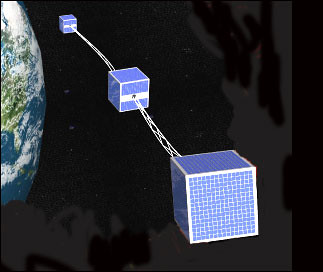
That testing begins imminently, a Dnepr rocket blasting off from Baikonur Cosmodrome today contains, within its payload, three mini-satellites that will deploy a half-mile tether, two of the satellites anchoring either end. The third, dubbed, according to a recent Engadget report, Inspector Gadget (Ted and Ralph make up the other two members of the trio), will move up and down the tether taking pictures that will allow those on the ground to learn how many cuts or tears the rope takes on over the next few months.

While it might be awhile until we see tether’s in action, propelling satellites in space, this initial experiment is an important first step in a lot of new space technology, possibly including space elevators.

DIY Friday: Using a Basic Stamp (Video Podcast)

Friday, April 13th, 2007


Click To Play

If you’ve been around here long enough, you probably already know how much we love MAKE Magazine. Well now they’re featuring Video Podcasts to buttress they’re already damn awesome audio offerings.

This week we wanted to direct you towards a video on using a BASIC Stamp that might be useful to anyone (like myself) just becoming an electronics hobbist. In the video, Bre Pettis and Joe Grand explain the basics of the Basic Stamp and a little on how to use it, ultimately directing you back to the MAKE website to get more information about the technology, which, by the way, would work really well if you’re still trying to make that LED T-Shirt we talked abut a few weeks ago.

Anik F3 Launch Update

Monday, April 9th, 2007


As you probably know those of us here at Really Rocket Science love a good launch, especially that of a big GEO satellite.

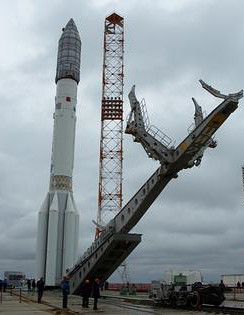
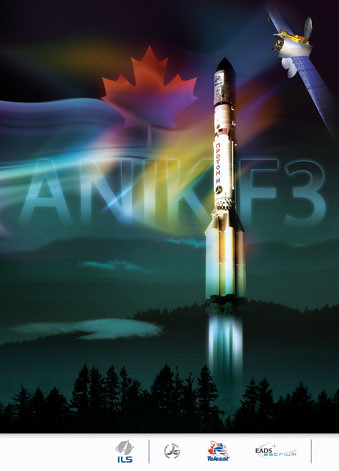
The Anik F3 will be launching tonight (04:54 April 10 Baikonur, 22:54 April 9 GMT, 18:54 April 9 EDT) this from launch pad 39 of the Baikonur Cosmodrome in Kazakhstan. You can, of course, catch the launch live via streaming, although hopefully we’ll be able to find on YouTube sometime tomorrow for those looking to beat a wicked case of the Mondays by heading to Happy Hour early.

Those nerdier than us might want to catch a live feed of the launch via satellite or over the phone at the following locations.

Live Broadcast
North America: Telstar 6 @ 93° West, transponder C11, downlink 3920 MHz (vertical), analog NTSC. Test signals start at 18:00 EDT.

Live Broadcast
Europe: NSS-7 @ 338° East, transponder WHL4/EUH3 CH1, Ku-band, 338 degrees West downlink 11098.9 MHz (horizontal), digital PAL symbol rate 6.1113, fec: 3/4. Test signals start at 22:00 GMT.

U.S. domestic Launch Hotline at 1-800-852-4980.

What does Anik F3 do? Basically its a comm sat for Telsat Canada, but since you asked:

"Multipurpose communications satellite with payloadsin Ku-, C- and Ka-band. The Ku- and C-bands will carry a wide range of broadcasting, telecommunications, business and Internet-based services throughout North America"

See you at the launch!

DIY Friday: Vacuum Tube Amplifier

Friday, April 6th, 2007


Our friends over at the MAKE Blog linked to it a few days ago, but when I saw it I knew it’d be perfect link for our own DIY Friday feature.

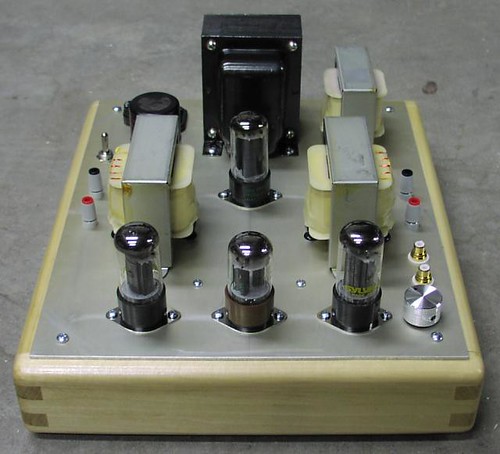
Boozehound Labs is obsessed with tubes — no, not the ones that run these here Internets — the vacuum kind. Often forgotten in the digital age, most good audiophiles get a little weepy talking about the "warmth" vacuum tubes give to music when amplifying, recorded or live music. The folks over at Boozehound Labs have dedicate most of their site to honoring the Vacuum Tube and teaching visitors how to bring a 19th century technology into their modern life.

Those looking to get started should check out the site’s awesome Vacuum Tube Hi- Fi Primer, which not only gives you the low-down on how to make the kick-ass amp you see above, but also provides an excellent explanation of vacuum theory and the technology behind the tube.

Those already familiar with the tech should check out Boozehound Lab’s show-and-tell pages on microphone and guitar amps the "scientists" have already put together. If you want to get started on a project right now (well, actually, as soon as the materials can be shipped to you), make your way over to Triode System’s page and check out some of their cool kits. While you might not save as much as you’d like, you guaranteed to get all you need to create the amp of your dreams.

Space Video: On-orbit Servicing with NextSat

Tuesday, April 3rd, 2007

We told you about the launch a few weeks back, but the Orbital Express refueling system appears to be up, running, and pretty effective. For those that don’t remember here’s the story about the new technology:

The goal of the Orbital Express Space Operations Architecture program is to validate the technical feasibility of robotic, autonomous on-orbit refueling and reconfiguration of satellites to support a broad range of future U.S. national security and commercial space programs. Refueling satellites will enable frequent maneuver to improve coverage, change arrival times to counter denial and deception and improve survivability, as well as extend satellite lifetime. Electronics upgrades on-orbit can provide regular performance improvements and dramatically reduce the time to deploy new technology on-orbit.

The full story about the mission of the Orbital Express satellite can be found at NASA’s Automated Rendezvous & Docking program website.

The video you see about you is a survey of the NextSat, the kind of serviceable satellite the Orbital Express is designed to fuel, and its refueling buddy as taken by the camera on its own arm.

DIY Friday: Satellite Radio Round-Up

Friday, March 30th, 2007

We tend to write a lot about Satellite Radio here on DIY Fridays, but that’s probably because it represents the next frontier for true satellite geeks. Digital quality audio, anywhere in the country, in your home or on the road, satellite radio represents a dream come true for nerdy enthusiasts: technical superiority, freedom, and a new chance to tinker with technology. So while, its not a purely DIY task, I thought I might use this week’s DIY Friday to talk a little bit about our new favorite technology.

First of all, for those who admit that they need to learn a little bit more about satellite radio technology, this article by the folks over at Crutchfield Advisor explains the reality of the satellite radio marketplace and the options out there for those looking to tune in in an incredibly readable way. While normally I’d be a little concerned about passing along a guide about a product from a company that looks to sell you something (especially on a DIY Friday), Crutchfield is famous for being a dream company for DIYers looking to add new and improved audio technology to their car. Not only does every install kit from Crutchfield come with thorough, user-friendly instructions, but the company’s sales and help lines are famous for their knowledgeable, no pressure operators most of whom are willing to talk you through almost any car stereo installation troubles you can imagine.

But what about those times that you’re not in your car or near an otherwise wonderful satellite radio receiver. Well, have no fear, an amazingly productive community of open source developers is here to bail you out of radio-less existence. According to WIRED, developers have rolled their own solution to the problem of no satellite signal =ing no radio with Pocket Satellite Radio and Mobile Satellite Radio which are able to grab the streams using a cell phone’s internet connection. While it means you might be limited to whatever stations Sirius or XM stream over the net (which means no Howard for dedicated Stern-ites), it does give you access to most stations when your in a dire situation (read: without a satellite signal). The best part? It’s a receiver for only $20.

Spaceport in New Mexico?

Monday, March 26th, 2007

The Washington Post writes today about the growing effort to build a spaceport in rural New Mexico:

"In a referendum, the people of Las Cruces and surrounding Do?a Ana County will be voting on a proposal to slightly raise their county sales tax, a highly unpopular idea these days. But in return, southern New Mexico, one of the poorest regions in the nation, would jump on a fast track to hosting the world’s first all-commercial spaceport.

If the effort succeeds, a desert valley used by a handful of ranchers could become Spaceport America — a 21st-century portal for thousands of people hoping to blast into space as tourists, explorers, researchers and, maybe someday, as commuters to destinations halfway around the world."

Located near the White Sands Missile Range (& National Monument) and Truth or Consequences, NM, the planned SpacePort America is already set to be one of the main launch points for Richard Bronson’s Virgin Galactic (which we’ve already written about a few times). The controversy, of course, stems from the sales tax increase that would be needed to build the the spaceport which would ad around $0.25 to a $100 purchase, mostly on the backs of poor, area residents, some of whom already live in areas without proper roads, water, or waste removal systems.

We’ll let you know how the vote turns out in the weeks ahead.