Author Archive

Ramen in Space… Again, but Now for Longer

Thursday, February 15th, 2007

According to one of my favorite space sites, SpaceDaily, Japan is Koichi Wakata, whose a veteran astronaut at the ripe old age of 43, will be the country’s first citizen to stay long-term in space begining in the fall of 2008 a three month stint on the International Space Station (ISS).

On his third mission into space (the first happened in 1996, the second in 2000) Wakata will be spending much of his time running a series of experiments in a small laboratory, Kibo (meaning "Hope"), on the multi-national space station. While excited about the opportunity his trip represents, Wakata is even more excited about bringing his nation’s noodles into space.

"’Since I believe that the chances will increase for Japanese astronauts’ long-term stays, I want to check things out such as the clothing, food and accommodation" for future astronauts,’ [Wakata] said.

‘I especially want to try Japanese foods like delicious ramen,’ he said."

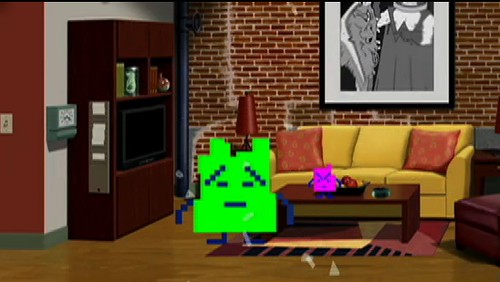
Those tasty noodles, invented by the recently deceased Mr. Noodle (right), were originally flown into space on a 2005 US Discovery flight with Japanese astronaut Soichi Noguchi.

Oh, and for those keeping count, according to the Wikipedia, currently 14 of the 193 countries on earth have had representatives visit the ISS so far. Looks like we got 179 to go!

Logging On at Mach 6

Monday, February 12th, 2007

Bringing new, potential meaning to the term, space pirate, is Fayetteville, AR-based aerospace firm Space Photonics who, according to the Northwest Arkansas Morning News, is working to up the bandwidth on military/government space and aircraft using optical technology. Check out the powerpoint slide below to get a better idea of how communication "turrets" would connect with satellites to get high-speed ‘net (and other communications) connections through to fast moving targets.


While the technology might mean that future Maverick’s can pirate copies of The Fast and the Furious VII: Golfcarts of Doom on their forays into the wild, blue yonder, the real excitement its stirring up centers around the potential it opens up for "synchronized communication lines between satellites." While the Morning News seems to think that this might translate into synchronized satellite orbiting competitions, its more likely to change communications in other more important ways.

Sofa Surfing on IPTV

Monday, February 5th, 2007

WebTV sucked and still sucks today despite being re-branded as MSNTV. Sure, it can get Grandma and Grandpa on the net and emailing the little Emma and Jack, but a new PC could do 20 times as much for just twice the price, making the sweetness of surfing on your big screen a little less logical. At $199.99 before service charges, WebTV may feel like a deal, but when Gramps gets frustrated by the limitations of the tiny device you’re going to have to get him a PC anyway, so why not bite the bullet and start things off right?

Well, even in light of the limits of WebTV and its Redmond-designed demon offspring, it isn’t to say that it wouldn’t be useful from time-to-time to surf the net from the comfort of your La-Z-Boy on your big screen.

Just imagine yesterday’s gridiron festivities with the aid of some Internet: Don’t really know what SalesGenie.com does judging from its cheesy ad? Just click the web button on your remote and — zip — there you are, visiting the site that’s set to bring spamming and direct dial marketing to anyone willing to pony up a couple hundred bucks a month.

Seems like a touchdown for me and my laziness (look, Mom, no laptop!) and even bigger boon for advertisers looking to get (and tracK) results from expensive ad buys. But can such a service be found?

The short answer is, yes, the technology’s already here, although you may need to wait a couple of years until it reaches your own plasma, HD display. This technological valhalla of laziness, known as IPTV, is new-ish, Internet Protocol-based (thus IP-tv) technology that seeks to transmit your favorite television channels over same thick, broadband pipe that you already get your Internet and maybe even your telephone service through.

While you can already get IPTV in a select number of markets in the US (e.g. some areas in Chicago, some schools in California), most are saying the US transition isn’t coming fast enough, with France with nearly 600,000 and Hong Kong with over 700,000 subscribers to IPTV-based services easily wining the competition for market penetration of the new technology. That said, some our saying America’s delay might be a good thing for certain big-name American networking firms, such as Cisco Systems, who stand to do extremely well, as broadband Internet providers start needing to upgrade their network infrastructure to handle the millions of gigabytes IPTV’s video will demand. Just check out the Robert Scoble’s interesting interview with the networking technology company’s CEO, John Chambers.

While it’s currently uncertain how this new technology will make its way into the market, as it competes with some of the older, television delivery formats, the full-scale launch will definitely be something interesting to watch.

SES & Cisco Help Reach the Last Mile

Monday, February 5th, 2007

The news is just starting to filter out, but today SES-Americom announced a major partnership with Cisco Systems to bring affordable television and video content to the millions of citizens in rural America using the Internet through the National Rural Telephone Cooperative. The video coursing through this new service will be provided by SES own IP-PRIME, of course. This is exciting news (and not just because we’re directly affiliated with SES), representing a real step-forward in getting Internet services down to infamous "last mile" consumers that often don’t get access to the communication services that many of us take for granted in more urban areas.

Some of the largest adopters of satellite television technology, man "country folk" around the US have been left out of the explosion in high speed, two-way internet services that are de rigueur in the our cities and suburbs. While satellite Internet technology is available, its speed is often hampered by dial-up upload speeds (which include telling your browser where you want to go) ultimately limiting its speed. Advancements in IPTV and joint-ventures like this deal provide additional incentive to get high-speed, wired internet connections to those who often feel isolated, geographically and socially, from the rest of the country and ultimately ensures that everyone, whether they live on the island of Manhattan or in Manhattan, KS, gains speedy access to the network that’s changing our lives.

For more infromation, you might want to check out blogger Robert Scoble’s interview with Cisco CEO John Chambers about the IPTV below or, via Networkworld, see how the system demoed in Europe last week.

DIY Friday: Make an LED Mooninite Shirt (and Don’t Get Arrested)

Friday, February 2nd, 2007


While NPR has said its the first sign of cross-generational warfare, the arrest of two twenty-something Guerilla Marketers in Boston Wednesday for leaving lite-bright-based ads for the upcoming Aqua Teen Hunger Force Movie in subways and on bridges strikes when they set off city-wide terrorist alerts strikes yours truly as a simple misunderstanding with enough blame to go around.

The reality: Boston’s entire police force (not to mention the Department of Homeland Security) showed that they need to get in touch with American pop culture and modern advertising techniques, but Cartoon Network and the guerrilla marketers they hire have to be sensitive to the realities of a post-9-11 world where circuit board filled boxes (regardless of what’s on the outside) on subway platforms should cause some concern when marketing their fine wares. In the end, what the world needs is a little more peace and understanding… and a cool how-to on how to make your own Mooninite shirt and look like an object of terror (I guess).


Thankfully our pals over at MAKE have the guide and, while I’m not sure I’d like to wear the shirt (one wonders how you’re supposed to clean it) it might be a fun geeky way to spend a cold winter’s weekend in the great indoors.

Jamming Your Satellite

Monday, January 29th, 2007

While the idea of satellite jamming might conjure up some old lines from Spaceballs you thought you forgot years ago, it is serious business in the world of future satellite development. According to a report in the NewScientist, Parisian satellite company Eutelsat blamed "unidentified signal interference" for a service interruption last Tuesday that kept several European, Middle Eastern, and northeast African television and radio stations off the air until their transmissions could be transferred to another satellite.

"Theresa Hitchens of the Center for Defense Information think-tank in Washington DC, US, says there have been cases of deliberate satellite jamming in the past, but it is hard to see what motivation there would be in this instance.

"It’s really puzzling to me," she told New Scientist. "If it was accidental, why would they be so secretive about saying what the source was and if it’s deliberate, you’ve got to wonder why – it just seems to me to be an odd target, unless someone’s ticked off at the French," she says.

While no one appears to know whose responsible for the blockage quite yet, last week’s jamming seems eerily similar to those China experienced not too long ago and is now working to prevent (although the project is currently stalled).

Those interested in how this jamming works should check-out the great report dailywireless.org did about the technology and the process back in October.

DIY Friday: Removing Snow from Your Satellite Dish

Friday, January 26th, 2007
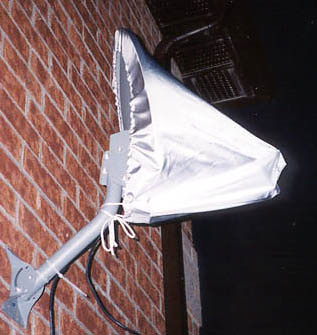
With flurries beginning to frequent the Washington (finally!), I felt like it might be a good idea to figure out how to get that snow off my satellite dish. Sure, I could just wait for it to melt (let’s call that Spektor method of choice numero uno), but there seem to be enough DIY (and commercial) options that I shouldn’t have to worry about getting snow on my screen when it snows outside. Overall, there appear to be three main methods for ensuring picture quality on even the snowiest nights: spray it, block it, or zap it.


Spray it. Spraying some Pam cooking spray on your dish at the start of winter is usually the traditional way of avoiding signal-destroying, satellite dish snow build-up. While this tends to work OK, if you’re dish is inconveniently located (on your roof, let’s say) it can get a little treacherous to reapply it if you’re having a particularly snowy winter. Alternatively, you could always pick up the commercial WX2100 super hydrophobic dish & radome coating, which promises to do the same thing but, you know, way better and stuff.


Block it. While some friends of mine have tried the old stand-by – the black plastic bag – to keep the picture free of fuzzies in the rain and the snow, most have had bad luck with signal loss for one reason or another (your milage may, of course, vary). The commercial option here, the WedgieCover, promises to do the same as a black plastic bag in the snow and the rain (not to mention "protect your privacy" although I’m not sure how) without the signal loss and comparatively easy installation… which means no twistee-ties. Score!


Zap it. The bad-ass, Tim Allen approach, however requires "more power," creating the option to melt it off. Particularly good for very cold climates who have to worry about long-term ice formation, the Ice Zapper seems to be the industry standard for metal dishes, although Montana Satellite has a few other options as well. DIY options for satellite heaters? While I’m sure its possible, I’d probably recommend finding a commercial option and staying away from any modifications unless you really are a regular Tim "The Toolman" Taylor. And, even if you are, we all know how well that tended to work out.

GA_googleFillSlot(“481_336x280”);


The Scramjet Future?

Monday, January 22nd, 2007

Every been curious about what comes after rockets? While the explosive lift-offs are awesome and have been helping NASA (and pretty much everyone else) do heavy lifting at incredible speeds throughout all of the space race, rockets require a great deal of hevy fuel (and Oxygen) to get up into space and don’t allow the manuverability we expect in a next generation space craft. For these reasons (and a bunch of others typically tied to safety), NASA has tied its plans for future superfast, ultrasonic transportation Scramjet (Super Combustion Ramjet) technology.

Current scramjet test vehicals reach over 7,000 mph (10x the speed of sound), going from 0 to 165 mph in .75 seconds. Check out the following video for even more information (note the selection of background music here):

The problem? While Scramjets may be able to overcome manuverability obstacles, it doesn’t seem likely that they’re going to be able to do it without rockets. In order to reach their ultrasonic speeds, most scramjets that have been tested, plagued with supersonic minimum speeds, need to be rocketed to 2.5-5 times the speed of sound by rockets in order to start their engines and reach their top speeds. Unless, of course, those electromagnetic catapults can start getting scramjets to their required speeds.

DIY Friday: Play-doh FM Radio

Friday, January 19th, 2007

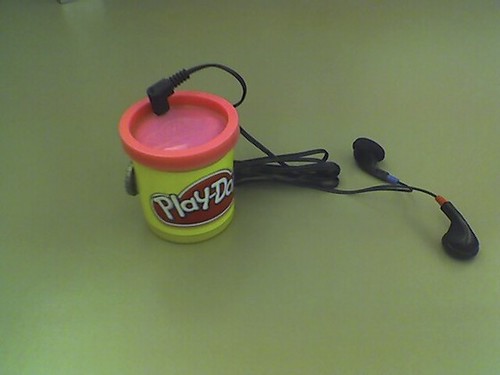
So maybe you got a little Play-doh® in your stocking during the holiday season and now, with winter finally upon us, you’re looking for something to do with it in the great indoors. Well, when I get out my playdough one potential use quickly leaps to mind… turning it into a Play-doh-based FM radio.

This a relatively easy project that only really requires a mini-radio, some playdough, a bottlecap, and some manual dexterity, but it’s sure to be a real conversation starter at the Gym.

"Oh, what’s this?" you reply stepping on to the treadmill. "This old thing? It’s just my playdough radio." Take that, Mr. Grunts-alot.

In all seriousness, you also might want to take some time checking out the Instructables site this weekend as well. It’s a really neat site that lets users easily create their own step-by-step instructions (with photos) of almost any project or activity.

Talk about a Payload…

Tuesday, January 16th, 2007

The Stanford Daily last week reported on a joint venture between NASA and Stanford University that would putting E. coli into space.

The project, which has been dubbed GeneSat-1, has involved the launching of a new non-harmful strain of E. coli bacteria into orbit in an attempt to observe the impact that zero gravity and space radiation have on the DNA of living organisms. By studying the data that is being transmitted to Earth from the shoebox-sized project satellite, the GeneSat-1 team believes that the mission could offer insight into the health risks of prolonged manned space missions. Spearheading the GeneSat-1 mission is a host of Stanford-affiliated technologists and NASA researchers.

I wonder if this is the first time blasting the bacteria commonly found in excrement into space might actually help humanity? I don’t know, but the mission appears to have been a part of the payload in the first launch from the Mid-Atlantic Regional Spaceport. Talking about some history making bacteria … hey, at least its not in my Spinach. 🙂