Archive for the ‘Astronomy’ Category

The Internet is Dead

Thursday, July 26th, 2007
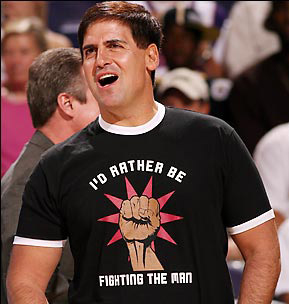
 

Satellite and Cable systems now have the upper hand. According to Mark Cuban, via Television Week:

Forget the Internet, the Future Is the ‘Intranet’

At CTAM: HDNet Founder Mark Cuban on Why VOD Will Rule

By Andrew Hampp, AdAge

You can’t have a Mark Cuban speech without at least one contrarian statement. In the past year alone, the HDNet founder has sounded off on everything from YouTube ("A million people watching three-minute clips of Lonelygirl is critical mass?" he said during Advertising Week) to local newspapers ("They’re trying to grow like they’re internet companies in 1999," he told Esquire). His latest target? The web. Did you hear? It’s dead.

Speaking at the Cable Telecommunications Association for Marketing (CTAM) Summit in Washington yesterday, Mr. Cuban declared "the Internet is dead" in an otherwise subdued panel that included executives such as ESPN President George Bodenheimer and Time Warner Cable CEO Glenn Britt.

‘Neighborhood feel’
The real growth medium is the "intranet," otherwise defined as the on-demand and digital video-recording platforms provided by cable companies. "There’s less restriction on the intranet, it’s like your own corporate network for all the cable networks and even wireless," he elaborated in an interview after the panel. "It’s all locally driven anyways. It has a true neighborhood feel. If I’m in Dallas and I’m on Time Warner Cable, I want localized content."

Mr. Cuban views the TV as the real computer, citing the decline in sales of desktop computers as a direct result of where media consumption is moving. "All that [content] is moving to the TV. What’s the difference between a PC and a TV? Nothing." Social networking and user-generated content are all the rage for Web 2.0, but there’s "nothing on the horizon" from a content perspective, he said (apparently glossing over the looming launches of NBC and News Corp.’s NewCo web-video venture and Joost). Broadband video, according to Mr. Cuban, has "stopped growing."

"Before the internet, people were doing whatever they were doing, thinking this was the end-all, be-all. I thought by 2007 the pipes would be so huge [for the web], you could do HD content and all that. And everything just didn’t turn out. I was wrong," he said.

Premium price for TV ads
Advertising for TV will also come with more of a premium price tag in the future, Mr. Cuban said. "There will be fewer commercials that cost more. The bang for your buck will become the same."

But not everyone was quite as bullish as Mr. Cuban is on the growth of TV. Debora Wilson, CEO of the Weather Channel, listened to Mr. Cuban’s internet rant and interjected a few thoughts of her own on what she still considers to be a viable medium.

"The internet is still in day two; there’s so much flexibility," she said. "The other opportunities on TV are still in a slow phase. I’ve been in the market for 15 years and we’re still waiting for that tipping point."


A little more detail, via Multichannel News:

Cuban: The Internet Is Dead

HDNet Chairman, Mavericks Owner Who Made Fortune from Web Speaks at CTAM Summit Closing Session

By Tom Steinert-Threlkeld — Multichannel News, 7/25/2007 7:35:00 PM

Washington — The archetype of the Internet-bred billionaire Wednesday declared, “The Internet’s dead. It’s over.”

The speaker was Mark Cuban, who sold Broadcast.com to Internet portal Yahoo in 1999 for $5.7 billion. He is currently the owner of the National Basketball Association’s Dallas Mavericks and HDTV programmer HDNet. He is also considering buying Major League Baseball’s Chicago Cubs, out of his pocket, for about $1 billion.

The venture that made his fortune, Broadcast.com, was the outfit that legally streamed programming from 420 radio stations and networks; 56 TV stations and cable networks; and game broadcasts and other programming for more than 450 college and professional sports teams over the Internet.

And Cuban made his comments to operators of a set of high-bandwidth alternatives to the Internet, known as cable systems.

Speaking on the closing panel of the CTAM Summit here, Cuban declared, “The Internet’s for old people.”

His basic point: The Internet has gone stagnant. The only “new application” on the World Wide Web of recent vintage was, in his view, YouTube — which, unlike Cuban’s Broadcast.com, ripped off the creative content of intellectual-property owners to build its video-based business.

Sour digits aside, Cuban’s view, as repeated in a group interview after the panel with Multichannel News and CableFax Daily, is that cable and satellite networks are now superior to the Internet as platforms for building complex, interactive services.

This is in direct counterpoint to his contention, when he built Broadcast.com a decade ago, that the Internet would — in 10 years’ time — have the bandwidth that would make it a superior home for the development and distribution of video programming.

“I was wrong,” he said.

Networks built by telephone companies, like Verizon Communications, and cable companies, like Comcast, do not easily talk to each other, stymieing development of services (like HD video) that require smooth, seamless transport of lots of digital stuff, he said.

By contrast, so-called clustered collections of cable networks provide an enclosed environment that allows high-bandwidth, complex applications to thrive. Developers will figure this out and develop applications to match. If, for instance, a developer wanted to build suites of office applications, he said, the better environment would be servers on local cable systems. Users would have faster response and better experiences. Such developers could “outgoogle Google,” in effect.

Google, the dominant search engine, is developing and providing a series of office applications for writing and making calculations that operate on the open Internet.

In effect, Cuban said, cable networks are “intranets,” which, by their nature, operate more efficiently than the Internet. Cable-system operators can control the quality of service they supply and the amount of bandwidth that developers can use. Plus, there is no friction in transporting services and data within their networks.

His contention harkens back to @Home, the ill-fated offspring of the cable industry that tried to create a “private” Internet that operated at higher speeds and with greater quality than the “open” Internet, which made “best-efforts” attempts to transfer information, whether text or video or other.

Using standards such as the OpenCable specifications and cooperative efforts to interlink their networks, cable-system operators, he added, could create a high-bandwidth nationwide alternative to the Internet that would attract developers of applications that needed and took advantage of greater capacity and speed of transmission.

 

The New Television Situation in Germany

Monday, July 16th, 2007

We read this news clip couple of weeks ago how the German Federal Cartel Office (offically Bundeskartellamt) has again contradicted itself whether a "positive signal" for the planned entavio platform was ever given. The proposition to convert TV viewers to a digital platform in Germany has be mired in regulatory proceedings for a while.


Now it seems they’re ready to launch in September with Premiere, via press release (in German and French, too):

Pay-TV broadcaster Premiere has signed an agreement to use SES ASTRA’s digital satellite platform entavio in Germany. Starting on September 1, 2007, new Premiere customers will be offered the Premiere programmes also via entavio. With this agreement, entavio wins a first important pay-TV client for its technical services. entavio-enabled receivers will be widely available in the market.

The new agreement also improves SES ASTRA`s ability to offer all broadcasters access to more than 2.5 million Premiere and Premiere-enabled satellite receivers in German TV households. SES ASTRA will continue to offer this access to other programme operators on neutral and transparent terms. SES ASTRA thereby further increases the attractiveness of its service portfolio to broadcasters.

I believe entavio will gradually replace Premiere set-top boxes over time. Broadband TV News tells us we can expect additional pay-TV companies to come aboard:

The new thematic bouquet from German pay TV operator Premiere is taking shape. The platform, which will use the entavio encryption facilities of SES ASTRA, is close to signing deals with both the RTL Group and ProSiebenSat1 to carry their new thematic channels.

The two contracts would bring RTL Living, RTL Crime, Passion, SAT1 Comedy and kabel eins classics into the fold. Earlier this year a deal was signed with Turner Broadcasting to carry the German language versions of Cartoon Network, TCM and Boomerang.

The total number of channels on the September 1st launch date is going to be twenty. Also planned are a kids channels and thematic channels about literature, music (concerts) and adult entertainment.

Nice video introduction, in German:

See you!


Big Broadband in Bermuda

Wednesday, July 11th, 2007


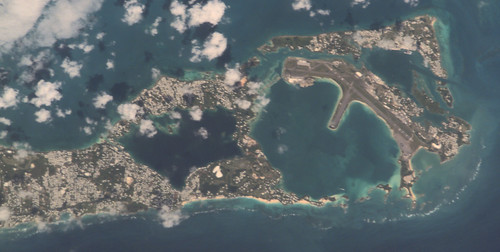
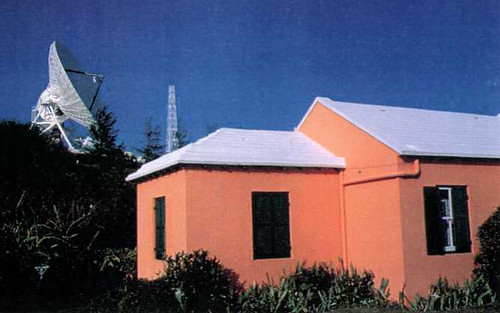
If you’re ever been to Bermuda, you may have noticed a very large satellite antenna in Devonshire Parish while motoring around the island on a rented scooter/moped/motorcycle. We read last month they’ve begun dismantling it since a new submarine cable is being light up for service:

World’s largest commercial satellite dish to be replaced by fibre optic cable

It’s out with the old and in with the new as Cable & Wireless begins tearing down its satellite dish, the Standard A Earth Station antenna.

The dish has been a Devonshire landmark for 24 years and is visible from North Shore and Middle Roads.

A new 800-mile submarine cable that will replace it is due to be operational by the end of October.

It has 700 times more capacity than the old cable it will replace, and will link all of C&W’s customers with access to their global network, the company said.

Like the satellite dish, the telecom firm’s existing undersea cable is obsolete and will be replaced by its new next-generation ‘Gemini Bermuda’ cable.

In its heyday the dish could carry 400 simultaneous circuit feeds to 15 different countries, and could withstand hurricane winds of up to 180mph, the company said.

As telecommunications technology evolves, dismantling outdated equipment like the dish marks the end of an era for Bermuda and indeed the world.

Weighing 400 tonnes and boasting a diameter of 300 meters, the 30-metre-high structure is the largest commercial satellite dish in the world.

"The new undersea cable will satisfy the growing demand for diverse, reliable high-speed data and broadband services which cannot be provided by the restricted capacity of the current cable," said Eddie Saints, C&W’s CEO. "This investment is one in a series of capital investments planned for the Bermuda marketplace in the near future in order to deliver truly world class communications services."

He assured reporters gathered at the facility for a press call yesterday that the transition from ageing cables and satellite transmitters, to state-of-the art fibre optic cables would be seamless.

"It’s extremely reliable and has withstood hurricanes," Mr. Saints said. "If one unit fails, a separate and equal (secondary) satellite takes over."

He said the company will continue to use the 400-tonne base of the station as high-speed data processing centre.

C&W has commissioned M.R. Construction to tear down the dish.

The $750,000 dismantling project, which began three weeks ago, will take another seven weeks to complete. "It cost money to put it up and it costs money to take it down," Mr. Saints said.

Most of the scrap metal will be recycled, some of it here, but most of the materials will go elsewhere.

"Carbon steel remains will be recycled as local mooring weights, [but some material will go to the] landfill," Mr. Saints said. "Other materials such as stainless steel and aluminum will be recycled in the United States."

We rocket scientists always favor recycling materials, so we’re glad to read they’ll be doing that. That’s why Bermuda is cool and at the forefront of technological innovation. Internet access is ample, to be sure.

This new cable, which is owned by Brasil Telecom and runs from Bermuda to New Jersey to Venezuela and Brazil — sort of a modern Bermuda Triangle made of fiber-optic cable — runs along the Continental Shelf, in water ranging from 20 to 600 meters in depth.

Not only are they moderninzing their telecommunications capabilities with other countries, they announced a country-wide RFID system for all their vehicles yesterday. Actually, it’s a first:

Bermuda’s Transport Control Department (TCD), an arm of Bermuda’s Ministry of Tourism and Transport, has launched an island-wide deployment of electronic vehicle registration (EVR) to automate compliance and enforcement using TransCore’s radio frequency identification (RFID) eGo® windshield sticker tags and readers. Initial deployment is underway.

The EVR system will automate enforcement of Bermuda’s vehicle-specific regulations including vehicle inspection, insurance, and registration and ensure the accuracy of vehicle data. Over the next five years, TCD expects to recover approximately $11 million in lost fees from unlicensed vehicles on the island’s roadways and reduce the number of non-compliant vehicles to less than 1 percent.

“Bermuda is a country with 53 square kilometers of land with 65,000 people and 47,000 moving vehicles. We’re the sixth largest population per square mile,” said Randy Rochester, Director of Bermuda’s Transport Control Department. “Bermuda has the world’s highest density per square kilometer of motor traffic on its roads. Consequently, we needed a system to facilitate compliance and lessen the burden on law-abiding citizens and our civil servants. EVR will expedite enforcement and ticketing of those not in compliance and recover lost fees more efficiently than our current manual system.”

TransCore is doing some good work — and they use satellite. We like that.

A Tour de France First: HD

Monday, July 9th, 2007

The 2007 Tour de France kicked off on Saturday from London, England — and Stage One, which ended in Canterbury, has already featured some high drama.


London mayor Ken Livingstone wrote about the course of the race prior to the Grand Depart, and the standings so far can be found here. But race fans have no doubt already heard about Robbie McEwan’s incredible comeback from a crash early in the race. As one fan writes:

McEwen crashes 20km from the finish line and is out of the race due to the furious pace being set at the front of the peleton by teams such as Quick-Step, Milram, Credit Agricole and Lampre. He is somehow brought back into the peleton with just a few kilometers remaining by his teammates despite the best efforts of the sprinter teams to make sure he stays out of contention. He then works his way through the entire Tour de France field in the space of a couple of miles and, despite all the exertions and a wrist injury, appears in the last 200 metres to blow all the other sprinters away. One of the most historic non-mountain stage wins in the Tour de France.

Here’s the video on YouTube:

Fans outside of England wouldn’t know about McEwan’s comeback without satcom, of course, and this year marks the first time that le tour is being broadcast in HD, thanks to a suite of satcom services being provided by Globecast:

GlobeCast will supply French broadcaster France Televisions and the European Broadcasting Union (EBU) with satellite and microwave transmissions to provide complete HD coverage of the race. GlobeCast will be deploying up to eight SNG (satellite news gathering) and mobile microwave units at each stage of the race, supported by 30 technical professionals. That includes coverage of the race’s start in London, England–a first for the Tour–where GlobeCast recently launched a full-service broadcast and playout center.

GlobeCast mobile units stationed at various points along the course will transmit footage shot via motorcycle and helicopter by SFP (Société Française de Production) back to France Televisions’ production trucks at the finish line. GlobeCast will provide unilateral satellite contribution feeds to the channel’s master control room in Paris, and its mobile units will distribute the official world feed of the Tour de France to rights holders throughout the world on behalf of the EBU.

The overall communications solution provided to the Tour by France Telecom, which now markets all its services under the Orange brand, includes 1,500 temporary telephone lines to be deployed every day in the technical and press areas; high-speed Internet access in those areas; an upgraded mobile network over the entire course to ensure optimum coverage, mostly in 3G or 3G+; and a team of 50 technicians. The team will be mobilized around the clock, with support from 330 regional colleagues at each stage, and will handle the transport, assembly, operation and supervision of the necessary infrastructures and systems for five specific areas: stage finish line, organization headquarters, intermediate points, press room and stage departure village.

If you want to see the excitement of the tour in even higher definition than HD (or at least on a bigger screen), be sure to check out Wired to Win, an IMAX film about the Tour de France that  is now making its way to select cities.

Indian DTH Market About to Grow

Wednesday, July 4th, 2007

Via TechWhack:

Airtel and Reliance to offer internet through DTH

Bharti Airtel and Reliance Communications are two companies which are all set to enter the Indian Direct to Home market by launching their services.

They would take on the existing players in the segment including Zee Dish TV and Tata Sky DTH.

However, one interested aspect of their upcoming services is that both Reliance and Airtel are planning to offer satellite-based broadband internet services along with regular DTH services.

Bharti Airtel president, broadband and telephone services, Atul Bindal spoke about their plans: “Satellite internet is a North American model. There are a lot of areas where Bharti would possibly never lay copper cable as it does not make economic sense. In these areas, Bharti will look at a offering broadband through Wi-Max or through DTH.”

Reliance in addition to internet services is also considering offering other services like video on demand to attract more customers to their upcoming BlueMagic service.


And now this bit of promising news from Satellite Finance (subscription):

The Indian government is considering increasing the foreign investment cap in domestic DTH companies from 49% to 74%.

At present the foreign direct investment (FDI) component of any international investment is only 20%. The change in law would bring DTH on a par with cable companies where foreign companies are allowed to own up to 74%, FDI or otherwise.

FDI ownership in a DTH company would, however, remain contingent on a composite shareholding. The move will encourage foreign investment into the sector, with the burgeoning number of cash-starved DTH operators looking to fund their expanding services in a market rife with demand.

Currently, TataSky has 20% FDI, as does Sun Direct TV, while Dish TV has received approval to invite foreign investors to invest in it. The current players in the DTH market are TataSky, Doordarshan and Dish TV with Sun Direct TV, Bharti Airtel and Reliance Communications to roll-out their own services within the next few months.

The government is undertaking a review of foreign investment across all industries, including aviation, media and telecoms. The law change would be of particular interest to Bharti Airtel, which had to reduce its holding in Bharti Telemedia recently due to the existing FDI rules.

TV Chip for iPhone

Wednesday, June 27th, 2007

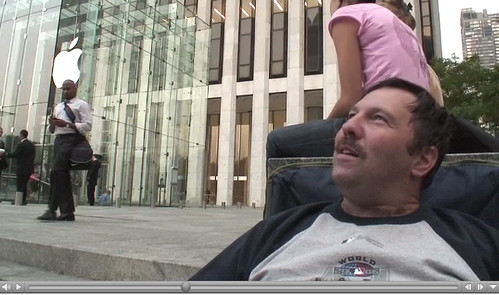
Yes, the Apple iPhone goes on sale Friday. Mr. Packer from Long Island was first in line at the Apple Store in New York. He started the queue at 5:00 a.m. on Monday. Read the "First in Line" blog.

Watch his interview here.  For such an effort, he deserves a digg.

I still think it will be able to receive live TV signals from towers and/or satellites. We blogged about Apple’s trademark filing during  CES 2006. Now consider this new chipset from Samsung, via EETimes:

Samsung Electronics Co., Ltd., has started sampling a multi-standard channel decoder and multi-band radio frequency tuner chipset made using its 65-nm process that it says supports almost all mobile TV standards including DVB-H/T, DAB-IP, ISDB-T, and terrestrial DMB.

Volume production of the part is scheduled for the fourth quarter of 2007.

The chipset is being offered either as two standalone ICs or as a system-in-chip package (SiP).

"Although a new market, we see high growth potential in mobile TV applications," said Yiwan Wong, vice president, Marketing Team, System LSI Division, Semiconductor Business, Samsung Electronics.

Wong added the part will initially be targeted at the European and Asian markets.

Samsung says the multi-band RF tuner, which receives the analog broadcast signal, has a simplified circuit structure by applying a low IF to compliment the conventional zero IF. It is also a general purpose tuner that supports UHF, VHF and L-band commonly used in Europe and the U.S.

The company says the chipset requires no external low noise amplifier (LNA) and additional memory chips, significantly reducing the bill-of-materials (BOM) cost of the total system. The chip set supports Link Layer processing to output fully error-corrected IP datagrams or MPEG2 transport streams.


The iPhone introduction is only the beginning of the new mobile revolution. Keep up with the news if you can.

And now, the official reviews…

David Pogue of The New York Times:


Walt Mossberg of The Wall Street Journal:


Jimmy Neutron Drives a Chrysler

Wednesday, June 27th, 2007


Chrysler’s exclusive Sirius Backseat TV deal just got a little more interesting. As part of a wider sponsorship deal with Nickelodeon, Jimmy Neutron will be promoting the Town & Country’s unique features: MyGig entertainment system, Swivel ‘n Go seating configuration, and Sirius Backseat TV. The details, via MediaPost’s Marketing Daily:

Ads will star Jimmy Neutron, who will explore the vehicle to spotlight features like Swivel-N-Go seating, the latest innovation from the company.

The company says he will also appear in online ads on Chrysler.com. Costumed Jimmy Neutron characters will grace Chrysler’s booth this year and next at auto shows, mobile tours, and in-theater ads where Chrysler products are featured.

The deal also includes a grassroots effort.

Chrysler will be exclusive automotive sponsor of Nickelodeon’s nationwide 20-city road show called "Slime Across America," launching next month.

Chrysler will have a Town & Country display showcasing the SIRIUS Backseat TV and on-site photo opportunities with a Jimmy Neutron costumed character, among other things.

Chrysler will also be featured in billboards on any of Nickelodeon’s local cable affiliate spots geared around the tour.

Chrysler will also have a Town & Country and Chrysler product specialist on site at Nickelodeon Family Suites by Holiday Inn in Orlando, Fla., from November through January 2008, where Chrysler’s custom spots will air on the hotel’s in-house TV network. Nick Hotel branding will be featured on Chrysler.com during the promotional window.


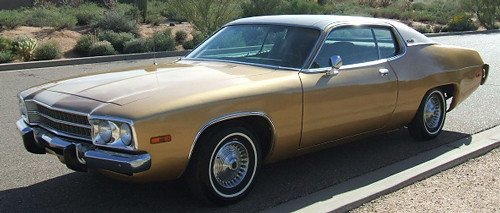
Too bad the Plymouth brand was killed a few years ago, otherwise he’d be driving a Satellite (you can still buy an old one on ebay).


  The folks at Viacom have been pretty busy lately with licensing, especially at last week’s Licensing International show in New York. That theme park deal in Dubai ought to be interesting:


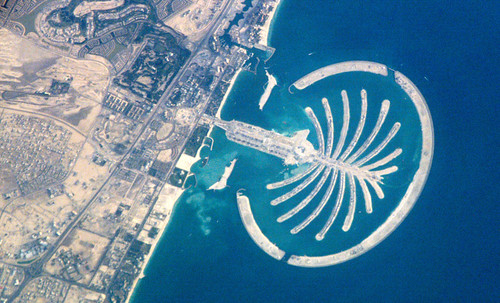
A unit of Viacom Inc. signed a deal with Dubai-based Ruwaad Holdings to create a theme park in the United Arab Emirates, featuring rides and attractions based on the Paramount Pictures film library, which includes “Titanic,” “Forrest Gump” and “The Godfather.”

The park is part of a larger $2.5 billion destination complex that includes boutique hotels and resorts, retail shopping and residential properties. An opening date has not been disclosed.

The deal with Viacom’s Paramount Licensing Inc. division marks the second time Viacom teamed up with a Dubai firm to create a park in the UAE. The company’s Nickelodeon unit signed separate agreements with the Al Ahli Group to license its characters for a $1 billion theme park. Marvel Entertainment Inc. signed a similar deal with Al Ahli.

Nickelodeon will help create rides and attractions based on its children’s cartoon characters, including SpongeBob Square Pants, while Marvel plans to lend its comic book hero’s like Spider-Man, The Incredible Hulk and the Fantastic Four.

Earlier this month, Nickelodeon signed an agreement with Marriott International Inc. to develop a series of upscale resort hotels and theme parks, with the first planned for San Diego in 2010. The companies plan to build up to 20 resorts by 2020 around the world.

Dubai is one of the world’s fastest growing tourism destinations, and the Al Ahli Group theme park is part of a plan to more than double the number of annual visitors to 15 million by 2011. Last year, six million people visited Dubai.


  But back to the TV service, which will include Disney Channel, Cartoon Network and Nickelodeon as part of the package. It will use hardward developed by STMicroelectronics:


SIRIUS Backseat TV, which offers consumers three channels of family TV programming, can be received via an in-vehicle satellite video receiver and two small roof-mounted antennas. The SIRIUS Backseat TV digital audio and video signal is broadcast over the same frequency spectrum allocation as SIRIUS radio.

The core of the in-vehicle satellite video receiver, which is manufactured by Delphi for SIRIUS, is based on three ST chips: the STA210 RF tuner IC; the STA240 channel, service and source decoder IC; and the STA264 advanced hierarchical demodulator chip, which extracts the video stream and performs error correction on the received signal.


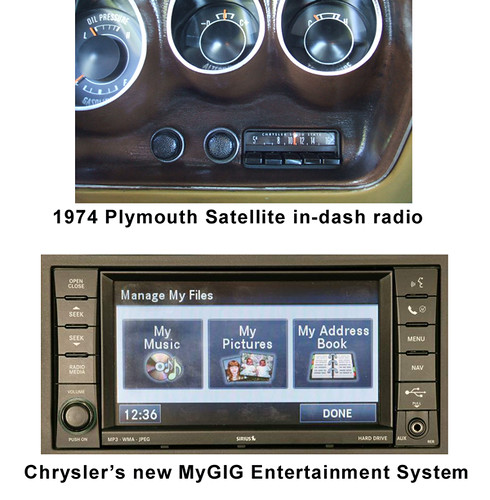
Those Plymouth Satellites came with an AM radio. That’s it. Today, Chrysler’s MyGig system is something we’d expect in a new car:


The system goes a step beyond iPods and other entertainment devices by putting a 20-gigabyte hard drive in the dashboard.

MyGIG allows drivers to download up to 1,600 songs. Users also can put up to eight photos and an address book into the system. Navigation maps with a three-dimensional appearance also are stored on the hard drive. MyGIG incorporates real-time traffic information from Sirius Satellite Radio.


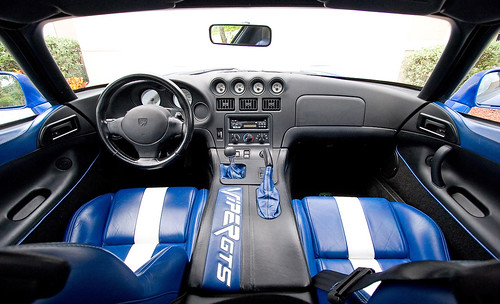
Sirius Backseat TV will not be available as an option in a Dodge Viper, obviously.


Hey, Jimmy Neutron’s been seen on a Campbell Soup can, but let’s not compare him to Andy Warhol.


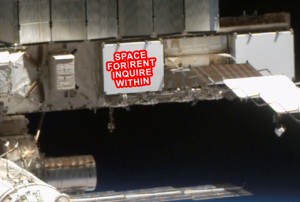
FREE Room for Rent on Space Station in 2010. Must pay for moving expenses.

Tuesday, June 26th, 2007

Reply to: [email protected]

Date: 2007-06-26, 10:04AM EDT

If you are looking for a microgravity labratory, this place is PERFECT for you. I’m now focusing more on exploration-related activites and have some extra space I can share. I prefer government agencies (are you from the National Institutes of Health?) but am willing to accept a private business.

The room should be available until at least 2015, although some think it can hold-together until 2022.

The move could be a bit tricky. My spacecraft fleet goes out-of-service in 2010. You will need to build or borrow a space-craft to get here.


Location: Space
it’s NOT ok to contact this poster with services or other commercial interests
PostingID: 360874


Yes, the International Space Station is for rent. From NewsDay:

For the past two years, much of the science at the space station has been oriented toward returning astronauts to the moon, and even going on to Mars.

“We didn’t need the entire capacity of the space station to do exploration-related research,” said Mark Uhran, NASA’s assistant associate administrator of the space station. “So the capacity that was freed up after we restructured our program is now available to other agencies or private sector companies.”

The space station’s first section was launched in 1998 and it has been inhabited continuously since 2000 by Russian, U.S. and European crew mates. By 2009, the station’s three-member crew is expected to grow to six people.

The station was designed to last until at least 2015, but managers now believe it could operate as late as 2022.

“What probably drives the life is … probably how much the space station is utilized,” said Bill Gerstenmaier, NASA’s associate administrator for space operations.

Once it is completed, it will cost about $1.5 billion a year to run the space station. About half the space station’s U.S. section would be available for the use by outsiders, who wouldn’t have to pay a fee for its use.

NASA’s plans to open up the space station to outsiders, though, depend on whether private companies build spaceships that could travel to the outpost as a replacement for the grounded shuttles after 2010. NASA has given $500 million in seed money to two private companies to build spacecraft and has signed agreements with others.

Satcom @ CommunicAsia

Friday, June 22nd, 2007

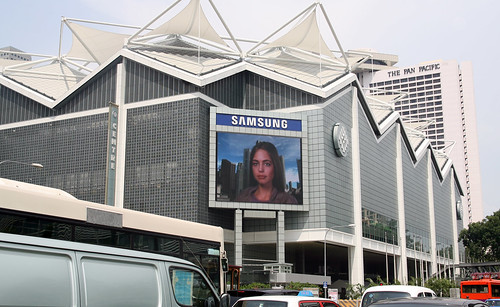
The CommunicAsia 2007 trade show just wrapped up in Singapore, which has been billed as the largest such event ever held in South-East Asia.

There was no shortage of press hype around this show. From Dubai Internet City to Nokia Siemens Networks, Huawei, to Yahoo! and Samsung. We were especially interested in those in the satellite business — and there were nearly 100 of those.


Of the more than 67,000 visitors to this show, we saw one satcom CEO on CNBC Asia this week:


Global Maritime Satcom

Wednesday, June 20th, 2007

Reading Multichannel News (MCN) yesterday, I came across a "news item" about a new service from Intelsat, calling it a "Global Maritime Solution:"

Intelsat’s Network Broadband GLOBAL Maritime service differentiates itself from other offerings by incorporating two unique technical features. The first feature is an integrated Automatic Beam Switching system, which seamlessly transfers service between the satellites and maintains a site’s Internet session while the vessel is underway, eliminating the need for complex and costly manual intervention such as the re-pointing of antennas. The second feature, the platform’s Global Network Monitoring System, offers customers the ability to monitor all remote locations from a single monitoring site at any location desired by the customer. The requirements of companies managing vessel fleets and maritime infrastructures desiring efficient connectivity worldwide were the driving force behind these design features.

Not exactly a fine piece of investigative journalism here. Both the press release and MCN description have this identical morsel of text:

Utilizing Intelsat’s global satellite C-band capacity, the Network Broadband Global Maritime network operates at rates up to 2 megabits per second, with the initial service offering continuous communications with high-powered bandwidth rates from 128 kilobits per second-512 kbps. In addition, Network Broadband Global Maritime offers always-on broadband access that provides customers with continuous bandwidth for a fixed monthly fee.


C-band? That means me and my boat are gonna need to set aside some space on the poop deck for this little baby. We’re talking about a 10 to 12 foot diameter radome. For example, a Sea Tel Model 9797 ought to do it.

I don’t think the Intelsat satellites’ C-band payloads are hot enough to handle smaller antennas. Some of the newer, higher-power C-band satellites out there, such as GE-23, might be able to use smaller antennas. There was talk about using sub-2-meter antennas within "hotter" coverage beams (40+ dBW in downlink EIRP). In fact, the language in ST Electronics’ press release is remarkably similar to Intelsat’s, but I’m more interested in the 1.2-meter antenna they’re launching at CommunicAsia 2007 in Singapore:

The Agilis 1.2 metre maritime VSAT antenna designed and marketed by ST Electronics subsidiary, ST Electronics (Satcom & Sensor Systems) Pte Ltd, will provide smaller sea going vessels with an “Always On” connectivity for all their communication requirements. It provides not only secure transmission, but also a fast 512Kbps inbound transmission rate and up to 2Mbps for outbound transmission.  Users can expect this cost-effective compact system to provide them with continuous on-board communications through a high performance network.

Recognising the potential in the large and untapped market base of smaller vessels, ST Electronics developed the antenna to provide these vessels an opportunity to benefit from efficient and cost effective broadband satellite communications.  The antenna is considered as the smallest stabilised C-band antenna available in the market currently and will fit perfectly into the confined space of smaller vessels.

Wait a minute: we’re putting a puzzle together here. ST Electronics and VT Systems are part of the same company, and VT Systems bought in to iDirect Technologies. Based on their press release this week, it may be their platform and making this a real solution after all:

IndosatM2 (IM2), one of the largest Internet and multimedia service providers in Indonesia, announced today that it will offer satellite broadband service over Ku-Band using a universal satellite hub from iDirect Technologies. The expanded service follows IM2’s success in providing satellite broadband service over C-Band and enables IM2 to offer satellite broadband to thousands of small and medium enterprises throughout Southeast Asia in remote and unreachable locations, as well as to the consumer market.

Bringing all these technologies together is what it will take to weaken Inmarsat’s firm grasp of the maritime market.