Archive for the ‘Cool Stuff’ Category

Simonyi in Space via Soyuz Rocket: It’s A Good Thing

Saturday, April 7th, 2007


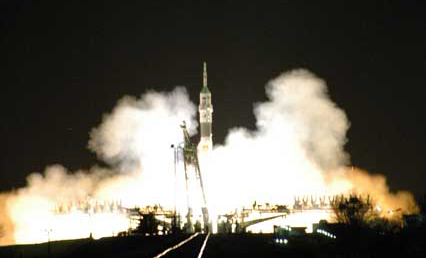
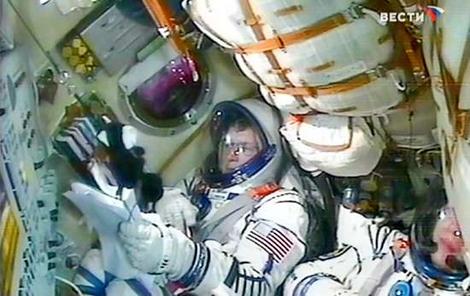
Microsoft billionaire Charles Simonyi was thrust into space today, with a meal prepared by Martha Stewart (quail roasted in wine, duck breast with capers and rice pudding, among other courses). They’ll be celebrating Cosmonauts Day on 12 April 2007. Check his blog later this week to see how much they all liked it.

RSC Energia’s statement:

At 21:31:14 Moscow Time a launch vehicle Soyuz-FG with Soyuz TMA-10 spacecraft was launched from the Baikonur launch site to the International Space Station.

The Increment 15 (ISS-15) crew and visiting crew 12 (VC-12) are on board the Russian transport manned vehicle. Soyuz TMA-10 is carrying a crew consisting of Russian cosmonauts Oleg Valeriavich Kotov (Gagarin CTC test cosmonaut) and Fyodor Nikolaevich Yurchikhin (S.P. Korolev RSC Energia test cosmonaut), as well as a spaceflight participant of the ISS visiting crew, USA citizen, Charles Simonyi. The objective of the launch is the scheduled replacement of two ISS-14 crewmembers and of the Soyuz TMA-9 spacecraft that has been serving within the space station as its crew rescue vehicle since September 20, 2006.

And it only cost him $25 million. By the way, he’s ham radio’s first space tourist, too (KE7KDP).

DIY Friday: Vacuum Tube Amplifier

Friday, April 6th, 2007


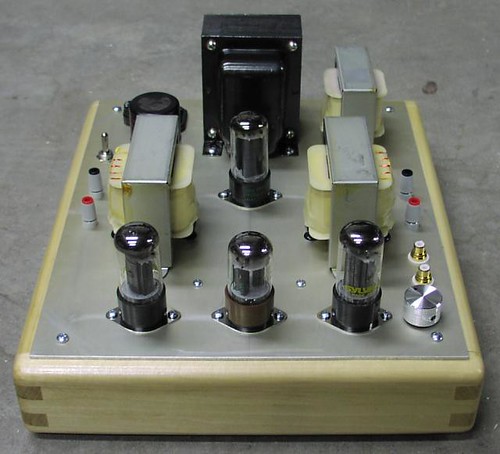
Our friends over at the MAKE Blog linked to it a few days ago, but when I saw it I knew it’d be perfect link for our own DIY Friday feature.

Boozehound Labs is obsessed with tubes — no, not the ones that run these here Internets — the vacuum kind. Often forgotten in the digital age, most good audiophiles get a little weepy talking about the "warmth" vacuum tubes give to music when amplifying, recorded or live music. The folks over at Boozehound Labs have dedicate most of their site to honoring the Vacuum Tube and teaching visitors how to bring a 19th century technology into their modern life.

Those looking to get started should check out the site’s awesome Vacuum Tube Hi- Fi Primer, which not only gives you the low-down on how to make the kick-ass amp you see above, but also provides an excellent explanation of vacuum theory and the technology behind the tube.

Those already familiar with the tech should check out Boozehound Lab’s show-and-tell pages on microphone and guitar amps the "scientists" have already put together. If you want to get started on a project right now (well, actually, as soon as the materials can be shipped to you), make your way over to Triode System’s page and check out some of their cool kits. While you might not save as much as you’d like, you guaranteed to get all you need to create the amp of your dreams.

100 MPG X-Prize

Monday, April 2nd, 2007

It’s no secret that those of us here at Really Rocket Science were big fans of the original X Prize and the X Prize Foundation.

For the uninitiated, the original Ansari X Prize, according to Wikipedia:

… was a space competition in which the X PRIZE Foundation offered a US$10,000,000 prize for the first non-government organization to launch a reusable manned spacecraft into space twice within two weeks. It was modelled after early 20th-century aviation prizes, and aimed to spur development of low-cost spaceflight. The prize was won on October 4, 2004, the 47th anniversary of the Sputnik 1 launch, by the Tier One project using the experimental spaceplane SpaceShipOne.

How could we not be obsessed with such a competition? Not only did the winning craft give us an opportunity to rekindle our long-held admiration for the aerospace designs of Burt Rutan — but the prize helped launch the X-Prize Cup and our beloved X-Racers.


The second X Prize, the Archon X Prize, is "$10 million for the first non-governmental organization to sequence the complete genomes of 100 humans in 10 days time."

And now, in accord with our obsession with speed and technology, comes the Automotive X Prize.

From the website:

People love their cars. They are vital links to our jobs, our community, ourselves. For everything we love about them, cars are chained to the most severe global crises of our time: oil dependence and climate change.

We aim to break this deadlock through the most radical approach to innovation yet – the X PRIZE.

The Automotive X PRIZE will invite teams from around the world to focus on a single goal: design viable, clean and super-efficient cars that people want to buy.

This will be a race for the ages, with major publicity and a big sack of cash waiting for the champion, and perhaps our future hanging in the balance.

How’s that for gripping PR copy? It sure makes us want to channel our inner De Lorean and get to work.  (Guidelines for entry can be found here.)

We’ll be keeping you up to date on the progress (and cool designs) of the Automotive X Prize as well as future X Prizes in other fields and technologies. Becuase we, too, believe in "revolution through competition." And one never knows what form of locomotion the winning design might use.


Look out below!!!

Wednesday, March 28th, 2007


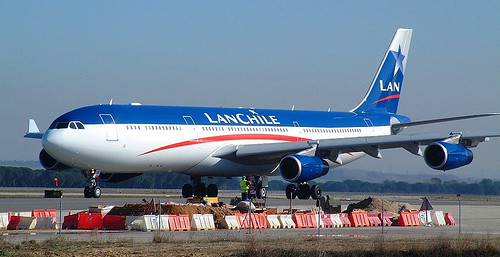
Flaming space junk from a Russian satellite narrowly missed hitting a Chilean airliner over the Pacific Ocean, reports said Wednesday.

The pilot of a LAN Chile Airbus A340 en route to New Zealand told air traffic controllers he had seen pieces of flaming space junk falling about eight kilometres (four miles) in front of the plane and behind it, TV3 said.

The aircraft was not struck by any of the debris and later landed safely in Auckland.

Airways New Zealand, which manages New Zealand’s air traffic, said it had been warned by Russian authorities that an obsolete satellite was due to fall into the Pacific Ocean on Wednesday.

But the debris had apparently fallen into the area 12 hours earlier than the time advised by the Russians.

A spokesman for the Civil Aviation Authority, which is responsible for air safety, said it would launch an inquiry after it was advised of the details of the incident.

Spacesuit Riot (Riot!)

Tuesday, March 27th, 2007

At Johnson Space Center, scientists are hard at work building the next generation of spacesuits for American astronauts’ return to the moon.

And at least one scientist there seems to have been destined to do this work; his name, appropriately enough, is Joe Kosmo.

The Associated Press explains:

Developing the new suits is easier than in the Apollo era, when designers had to rely on slide rules and drafting tables. The suits are designed and re-designed on computer screens before any hardware is used.

"There’s a lot more capable tools and technology to get the job done – a lot more knowledge, as well – so we can capitalize on them," said Joe Kosmo, who participated in the design, development and testing of suits from the Mercury, Gemini, Apollo, Skylab and shuttle eras.

At the top of the list is making the next spacesuit smaller and lighter – engineers are hoping to halve the 200-pound weight of the suit and life support backpack that Apollo astronauts lugged around.

NASA plans to use new, lightweight composite materials and take advantage of smaller electronics to shrink the life support backpacks. NASA also wants the astronauts to be able to move around easily.

Terry Hill, who’s developing the new spacesuit, recalled the robotic-like hops of the Apollo astronauts broadcasting from the moon.

"Mostly, that was because of mobility – they just didn’t have it," he said. 

(An interesting aside found in the AP’s report is that Russian spacesuits, unlike American ones, are only designed to be worn a few times before being thrown away. We reckon that’s how we ended up with Suitsat, the ad-hoc communications "satellite" that we blogged so enthusiastically about last year (here and here).)

Scientists at Johnson Space Center aren’t the only ones working on new spacesuits, however. Students at the University of North Dakota and four other schools are testing their design in the Utah desert, according to another AP report. And scientific advancements in other arenas could quickly find their way into the next generation of space suits, as this New Scientist Space article on "power skin" technology suggests.


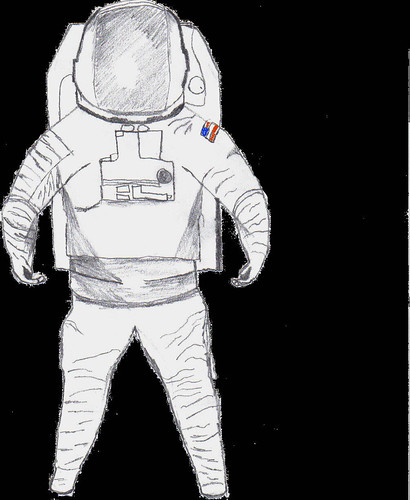
For ourselves, we’re looking forward to seeing more of the next iteration of the Joe Kosmo line (sketched above). But we know without a doubt that, as with any summer line of fashion, lightweight is in.

Spaceport in New Mexico?

Monday, March 26th, 2007

The Washington Post writes today about the growing effort to build a spaceport in rural New Mexico:

"In a referendum, the people of Las Cruces and surrounding Do?a Ana County will be voting on a proposal to slightly raise their county sales tax, a highly unpopular idea these days. But in return, southern New Mexico, one of the poorest regions in the nation, would jump on a fast track to hosting the world’s first all-commercial spaceport.

If the effort succeeds, a desert valley used by a handful of ranchers could become Spaceport America — a 21st-century portal for thousands of people hoping to blast into space as tourists, explorers, researchers and, maybe someday, as commuters to destinations halfway around the world."

Located near the White Sands Missile Range (& National Monument) and Truth or Consequences, NM, the planned SpacePort America is already set to be one of the main launch points for Richard Bronson’s Virgin Galactic (which we’ve already written about a few times). The controversy, of course, stems from the sales tax increase that would be needed to build the the spaceport which would ad around $0.25 to a $100 purchase, mostly on the backs of poor, area residents, some of whom already live in areas without proper roads, water, or waste removal systems.

We’ll let you know how the vote turns out in the weeks ahead.

IP Radio Comes to Indonesia

Tuesday, March 13th, 2007


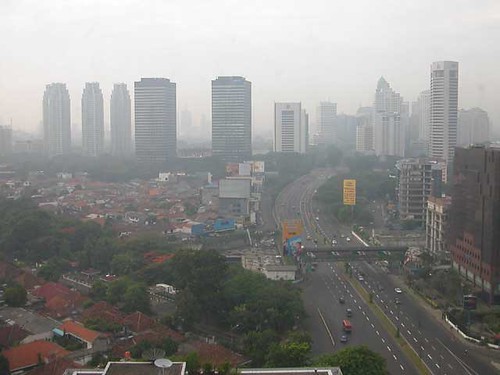
Last week’s announcement of the deployment of an integrated IP-based radio network in Indonesia isn’t the first time that Indonesia has been an early adopter of the latest communications technology.

ND SatCom, an SES ASTRA company, partnered with Studio Hamburg Media Consult International (MCI) GmbH to deploy the IP-based radio contribution and distribution network for Radio Republik Indonesia (RRI).

The Jakarta-based, state-owned radio broadcast is operated by the Indonesian government and consists of 21 regional stations. (You can find frequencies here, or — if you’re not in Indonesia — you can listen online here.)

Back in the 1970s, Indonesia was one of the first countries (following Canada and then the United States) to realize the importance of satellite communications for networking, and to deploy a satcom network for telephone and fax communications.

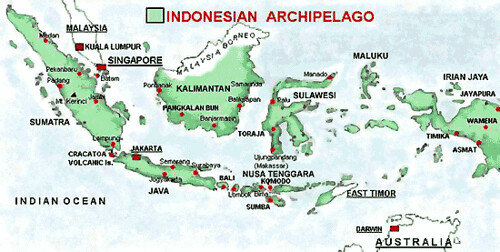
It’s no wonder that Indonesia has been an early adopter of communications technology, when one considers the hundreds of islands that it must connect:


DIY Friday: SXSW & Austin

Friday, March 9th, 2007

This week’s DIY Friday combines two of my real loves – DIY projects and music – by bringing together two of my favorite things: Make Magazine and South By Southwest (aka SXSW). I know all of you have already heard about MAKE (we’ve covered a few of their projects right here in this weekly feature), but, for those who haven’t heard about SXSW, its one of the best general "media" conferences in the world.

Even those who’ve heard about SXSW might not know that it is really three different events rolled into one: The SXSW Music and Media Conference, the SXSW Interactive Festival, and the SXSW Film Conference and Festival. The whole affair begins today and lasts ten days (that’s through the 18th) and features hundreds of musical acts on 50 stages in downtown Austin, dozens of keynote presentations and workshops by leading thinkers and new medias, and a series of films from rising talent that easily rivals Sundance. In short, for those interested in what we’ll be watching, listening to, and thinking about in the next five years, SXSW is the place to be.

While that all might be enough for any dedicated RRS reader, those interested in DIY projects like myself might be excited to learn that the Senior Editor of Make Magazine, Phillip Torrone, will be keynoting with Limor Fried, a DIYing Engineer and Artist in her own right, on Sunday. While its hard to predict what two brilliant DIY minds might get into during the talk, I can assure you it will be interesting.

For those that can’t make it, while you might not be able to see Sunday’s kick ass keynote, you can tune to channel 101 on your DirectTV [fuller descriptions are available at the listings at SXSW Live] and check out many of the festivities (although mostly musical) in the weird, liberal oasis that is Austin, TX.

Oh, and if you missed out on the fun of SXSW like I will you might want to make plans to visit Austin this fall nonetheless, because it looks like Austin will also be the home to one of 2007’s MAKE Faires. While it might not have the hipster cachet of SXSW, you better believe you’ll have the opportunity to see (and make) some cool stuff like the crowds did last year.

Wee TV

Thursday, March 1st, 2007

Very cute, little "Wee TV" via Reuters

Verizon Wireless kicks off mobile phone TV

By Sinead Carew

NEW YORK, March 1 (Reuters) – Verizon Wireless, the second-biggest U.S. mobile phone provider, said it launched the country’s first commercial mobile television service in 20 states with full-length programs and picture quality similar to regular TV.

The venture of Verizon Communications Inc. <VZ.N> and Vodafone Group Plc <VOD.L> said on Thursday it is charging $15 a month for the service, which was developed by Qualcomm Inc. <QCOM.O> unit MediaFlo and includes eight channels broadcasting full-length TV shows to phones 24 hours a day.

Verizon Wireless and its rivals have been pushing services such as video and music to boost revenue as the price falls for traditional mobile phone calls.

But mobile video services have been slow to take off due to high prices and poor quality compared with television at home.

The picture quality of the new service will be on a par with home TV and roughly twice as clear as Verizon Wireless’s existing Vcast video service, spokesman Jeffrey Nelson said.

Mobile video services, first launched in the U.S. in 2004, have only about 7 million customers out of about 232 million mobile subscriptions, according to Ovum analyst Roger Entner, who said that higher-quality pictures could change that.

"I think the impact in the beginning will be modest," since Verizon is rolling out the service gradually, said Entner. But he estimated that MediaFlo users could increase to 20 million to 30 million people within about seven years.

CINGULAR TO FOLLOW

AT&T Inc.’s <T.N> Cingular Wireless, the biggest U.S. mobile service in terms of subscribers, has said it plans to launch MediaFlo to its customers later in the year.

The first phone to support MediaFlo, the U620 from Samsung Electronics Co. <005930.KS>, is being sold for $199, or $149.99 for customers who sign a two-year contract. Verizon plans to add an LG Electronics Inc. <066570.KS> phone in weeks.

Subscribers who also sign up for mobile Internet access, for $5 a month, and Verizon’s existing Vcast service, which lets users download short video clips for $15 a month, can add MediaFlo for $25 a month, or $10 less than if they were to buy the three separately.

Entner said adding eight channels for another $5 could be attractive for existing Vcast and Web subscribers.

The MediaFlo service became available on Thursday in cities such as Chicago; New Orleans; Portland, Oregon; Seattle; Las Vegas; Tucson, Arizona; Kansas City; Dallas-Forth Worth; and Salt Lake City.

Available channels include a live feed from MTV and programming from CBS Corp. <CBSa.N>, NBC, ESPN, Fox, Nickelodeon and Comedy Central. Some programs are shown at the same time as regular TV, while others are rescheduled to match the heaviest mobile phone television viewing times, Nelson said.

Viacom Inc. <VIAb.N> owns MTV, Comedy Central and Nickelodeon. General Electric Co. <GE.N> controls NBC. Walt Disney Co. <DIS.N> owns ESPN.

Wireless chipmaker Qualcomm plans to build a nationwide network for delivering television to mobile phones to kick-start the market. In that way, established operators such as Verizon can offer additional media services to customers without clogging up their own networks.

Modeo, a unit of Crown Castle International Corp. <CCI.N>, is also building a network dedicated to mobile television, but it has yet to name any customers for its service, currently in trial in New York.
Danger Of Early Daylight Savings: Mistimed Coffee Brewing

Wednesday, February 28th, 2007

From the batten-down-the-hatches dept…

Los Alamos Highlights Real Danger Of Early Daylight Savings: Mistimed Coffee Brewing

The upcoming early arrival of Daylight Savings Time continues to make some headlines, even if there really isn’t a whole lot to worry about. The latest story looks at how the Los Alamos National Laboratory is coping with the change, and things seem fine, as its IT director is apparently most concerned about people who use calendar programs showing up for meetings on time. The lab’s newsletter, though, had some more pressing advice for employees: make sure things like the clocks on their coffee pots are set correctly, as clearly it would be a significant problem if their coffee wasn’t ready as expected on March 11. Perhaps when we repackage our Y2K preparedness kits and bunkers, we should make sure they include coffee pots that don’t contain a clock.