Archive for the ‘Front Page’ Category

South Pole South Paw

Thursday, January 3rd, 2008

We recently blogged about a new satcom connection in Antarctica and a terrific new map of "the coldest continent," so we were somewhat amused to read about the "drunken brawl" around Christmas at the Amundsen-Scott South Pole Station:

"There was an altercation between two people … there’s no indication of the cause or of the background between the two folks," said US National Science Foundation spokesman Peter West.

Dr Karl Erb, head of the US Antarctic programme, said the man had been sacked.

"The assailant has been removed from Antarctica and his contract terminated by his employer. Such behaviour has no place whatsoever in the US Antarctic programme."

Mr West said the injured person had been flown to the larger McMurdo Station – near New Zealand’s Scott Base – for treatment.

Medical staff at McMurdo assessed the man’s injury to be more serious than they could treat, and he was flown to Christchurch – accompanied by a flight nurse and paramedic – on board a US Air Force Hercules. Dozens of workers at McMurdo had to work on their day off to help the evacuation.

Mr West said the incremental cost of the medivac was approximately US$85,000 ($110,000) including fuel costs and reimbursement for flight hours.

"The additional costs were incurred because the medivac was required during a period of normally reduced flight activity – specifically the Christmas holiday.

"The injured party is, to my knowledge, still in Christchurch and is recuperating after being treated."

A Christchurch Hospital spokeswoman said a man was admitted on Christmas Day, and was discharged on Boxing Day.

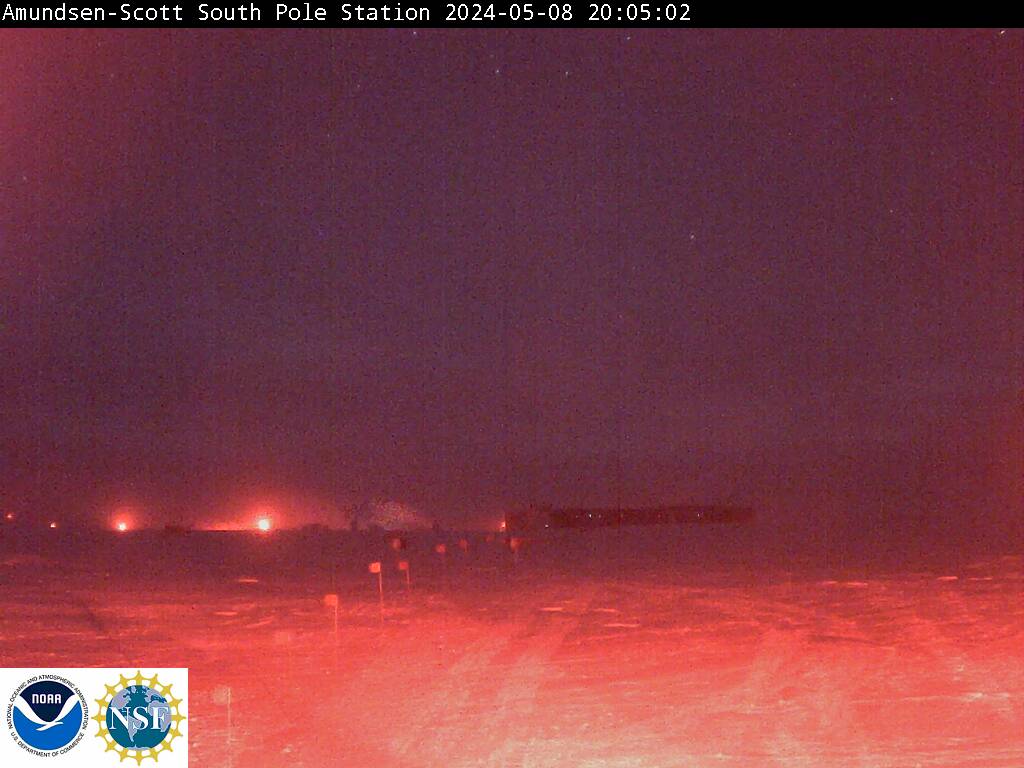
It’s summer there now, as seen on this NOAA webcam:

Wow, US$85,000 to rescue the guy with the busted jaw. Both were apparently employees of Raytheon Polar Services, the IT contractor. I remember reading about the IT guy in a Computerworld interview last month, who has his own blog. In the interview, he talks about one of his more outrageous experiences, the 300 Club:

We have this tradition called the 300 Club. When the temperature drops below -100 we hike the sauna up to 200 degrees and stay in there as long as we can stand it. Then we run outside, naked, around the geographic pole and back inside so we get that total 300-degree change in temperature. That happens every year and it’s absolutely amazing. Just the feel of that cold on your skin is like nothing else. People always wonder if you can feel the difference between 60 below and 100 below and the answer is absolutely.
 

Check out his photo gallery for this and other scenes from the South Pole. Pretty interesting story, too. They use three inclined orbit satellite for communications, available for only a few hours each day. Geosynchrounous satellites are positioned over the equator, so an antenna at the either of the poles can’t really "see" them as they are beyond the horizon.

Your Sirius Radio, however, will work at the North Pole. Their elliptical orbit is focused on North America and is sometimes referred to as a "tundra orbit."

Love the Laptop in Peru

Thursday, December 27th, 2007

Here’s an AP story via CNN:

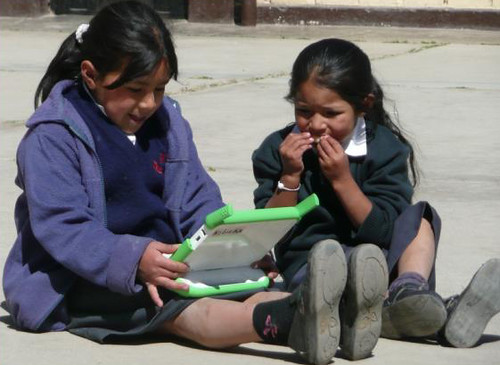
Doubts about whether poor, rural children really can benefit from quirky little computers evaporate as quickly as the morning dew in this hilltop Andean village, where 50 primary school children got machines from the One Laptop Per Child project six months ago.

These offspring of peasant families whose monthly earnings rarely exceed the cost of one of the $188 laptops — people who can ill afford pencil and paper much less books — can’t get enough of their "XO" laptops.

At breakfast, they’re already powering up the combination library/videocam/audio recorder/music maker/drawing kits.

At night, they’re dozing off in front of them — if they’ve managed to keep older siblings from waylaying the coveted machines.

"It’s really the kind of conditions that we designed for," Walter Bender, president of the Massachusetts Institute of Technology spinoff, said of this agrarian backwater up a precarious dirt road.

Founded in 2005 by former MIT Media Lab director Nicholas Negroponte, the One Laptop program has retreated from early boasts that developing-world governments would snap up millions of the pint-sized laptops at $100 each.

In a backhanded tribute, One Laptop now faces homegrown competitors everywhere from Brazil to India — and a full-court press from Intel Corp.’s more power-hungry Classmate.

But no competitor approaches the XO in innovation. It is hard drive-free, runs on the Linux operating system and stretches wireless networks with "mesh" technology that lets each computer in a village relay data to the others.

Mass production began last month and Negroponte, brother of U.S. Deputy Secretary of State John Negroponte, says he expects at least 1.5 million machines to be sold by next November. Even that would be far less than Negroponte originally envisioned. The higher-than-initially-advertised price and a lack of the Windows operating system, still being tested for the XO, have dissuaded many potential government buyers.

Peru made the single biggest order to date — more than 272,000 machines — in its quest to turn around a primary education system that the World Economic Forum recently ranked last among 131 countries surveyed. Uruguay was the No. 2 buyers of the laptops, inking a contract for 100,000.

Negroponte said 150,000 more laptops will get shipped to countries including Rwanda, Mongolia, Haiti, and Afghanistan in early 2008 through "Give One, Get One," a U.S.-based promotion ending December 31 in which you buy a pair of laptops for $399 and donate one or both.

The children of Arahuay prove One Laptop’s transformative conceit: that you can revolutionize education and democratize the Internet by giving a simple, durable, power-stingy but feature-packed laptop to the worlds’ poorest kids.

"Some tell me that they don’t want to be like their parents, working in the fields," first-grade teacher Erica Velasco says of her pupils. She had just sent them to the Internet to seek out photos of invertebrates — animals without backbones.

Antony, 12, wants to become an accountant.

Alex, 7, aspires to be a lawyer.

Kevin, 9, wants to play trumpet.

Saida, 10, is already a promising videographer, judging from her artful recording of the town’s recent Fiesta de la Virgen.

"What they work with most is the (built-in) camera. They love to record," says Maria Antonieta Mendoza, an Education Ministry psychologist studying the Arahuay pilot to devise strategies for the big rollout when the new school year begins in March.

Before the laptops, the only cameras the kids at Santiago Apostol school saw in this population-800 hamlet arrived with tourists who visit for festivals or to see local Inca ruins.

Arahuay’s lone industry is agriculture. Surrounding fields yield avocados, mangoes, potatoes, corn, alfalfa and cherimoya.

Many adults share only weekends with their children, spending the work week in fields many hours’ walk from town and relying on charities to help keep their families nourished.

When they finish school, young people tend to abandon the village.

Peru’s head of educational technology, Oscar Becerra, is betting the One Laptop program can reverse this rural exodus to the squalor of Lima’s shantytowns four hours away.

It’s the best answer yet to "a global crisis of education" in which curricula have no relevance, he said. "If we make education pertinent, something the student enjoys, then it won’t matter if the classroom’s walls are straw or the students are sitting on fruit boxes."

Indeed, Arahuay’s elementary school population rose by 10 when families learned the laptop pilot was coming, said Guillermo Lazo, the school’s director.

The XOs that Peru is buying will be distributed to pupils in 9,000 elementary schools from the Pacific to the Amazon basin where a single teacher serves all grades, Becerra said.

Although Peru boasts thousands of rural satellite downlinks that provide Internet access, only about 4,000 of the schools getting XOs will be connected, said Becerra.

Negroponte says One Laptop is committed to helping Peru overcome that hurdle. Without Internet access, he believes, the program is incomplete.

Teachers will get 2½ days of training on the laptops, Becerra said. Each machine will initially be loaded with about 100 copyright-free books. Where applicable, texts in native languages will be included, he added. The machines will also have a chat function that will let kids make faraway friends over the Internet.

Critics of the rollout have two key concerns.

The first is the ability of teachers — poorly trained and equipped to begin with — to cope with profoundly disruptive technology.

Eduardo Villanueva, a communications professor at Lima’s Catholic University, fears "a general disruption of the educational system that will manifest itself in the students overwhelming the teachers."

To counter that fear, Becerra said the government is offering $150 grants to qualifying teachers toward the purchase of conventional laptops, for which it is also arranging low-interest loans.

The second big concern is maintenance.

For every 100 units it will distribute to students, Peru is buying one extra for parts. But there is no tech support program. Students and teachers will have to do it.

"What you want is for the kids to do the repairs," said Negroponte, who believes such tinkering is itself a valuable lesson. "I think the kids can repair 95 percent of the laptops."

Tech support is nevertheless a serious issue in many countries, Negroponte acknowledged in a phone interview.

One Laptop is currently bidding on a contract with Brazil’s government that Negroponte says demanded unrealistically onerous support requirements.

The XO machines are water resistant, rugged and designed to last five years. They have no fan so they won’t suck up dust, are built to withstand drops from a meter and a half and can absorb power spikes typical of places with irregular electricity.

Mendoza, the psychologist, is overjoyed that the program stipulates that kids get ownership of the laptops.

Take Kevin, the aspiring trumpet player.

Sitting in his dirt-floor kitchen as his mother cooks lunch, he draws a soccer field on his XO, then erases it. Kevin plays a song by "Caliente," his favorite combo, that he recorded off Arahuay’s single TV channel. He shows a reporter photos he took of him with his 3-year-old brother.

A bare light bulb hangs by a wire from the ceiling. A hen bobs around the floor. There are no books in this two-room house. Kevin’s parents didn’t get past the sixth grade.

Indeed, the laptop project also has adults in its sights.

Parents in Arahuay are asking Mendoza, the visiting psychologist, what the Internet can do for them.

Among them is Charito Arrendondo, 39, who sheds brief tears of joy when a reporter asks what the laptop belonging to ruddy-cheeked Miluska — the youngest of her six children — has meant to her. Miluska’s father, it turns out, abandoned the family when she was 1.

"We never imagined having a computer," said Arrendondo, a cook.

Is she afraid to use the laptop, as is typical of many Arahuay parents, about half of whom are illiterate?

"No, I like it. Sometimes when I’m alone and the kids are not around I turn it on and poke around."

Arrendondo likes to play checkers on the laptop.

"It’s also got chess, which I sort of know," she said, pausing briefly.

"I’m going to learn."
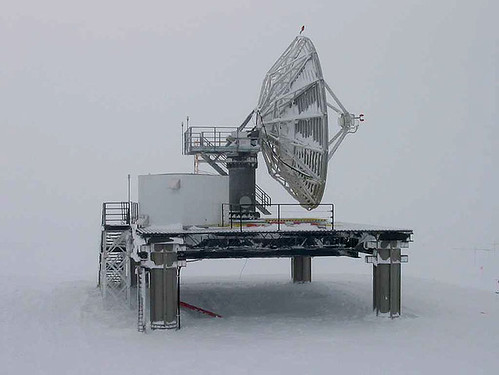
It’s in situations like these where the SES "one dish per village" idea will make an impact.

What happens in Vegas, shouldn’t stay in Vegas

Thursday, December 20th, 2007

Mobile TV is starting to take off. As networks get faster, phones get smarter, and consumers become more demanding, mobile tv may become the central front in the mobile market wars. So, not surprisingly, the Consumer Electronics Association Conference in Vegas next month will be a hot show on this subject.

ICO Global and Alcatel-Lucent will demonstrate a new standard in mobile broadcasting – Digital Video Broadcasting, satellite to handhelds (DVB-SH).

In the demonstration, ICO and Alcatel-Lucent will deliver mobile high-resolution live television programming to display terminals located in a moving vehicle outfitted with DVB-SH receivers. In addition, ICO will demonstrate high-resolution DVB-SH video reception by delivering pre-encoded content to portable monitors in ICO’s exhibit suite at the Venetian hotel. ICO and Alcatel-Lucent will also be demonstrating at the CES “ShowStoppers” press event on Monday, January 7 from 6:00 until 10:00 pm at the Wynn Hotel.

These standards-based demonstrations are the first displays of the cutting-edge solution being developed for the ICO alpha trial of mobile interactive media (mim) services, which will take place in 2008 in Las Vegas, Nevada and Raleigh-Durham, North Carolina.

The ICO mim™ product is a converged mobile media service that addresses a wide variety of consumers’ entertainment, information, and two-way communication needs: live and stored mobile TV in vehicles, interactive navigation, and roadside assistance, all with nationwide coverage. ICO mim will provide multiple channels of high-quality mobile video to portable, larger-screen (4.5 to 10 inch) user devices.

Last spring, ICO announced agreements with Alcatel-Lucent and Hughes Network Systems (Hughes) to develop key architecture and technology for use in ICO’s alpha trial based on ICO’s next-generation geostationary satellite (ICO G1) and the deployment of an Ancillary Terrestrial Component (ATC) using the mobile multimedia DVB-SH open standard. ICO G1 is scheduled for launch in March 2008, and the alpha trial will take place in Raleigh-Durham and Las Vegas after the launch of ICO G1.

SES AMERICOM’s IP-PRIME service is providing the programming for this test, along with another test at the Las Vegas conference—Hiwire—this one using Digital Video Broadcasting to handheld (DVB-H, see image). This will utilize the 700mhz spectrum through Aloha Partners – the largest licensee of this spectrum in the country. It promises to have “the largest channel lineup of high-quality multicast television mobile TV ever trialed with consumers anywhere around the globe. The trial will also deliver up to three times as many channels as any similar mobile TV network in the United States, giving consumers the depth of programming that satisfies their appetite for TV.” The programming:

Hiwire will leverage Aloha Partners’ sizable 700 MHz spectrum capacity to deliver this unprecedented channel lineup of high-quality, full-frame rate TV to consumers. The channel lineup, procured by SES AMERICOM, includes top, leading programmers and networks, with seven channels from Discovery Communications (including Discovery Channel, Animal Planet, TLC, Discovery Kids and Discovery’s dedicated mobile network, Discovery Mobile), six channels from MTV Networks (including CMT, COMEDY CENTRAL, MTV, Nickelodeon, Spike TV and VH1), two channels from Turner Broadcasting – CNN Mobile Live and Cartoon Networks/Adult Swim Mobile, Anime Network, E!, Fox News Channel, Travel Channel, The Weather Channel, MavTV and AccuWeather.com. The parties are in discussions to add other programming services as well which will be finalized prior to the consumer launch, scheduled to begin this month.

So, should carriers move towards DVB-SH or DVB-H? Europe is already having the debate:

But can DVB-SH gain traction? It has struggled to find support among handset vendors, especially as DVB-H, the only globally used mobile TV standard, is backed by an industry consortium that includes Nokia (NYSE: NOK) and Motorola. In a controversial move, the EU has also recently endorsed DVB-H as its mobile TV tech standard of choice and has placed the technology on its list of “official standards.” Starting in February, member states will be required to support its use and implementation—though this doesn’t mean they have to ban other standards.

There’s also a question on whether its use may be more costly. As Reuters (NSDQ: RTRSY) reports, in Europe there is a current shortage of spectrum for mobile TV, which means the telecoms industry—just as Alcatel Luncent has done—has been looking at higher frequencies. DVB-SH sits just above current 3G airwaves. But these higher frequencies are usually costlier since the higher the frequency, the shorter the distance radio signals travel, meaning operators have to build denser networks. Rival DVB-H standard uses much lower frequencies, the same as traditional television’s UHF band.

This will be just part of the fun at the CES show next month. Check out the “March of the CES Press Releases.” Perhaps a clip from Laurel & Hardy’s “March of the Wooden Soldiers” is appropriate:

90 Orbits Around The Sun

Wednesday, December 19th, 2007

What does it feel like to have completed 90 orbits around the Sun? I don’t feel a day older than 89.

I still can’t quite believe that we’ve just marked the 50th anniversary of the Space Age.


The golden age of space is only just beginning… Space travel and space tourism will one day become almost as commonplace as flying to exotic destinations on our own planet.

X-Prize Contestant for Moon 2.0

Wednesday, December 12th, 2007


Fly me to the moon
Let me play among the stars
Let me see what spring is like
On a-Jupiter and Mars


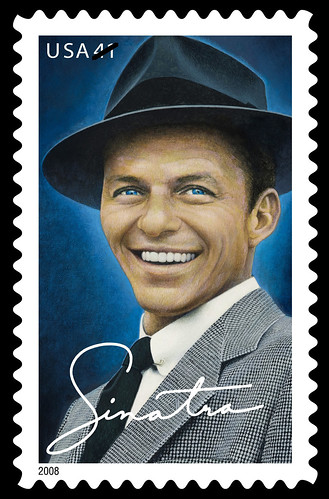
That’s how the old Bart Howard song begins, popularized by Frank Sinatra in 1964 (it’s been used as a water fountain show tune at the Bellagio in Las Vegas, too). Funny how this popped into my head right on Sinatra’s birthday. The U.S. Postal Service chose to introduce the new postage stamp commemorating "Old Blue Eyes" in Los Angeles this afternoon:

Art director Richard Sheaff of Scottsdale, AZ, worked with stamp artist Kazuhiko Sano of Mill Valley, CA, to create the image based on a 1950s photograph of the entertainment icon. The stamp depicts Sinatra’s charismatic smile, trademark fedora and cobalt blue eyes that earned him the nickname “Ol’ Blue Eyes.” Sinatra’s autograph also appears on the stamp.

In a 50-year career studded with accolades, Sinatra won several Grammys, received the Jean Hersholt Humanitarian Award in 1971, and was recognized at the Kennedy Center Honors in 1983. Sinatra gave generously to many charities and was noted for his philanthropy. President Reagan awarded him the Presidential Medal of Freedom in 1985. Sinatra was born in Hoboken, NJ, in 1915. He died in 1998 and in 2002 the Hoboken Post Office was renamed in his honor.


This song came to mind recently when I read the piece in the San Francisco Chronicle on the Google Lunar X-Prize, for which they found a contestant:


Out of 375 inquiries from more than 40 countries, so far only a company called Odyssey Moon has completed the registration process to become an official contender, Diamandis said at a conference about space investment on Thursday in San Jose.

Among the commercial possibilities of such a mission: robotically mining the surface of the moon to extract silicon that could be refined into chips to create solar arrays on the moon that would eventually – by means as yet unspecified – beam power back to Earth.

Gregg Maryniak, executive director of the XPrize Foundation, began the presentation by showing a futuristic video depicting the moon as "a natural storehouse of resources that we can use to enhance life on Earth and explore our universe."

Maryniak likened the Google Lunar XPrize to the Apollo challenge issued by President John F. Kennedy in 1961.

"Now there’s a new moon race," Maryniak said, calling this "Moon 2.0" effort "a race to bring Earth’s offshore island, the moon, into Earth’s sphere of economic activity."

Odyssey Moon’s leaders include Robert Richards, a co-founder of International Space University, and Ramin Khadem, former chief financial officer of Inmarsat, a nearly 30-year-old satellite firm publicly traded on the London Stock Exchange. Officials said the company is based on the Isle of Man to take advantage of space-friendly tax policies and regulations.


Based in the Isle of Man, ey? We blogged about that space-friendly place in the Irish Sea before. Read more about Odyssey Moon. Will they be the next "giant leap for mankind?" Here’s that clip from July of 1969:


Master Satcom

Wednesday, December 5th, 2007

The original vision by Sir Arthur Clarke was you could cover the world with three satellites. There are lots of satellite channel distributed worldwide today. Came across a new one today: a press release about Supreme Master TV being distributed worldwide by RRSat of Israel. What’s all this "supreme master" then? Believe me, it’s got noting to do with hip-hop pioneer Grand Master Flash:

The Supreme Master TV Channel is a free-to-air satellite channel broadcasting 24 hours a day, 7 days a week, with a variety of programs in English with over 40 languages and subtitles.

As part of the agreement, RRsat started broadcasting the channel at the beginning of November 2007, reaching North America, South America, Asia, Africa, Middle East, Australia and New Zealand, including over such prominent satellites as Galaxy 25, Hispasat 1C, Intelsat 10 and Optus B3.

Lily Able, Director of Programming of Supreme Master TV commented "It’s inspiring in that there is a tremendous appreciation for uplifting news and programming. Viewers worldwide have enthusiastically responded to Supreme Master Television in their countries. We’re very pleased and honored to bring positive media to all cultures around the world. RRsat, through its global network of 29 satellite partners is ideally suited to help spread the Supreme Master TV’s positive media around the world, by bringing the channel to millions of new households worldwide."

The channel is available on 12 satellites, so you can’t miss it. So what’s the "uplifting news" like? Here’s a clip from earlier this year:


Now, who is this "supreme master?" The person behind this global television service, broadcast from Los Angeles, is Supreme Master Ching Hai, a Vietnamese vegetarian who advocates meditation:


Master Ching Hai initiates sincere people longing to know the Truth, into the Quan Yin Method. The Chinese characters "Quan Yin" mean contemplation of the Sound Vibration. The Method includes meditation on both the inner Light and the inner Sound. These inner experiences have been repeatedly described in the spiritual literature of all the world’s religions since ancient times.


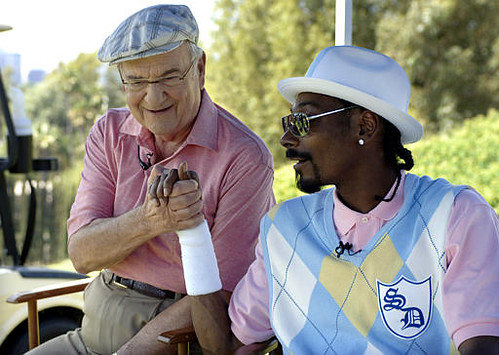
I was hoping this new channel was about Big Business and CEOs — a "captains of industry" channel of sorts. Or perhaps a channel from Grand Master Flash himself featuring today’s hip-hop innovators such as the "Doggfather of Rap" himself, Snoop Dogg. Or why not both? CEO programming during the day time, hip-hop programming at night. Hey, it’s not that far-fetched. Remember Snoop Dogg and Lee Iacocca getting together to shoot the Chrysler TV spot a couple of years ago? I remember reading the inside account in the Detroit News:

They traded lines like it was the most natural thing in the world that a 6-feet-4-inch, goateed rapper would be teeing it up with a grey-haired corporate big-shot.

Their off-camera moments were priceless. In one scene, Snoop drives a pimped-up golf cart with spinner wheels and white leather seats, with Iacocca sitting next to him. When Snoop gunned the cart down a steep hill, Iacocca held on tight.

"How are the brakes on this thing, Snoop?" he said.

"I got you baby," Snoop replied. "But that would be a funny commercial if I tipped over with the boss in here."

"Yeah," Iacocca huffed. "That’s funny alright."

Getting back to Grand Master Flash, here’s an original video of his showing a snapshot of New York City in the early 80’s:


Where the heck am I?

Thursday, November 29th, 2007


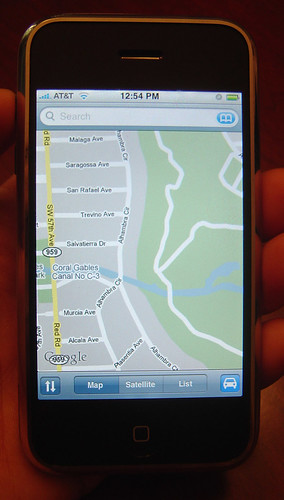
Wow, now I know. Thanks to a new "killer app" from Google called My Location. The folks at AppleInsider see it:

New Google Maps feature could simulate GPS on iPhones

By Slash Lane

A new version of Google Maps introduced this week includes a beta feature dubbed My Location that was designed to simulate the GPS experience on mobile phones and handheld devices that do not include GPS hardware, like Apple’s iPhone.

Essentially, the My Location feature takes information broadcast from mobile towers near non-GPS equipped mobile phones to approximate the device’s current location on the map down to about 10 city blocks.

"It’s not GPS, but it comes pretty close (approximately 1000m close, on average)," the Mountain View, Calif.-based search giant explained on its website. "We’re still in beta, but we’re excited to launch this feature and are constantly working to improve our coverage and accuracy."

The My Location feature is currently available for most web-enabled mobile phones, including Java, BlackBerry, Windows Mobile, and Nokia/Symbian devices. However, it is not yet compatible with Apple’s iPhone.

Still, Apple has promised to continuously update and improve upon the feature set of its inaugural mobile handset, making it more than likely that the feature will turn up once it emerges from the beta stage.

For a more detailed explanation of My Location and a visual demonstration, please see the video below.


Just downloaded it on a BlackBerry and it works. Amazing.

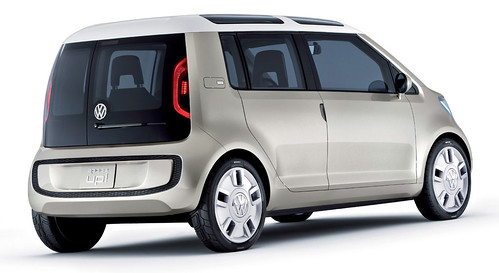
VW Space Up! Blue: A Very Cool Car

Wednesday, November 21st, 2007


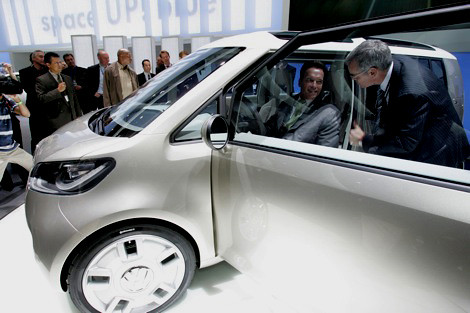
Love this car. I’m buying it regardless of what it will look like off the production line. Shown at last week’s LA Auto Show. Gov. Schwarzenegger just had to sit in it, but he still won’t back down from their lawsuit served to the EPA and automakers:

“We understand the way the corporate world works, and we understand the way lawyers work. They will do everything they can to stop it, and we will do everything we can to move forward,” Schwarzenegger said during a tour of the Los Angeles Auto Show.

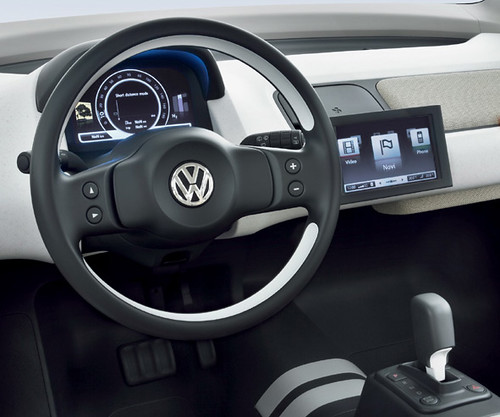
Beautifully designed, it features an interface that was probably designed by Apple. More than likely this was why VW’s CEO paid a visit to Steve Jobs back in September. The editors at Engadget think so:

Nice interior huh? And how ’bout that 7-inch touchscreen display slapped onto the center console. Pretty sweet right? You’re looking at the inside of VW’s third iteration of their Space Up! — the Space Up! blue — just revealed at the LA auto show. Now try this on. Reader Joona wonders if this is the result of recent collaborations between Apple and VW. After thinking about it some, we’re starting to wonder too. As Autoblog describes it, the concept touchscreen monitor "controls all conceivable functions" and is meant to demonstrate how future human-machine interfaces might look and operate. The touchscreen (no mention of multi-touch support) uses proximity sensors to react to gestures, apparently, without actually touching the display. The user can simply touch the "main menu carousel" to navigate to the desired category or manipulate the system with simple hand gestures near the display. Autoblog says, "Visually, this control is just as spectacular as it is intuitive." Now, chew on this for a second. VW announced earlier this week that all new VW models in 2008 2009 will have touchscreens. Is this what Apple has in store for us at January’s MacWorld?


Check it out — it’s coverflow, thanks to Edmund’s CarSpace:


Nice photo gallery on Autoblog:

Here’s a video clip showing details:


DIY Friday: People Powered Prime Mover

Friday, November 9th, 2007

If you feel like there is no point to working out — no weight loss, no fun — and if all you enjoy is watching tv, there may be a way to make television your motivation:

Couch Potatoes of the world rise up! (Or at least reach for the remote.) Your nemesis nears. David Butcher is an over 50 year old who has your lazy days in his sights. David has constructed what he labels the ‘Pedal Powered Prime Mover’, and uses it to power all manner of appliances, including the venerable TV. No more loafing about on the sofa watching the tube. David is offering plans, so you can build your own power generator. Got a screwdriver, hacksaw, wrench, hand drill, and wood chisel, plus a spare day? Perfect. A bit of galvanised water pipe, and some particleboard later, you’ll soon be consuming both The Simpsons and calories. David lost 8 lbs over 5 months, pedal powering his own needs. The trick to his design is the huge timber disc, which acts as a flywheel “creating torque where human legs/pedals cannot generate any.” Curious?

Plans for a “pedal powered prime mover” (PPPM) are available for purchase here ($50). They claim it isn’t too tough: “You can assemble the Pedal Powered Prime Mover (PPPM) with standard hand tools (drill, hacksaw, wrench, pliers, screwdriver, etc.). No welding, brazing or machine-shop work is required.”

Instead of using the PPPM to power a battery, you can also connect it directly to you device. They claim that “even the most efficient batteries “lose” 10-15 percent of the power they receive.”

To power a tv?

Our 27 inch television draws 45 watts when the screen is showing a dark picture, and 90 watts when the scene is brightly lit, according to my “Watts-up?” 120 volt AC power meter (same name as the meter on the pedal generator, but it measures AC instead of DC). I’ll bet you never thought of that, but yes, it takes more power to show brightly lit scenes on a television than is does to show dark. If you were pedaling the TV directly, you would have to constantly be adjusting your pedaling speed as the picture changed to keep the voltage at a safe level for the TV.

This isn’t unreasonable. A “sprint” would generate 110 to 150 watts, while a steady ride can generate from 50 to 110 watts.

Why not wash your gym clothes with the PPPM? This user couldn’t quite keep up with the spin cycle.

Conclusion: One person could pedal this machine all the way through the wash. They could not power the spin directly from the Pedal Generator – it just requires too much power. However, with the help of a battery, it would be possible to pedal this washer. In my physical condition, I would have to pedal for about 1 hour and 45 minutes to generate enough power to wash one load.

(There is an explanation at the end of the video.)

Carnegie Mellon Wins DARPA Urban Challenge

Monday, November 5th, 2007


Would it be a bad pun to call this a major milestone?

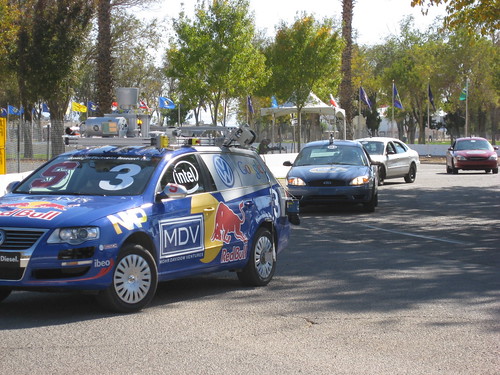
This past weekend, 11 finalists for the DARPA Urban Challenge — a prize competition for driverless cars —  wove their way through a 60-mile course at the U.S. Army urban warfare training center in Victorville, California (formerly the housing area at the now-closed George Air Force Base).

Only 6 teams finished, with Carnegie Mellon’s Tartan Racing Team taking the $2 million development prize. Defense Industry Daily was there, and has some amazing reporting

[DARPA had the] guts to invite in the world press and the general public while trying something new to the world: Turning multiple autonomous vehicles loose on city streets at the same time, interspersed with human drivers. As [DARPA Director Dr. Tony] Tether said at the start of the program, "If anyone tells you he knows what’s going to happen, he’s lying."

Since that test could likely take every bit of a short November day, the teams, staff and press assembled for their briefings at a chilly and dark 0600 hours. The day featured robot traffic jams, the world’s first ‘bot vs. ‘bot collision, and the Terramax robot truck’s attempt to take out the old air base PX.

DID has some great pictures of the event, and video of the bots making their way through the streets can be found on the DARPA website.

Automotive Design Line has additional details on the competition and rules: 

The competitor autonomous vehicles had to obey California traffic laws and were penalized for any violations. The three top teams had no infractions and were thus ranked solely by time in completing each of three "missions"—coming in with total times staggered by intervals of about twenty minutes. In addition to the robots, nearly 50 vehicles with professional drivers were on the course at the same time to simulate traffic situations.

The competition was close — Carnegie Mellon won with an average 14 mph throughout the course, while the second and third place finishers (Stanford and Virginia Tech, respectively) averaged just about and just under 13 mph. All of the top 3 teams finished the course in less than 6 hours. (MIT came in fourth place.)

More from Wired

Tether couldn’t have been more pleased with the race, calling it a "fantastic accomplishment," and saying that the technology for robotic vehicles was now just about ready for other companies and organizations to pick up the work in honing it further. "DARPA is an interesting organization," he said. "We really never finish anything. All we really do is show that it can be done. We take the technical excuse off the table, to the point where other people can no longer say ‘Hey this is a very interesting idea, but you know that you can’t do it.’ I think that we’re close to that point, that it’s time for this technology to [be furthered] by somebody else."

While five teams didn’t make it to the finish of the course (due to several "vehicle vs. building incidents"), there were no reports (that we’ve heard) of bot road rage.