Archive for the ‘Front Page’ Category

Take a Deep Breath

Thursday, May 17th, 2007

Breathing Powered USB Charger

Fwoevt6F1Oabqa8.MediumJmengel has built a USB charger from an old CD drive, a rubber band (from broccoli!), and a name badge strap. The device stretches when you breathe in and converts the motion into a five volt DC output.

The concept is simple but the making part is a little scary, involving the design of drive trains, circuit boards and lots of fiddly work. This first version only puts out 50mW, which means that you would take around a day to charge a cellphone, but the intention is noble, and there is a Version 2.0 on the way.

Head over to Instructables if you are feeling handy.

Breath powered USB charger [Instructables via Make]

Sensor Flight Computer Anomaly

Tuesday, May 15th, 2007

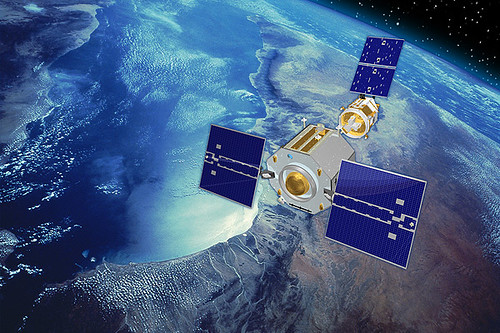
Launched in March, the Orbital Express mission has been progressing nicely. We blogged this cool space video last month, and I like the possibilities of this mission: on-orbit servicing of satellites. Potentially saving millions for all dependent on commercial space systems.

Then we read this from the DARPA Public Affairs Office, via SpaceRef.com:

15 May 2007 Update from Jan Walker, DARPA PAO:

"During Scenario 3-1 execution on the evening of May 11, Orbital Express encountered a serious sensor flight computer anomaly on the ASTRO while stationkeeping at 10 meters separation distance from the NextSat. Onboard fault protection reacted immediately, placing the ASTRO into an abort trajectory which carried it to a hold-point 120 meters from the NextSat. The Orbital Express team has spent the past several days recovering from this fault and from problems associated with loss of relative navigation at the longer-than-anticipated separation distances for this scenario. The ASTRO has since coasted at distances of up to several kilometers from the NextSat. Both vehicles are safe. The ASTRO powered up its redundant sensor flight computer and is processing sensor data nominally. The team is in the process of developing a recovery scenario for ingress and remate, and hopes to execute this ingress in the next several days."

Editor’s 14 May 2007 note: At this point ASTRO and NextSat should be a few meters apart. Some observers are suggesting that they are kilometers apart. No word from DARPA.

OE observed with Nextsat, SeeSat-L

"… NEXTSAT appeared to trail by about 0.5 deg, when at a range of about 600 km, which indicates a distance of about 5 km."

The account by New Scientist was more alarming than that:

The US military’s experimental satellite mission, Orbital Express, may be in peril. The lead spacecraft ASTRO has drifted several kilometres away from where it should be.

No updates from Boeing yet, but they’ve got a great team of people working on this mission. I’m sure they’ll recover from this without a scratch.


DIY Friday: Build Your Own DVR

Friday, May 11th, 2007


I love my TiVo. My roomates love my TiVo. Pretty much everyone that has met it loves my TiVo. But TiVo isn’t cheap (especially if you want to record HD content) and I’m sure the $12/month I pay to keep up access to the TiVo service is going to get old when I start living on my own. So what’s a good RRS reader who loves TiVo — but just can’t fit the bill for it — to do?

Well, Duh. Make our own, of course.

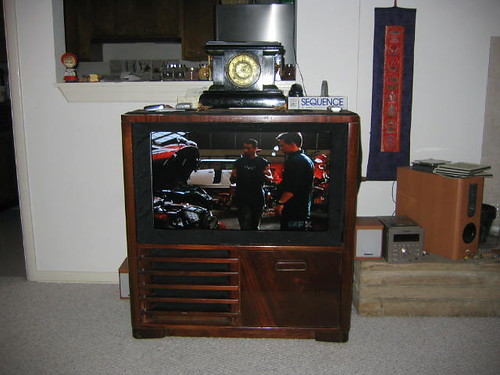
Forutunately for us, plenty of people have beat us to the punch and begun building their own DVR (digital video recorder), whether its to save money or build the ultimate, tricked out HD-ready, multi-tuner beast they always wantend… that also just happens to fit into an antique television console (as seen above).

The best place to start your efforts to build your own DVR is Build Your Own PVR (the P stands for personal, but basically means the same thing) which has tons of how-tos, construction guides, and forums for sharing tips and tricks about building your own TiVo-like device. If you want to build something this weekend and have an old (but not too old) computer lying around, check-out this how-to to figure out how to build your own homebrew PVR for less than $200 and a couple of hours. The site also has a pretty cool wiki (although it could stand a little fleshing out).

Be prepared, however, to get a DVR you can really write home about (i.e. brag about to your neighbors), you’re going to need to spend some real money on a nice hardware decoder (Hauppauge WinTV PVR 250/350 seems to be the favorite) and some time tinkering with whatever software you chose run your box of digital delight (MythTV, is, of course, the free standard bearer, but other options — Sage TV, Snapstream BeyondTV — do exist).

But if you’re willing to put in the time (and a little dough), I’m sure anything you build will have even the most hardcore TiVo enthusiats asking for a spec sheet.

Your Majesty, It Really Is Rocket Science

Tuesday, May 8th, 2007


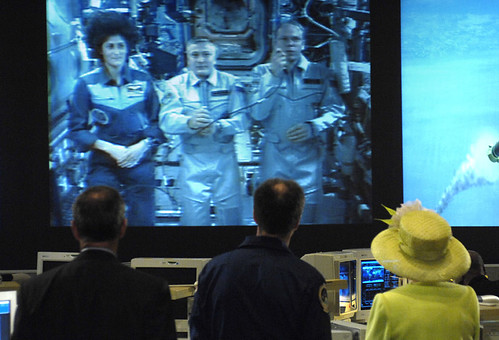
Queen Elizabeth II, in a speech at the White House Arrival Ceremony, was anticipating a visit to NASA’s Goddard Space Flight Center:

This visit also gives us a window on the future – both the future of the United States and the future cooperation between our countries.  I particularly look forward in the next two days to seeing at first hand something of how the cutting edge of science and technology can take us to the next phases of discovery and exploration in human endeavour.

NASA TV carried the visit live. You can watch the canned highlights any time you like. The tour occurred near the end of the queen’s visit to commemorate the 400th anniversary of the Jamestown settlement in Virginia.

Plop-plop, Fizz-fizz in Zero-G

Tuesday, May 8th, 2007

ASTRA 1L Launch Video

Saturday, May 5th, 2007

Go Sat, Go!

Thursday, May 3rd, 2007

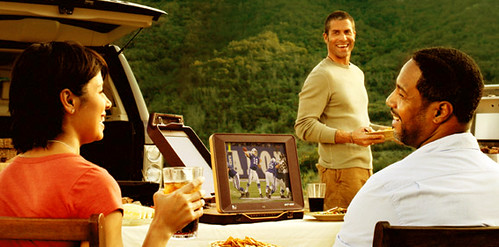
From the man who created CHiPS, an idea we blogged in January is finally here: Sat-Go:

  • Integrated 17-inch LCD monitor and satellite receiver with two speakers
  • Compact and portable flat antenna and satellite receiver
  • DIRECTV® programming accessed through a platform based on DIRECTV’s D11 set top box
  • Small profile IR remote
  • Component and composite A/V inputs
  • Composite A/V out
  • Satellite in connection
  • Phone Jack
  • USB connection
  • AC and DC capable (cigarette lighter adapter included)
  • Rechargeable, replaceable, laptop-style battery

All this for US$1,500. Today’s press release:

Just in time for the summer travel season, DIRECTV, Inc., the nation’s leading satellite television service provider, is launching DIRECTV(R) Sat-Go ("Satellite-to-Go"), the world’s first portable satellite TV system.

Beginning today, the DIRECTV(R) Sat-Go unit, created by DIRECTV and TV producer/writer, Rick Rosner, is available to DIRECTV customers for $1,499. DIRECTV customers who are interested in purchasing a DIRECTV Sat-Go unit can call 1-800-DIRECTV. The DIRECTV Sat-Go will be available at participating retail locations across the country soon.

"DIRECTV’s digital satellite technology enables us to do what no cable service can, offer consumers TV programming that they can watch wherever they are," said Eric Shanks, executive vice president, DIRECTV Entertainment. "DIRECTV Sat-Go is the perfect companion for a summer road trip and the ultimate tailgating accessory for any sporting event. Since we unveiled a prototype of the unit in January, the DIRECTV Sat-Go has created an exciting buzz in the marketplace and we are thrilled to make it available now to DIRECTV customers across the country."

The DIRECTV(R) Sat-Go is specifically designed to be compact and highly portable. The unit comes in an easy-to-carry, briefcase-like design that includes a 17-inch LCD monitor with integrated DIRECTV Receiver, flat antenna and replaceable/rechargeable lithium-ion battery. The unit also includes AC/DC adaptors for home and car.

Once the DIRECTV Sat-Go unit is opened, there is no installation necessary. It’s quick and simple setup makes it easy for customers to find line-of-sight with DIRECTV satellites and receive DIRECTV(R) programming within minutes (provided the user is within range of the DIRECTV signal).

When not being used as a portable/ travel unit, the DIRECTV Sat-Go can also be utilized as an additional in-home DIRECTV Receiver and television. The LCD TV screen has a built-in DIRECTV Receiver, which can be separated from the DIRECTV Sat-Go antenna casing and connected to a customer’s existing DIRECTV Satellite Dish.

TO SAVE MY COUNTRY, I NEED TO BORROW THE SUM OF $200 MILLION

Tuesday, May 1st, 2007

Nigeria is a country best known for its email marketing scams. You know, the ones written in all caps and started off something like…
"Dear Friend,
It is with heartfelt hope that I write to seek your co-operation and assistance in the context stated below, I am Barrister Fenner Mark Elvis, the personal Attorney to the late Mr. Nobert Spagele. I got your contact through the help of my brother-in-law that works with the American Chambers of Commerce and Tourism, though I did not disclose to him my humble intention for an honest foreigner like you, having noted the confidence reposed on your person by the sponsor of the recommendation…

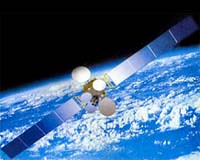
Well, according to SpaceMart, last January a Chinese Bank fell for a similar line and, at present, is financing the construction of Nigeria’s first communications satellite, NigComSat, which is now set to launch before the end of this month.

While this is not Nigeria’s first satellite, a title held, according to allAfrica.com, NigeriaSat-1, launched in 2003 to take photos of Nigeria’s environs, it does mark the first time a Sub-Saharan African country has launched and retained control of their own communications satellite.

Recently "replaced" Nigerian President General Olusegun Obasanjo said that the satellite is a part of his country’s commitment to development:

"This commitment has informed our embarking on programmes and initiatives that would effectively address the challenges of poverty, food security, infrastructural development, sustainable energy, affordable health and housing, and protection from natural and man-induced disasters.

Space technology is key to the realization of the Millennium Development Goals (MDGs) and the objectives of our holistic reform agenda as encapsulated in the NEEDS document. It guarantees the availability and speedy access to real-team data and geo-partial information, as well as the availability of relevant infrastructure and backbone for information communication"

The Chinese, who are financing, building, and launching the project, are also proud of the effort, the first step in a move to develop a satellite design and construction export business. The launch will take place at the Jiuquan Satellite Launch Center, which has launched some 30 satellite since 1990, 24 of which were commercial launches for overseas clients.

 

The satellite itself is being constructed by China Great Wall Industry Corp., based on China’s latest model of satellite platform, DFH No. 4, and will feature 28 transponders, including 4 C band, 18 Ku band, 4 Ka band and 2 L bands. The whole thing weighs somewhere around 5000 kg and has an anticipated life-span of 15 years.

Blast Me Off, Scotty

Monday, April 30th, 2007


The earthly remains of the one and only Scotty from Star Trek, Canada’s own James Doohan, beamed himself into outer-space from just outside of Truth or Consequences, NM this weekend in one of the first successful launches from America’s first commercial spaceport, Spaceport America.

The ashes of Doohan and 200 other space enthusiasts, including Astronaut Gordon Cooper, were launched into outer space Saturday aboard a Spaceloft XL rocket (made by UP Aerospace) for 15 minute, 72 mile high flight. The flight, which cost each "passenger" $495, was arranged by the Houston-based, Space Services, Inc. (the same company that put the ashes of Star Trek creator Gene Roddenberry in to the sky in 1997) and ended in a parachute ride back to earth. According to Reuters, "Capsules containing the ashes are retrieved, mounted on plaques and given back to relatives."

The coverage of Scotty’s lift-off has been pretty wide, including some coverage in Scottish papers and, not surprisingly, a bevy of stories from the area surrounding America’s spaceport.

We’re working to find a YouTube of the lift-off, but, for now, be sure to check out the QuickTime version of the launch on the UP Aerospace website.

DIY Friday: Quantum Eraser Experiment

Friday, April 27th, 2007

I’ll be the first one to admit that I don’t REALLY get the ideas behind quantum mechanics. Sure, I have a loose idea of what it is, somehow managing to bring complexity and relativity into the precise world of classic, Newtonian physics — you know, something to do with light being both waves and particles at the same time — but if you ask me to go into any more depth I’ll either fake it or redirect your attention to a funny cartoon I saw in the New Yorker last week.

But my lack of knowledge shouldn’t mean that you should be deprived on an excellent DIY Friday that focuses like a laser beam (ha ha, RFLMAO) on one of the central cases for the necessity of quantum theory, the double-slit experiment, that you can do it home.

First and foremost, before you even try the experiment I’ll link to below, do yourself a favor and check out the Dr. Quantum YouTube video below to get a basic handle on the experiment. The visualizations mean that, even if you’re a dolt like me, you’ll understand just why you’ll want to do this experiment yourself.

If you’re interested in the larger question of observer effects in quantum theory and you don’t mind delving a bit into the philosophy of science (the only way I had stumbled into this whole quantum theory business before), do a little reading on the famous Schrödinger’s cat thought experiment… its good fun and it’ll, again, make the DIY experiment a little more thought provoking.

Finally, if you’re ready to go for the good stuff, check out Scientific American’s DIY Quantum Erasure experiment page and learn how to do the double-slit experiment on your own all while working through the paradox posed by Schrödinger’s work. Also be sure to check out the awesome slide show SA has for the experiment (which shows how to conduct the experiment in a little more detail) and some other neat online extras.

Not looking to delve that deeply into the major problems of contemporary physics this weekend? Well, just watch the video below and laugh comfortably knowing that now you have the knowledge necessary to make your own video on a physics superhero too.


The Quantum EraserThe funniest bloopers are right here