Archive for the ‘Front Page’ Category

NASA’s AIM Spacecraft Launch via Pegasus XL

Wednesday, April 25th, 2007


Nice launch of the AIM spacecraft, via NASA press release:

During the next two years, AIM scientists will methodically address each of six fundamental objectives that will provide critical information needed to understand cloud formation and behavior.

"This mission has many firsts, including that Hampton University is the first historically black college and university to have the principle investigator and total mission responsibility for a NASA satellite mission," said Program Executive Victoria Elsbernd, NASA Headquarters, Washington.

NASA’s Kennedy Space Center, Fla., is responsible for launch vehicle/spacecraft integration and launch countdown management. NASA’s Goddard Space Flight Center, Greenbelt, Md., is responsible for the overall AIM mission management in collaboration with Hampton University, the University of Colorado, Boulder, and Virginia Polytechnic Institute and State University, Blacksburg. Orbital Sciences Corporation, Dulles, Va., is responsible for providing the Pegasus XL launch service to NASA.

Shields On, Captain!

Thursday, April 19th, 2007


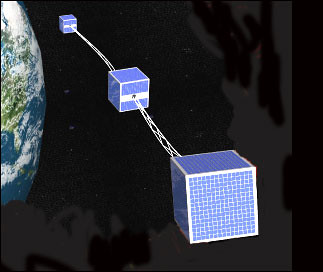
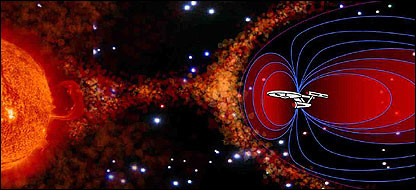
The image above may look like science fiction, but today it’s actually science.

The BBC reports that "British scientists are planning to see whether a Star Trek-style deflector shield could be built to protect astronauts from radiation."

The cancer-causing radiation from cosmic rays and solar flares has always been a danger to astronauts, but that danger has been mitigated by the minimal durations of time that most individual astronauts have spent in space.

Crew members on the International Space Station have a thick-walled room that they can retreat to during times of increased solar radiation:

 But these protective shelters would not be practical on long-duration space journeys, since the "drip-drip" of energised particles is thought to be as harmful to the health of astronauts as large solar storms.  

The harmful particles come from the Sun, in the form of the solar wind, and from sources outside our Solar System.

To create the deflector shield around a spacecraft or on the surface of a planet or moon, scientists need to generate a magnetic field and then fill it with ionised gas called plasma….

"You don’t need much of a magnetic field to hold off the solar wind. You could produce the shield 20-30 kilometres away from the spacecraft," explained Dr Ruth Bamford, from the Rutherford-Appleton Laboratory in Didcot, UK, one of the scientists on the team.

Dr Mike Hapgood, from the Didcot-based research centre, told BBC News: "The nice thing is that magnet technology is really quite evolved here on Earth. The question is can you take it into space?’"

The team from Rutherford-Appleton plans to build an artificial magnetosphere in the laboratory. They would eventually like to fly a test satellite which would test the technology in space…

The idea has been likened to the deflector shields which protect the USS Enterprise and other spacecraft in Star Trek. Like their fictional counterparts, these shields could also be switched on and off….

The idea for the shields draws on technology pioneered in experimental nuclear fusion reactors. Nuclear fusion is not yet a mature technology.

It works on the principle that energy can be released by forcing together atomic nuclei rather than by splitting them, as in the case of the fission reactions that drive existing nuclear power stations.

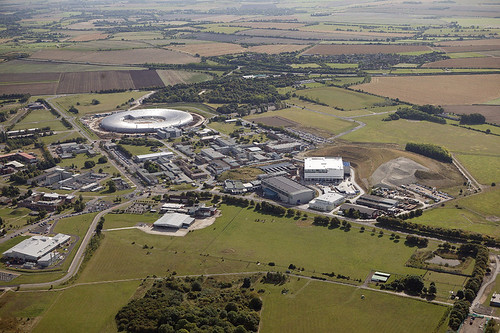
The Rutherford Appleton Laboratory (pictured below), where the research is taking place,  "has a staff of around 1200 who support the work of over 10000 scientists and engineers." Located in Oxfordshire, RAL is one of the largest space research laboratories in Europe.
For more information on magnetic fields and the debate about their effectiveness, check out this active discussion on Slashdot, including this comment:

 The big engineering problems with this approach still have not been solved. (1) If you’re not using superconducting magnet coils, a large, static magnetic field requires a huge power supply to keep it going. That’s not practical for foreseeable, near-future technologies for going to Mars, which will need to use very small payloads. (2) Superconducting magnets are unreliable, finicky beasts, at least from my experience here on earth. You need big, heavy cryostats full of liquified gases. It’s not necessarily a good idea to have a vital piece of safety equipment for your spaceship depend on an inherently high-maintenance, low-reliability technology. (3) Large electric fields are hard to maintain because you get arcing and discharges. I used to work at an electrostatic accelerator that used megavolt potentials, and it would start sparking at the most inopportune times, for reasons like, e.g., someone leaving behind a speck of lint inside the accelerator. When a spark would happen, you could hear it all through the building, and the energy released was equivalent to dropping a VW bug off the roof of a building. Again, low-reliability, high maintenance. (4) Although it’s possible to use tricks to get rid of some of the particles, or channel particles to a place where they’re not as harmful, you still have to deal with the fact that you have particles with both signs of charge, which feel forces in opposite directions from the same field. What repels one attracts the other. Also, if the particles get channeled to a certain place, and impact on something solid, then you get extremely intense secondary radiation at that spot.

Of course, this is pessimistic nonsense. We’ve seen magnetic fields work nearly 80 times


Contextual Search Using Phonetics

Tuesday, April 17th, 2007

We knew this was coming last summer when we wrote about how Google will soon be selling ads against audio and video content. We didn’t think so much was going to happen so quickly. They buy YouTube, become ad reps for Dish Network, are about to sign DirecTV, and now we hear about Google selling ads for Clear Channel and other radio stations (up to 1,600 so far).

How do you target audio video content? Will this system use sophisticated algorithms for "mass personalization?" Will phonetics work? They might: came across this Scoble interview with an executive from Nexidia, a company that’s using phonetics to enhance contextual searches. Very interesting. Here’s the short demo version:


Add localization and you’ve got a pretty interesting propostion for advertisers. I recently downloaded Google apps for my mobile and I’ve gotta tell you, they work great. Need a Chinese restaurant where you are? Google it using Maps. It worked for me.

I Love You, C-band

Monday, April 16th, 2007

This may not be the same love as the backyard-dish people were feeling 20 years ago, but these folks are digging IP-PRIME, which is carried nationally via AMC-9’s C-band payload in the U.S.:

“We have an extraordinary partnership with SES AMERICOM and with the launch of IP-PRIME we can now reach out securely and effectively to IPTV viewers across the country who will be able to access their favorite NBCU programs,” commented Henry Ahn, executive vice president, NBC Universal TV Networks Distribution.

“Showtime Networks is excited about the ability of SES AMERICOM to securely and reliably deliver all of our networks to the telcos with video initiatives, using enabling technologies such as MPEG4,” said Michael Tas, Senior Vice President, Distribution and Sales Strategy for Showtime Networks. “SES AMERICOM has been a proven partner of Showtime Networks for decades now and we look forward to extending the relationship well into the future.”

“We are sensitive to the costs of getting into the distribution business and are happy IP-PRIME is in place to fill the technology gap for small operators,” said Karen Byko, executive vice president of operations for Turner Network Sales.

“Consumers want alternatives in how they spend their entertainment dollars,” said Mike Biard, Senior Vice President, Affiliate Sales, Fox Cable Networks. “IP-PRIME will deliver Fox’s networks securely to a new generation of distributors, and we are delighted to be working with SES AMERICOM to do so.”

"We’re excited to be a part of SES AMERICOM’s new IP-PRIME programming lineup," said Mark Cuban, chairman and co-founder, HDNet. "By including HDNet and HDNet Movies, SES AMERICOM is making sure IPTV viewers receive the highest quality HD programming, including our acclaimed movies, original programming, investigative news, popular series and sports.”

Multichannel News followed up with a question on ESPN, of course.

Will this revive the backyard dish market? I can almost imagine a DTH service using C-band. I want my IPTV!

Space Tether Experiment Launches Today

Monday, April 16th, 2007

If you were up with the sun (or the clouds, if you’re in the eastern portion of the US) this morning, you might have caught the report on NPR on Space Tethers and Tethers Unlimited efforts to change the way satellites are transported.

While science fiction, Victoria’s Secret, and long-woven ropes are rarely mentioned in the same breath (unless of course you’re in some bizarre John Waters movie), the work of Dr. Robert P. Hoyt and Dr. Robert L. Forward have brought the two strangely together to solve a real problems posed by simply moving obejcts around space.


"For 50 years, people have relied on rockets to move things around in space. But rocket fuel is expensive and heavy. [Hoyt with the help of Forward realized how] much easier it would be to just fling things around using orbiting tethers.

‘It’s sort of like using the techniques of Tarzan to move around in space,’ explains Hoyt. ‘You’re basically grabbing onto a long, high-strength rope and using it to swing you from one place to another.’"

The problem, of course, was how you got those ropes to last in an environment where they were being constantly pounded by the debris that litters our orbit. And that’s where the underwear comes into Tethers Unlimited business plan…

"The company makes tethers by starting with light but strong fibers, like Kevlar. Then the strands are woven together using a computerized machine.

‘[That machine is] normally used for fabricating things like lacy edgings on Victoria’s Secret undergarments," says Hoyt. "We’ve developed ways to use that to braid the multi-line tether structure that we’re testing in space.’"

That testing begins imminently, a Dnepr rocket blasting off from Baikonur Cosmodrome today contains, within its payload, three mini-satellites that will deploy a half-mile tether, two of the satellites anchoring either end. The third, dubbed, according to a recent Engadget report, Inspector Gadget (Ted and Ralph make up the other two members of the trio), will move up and down the tether taking pictures that will allow those on the ground to learn how many cuts or tears the rope takes on over the next few months.

While it might be awhile until we see tether’s in action, propelling satellites in space, this initial experiment is an important first step in a lot of new space technology, possibly including space elevators.

DIY Friday: Using a Basic Stamp (Video Podcast)

Friday, April 13th, 2007


Click To Play

If you’ve been around here long enough, you probably already know how much we love MAKE Magazine. Well now they’re featuring Video Podcasts to buttress they’re already damn awesome audio offerings.

This week we wanted to direct you towards a video on using a BASIC Stamp that might be useful to anyone (like myself) just becoming an electronics hobbist. In the video, Bre Pettis and Joe Grand explain the basics of the Basic Stamp and a little on how to use it, ultimately directing you back to the MAKE website to get more information about the technology, which, by the way, would work really well if you’re still trying to make that LED T-Shirt we talked abut a few weeks ago.

Anik F3 Launch Update

Monday, April 9th, 2007


As you probably know those of us here at Really Rocket Science love a good launch, especially that of a big GEO satellite.

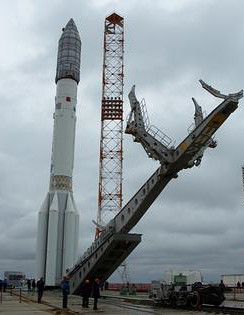
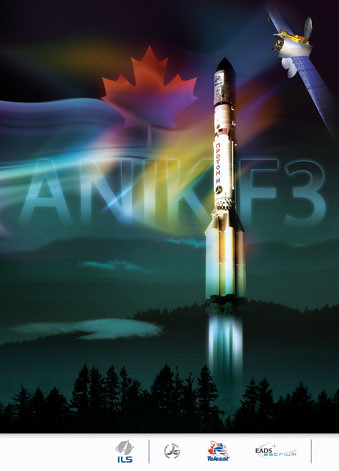
The Anik F3 will be launching tonight (04:54 April 10 Baikonur, 22:54 April 9 GMT, 18:54 April 9 EDT) this from launch pad 39 of the Baikonur Cosmodrome in Kazakhstan. You can, of course, catch the launch live via streaming, although hopefully we’ll be able to find on YouTube sometime tomorrow for those looking to beat a wicked case of the Mondays by heading to Happy Hour early.

Those nerdier than us might want to catch a live feed of the launch via satellite or over the phone at the following locations.

Live Broadcast
North America: Telstar 6 @ 93° West, transponder C11, downlink 3920 MHz (vertical), analog NTSC. Test signals start at 18:00 EDT.

Live Broadcast
Europe: NSS-7 @ 338° East, transponder WHL4/EUH3 CH1, Ku-band, 338 degrees West downlink 11098.9 MHz (horizontal), digital PAL symbol rate 6.1113, fec: 3/4. Test signals start at 22:00 GMT.

U.S. domestic Launch Hotline at 1-800-852-4980.

What does Anik F3 do? Basically its a comm sat for Telsat Canada, but since you asked:

"Multipurpose communications satellite with payloadsin Ku-, C- and Ka-band. The Ku- and C-bands will carry a wide range of broadcasting, telecommunications, business and Internet-based services throughout North America"

See you at the launch!

Simonyi in Space via Soyuz Rocket: It’s A Good Thing

Saturday, April 7th, 2007


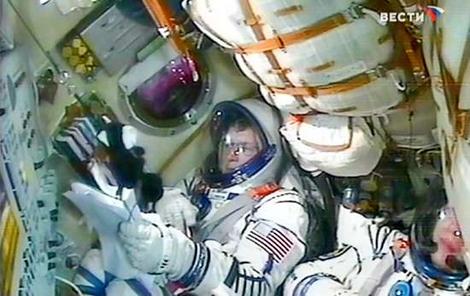
Microsoft billionaire Charles Simonyi was thrust into space today, with a meal prepared by Martha Stewart (quail roasted in wine, duck breast with capers and rice pudding, among other courses). They’ll be celebrating Cosmonauts Day on 12 April 2007. Check his blog later this week to see how much they all liked it.

RSC Energia’s statement:

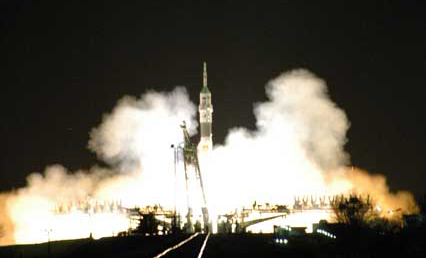
At 21:31:14 Moscow Time a launch vehicle Soyuz-FG with Soyuz TMA-10 spacecraft was launched from the Baikonur launch site to the International Space Station.

The Increment 15 (ISS-15) crew and visiting crew 12 (VC-12) are on board the Russian transport manned vehicle. Soyuz TMA-10 is carrying a crew consisting of Russian cosmonauts Oleg Valeriavich Kotov (Gagarin CTC test cosmonaut) and Fyodor Nikolaevich Yurchikhin (S.P. Korolev RSC Energia test cosmonaut), as well as a spaceflight participant of the ISS visiting crew, USA citizen, Charles Simonyi. The objective of the launch is the scheduled replacement of two ISS-14 crewmembers and of the Soyuz TMA-9 spacecraft that has been serving within the space station as its crew rescue vehicle since September 20, 2006.

And it only cost him $25 million. By the way, he’s ham radio’s first space tourist, too (KE7KDP).

DIY Friday: Vacuum Tube Amplifier

Friday, April 6th, 2007


Our friends over at the MAKE Blog linked to it a few days ago, but when I saw it I knew it’d be perfect link for our own DIY Friday feature.

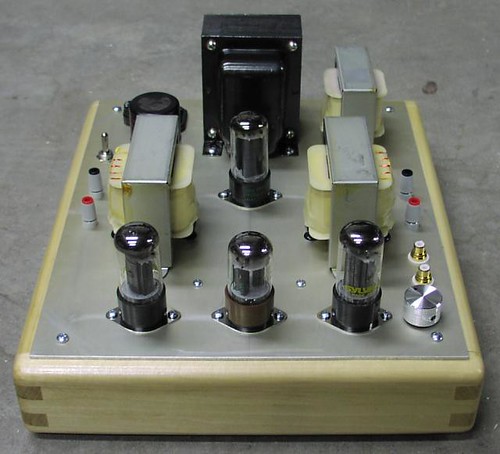
Boozehound Labs is obsessed with tubes — no, not the ones that run these here Internets — the vacuum kind. Often forgotten in the digital age, most good audiophiles get a little weepy talking about the "warmth" vacuum tubes give to music when amplifying, recorded or live music. The folks over at Boozehound Labs have dedicate most of their site to honoring the Vacuum Tube and teaching visitors how to bring a 19th century technology into their modern life.

Those looking to get started should check out the site’s awesome Vacuum Tube Hi- Fi Primer, which not only gives you the low-down on how to make the kick-ass amp you see above, but also provides an excellent explanation of vacuum theory and the technology behind the tube.

Those already familiar with the tech should check out Boozehound Lab’s show-and-tell pages on microphone and guitar amps the "scientists" have already put together. If you want to get started on a project right now (well, actually, as soon as the materials can be shipped to you), make your way over to Triode System’s page and check out some of their cool kits. While you might not save as much as you’d like, you guaranteed to get all you need to create the amp of your dreams.

Jet Man!

Thursday, April 5th, 2007

This is one of the coolest videos we’ve seen in a long time.


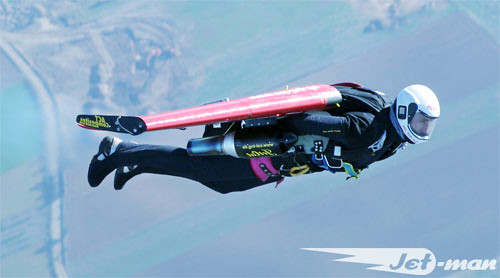
One could say Yves Rossy has distilled rocket science down to its essence, and created the perfect blend of man and machine:

His dream became reality mainly because of 4 model-engines which were built under his wings. With these, he can fly at over 200km/hr and conquer mountain summits. During the flight, Yves’s body becomes the likes of a bird and, other than a gas handle, Yves does not ride his wings but truly flies them, using various light body movements that he has learned to handle with perfection. These body movements are equal to those that birds use to fly…