Archive for the ‘Front Page’ Category

DIY Friday: Slingbox Traffic Webcam!

Friday, June 22nd, 2007

Earlier this month we wrote about an innovative blogger using Slingbox and Tivo to deliver Tivo to a mobile phone.

Now, Slingbox is making its second appearance in a month in our DIY Friday series with your very own DIY Traffic Webcam!

A TV news station in San Francisco figured it out

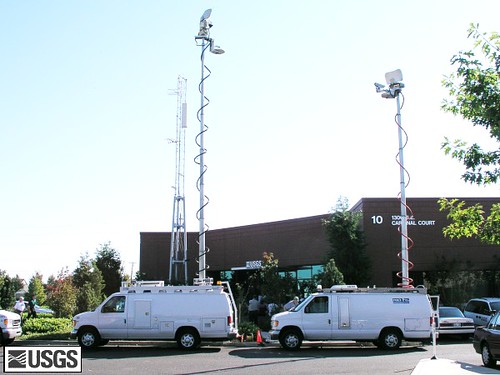
The news operations director at CBS 5, Don Sharp, devised a way to replace more than 20 of its cameras affixed to the tops of local bridges, freeways and buildings that use microwave technology to relay video back to the station with smaller cameras combined with a Slingbox Pro and a high-speed wireless EVDO card, at 800 kilobits per second.

Normally, news stations have to pay $25,000 for cameras to monitor traffic and weather, in addition to the cost of maintaining the units and renting the space for them. Compare that to a smaller camera for $500, a $300 Slingbox and $60 per month for each data card and it could potentially change the way broadcast TV news does business. That’s especially true if someday all live shots were done with a small portable camera and Slingbox, since that could eliminate the need for gas-guzzling microwave trucks normally needed to broadcast breaking events.

Be sure to check out the great webcam shots of San Fran, transmitted via Slingbox, here.

So what do you think? Could this really send these guys the way of the dinosaurs?


Spy Satellites Wiped Out

Thursday, June 21st, 2007


Yes, the "Misty" satellite program’s next generation will never be seen now. The AP filed this story this afternoon, published in the Seattle Post-Intelligencer, et. al.:

Spy chief scraps satellite program

By KATHERINE SHRADER
ASSOCIATED PRESS WRITER

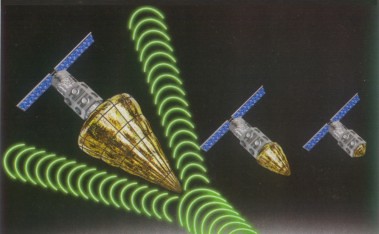
WASHINGTON — Spy chief Mike McConnell has junked a multibillion-dollar spy satellite program that engineers hoped would someday pass undetected through the space above other nations.

The move from the director of national intelligence comes after several years of congressional efforts to kill the program, known publicly as the next generation of "Misty" satellites. The new satellite was to be a stealthy intelligence spacecraft designed to take pictures of adversaries and avoid detection.

Little is known about the nation’s classified network of satellites, which represent some of the most expensive government programs and receive almost no public oversight. Because of their multibillion-dollar price tags, sensitive missions and lengthy development schedules, spy agencies go to great pains to keep details from becoming public.

McConnell gave no reason for his recent decision. Despite the program’s secrecy, he almost dared further inquiry into it.

Speaking Tuesday to an intelligence conference on workplace diversity, McConnell changed the subject and ended his speech by saying: "I have been advised when I was getting ready for this job, you have to do two things: kill a multibillion-dollar program. Just did that. Word is not out yet. You’ll see soon.

"And fire somebody important. So I’m searching," he added in jest, getting a laugh from the crowd.

Asked during a Q&A session to elaborate on which program he cut, McConnell declined to comment. His spokesman Steve Shaw also declined to comment on Thursday, but he noted that the director had the power to make this type of budget decision.

Loren Thompson, a defense expert with the Lexington Institute, said he was told by an industry source this month that the program to build the Misty satellites was ending. He said the satellite’s true name is not publicly known, but it has been assigned a designation of a letter followed by numbers.

The Associated Press separately confirmed the program was cut.

"People are thinking it is just not worth the huge amount of money it is sucking in," Thompson said.

Speaking generally, Thompson said promises of faster, smaller, cheaper satellites – hopes that became common during the Clinton administration – have been confounded by the laws of physics. The technology simply wasn’t able to meet expectations.

The new generation of Misty satellites was born from the belief that stealth technology would be crucial to deceiving adversaries, since many states are aware when U.S. satellites are passing overhead and can change their behavior accordingly.

Yet the threat has changed in recent years, as the United States became more concerned about difficult-to-track terror cells and underground sites for nuclear programs run by countries such as Iran and North Korea.

"The entire imagery architecture that is in space or under development was conceived prior to 9/11. Changes in the threat have led to a re-evaluation of the threat," Thompson said.

The first satellite launched in the Misty family was disclosed by military and space expert Jeffrey Richelson in his 2001 book, "The Wizards of Langley: Inside the CIA’s Directorate of Science and Technology." That first Misty satellite was launched from the space shuttle Atlantis in March 1990, he wrote.

In an interview, Richelson said a second satellite was launched in 1999. But as insiders debated whether to continue to build the third, some officials didn’t think it was worth the money because other satellites could fulfill the role at less cost, said Richelson, a senior fellow with the National Security Archive.

In 2004, an unidentified government agency asked the Justice Department to open a leaks investigation after The Washington Post reported that the program’s projected cost had almost doubled from $5 billion to nearly $9.5 billion.

Rick Oborn, a spokesman for the tightlipped National Reconnaissance Office, declined to comment on McConnell’s decision. His Northern Virginia-based agency is responsible for designing, building and operating a constellation of U.S. spy satellites.

Those spacecraft are built by American companies contracted by agencies including CIA and NRO and by the Air Force. A spokesman for Lockheed Martin, which is believed to be the lead contractor on this program, declined to comment on McConnell’s decision.

The pricey program has been a source of controversy in Congress.

In the House’s intelligence budget bill approved last month, lawmakers agreed to end a satellite program that they had supported before, according to New Mexico Rep. Heather Wilson, the top Republican on the House Intelligence Committee’s panel on technical intelligence. "We had to make some decisions without a lot of good alternatives," she said in an interview.

The details are in the classified portion of the bill, and Wilson would not confirm that it was a next-generation Misty satellite. But Wilson, a former Air Force officer, said McConnell’s decision was part of ongoing discussions among his advisers, the House committee and the Defense Department. "There was a great deal of communication," she said.

Wilson said the government does not have to walk away from the entire amount sunk into the program. Rather, she said, some of the technology can be harvested and used in other programs. She declined to offer any details.

Wilson praised McConnell’s early moves but said the key factors in his decision to end the program predated his arrival as intelligence chief in February. "I think it is the conclusion that most of the folks involved had come to – based on cost, schedule and performance. It was a conclusion that everyone was coming to at about the same time," she said.

House Intelligence Committee Chairman Silvestre Reyes, D-Texas, could not be reached for comment.

The panel’s top Republican, Rep. Peter Hoekstra of Michigan, said he is not looking for a decision on a single program from McConnell and his advisers. He wants to see leadership.

"I am looking for them to give us a strategy," he said. "This program was there for a reason. What are you going to replace it with? How long is it going to take to develop it? What is the cost for this new program?"

Hoekstra would not identify the program McConnell said was being cut and said he remains doubtful it is truly gone. He said its congressional allies could find a way to bring it back to life through a bill. He also noted that the White House has not sent a revised version of its budget to Congress reflecting McConnell’s change.

Hoekstra also criticized how McConnell made his decision public. "I don’t think the way you go about announcing major policy decision is to make a flippant comment to a group that you are speaking to about diversity," he said.

DIY Friday: Card-Dealing Robot!

Friday, June 15th, 2007

So you’ve completed all of our DIY Friday activities, and the beer-launching robot fridge is armed for the weekend, but you want more. Something to do inbetween catching aerial beers with your friends.

The answer, you decide, is cards — which brings us to today’s DIY Friday project: the robot arm playing card dealer.

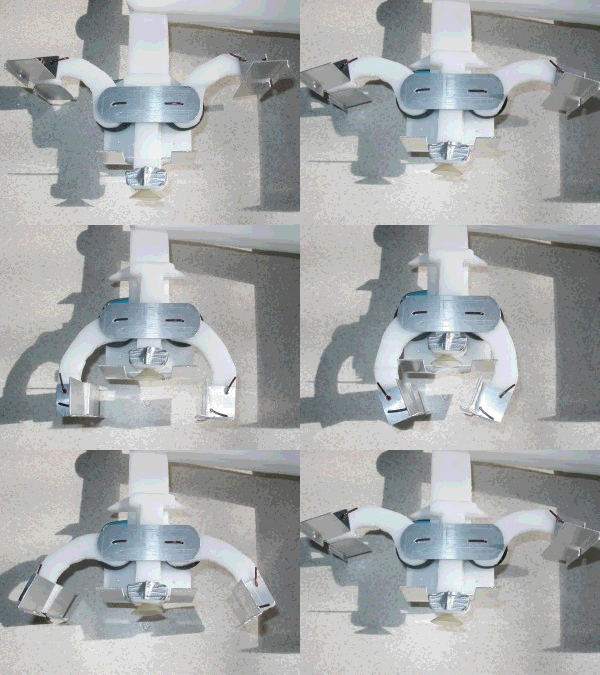
The robot is capable of shuffling cards, cutting the deck twice, and dealing cards to any number of players. A suction cup is used to pick up the cards; two remote controlled servos lift the arm; it’s the gripper that is the most technical part of the robot:


Finally, the robot arm is programmed using a PIC16F877. The inventors of the arm had to use "an external zero insertion force PIC programmer so we kept several PICs around to swap out quickly. A motor driver IC controlled the DC motor. The motor had a PID control algorithm with a homemade encoder."

No word yet on whether the arm is programmed to stay on a soft 17.

(Also be sure to check out this robot arm tutorial page from the Society of Robots.) 


Lancio Bello di Delta II

Tuesday, June 12th, 2007


We have many observation satellites orbiting Earth. Now we have another.

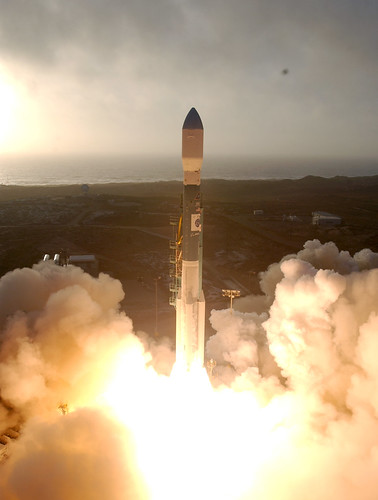
Delta nailed it again, this time from Vandenberg A.F.B in California:
 

"It is very emotional," said a tearful Francesca Sette, Thales Alenia Space-Italia. "We worked very hard for six months on this event; and during the last six months, we began to work 24 hours per day to ensure we completed this project on time."

The group from the Italian launch community used the Pacific Coast Club here to observe the event. An extravagant event, it included everything from 30 plasma screen TVs, to a live broadcast from Rome with a speech by Italian Minister of Defense, Arturo Parisi.

After watching the rocket lifting off the pad during a live broadcast in the PCC, an Italian train of 100 people went hurrying through the door to observe the Delta II rocketing through the sky outside. People were jumping up and down and hugging each other in celebration.

"It was so beautiful," said Mara Midealo, the wife of a Thales Alenia employee. "This was my first launch and it was a great event."

Thales Alenia Space Italia developed the COSMO-Skymed program for Agenzia Spaziale Italiana, using an X-band Synthetic Aperture Radar instrument. More about the mission:

The Cosmo-Skymed satellites are intended to provide monitoring, surveillance and intelligence data during international crisis for military customers, and environmental surveillance of floods, fires, landslides, and oil spill as well as earth topographic mapping, law enforcement for commercial, civilian institutions and scientific communities. Each satellite will be equipped with one X-band multipolarimetric Synthetic Aperture Radar (SAR) that will provide coverage of areas with a maximum width of up to 520 km.

The Cosmo-Skymed satellites will provide high resolution metric and sub-metric imagery through clouds, at night, with a revisit time of few hours. The 4 satellites constellation will acquire and furnish data worldwide.

The SAR sensor can work in four acquisition modes. Using the SPOTLIGHT mode the SAR scans with a resolution of one or less than a meter covering an area of tens of square kilometers. The HIMAGE (stripmap) acquisition mode provides a few meters resolution covering areas featuring a width of several tens of kilometers. The WIDEREGION, also known as ScanSAR, features tens of meters of resolution and swathes areas of hundreds of kilometers. Finally, the HUGEREGION acquisition mode swathes up to 520 km wide areas with a resolution of several tens of meters.

EHF Satcom Upgrade For B-2 Stealth Bomber

Tuesday, June 12th, 2007


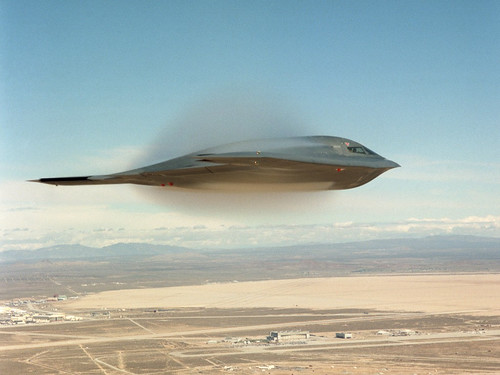
The U.S. Defense Department’s Global Information Grid (GIG) and the doctrine of network-centric warfare are about the touch the B-2 Stealth bomber. Prime contractor Northrop-Grumman got the go-ahead to develop a system using extremely high frequency (EHF) satellite communications earlier this year. Now we read they got a nice contract to really get going on it:

Northrop Grumman Integrated Systems was awarded a $171 million Air Force contract to begin a major step in developing a new satellite communications system for the B-2 Spirit stealth bomber, the company said Monday.

This 62-month phase will be the first of three increments in developing and installing the communications system. Once all three increments are completed, the upgrade will allow the B-2 to send and receive battlefield information up to 100 times faster than its current satellite communications system, the company said.

This contract "provides significant momentum for the work Northrop Grumman and its subcontractors are doing to increase the B-2’s fighting effectiveness in the face of technological advances by our enemies," said Dave Mazur, vice president of Long Range Strike for Northrop Grumman’s Integrated Systems sector, in a statement.

The project will enhance the B-2’s satellite communications system from ultra high frequencies, known as UHF, to extremely high frequency, or EHF.

Most of the work will occur in Palmdale, where Northrop houses its B-2 program, spokesman Brooks McKinney said.

Known as a flying wing because of its unorthodox shape, the Spirit has stealth properties that block enemy detection of the plane.

First introduced into the Air Force’s fleet in 1993, the B-2 has been one of the nation’s most high-profile warplanes because of its technological advancement and success in conflicts.

The first increment will involve replacing the B-2’s flight management computers with a single processing unit developed by subcontractor Lockheed Martin Systems Integration in Owego, N.Y.

The next increment of the upgrade will enable the plane to process signals at EHF frequencies.

The final increment will integrate the EHF capabilities with the aircraft’s controls and displays.

The new satellite communications system also will allow the B-2 to connect easily to the U.S. Department of Defense’s Global Information Grid, a worldwide network of information systems, processes and personnel involved in processing information on demand to warfighters, policy makers and military support people, Northrop said.

The B-2’s new communications system will be compatible with current and future secure military satellite communications networks.

The modernization program is the latest in a series of Northrop’s B-2 upgrades. Other past or ongoing improvements include:

A bomb-rack assembly that allows the aircraft to deliver 80 independently targeted, 500-pound "smart" munitions, five times more than previously.

Application of a surface coating that has reduced B-2 maintenance time and improved operational readiness.

Installation of a line-of-sight tactical communications system to improve pilots’ ability to share targeting and threat information.

Installation of an advanced antenna providing more advanced imaging capabilities in the future. El Segundo-based Raytheon Space and Airborne Systems is developing that antenna.


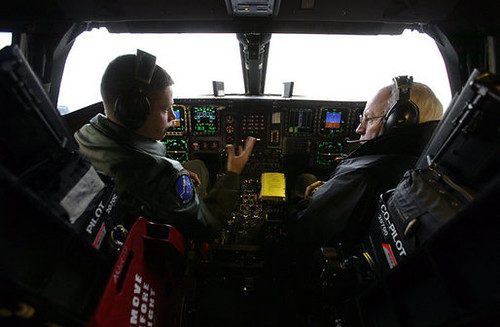
After the SR-71 Blackbird, the B-2 is the coolest aircraft around. Vice President Dick Cheney got to sit in one last October. How cool is that?

There’s Rocket Science in IPTV

Wednesday, June 6th, 2007

I had a feeling this was going to happen. Apple introduced the iPhone and Apple TV earlier this year. The iPhone is shipping at the end of this month, but Apple TV became available in March. We liked the iPhone right away — as did millions of others. Both products have intriguing capabilities, we thought. Watch Mossberg interviewing Jobs at the D: All Things Digital Conference:


Now more of those capabilities are becoming apparent. First, we read about Apple TV being integrated with YouTube. That’s pretty cool. Next, with Apple’s AT&T relationship (exclusive iPhone wireless carrier, formerly Cingular), rumors surfaced on Engadget that AT&T’s U-verse IPTV offering will be using Apple TV as a set-top box option.


How are they reading this rumor in Redmond? If AT&T’s U-Verse, which inherited BellSouth’s Microsoft IPTV middleware, is talking to Apple, will they also provide an X-Box 360 as an option?


Wait a minute: AT&T, Apple TV, iPhone. I see media convergence. The "triple play" is buying voice, data and video services from one provider. The cable guys are selling it, so the telcos need to start selling video — and fast. Add mobile phone service and you’ve got a interesting proposition: a "quad play." According to the San Francisco Chronicle, this is sure to grow:

For consumers, the quad play means they can buy all four services from one provider and pay for it on one bill, increasingly at a reduced price. But the companies say it’s not only about the convenience and savings from one-stop shopping.

They see the new mega-bundles as a collection of services that will increasingly work together, giving you a new level of access and interaction with your entertainment and communications services. The cell phone will play a pivotal role as a portal to receive television or personal content from home, access home voice mail and e-mail, and program digital video recorders.

The move to the quad play is the latest escalation of a battle that’s been building between phone and cable companies, who, because of deregulation, are allowed to compete on each other’s traditional turf. The two industries have cranked up the competition recently, with cable entering the phone market while telecom companies have started to provide television services.

Both sides see the quad play as a way to hold onto customers, who are even more prized and valuable if they can be made to pay for four services.


Can Apple’s iPhone become the ultimate portable TV receiver? Think about that for a minute.

As we’ve mentioned before, Google is sure to play a role in the new IPTV ecosystem. The lifeblood of this new ecosystem will be advertising. According to Accenture’s latest IPTV Monitor, advertising revenue is key, but keeping customers from bolting is more important:

For although 52% of content providers believe targeted advertising will be the principal source of revenue for those in the IPTV industry, 7% also foresee subscription fees for premium content providing a major source of income, as do 41% of network operators. Yet for many telecom operators IPTV’s initial purpose is not to increase revenue. Instead it is both a defensive measure to stem the defection of customers to alternative broadband access providers and a means to increase sales of broadband access.

Where does that leave the two dominant satellite TV players? You can find some clues at the FCC, where Dish Network, DirecTV, Intel, Google, Yahoo!, and Skype are teaming up to bid for some of the spectrum becoming available once TV goes all digital in 2009. Could a WiMAX-style play developing here.

I still think advertising is where the action will be. As IP is inherently two-way communications, and the addressability can come down to the set-top box, the short-, mid- and long-term possibilities are very intriguing. Yesterday’s op-ed piece in Forbes was especially interesting. Enter "Television 2.0," bring together new possibilities. I especially like the idea of targeting two different IP addresses in the same house:

The convergence of TV with the Internet is transforming a technology that has gone largely unchanged for 60 years–a one-way, TV signal broadcast to a screen, whether that screen is a TV, PC or cellphone. Television is on the verge of becoming completely personalized, interactive and enjoyed on-demand.

Imagine a news broadcast where you as the viewer pre-select the types of stories you want to watch; television programming with interactive multiplayer gaming; personalized viewer-specific content and advertising embedded within national television broadcasts; highly localized and efficient Emergency Broadcast System and Amber alerts; viewing and interacting with the vast and growing catalog of high-quality, user-generated content.

By combining the interactivity of Web services and the Internet with the trend toward on-demand and anywhere viewing, the world of television is about to radically change in ways that will dwarf the changes to the Internet referred to as Web 2.0. We’re calling this change "Television 2.0."

These changes are important. Fueled by the (sometimes reluctant) acceptance of open standards and technology advances, the newly amalgamated television, telecommunications and Internet industries are jointly forging new paths to innovation. What’s in store for all of us is nothing short of exciting.

Think back just a few years to how you received television, telephone and Internet services. Chances are it involved separate providers for television and phone service, one of which might have provided broadband Internet service. And just how fast was the Internet connection then compared with now?

Today an increasing number of households are getting "triple play" service–one provider delivering phone and television services over the same "pipe" that brings Internet into the home. This is a hugely important trend, which from the very beginning enables three disparate communications systems to work together increasing the functionality and utility of all three.

Whereas once interacting with the television set meant using the remote control to change channels or adjust the volume, today you can record multiple shows simultaneously and set user preferences. Tomorrow you’ll be able to apply rules regarding those preferences to your entire home communications system.

Who wants to be interrupted by a phone call during a favorite television program or movie? Simply instruct your system that you do not want to be disturbed and all your calls are delivered to voicemail while you’re watching TV. But what if it’s an emergency call from a family member? You can instruct the system to only pass along calls from people you allow.

Caller ID already helps us screen calls, and Television 2.0 will let us select which voicemail greeting to play for denied callers: serious for the boss or fun and personal for friends. Since your phone is now tied to your TV, why can’t all phone calls become video calls? These are enhanced functionalities we can all use, but we’re just scratching the surface.

Also, when television is delivered as a digital signal over an Internet connection, the program stream itself can be manipulated. When television was delivered over the air to antennas, each station was limited to one macro broadcast. What you watched was exactly the same as what your friend across town watched.

With the advent of digital television delivered to set top boxes, the paradigm shifted. Particularly important for advertisers, content can be targeted based on geography. You and your friend can still watch the same program, but now the ads are different, based on where in town each of you reside. This is no small market. Kagan Research says that in 2006, local ads sold by U.S. cable companies exceeded $4.3 billion.

In the Television 2.0 world, targeting gets personal. Not only are the commercials different for you and your friend across town, the commercial viewed by parents on the downstairs on one TV will be different than the commercial seen by the kids watching TV upstairs in the same house. With Internet Protocol (IP) set top boxes, demographic targeting is already upon us.

One key difference between the television of today and Television 2.0 is that it is delivered over an IP connection. Unlike television delivered over the air, IP connections are bidirectional. Soon the individual television experience will exploit this bidirectionality.

If advertising can be targeted to individual set top boxes, why can’t programming? Think of the news program referenced earlier. Consider how much news is taped for local and national broadcasts every day. Television 2.0 will make it possible to watch any of it. If you’ve relocated from a different part of the country, Television 2.0 will let you see the sports news about your old home team during your new local news program.

If such programming can be done with the news, it can be done with anything. Look forward to seeing more personal selections of sports, music and other entertainment programming. Programming can become interactive too. Instead of merely watching your favorite big city detectives solve crimes, you can lend a hand.

Many universities are adopting distance learning programs. Want the best education? Why not create a hybrid curriculum from the top universities around the world and attend classes from the comfort of your living room? Television 2.0 makes that possible.

Arguably the best part of Television 2.0 is that all these advances are happening independently from the TV itself. So, none of the investment in your state-of-the-art home theater system went to waste. Television 2.0 will just make that home theater all the more spectacular.

In Television 2.0, the possibilities are endless, and largely because the technology companies behind all these innovations are learning to play nicely together. The acceptance of open standards is the fuel powering these innovations. Between the television network and your television set lies the equipment and networks of many different companies all playing a different but complementary role in the Television 2.0 ecosystem.

Fo ‘shizzle: this is not the old TV we grew up with.

DIY Friday: TiVo on your mobile phone

Friday, June 1st, 2007

Picture it: you’re at a baseball game and are fighting with your buddy about whether or not the last hit was fair or foul. The away team’s manager is screaming at the ump and the home team isn’t showing the replay on the scoreboard to avoid controversy. You are stuck guessing — and your honor is on the line.

The solution: pull out your mobile phone, connect to your home’s TiVo, rewind the recording, then force your friend to buy you a beer for getting the call wrong. It’s possible!

An innovative blogger pulled off a very useful mashup by connecting his PPC-6700 mobile phone to a Slingbox, and the Slingbox to his TiVo. A Slingbox is a TV streaming device that enables viewers to remotely view content.

After connecting your TiVo to the Slingbox, download the appropriate player for your mobile phone. Currently there are versions for Windows Mobile 2003, Windows Mobile Version 5.0 for Smartphone, and Palm OS.

While many users find the ability to easily record shows to be most important, I’m intrigued by the convenience of having vast amounts of mobile content. The screen size on the 6700 or the Q is not much different than on an iPod and this mashup avoids hard drive space limitations and the trouble of having to download content, then add it to the iPod. By streaming from your TiVo, you are guaranteed a steady selection of fresh media—both live and recorded.

From early user reviews, the quality appears to be more-than-sufficient. Here is a video from a Motorola Q (skip to 3:30 to watch the Chappelle Show):

Don’t have a Slingbox or TiVo but still want to stream TV on your phone? Try a free service called Orb. While it let’s your home computer be a hub that streams all types of media—music, photos, and videos—to any Internet-connected device, its tv feature may be most useful. Simply connect your tv or set-top box to your computer’s tv tuner card (instructions on buying one are here), then install Orb’s free software. Your computer becomes a server distributing your tv’s content. Orb includes DVR technology, allowing you to (like the TiVo mashup) remotely record programming.

Enjoy the game!

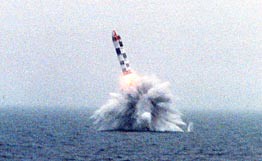
SumbandilaSat Launch via Submarine Scrubbed

Wednesday, May 30th, 2007


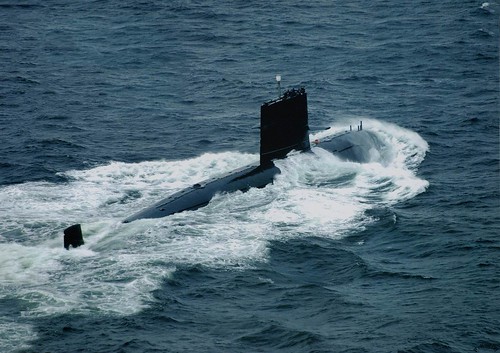
South Africa’s SumbandilaSat, an 81-kg LEO (low-earth orbit) observation/imagery satellite, which was to launch via a Russian submarine in the Barents Sea, has been postponed. The story, via Engineering News (South Africa):

The launch of South Africa’s first government satellite from a Russian submarine next month has been postponed indefinitely, an official said on Tuesday.

"It has been postponed because official documentation still needs to be arranged to issue a decree for the launch," said Nhlanhla Nyide, spokesman for the Department of Science and Technology.

"They are currently working on the process … We will hear from them when they have set a new date for launch," Nyide said.

He told said no additional costs will be incurred and South Africa’s nascent space programme would not be affected because of the cancellation of the launch, which was to have taken place in the Barents Sea near Norway.

The R26-million satellite, intended to orbit some 500 km (310 miles) above earth and have a life-span of three years and longer, would carry high-resolution imaging cameras.

The images from the South African-built satellite would be used across a wide array of applications, from agriculture to land use and infrastructure mapping.

South Africa has pledged millions of rands to build its astronomy and space sector, with the construction of the South African Large Telescope creating a hub for astronomy research in southern Africa.

In July 2006 cabinet approved the establishment of a South African Space Agency as an institutional vehicle to look at space science and technology.


This would have been a cool launch. Back in December, 2006, the satellite was handed off to Russia:

South Africa’s low-earth-orbiting microsatellite, SumbandilaSat, left for Russia on Thursday, ahead of its launch into space off a submarine in early 2007.

The 81-kg SumbandilaSat will generate satellite imagery through its remote sensing camera at 6,25 m ground sampling distance.

Upon arrival in Russia, SumbandilaSat will be taken to the Russian naval base at Murmansk, where the Russian navy will integrate it with a launch rocket. The satellite will then be transported to a submarine at Severemorsk, just off the Russian coast, where it will be launched into space.

The launch window period is between April and May and is strongly dependent on weather conditions at the time. Once in orbit, SumbandilaSat will pass over South Africa mid-morning and mid-evening, at an average orbit altitude of 500 km.

In addition to its earth observation and communications payloads, SumbandilaSat carries five experimental payloads, which will present the scientific community with exciting results in low frequency radio waves, radiation, software defined radio, forced vibrating string and radio amateur transponders.

Speaking at the hand-over ceremony, in Stellenbosch, Science and Technology Minister Mosibudi Mangena said that the development of SumbandilaSat offered South Africa a number of competitive advantages and would support decision-making in natural resource management and sustainable development. He added that the images yielded by the satellite would be used in various applications, which had direct benefits to societies, such as flood and fire disaster management; enhancing food security through crop yield estimation; ensuring better human and animal health through enabling the prediction of the outbreaks of diseases; better monitoring of land cover and use; as well improved capabilities for water resource management.

The actual construction of the SumbandilaSat had been completed at the end of September and had been followed by a battery of trials, including functional testing, space environmental testing, vibration testing and burn-in testing, designed to establish the satellite’s readiness prior to a flight acceptance review.

“The environmental-testing phase determined SumbandilaSat’s ability to withstand extreme variance in temperatures, while the vibration tests verified its ability to endure the shocks it will undergo as it is launched into space. The burn-in testing phase comprised the actual and continual running of the satellite and its systems in order to confirm that all components are fully functional,” the Department of Science and Technology (DST) said.

Sunspace project manager for SumbandilaSat Harry van der Heyden said that the review presentation included an introduction to the hardware produced, as well as the ground support equipment developed for the satellite. “We also conducted demonstrations to illustrate how the satellite communicates with the ground support equipment.”

The birth of SumbandilaSat was initiated by the DST and was given life by numerous stakeholders, including the University of Stellenbosch, Sunspace, the South African Space Council, the Departments of Foreign Affairs, Trade & Industry, and Communications, as well as the Centre for Scientific and Industrial Research.

The launch of SumbandilaSat is envisaged to strengthen South Africa’s technological capability and innovation in space science and technology, as well as reinforce the country’s role in national, regional and international space initiatives.

This is but one aspect of a budding interest in space, as evidenced by South Africa’s National Astrophysics and Space Science Programme. The first "space age school" was established in 2003.

Here’s a clip of U.S. Trident missiles being launched from a sub:


Comet Crushed Clovis Culture?

Thursday, May 24th, 2007

There is something oddly compelling about doomsday scenarios in which an asteroid or comet tumbles to earth and destroys an entire civilization. Maybe it is the religious element or the “hero that saves the world” drama we see in movies (there are a lot of flicks out there).

So what better place to discuss a sexy topic like this than the beach paradise of Acapulco?


This week, geologists will convene at the American Geophysical Union’s Joint Meeting in Acapulco to discuss a controversial new theory: that an extraterrestrial impact, possibly a comet, impacted North America nearly 13,000 years ago, setting off a 1,000-year-long cold spell and wiping out entire species.

The BBC summarizes the evidence:

The evidence comes from layers of sediment at more than 20 sites across North America.

These sediments contain exotic materials: tiny spheres of glass and carbon, ultra-small specks of diamond – called nanodiamond – and amounts of the rare element iridium that are too high to have come from Earth.

All, they argue, point to the explosion 12,900 years ago of an extraterrestrial object up to 5km across.

No crater remains, possibly because the Laurentide Ice Sheet, which blanketed thousands of sq km of North America during the last Ice Age, was thick enough to mask the impact.

Another possibility is that it exploded in the air.

Researchers have for some time proposed that a reversal in the world’s ocean currents and a corresponding global cooling was responsible for the rapid geological change that led to the extinction of multiple species of animals and the end of the Clovis Culture. A comet could explain the shift:

According to the new idea, the comet would have caused widespread melting of the North American ice sheet. The waters would have poured into the Atlantic, disrupting its currents. This, they say, could have caused the 1,000 year-long Younger Dryas cold spell, which also affected Asia and Europe.

This geological rap session may be just sexy enough to keep the scientists from laying on the beach all-day.

DIY Friday: Six-Axis Playstation 3 Controller

Friday, May 18th, 2007

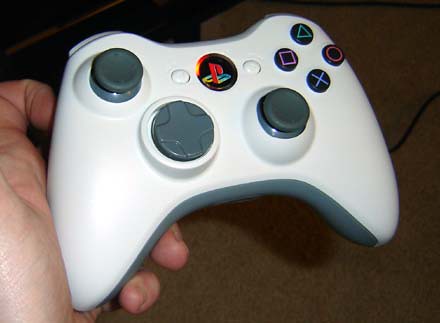
I haven’t had the opportunity (read: hundred of dollars of extra cash) to get my hands on one of the new Playstation 3s, but, according to some people, the controller on the beast of a console leaves a little to be desired. Don’t get me wrong, it’s still damn cool with its six-axis control functionality (as we saw demoed at last year’s E3), but the design is over a decade old and could stand to be a little changing.

Enter DIY master Ben Heck.

Notorious for backwards engineering and recreating (himself!) portable versions of just about every video game console in recent memory, Heck, also frustrated with the new Playstation controller’s old design, last month announced that he had figured out how to stuff the cutting edge electronics into the (supposedly) more hand-pleasing Xbox form factor. It turns out Heck’s announcement released pent up demand for a modified Playstation paddle that it quickly outpaced his ability to produce the mod-ed controllers even at "consignment" rates.

So rather than keep the details himself, like a dedicated DIY aficionado, Heck, just a couple of weeks ago on Engadget, released an easy to follow how-to guide for the project that’s a lot less complicated then you would think.

More committed DIYers (especially those who don’t like to deal with consoles) should take a look at this post on building your on 6-axis controller for your PC and check out the fan-boy produced video below. It’s undoubtedly a harder project, but at least you’ll have bragging rights.