Archive for the ‘Front Page’ Category

Canada Invests in Space Technologies

Tuesday, January 30th, 2007

The Canadian government recently announced a major investment of $10.3 million in R&D contracts to Canadian firms for the design of new space technologies and applications:

"The investments announced are crucial for supporting Canada’s leadership position in niche markets such as robotics, remote sensing, satellite communication components, and radar, and for making groundbreaking technologies market-ready. These are technologies that respond to Canadian needs and those of our international partners," said Minister [of Industry Maxime] Bernier.

Nearly $1.9 million of those grants went to the Ottawa area. But what exactly is being funded?

A list of projects is available on the Canadian Space Agency website; they include "guidance, navigation and control software to improve the autonomy, safety and reliability of space systems; improvements on a new satellite design that can be used for studying the environment and monitoring natural resources; a feasibility study on an instrument which measures water content of soil without touching it; and near-instantaneous distress alert technology."

The end result of such investments reach far beyond Canada. In November of last year, the CSA signed a Memorandum of Understanding (MOU) with the Egyptian government to explore uses of space technology in Egypt:

The main focus of the agreement is currently Earth observation to promote sustainable growth; in past years Canada has worked extensively with various satellite applications to connect its far-flung population of 32 million people spread out over 10 million square kilometers. As the MOU is an open agreement, however, there are virtually no limits on the possibilities.

The Egyptian project is aimed at promoting sustainable development, and may help deliver high-tech telemedicine services to the region.

Which, we must admit, seems to be a better use of money than this widely-publicized bit of Canadian research

Grand Prize: A Trip in Space

Sunday, January 28th, 2007

From USA Today, a great piece on space tourism being used as prizes:

There are no free rides to outer space

Brian Emmett’s childhood fantasy came true when he won a free trip to outer space. He was crushed when he had to cancel his reservation because of Uncle Sam.

Emmett won his ticket to the heavens in a 2005 sweepstakes by Oracle Corp., in which he answered a series of online questions on Java computer code. He became an instant celebrity, giving media interviews and appearing on stage at Oracle’s trade show.

For the self-described space buff who has attended space camp and watched shuttle launches from Kennedy Space Center, it seemed like a chance to become an astronaut on a dime.

Then reality struck. After some number-crunching, Emmett realized he would have to report the $138,000 galactic joy ride as income and owe $25,000 in taxes. Unwilling to sink into debt, the 31-year-old software consultant from the San Francisco Bay area gave up his seat.

"There was definitely a period of mourning. I was totally crestfallen," Emmett said. "Everything you had hoped for as a kid sort of evaporates in front of you."

With commercial spaceships still under development, it’s uncertain when the infant space tourism industry will actually get off the ground. Still, ultra-rich thrill-seekers are already plunking down big — though refundable — deposits to experience a few minutes of weightlessness 60 miles above Earth.

And in recent years, space tourism companies have teamed with major corporations to stage contests with future suborbital spaceflights as the grand prize.

The partnerships have interstellar hype — but as Emmett found out, they can get mired in that most earthbound hassle: taxes.

"From a consumer perspective … I’d be wary," said Kathleen Allen, director of the University of Southern California’s Marshall Center for Technology Commercialization. "I’d check to see the fine print."

Since the Internal Revenue Service requires winnings from lottery drawings, TV game shows and other contests to be reported as taxable income, tax experts contend there’s no such thing as a free spaceflight. Some contest sponsors provide a check to cover taxes, but that income is also taxable.

"I don’t see how an average person can swing that kind of tax payment. It’s a big, big bite," said tax attorney Donna LeValley, contributing editor for J.K. Lasser’s annual tax guide.

To reduce the financial burden, winners can argue that they don’t owe any taxes until their flight lifts off. Another option is working out an installment plan to pay taxes over time, said Greg Jenner of the American Bar Association.

The IRS declined to comment, saying it does not talk about individual matters.

Despite Emmett’s cancellation, Oracle said its contest was a success. The software giant is in the process of naming his replacement and still has two other winners on board from Asia and Europe.

That spaceflight will be provided by Space Adventures Ltd., the same company that brokers deals for trips on Russian rockets to the orbiting international space station for a reported $20 million per customer.

Eric Anderson, the company’s chief executive, insists that contests are the best way for most people to get into space. He said Space Adventures has given away about 20 reservations through competitions, and the majority of winners are satisfied.

Space contest rules vary widely but generally require winners to undergo astronaut training before the trip and sign a waiver freeing the sponsors from any liability if there’s an accident.

Microsoft Corp. is the latest company to dangle a free space ride. This month it launched an elaborate online puzzle game as part of its promotional campaign for its new Vista PC operating system. The grand prize winner — to be named this week — gets a seat with Rocketplane Ltd., which is building a souped-up Lear jet it hopes will ferry passengers to space in late 2009.

The $50,000 check that comes with the prize, which is valued at $253,500, should cover the winner’s taxes, said Brian Marr, group marketing manager for Vista.

It’s common for contest winners to have to play a waiting game.

Virgin Galactic customer Doug Ramsburg won his ticket in a Volvo sweepstakes during the 2005 Super Bowl. His family and friends often hound him about when he’ll reach the cosmos. After all, Virgin Galactic doesn’t have any spacecraft yet.

Even without an itinerary, Ramsburg says he’s not worried. He said he’s confident in the man tasked to build Virgin’s commercial spacecraft — aerospace designer Burt Rutan, whose SpaceShipOne became the first privately manned rocket to reach space in 2004.

Ramsburg considers the prize a "blessing" but declined to talk about the financial arrangements, except to say the $100,000 check that came with the prize should make him the first free Virgin Galactic passenger.

"You don’t have to be a superhero in order to go to space," said Ramsburg, 43, who works in the admissions office of the University of Colorado at Denver.

Back on Earth, Emmett said he has no regrets about turning down his trip and doesn’t blame anyone.

"I was, however briefly, a potential astronaut," he wrote last fall in a blog entry titled "Clipped Wings."

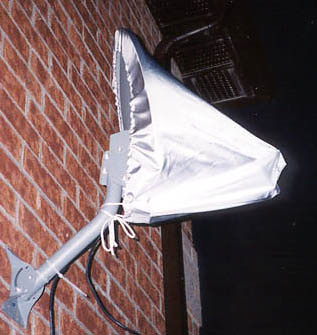
DIY Friday: Removing Snow from Your Satellite Dish

Friday, January 26th, 2007
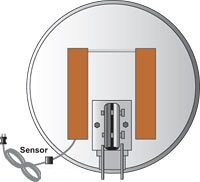
With flurries beginning to frequent the Washington (finally!), I felt like it might be a good idea to figure out how to get that snow off my satellite dish. Sure, I could just wait for it to melt (let’s call that Spektor method of choice numero uno), but there seem to be enough DIY (and commercial) options that I shouldn’t have to worry about getting snow on my screen when it snows outside. Overall, there appear to be three main methods for ensuring picture quality on even the snowiest nights: spray it, block it, or zap it.


Spray it. Spraying some Pam cooking spray on your dish at the start of winter is usually the traditional way of avoiding signal-destroying, satellite dish snow build-up. While this tends to work OK, if you’re dish is inconveniently located (on your roof, let’s say) it can get a little treacherous to reapply it if you’re having a particularly snowy winter. Alternatively, you could always pick up the commercial WX2100 super hydrophobic dish & radome coating, which promises to do the same thing but, you know, way better and stuff.


Block it. While some friends of mine have tried the old stand-by – the black plastic bag – to keep the picture free of fuzzies in the rain and the snow, most have had bad luck with signal loss for one reason or another (your milage may, of course, vary). The commercial option here, the WedgieCover, promises to do the same as a black plastic bag in the snow and the rain (not to mention "protect your privacy" although I’m not sure how) without the signal loss and comparatively easy installation… which means no twistee-ties. Score!


Zap it. The bad-ass, Tim Allen approach, however requires "more power," creating the option to melt it off. Particularly good for very cold climates who have to worry about long-term ice formation, the Ice Zapper seems to be the industry standard for metal dishes, although Montana Satellite has a few other options as well. DIY options for satellite heaters? While I’m sure its possible, I’d probably recommend finding a commercial option and staying away from any modifications unless you really are a regular Tim "The Toolman" Taylor. And, even if you are, we all know how well that tended to work out.

GA_googleFillSlot(“481_336x280”);


NSS-8 Satellite Launch Updates

Thursday, January 25th, 2007

The NSS-8 satellite is set to launch from a converted oil platform anchored on the equator in the Pacific Ocean, approximately 1,500 miles south of Hawaii. The launch video will be streamed live via the Sea Launch Web site.

The satellite itself is impressive:

The high-power, state-of-the-art NSS-8 satellite is a Boeing 702 spacecraft that carries 56 C-band and 36 Ku-band transponders designed to replace the existing NSS-703 satellite as the centerpiece of NEW SKIES’ strategic Indian Ocean contribution to SES’ global communications network. The successful launch of NSS-8 will subsequently also allow for NSS-703 to be re-deployed to the Atlantic Ocean region at 340° East, further boosting the global coverage and connectivity provided by the 40 plus strong fleet of satellites in the SES Group. NSS-8 will support a wide range of functions, including corporate communications, government and military operations, Broadband Internet services and broadcast applications.

The satellite will provide coverage to two-thirds of the world’s population, serving countries in Europe, Africa, the Middle East, the Indian subcontinent and Asia. Designed for a 15-year lifespan, NSS-8 will have 18 kilowatts of total power at the beginning of life on orbit.

NSS-8 Satellite to Launch on Saturday

Thursday, January 25th, 2007

The NSS-8 satellite is set to launch from a converted oil platform anchored on the equator in the Pacific Ocean, approximately 1,500 miles south of Hawaii. The launch video will be streamed live via the Sea Launch Web site. Here’s an image from the launch platform’s live webcam (remember to refresh often for changes):

The satellite itself is impressive:

The high-power, state-of-the-art NSS-8 satellite is a Boeing 702 spacecraft that carries 56 C-band and 36 Ku-band transponders designed to replace the existing NSS-703 satellite as the centerpiece of NEW SKIES’ strategic Indian Ocean contribution to SES’ global communications network. The successful launch of NSS-8 will subsequently also allow for NSS-703 to be re-deployed to the Atlantic Ocean region at 340° East, further boosting the global coverage and connectivity provided by the 40 plus strong fleet of satellites in the SES Group. NSS-8 will support a wide range of functions, including corporate communications, government and military operations, Broadband Internet services and broadcast applications.

The satellite will provide coverage to two-thirds of the world’s population, serving countries in Europe, Africa, the Middle East, the Indian subcontinent and Asia. Designed for a 15-year lifespan, NSS-8 will have 18 kilowatts of total power at the beginning of life on orbit.

The Death of Driveway Moments?

Thursday, January 25th, 2007

"Driveway moments," for those who don’t know, is a term used by NPR and other radio stations to describe those radio stories (or songs) that are so rivetting that you sit in the driveway listening to it after you’ve arrived home.

A variation that I’m familiar with is provincially known as "parking lot eternity" — when you sit and scream at the DJ for not telling you the name of the artist who did that awesome song two or three segments earlier.

Such experiences would come to an end, we’ve known, if and when Tivo for Radio ever showed up in our vehicles.

In Europe, that moment may soon arrive:

The luxuries of owning a PVR for watching TV shows may soon show up in automobiles. The European Space Agency, or ESA. is working on a new satellite radio system that requires little changes to automobiles but will allow listeners to perform the same PVR functions, but to their favorite radio stations. Pausing, rewinding and time shifting will all become usable features for in-car radio.

The ESA’s system employs what it calls "cache" memory for radio — essentially either a hard drive storage medium or some form of solid state memory such as flash memory. When released, the ESA’s system will more than likely employ solid state flash memory for storing audio data, which will better withstand bumps and jolts while driving around.

While satellite radio already exists from Sirius and XM, ESA’s system’s claim to fame is its cost which, according to the ESA, will be a lot cheaper to implement. Because the new system does not require the use of local transmission towers for assistance — like Sirius and XM — there are costs associated with setting up a local ground infrastructure. The ESA’s system will also use existing communications satellites that are already in place. This will require flat satellite dishes to be installed on automobiles, but the ESA claims that the system is small enough to be integrated well.

 ITWire has more.

Bicycling in Low Gravity

Tuesday, January 23rd, 2007

Here’s an interesting concept:

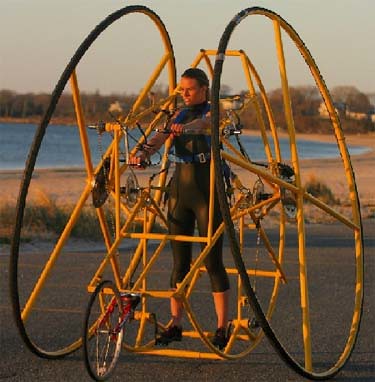
What is it, you ask? It’s a hyperbike — and NASA has put up a little cash to see where it goes (pun intended): 

The Hyperbike is a working prototype created by inventor Curtis DeForest for a human-powered vehicle that will be faster than a traditional bicycle and much safer…

In creating the HyperBike, DeForest tried to remedy the flaws of the standard bicycle. For one thing, it has no seat; the rider stands upright. Also, the arms are used for additional power. DeForest describes pedaling the HyperBike as "swimming on dry land." Motor vehicle speeds of at least fifty miles per hour are easily attained….

One of the most interesting differences lies in the greater stability of the HyperBike. A conventional bicycle has the center of gravity higher than the spinning axis of the wheels. The HyperBike positions the rider in such a way as to put the center of gravity below the wheel axis.

Apparently, it is the stability and balance of weight relative to spinning forces that has NASA interested. These factors would make the Hyperbike a good choice for low gravity environments. The NASA-funded Space Alliance Technology Outreach Program has invested some capital in the development of the next model.

Now, I’ll admit to a tendency to get overly excited about these things — don’t even ask me about the Segway — but don’t you think this is pretty cool?

Consumer Electronics Everywhere: Updates from CES & Macworld

Wednesday, January 10th, 2007

Yesterday was a huge day (probably the biggest of 2007… just 9 days in) for the announcement and release of Consumer Electronics, as we teased yesterday, at CES and Macworld Conference & Expo.

Of course, Apple takes the cake with three of the biggest announcements of the day:

The release of Apple TV which brings iTunes Store purchased music, television shows, and movies (over 350, now including many from the Paramount vault) to the big screen via your wired or wireless network.

The introduction of the iPhone, a product which will foreseeably revolutionize the mobile phone market. WIth over 200 individual patents to its name, when its released in June, the iPhone will be the most technology advanced mobile phone on the market featuring a full blown operating system, multiple wireless connection technologies (Quad-band GSM, EDGE, 802.11b/g, & Bluetooth 2.0 w/ EDR), and a huge 3.5-inch screen that utilize new multi-touch display technology.

The announcement that the company would know be known as Apple, Inc. rather than Apple Computers, Inc. While meaningless to most techies, the name change is akin to Apple screaming, "Bring it on" to consumer electronic juggernauts such as Sony, Motorola, or Nokia, representing its transition to a consumer electronics company and a willingness to take on a new industry.

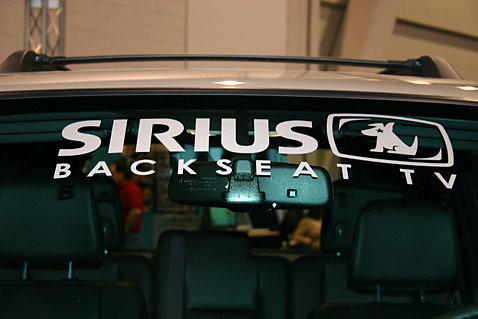
Back at CES, Satellite Radio company Sirius announced, according to Sat Radio blog Orbitcast, that Dodge will be offering Sirius Backseat Television in some 2008 models. With multiple zones, Orbitcast notes, the Dodge set-up allows the driver to listen to the raunchiest bits of Howard Stern while the kids watch Spongebob. Coolness!


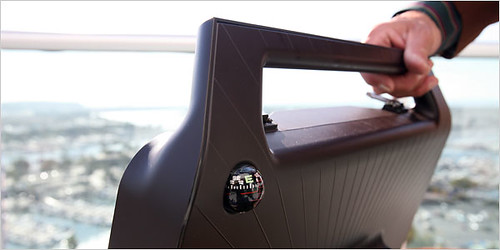
For those looking to watch TV themselves, The New York Times featured an article Monday about another major announcement from DirectTV, Sat-Go, which allows you to watch satellite TV anywhere. With an interesting genesis, partially invented by the man who produced CHiPS and The New Hollywood Squares, its a product that sure to be a huge hit in the right markets, even if there have been less elegant solutions in the past.

The News at CES and MacWorld

Tuesday, January 9th, 2007

The 40th Annual CES (Consumer Electronics Show) kicked off yesterday in Las Vegas — and even if you’re thousands of frigid miles away (as we are), you can be there virtually by following Engadget’s live coverage of the event.

And if you want to duck out virtually, take this virtual tour of the Venetian, where the conference is being held. 

But we digress. The big news to come out of CES yesterday was DIRECTV’s announcement of their launch and carriage of 100 HD channels in 2007. 

The big news today? Well, it might actually come from the MacWorld Conference and Expo in San Francisco, where today may be:

… the day we find out whether all the rumors are true and the Applephone and / or solid-state ultraslim MacBook and / or iTV and / or true wireless-video-touchscreen iPod will be announced (we’re not holding our breath on any of the above), or whether we’ll spend another few months sorting through rumor, speculation, and bad Apple product mockups.

The keynote at MacWorld will be broadcast live beginning at 12 noon EDT today; you can tune in for a webcast and get other breaking news from both conferences on the Engadget website.

‘Plutoed’ chosen as ’06 Word of the Year

Tuesday, January 9th, 2007

The AP reports that our dear former planet has found newfound fame in the slang of the hip:

 Pluto is finally getting some respect — not from astronomers, but from wordsmiths.

"Plutoed" was chosen 2006’s Word of the Year by the American Dialect Society at its annual meeting Friday.

To "pluto" is "to demote or devalue someone or something," much like what happened to the former planet last year when the General Assembly of the International Astronomical Union decided Pluto didn’t meet its definition of a planet….

"Plutoed" won in a runoff against "climate canary," defined as "an organism or species whose poor health or declining numbers hint at a larger environmental catastrophe on the horizon."

Other words considered: murse (man’s purse), flog (a fake blog that promotes products) and macaca (an American citizen treated as an alien).