Archive for the ‘NASA’ Category

Satellite B.I.G.

Wednesday, June 18th, 2008

 

Biggy, Biggy, Biggy, can’t you see? CommunicAsia 2008 is all over me.

The big news in Singapore this week is all about telecom at the Singapore Expo. The region’s satcom players are making the news — even appearing on CNBC.

Globecast’s new playout centre is amibitious:

GlobeCast Media Management, a solution for playout and origination, will be the key product offered to broadcasters of all sizes from this new centre – providing channels with use of market leading technology without the expensive investment. The centre will allow new channels to reach viewers using a fast and reliable solution and help international channels entering the market to create regionalised feeds and enhance their appeal to Asian audiences.

The launch of GlobeCast’s Media Management in the region means that broadcasters in Asia will be able to focus on their content and programming and outsource both their channel management and delivery needs to GlobeCast. Coupled with connectivity to GlobeCast’s worldwide satellite and fibre distribution network and linked to twelve teleports and technical operations centres around the globe, the company also offers this one stop solution from its facilities in London and Florida. The two existing facilities already serve major clients such as Arsenal TV and ION Networks.

And SingTel’s maritime service on SES NEW SKIES, using a whopping 5 MHz of space on each of satellites, via Red Orbit:

Mr. Titus Yong, SingTel’s Vice President of Satellite, said: "SingTel, one of Asia’s leading satellite service providers, has been providing VSAT services with regional coverage for over two years. We are pleased to work with a top-tier global satellite service provider such as SES NEW SKIES to extend our reach to provide seamless and secure worldwide coverage over all major shipping routes."

The SES NEW SKIES satellites will also support demand for SingTel’s OfficeAtSea@SingTel suite of Maritime VSAT solutions, which enable vessels to communicate seamlessly and cost-effectively with their headquarters on land. Solutions include ‘always-on’ unlimited broadband internet access, email, low-cost Voice over IP (VoIP) calls, GSM onboard and ship surveillance. These overcome the limitations of traditional maritime communications by allowing the ship to become a seamless extension of the shore-based office.

My favorite piece of news concerns a new direct-to-home satellite TV service in India, Big TV. We first read about it last week in Hindustan Times, where the launch date was leaked:

With the direct-to home race hotting up, Anil Ambani’s Big TV has decided to launch in haste. The company is planning a June 24 launch, said industry sources, with teaser campaigns hitting televisions four days before the launch. Abhisekh Bachchan may be used as a brand ambassador sources added.

Big TV’s entry, this month may intensify the action in the DTH space that is seeing a fierce price-war. Big TV already serves 50,000 customers who are part of its pilot launch and are its employees and customers of associate companies. According to the 2008 Ficci-PwC report on Indian entertainment and media industry, DTH households are expected to grow from 4 million in 2007 to 25 million by 2012.

When contacted, a Big TV spokesperson said, "Reliance Communications is in advanced stages of launching Big TV DTH services. Big TV DTH service aims to be the most preferred option for home entertainment solutions across customer segments. Like in case of all offerings from Reliance ADA Group, customers using Big TV DTH services would be able to avail of better service quality, enhanced features and wider offerings at prevailing price points".

And Indian Television is telling us they signed up for a transponder on AsiaSat 3S:

Reliance Big Broadcasting COO Ashutosh says, "One of our key objectives is to bring to our audience a unique, world class and unprecedented TV viewing experience. Placing our satellite television services on AsiaSat 3S, Asia’s premium platform for satellite television enables us to establish in the shortest time possible a seamless broadcast network accessing all our targeted cable homes.

"By using Asiasat 3S, the most popular satellite platform for the Indian media market, we gain immediate access to all cable head ends across India. We are proud to have AsiaSat as our partner as it has a powerful satellite fleet offering the most comprehensive coverage and largest audience access that fully support our aggressive broadcast plan in India".

Big TV reportedly bought 5 million set-top boxes recently, so they’ve got big plans. More DTH competition for Tata Sky and Dish TV. This should be interesting.

Chinese Interference

Wednesday, May 28th, 2008

If you’ve been in the satcom business for a while, you remember Loral’s problems with selling satellite technology to China about 10 years ago. The story made the front page of the New York Times 10 years ago:

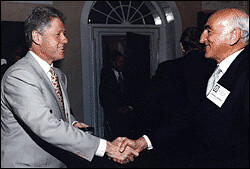
The documents paint a fascinating portrait of the intense struggles surrounding Mr. Clinton last February as he weighed whether to allow the satellite launching and ignore the pleas of prosecutors and the probable outrage from some in Congress.

A top State Department official had warned White House staff members that the satellite company, Loral Space and Communications, engaged in ”unlawful” and ”criminal” activity by providing valuable help to the Chinese rocket program.

And the chairman of the company, Bernard L. Schwartz, combed a White House dinner on Feb. 5, looking for Samuel R. Berger, the national security adviser, to plead for a decision on the satellite launching, a decision worth tens of millions of dollars to the company.

As it all played out, with the company arguing it needed an immediate decision, the senior White House staff were concluding that the President’s broader strategy of engaging China should not be endangered by blocking the launching.


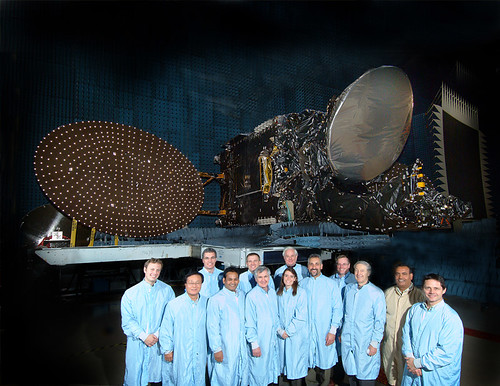
The impact of that scandal was far-reaching and still affects how satellite technology is exported — or not.  The spacecraft in question, Chinasat 8, was never delivered. What ever became of it? Space Systems/Loral sold it to Bermuda-based ProtoStar, modified it and just shipped it to Kourou for launch next month:

"Space Systems/Loral has been able to deliver a satellite customized to our requirements in a timely and professional manner," said Philip Father, chief executive officer of ProtoStar. "We have worked closely with SS/L throughout this project and are very impressed with the passion and commitment of all the engineers and technicians who have been involved."

The satellite, which was designed to meet the needs of both emerging and existing direct-to-home (DTH) operators in the Asian market as well as other broadband communication needs in the region, was completed for ProtoStar less than 17 months after the contract was signed. It is the first in a fleet of multiple satellites ProtoStar plans to launch that will enable its in-country partners to offer advanced satellite television services and powerful two-way broadband Internet access.
 
"ProtoStar I is the third satellite that SS/L has shipped for launch this year," said John Celli, president and chief operating officer of Space Systems/Loral. "It is rewarding to see the tangible evidence of our ability to deliver within commercial schedule constraints and to help our customers meet business plan requirements."

Space Systems/Loral was able to deliver the satellite in just over a year because the project involved modifications to an existing satellite, which ProtoStar purchased from its previous owner. SS/L then tailored the spacecraft to meet the defined power and footprint/coverage requirements of ProtoStar’s customers.

Now we read of the Protostar-1 satellite is not fully coordinated in Asia, causing quite a bit of friction, via Satellite Finance (subscription):

Confusion has broken out in the Asian satellite industry as Protostar-1 nears its launch at the end of June. Other Asian operators have expressed fears that Protostar-1 has not been properly configured to avoid interfering with the signals of other satellites close to its orbital slot at 98.5° East.

Speaking to SatelliteFinance, Peter Jackson, CEO of AsiaSat, said: "The Ku band is an issue, but it’s the C-Band on the Protostar satellite that’s going to be the real problem, it is going to interfere with a number of satellites. I know that the Chinese national operator has a problem because they are only a half a degree away with Chinasat 22, and Thuraya has a problem because they have a satellite right at 98.5°. New Skies will have issues as well."

Protostar is understood to be launching the satellite to the orbital slot belonging to Singapore. The Chinese Radio Regulatory Department has written to the Infocomm Development Authority in Singapore to express its concerns.

Jackson said that AsiaSat has had contact with Protostar over the issue, but that they have not been able to come to any definitive understanding on the matter. "When AsiaSat 4 launched we had to make changes to accommodate Thaicom, it’s just the way it works," he said. "I’d be very surprised if Singapore allows them launch as it stands. I know that if it were Hong Kong that was in the same position it would definitely not allow it."

Protostar could not be reached for comment on the issue. Protostar-1 is an SS/L built satellite with 16 Ku band transponders and 36 C-Band transponders, and its primary purpose is to provide capacity for DTH platforms in Asia.

This should be interesting. The co-passenger for next month’s launch is expected to be BADR-6 for Arabsat.

Loving Pay TV

Thursday, May 22nd, 2008

The results are in for the American Customer Satisfaction Index for cable and satellite television providers (link):

Customer satisfaction among subscribers to cable and satellite television improved three percent to a score of 64 in the first quarter of 2008, according to the American Customer Satisfaction Index.

But, at the same time, Comcast, Charter, and Dish Network are losing ground in the satisfaction of their customers. Comcast is down four percent to 54, an all-time low for the largest cable provider in the country.

Rapid growth may have contributed to difficulties in operations as Comcast continues to add cable subscribers, often through acquisitions of companies in smaller markets, says Professor Claes Fornell, director of the National Quality Research Center at the University of Michigan.

Satellite TV provider Dish Network is down three percent to 65 and Charter is down two percent to 54, sharing the lowest score in the industry with Comcast.

The reason for the industry’s overall uptick is the large improvement among smaller cable TV providers such as Cablevision and RCN, Fornell says.

The category of "all other" cable TV companies is up five percent to lead the industry with an all-time high of 69, well ahead of the large competitors.

DirecTV is, once again, the king:

For the eighth consecutive year, DIRECTV has topped the American Customer Satisfaction Index (ACSI) in the Pay TV category.

DIRECTV is American satellite television service provider, serving more than 17 million customers. It has played a major role in the industry-wide switch to high definition (HD) programming, and currently offers 95 HD channels nationally.

The American Customer Satisfaction Index (ACSI) is an economic indicator that measures the satisfaction of U.S. consumers. It is produced by the National Quality Research Center (NQRC) at the University of Michigan in Ann Arbor, Michigan. The ACSI generally interviews about 80,000 Americans annually and asks about their satisfaction with the goods and services they have consumed.

DIRECTV posted an index score of 68 at the ACSI against the overall cable and satellite industry score of 64. Customers surveyed by the ACSI in the first quarter of 2008 were also asked about such issues such as perceived quality and value, and their expectations prior to making a purchase. The ACSI also measures customer loyalty and retention.

Comcast – not so much, unfortunately:

Customer satisfaction ratings for Comcast Corp. fell this year to an all-time low and rank at the bottom of cable and satellite TV providers, according to a survey released on Tuesday.

No Room for Voom

Wednesday, May 21st, 2008

A few months ago, I switched from Dish Network to Cablevision so I could watch MSG-HD. I’ve been a Ranger fan forever. Since Dish didn’t offer MSG-HD, that made up my mind. Cablevision owns Rainbow Media, which owns Voom, and offered all 15 Voom HD channels,  just as Dish did at the time.


Today I heard Dish dropped all the Voom HD channels from their line-up. I was just considering going back to Dish, which means I won’t be watching Voom’s Kung Fu channel, where some of my paesanos and I enjoyed watching the Zatoichi movies from Japan.

Why? Politics, money and bandwidth, according to Phillip Swann:

1. Politics
TBS is owned by Turner Broadcasting, which also owns TNT, CNN, the Cartoon Network and Turner Classic Movies. These are highly rated, basic-cable networks — and a must-carry for any TV operator. Turner knows this so when it negotiates a carriage deal with a TV provider, it usually can mandate that it carry the company’s entire programming suite. That gives TBS HD a tremendous edge over Voom.

And this is not to harp on Turner and TBS. NBC Universal, which owns NBC, CNBC, Universal HD, MSNBC, etc., uses the same leverage to get carriage for its entire programming lineup.

At this time, Voom is relatively unknown and, consequently, does not generate as much interest in the TV audience. It’s easier for a TV provider to say yes to Turner and no to Voom.

2. Money
Because Voom is a small unit, the company must sell all 15 channels as a programming block, rather than offering each niche channel individually. This requires a TV provider to pay more in carriage fees if it wants to add Voom’s suite to its lineup. So it’s easier — and cheaper — for the TV provider to simply go with the established channels from companies such as Turner and NBC.

3. Bandwidth
While cable and satellite operators are rapidly expanding their high-def capacities, many still lack the system space to add 15 HD channels all at once. Even if Voom was owned by a powerhouse such as Turner, it would have difficulty getting 15 channels on the air at the same time.


Good Morning, Sea Launch

Tuesday, May 20th, 2008


That’s the live view from the Odyssey platform’s web cam. The Zenit-3SL rocket will launch Galaxy 18 for Intelsat. Two-hour launch window opens at 09:43 GMT).

Watch the live Webcast here. 

Or downlink the live broadcast yourself.

BBC, ITV to Launch Freesat

Tuesday, May 6th, 2008

How much does the satellite TV subscription cost you?

In the UK, viewers will soon be able to answer "nothing," with the long-awaited release of Freesat, a digital satellite TV service from the BBC and ITV that is rolling out with more than 80 TV and radio channels. (That number is expected to rise to 200 by the end of the year.)

The full dish, as it were: 

Freesat will be available to 98% of UK homes, including those who currently cannot receive Freeview, which is broadcast via terrestrial transmitters and aerials.

Customers will have to make a one-off payment for a digital box, satellite dish and installation.

Viewers will need an HD-ready TV in order to view high-definition programmes.

Millions of people have already got HD-ready TV sets, but until now have not been able to access HD programmes for free.

Could such a free service be made available in the North American market? Bell Canada is contemplating it

 Bell Canada, which operates the Bell ExpressVu satellite service, says it is exploring a proposal to give Canadians "free" access to a limited number of high-definition channels.

Dubbed "FreeSat," Bell said yesterday the offer would be ideal for consumers who are eager to access local HD stations but wary of paying subscription fees to television service providers.

"Bell ExpressVu believes that we can provide a service whereby we carry a certain number of high-definition signals from each of the major national and regional networks on our satellites," Gary Smith, president of Bell Video Group, told the federal broadcast regulator yesterday. "All they (consumers) would need would be the reception equipment."

The front-end cost of that receiver was not specified. Bell executives, however, made it clear that "free" access would be restricted to local over-the-air signals and would not include specialty or "pay-TV" networks.

Smith said FreeSat would also be a boon to conventional broadcasters because it would allow them to avoid "huge investments" in new transmission towers and distribution systems to carry those high-definition signals across the country.

The Canadian Radio-television and Telecommunications Commission has set 2011 as the deadline for television channels to be broadcast in high-definition digital, and networks around the country are scrambling to meet that deadline.

Meanwhile, back in Britain, BSkyB is not taking the threat of Freesat to their subscription base lying down. They recently lowered prices to preempt the competition:  

BSkyB will not stand by and let Freesat take its market. As we report this week, the broadcaster has already reacted by reducing the price of its HDTV box. And BSkyB has the ability to target customers at the low end of the market beyond its £150 (US$297.63) “Freesat from Sky”. Its Sky Pay Once service is now available as a standard product after a successful trial last year.

For a one-off payment of £75, BSkyB provides a free four-month subscription to four of its six basic-tier television channel packages along with a set-top box, dish, viewing card and standard installation. This compares favourably to a basic Freesat box and installation, which will start from about £130.

So will Freesat steal huge market share from paid services? It’s possible, but not necessarily a given. The demand for premium channels, after all, has led millions of people around the globe to pay for broadcasting via satellite or cable despite it being available (mostly) for free over the air.

Nonetheless, on the margins, it will be interesting to see how Britons respond to the availability of Freesat.
 

Hungarian HD

Wednesday, April 30th, 2008


Nagyfelbonatásύ televisiό — that’s Hungarian for HDTV. I like the name of the new satellite TV service launching on 1 May 2008: Hello HD. When I got HDTV service at home, that’s something I may have exclaimed: "well, hello HD!" The news, via Broadband TV News:

Further details have been made available about Hello HD, the DTH platform to be shortly launched in Hungary.

According to the local publication Figyelö, the service is backed by Hello HD Platform, a Hungarian-registered company owned by the UK-registered Watchcable Ltd.

Csaba Sár, the latter’s director, said that Watchcable’s owners are foreign investors who previously launched Minimax in several CEE countries with Chellomedia but subsequently sold their 50% stake in the company to the Liberty Global content arm.

Hello HD will employ a different business model to other DTH platforms, selling rather than leasing reception equipment to its customers.

The service will be aimed at the high end of the market, with reception equipment and installation costs being in the region of €390.

Less than €400? One time payment? Maybe that’s not such a bad deal, but they could use a few more channels. Eutelsat’s press release talks some hot bird:

Hello HD, Hungary’s first High-Definition television platform is gearing up for launch on May 1 from the EUROBIRD™ 9 satellite operated by Eutelsat Communications (Euronext Paris: ETL). Using two transponders leased on a long-term basis on EUROBIRD™ 9, Hello HD’s new television platform will feature industry-leading HDTV services including Eurosport HD, National Geographic HD, Filmbox HD and HBO HD, complemented by high quality Hungarian channels broadcasting in Standard Digital.

Hello HD will be available to viewers on a subscription basis using CONAX encryption. Subscribers will procure a High-Definition set-top-box provided by the Swiss company Advanced Digital Broadcast (ADB) which enables high definition and standard definition reception based on the DVB-S2 standard and is also equipped with PVR (Personal Video Recorder) and VOD (Video on Demand) features. In fourth quarter 2008 Hello HD plans to launch video-on-demand and a range of value added interactive services.

Hello HD’s choice of EUROBIRD™ 9 will also enable satellite homes in Hungary to receive digital channels broadcasting from Eutelsat’s HOT BIRD™ video neighbourhood. Using off-the-shelf double-feed antennas, Hello HD subscribers will be able to use the same dish to pick up content available free-to-air at the HOT BIRD™ position.

Much of European satellite TV, like ASTRA, is supported by advertising. Here’s a Hungarian ad for Coca-Cola:


And here’s a parody of the same spot, which I found entertaining — and I couldn’t understand a word:


In my book, this is one of the most memorable Coke ads ever:


Sky Angel to Take Flight on IPTV

Monday, March 31st, 2008

Sky Angel, the "faith and family" direct broadcast satellite service currently available on Echostar 3 at 61.5° West, is moving all the way to an IPTV platform in the United States:


Nancy Christopher, Sky Angel’s VP for Corporate Communication, [says] "Yes, we will be transitioning Sky Angel to a broadband Internet protocol called Internet Protocol Television (IPTV). It’s a proven technology that’s widely used in Europe and Asia and gaining popularity in the U.S. We already deliver our service into Canada using this technology."

IPTV provides viewers value-added services and conveniences such as the ability to set up their own equipment (no outside dish or antenna or professionally installed equipment needed), to retrieve programs that have already aired, much like a personal video recorder, and to utilize Video on Demand. IPTV enables programs to be viewed on conventional TVs, personal computers and handheld instruments, which will provide viewers the benefit of receiving programs at home and on the go. Enhanced programming, additional channels and more choices of programming packages for individual subscribers are other features afforded by IPTV.

The move is not without its controversies, as some of the comments over at Phil Cooke’s blog indicate. Some lifetime subscribers question whether abandoning satcom means abandoning Sky Angel’s vision of spreading the Gospel throughout the world. But with Sky Angel having already transferred their licenses to Echostar, the deal is done.

Defenders of the move note that more channels will be made available at the same price on the IPTV platform. Sky Angel just last week added the CBS College Sports network to its line up; and, unlike some cable operators, Sky Angel on IPTV will include the much-in-demand NFL Network.

Of course, Sky Angel’s news and religious channels will continue to provide coverage of major religious events, like the Pope’s upcoming visit to the United States

The move to IPTV isn’t the first time Sky Angel has been among the first to set up shop on the borders of new broadcasting technologies:

Sky Angel led the way in exploring and then utilizing another cutting-edge technology known as direct broadcast satellite (DBS) when DBS was in its infancy back in the 1980’s. Sky Angel was actually the second company to apply to the FCC for a DBS license back in 1981 when DBS was actually untested technology. Back then, frequency spectrum and orbital slots were yet to be assigned, and there was no satellite manufacturer with a high-power DBS satellite design; the DBS technology was widely opposed by television station and cable industry trade groups back then. Of course, DBS came into its own during the ’90’s. In 1999, Sky Angel became the sole surviving DBS pioneer from that first round of nine 1981 DBS licensees when USSB merged with DirecTV (DISH and DirecTV acquired their licenses later).

You can learn more about Sky Angel on their corporate website

700 MHz Spectrum Auction

Thursday, March 20th, 2008


[Antenna image courtesy of DMS Wireless

Very interesting to see EchoStar as one of the winners in the FCC auction, via Multichannel News:

EchoStar won sizable amounts of spectrum in the government’s 700-Megahertz wireless spectrum auction – and Cox Communications emerged as the largest winning cable entity – but the biggest slices went to Verizon Wireless and AT&T, the Federal Communications Commission announced Thursday.

The auction, which closed March 18, generated $19.592 billion in total bids. A portion of the funds will be allocated to the Commerce Department’s digital-to-analog converter box program.

“Even in a difficult economic climate, revenues raised in this auction exceeded congressional estimates of $10.182 billion by approximately 187%– nearly twice the amount Congress had anticipated would be raised to support public safety initiatives, the digital television transition and $7 billion in budget deficit reduction,” FCC chairman Kevin Martin said, in a statement.

However, preliminary FCC data regarding winning bidders indicated that, based on self-reporting, women-owned bidders failed to win any licenses and minority-owned bidders won less 1% of licenses.

In a prepared statement, FCC commissioner Jonathan Adelstein said: “It’s appalling that women and minorities were virtually shut out of this monumental auction… Here we had an enormous opportunity to open the airwaves to a new generation that reflects the diversity of America, and instead we just made a bad situation even worse. This gives whole new meaning to ‘white spaces’ in the spectrum.”

The spectrum in the 700-MHz band is being made available as a result of the government’s mandate that over-the-air broadcasters cease their analog over-the-air signals by Feb. 17, 2009.

EchoStar won 168 licenses in the E block, spectrum covering most of the United States, for a total of $711 million, according to the FCC’s Web site.

Cox, which was bidding as Cox Wireless, will pay $304.6 million for 22 licenses, in the A and B blocks, in California, Virginia, Georgia, Florida, Louisiana, Arkansas, Kansas and Oklahoma. Cox’s largest single winning bid was $84.1 million for an A-block license in San Diego.

Paul Allen’s Vulcan Ventures secured two A Block licenses, in the Pacific Northwest, for $112 million. Analyst firm Stifel, Nicolaus & Co. predicted that spectrum will overlap with his cable holdings.

Comcast and Time Warner Cable did not participate in the auction. Cablevision Systems registered to bid but did not win any licenses.

Verizon Wireless and AT&T—the two largest wireless carriers in the U.S.—accounted for 83% of the total bid in the auction.

Verizon Wireless won the regional licenses in the C block necessary for a nationwide footprint, paying in total $9.63 billion. AT&T will fork over $6.64 billion for 227 licenses, which are all in the B block.

Qualcomm won a total of nine licenses for a total of $1.03 billion, and was the initial – and only – bidder for the D block, with a $472 million bid.

The FCC Thursday issued an order de-linking the D block from the other blocks in the auction. The D Block did not meet its $1.3 billion reserve price established in advance of the auction.

The agency said it “is committed to making this spectrum available for use quickly after the DTV transition on February 17, 2009.” The FCC said it will not re-offer the D block immediately in Auction 76 but will consider its options for how to license this spectrum in the future.”

All told, there were 99 winning bidders for 754 spectrum licenses. The auction had a total of 261 rounds.

Other notable 700-MHz winners and losers:

– Google ended up with no winning bids in the auction. The Internet search giant had pressed the FCC to adopt a rule requiring the winning bidder of the C block to provide “open access” to third-party applications and devices, if a minimum bid price of $4.3 billion was met.

– BendBroadband won a license in the B block in Oregon for $6.7 million.

– Neither Leap Wireless nor Alltel Wireless won any licenses.


Could a national mobile TV service be in the works? PocketDISH and iPod: a comparison.


SXSWi Roundup

Monday, March 17th, 2008


DirecTV last week "gave viewers a front row seat to the legendary South By Southwest (SXSW) music festival with DIRECTV SXSW Live, a live broadcast concert series featuring 24 performances broadcast in HD and 5.1 surround sound direct from Austin, Texas."

Along with Miller Lite, DirecTV was also one of the festival’s sponsors. But the festival wasn’t all just punk rock and debauchery (well, depending on where you went); there was a strong element of green responsibility to be seen and heard among all the live acts. The Festival purchased Renewable Energy Credits (RECs) from the City of Austin to negate its carbon footprint of 263 tons generated during the planning and delivery of its 2007 event. For 2008, plans included:

…offering all delegates 24/7 access to biofuel made from cotton seed waste for their vehicles; eliminating all bottled water for staff and volunteers and using municipal water fountains instead; featuring environmental issues in the conference programs and offering tips to delegates on how to have a greener SXSW.

Of course, bands and music performance all around Austin is cool, and indie films are always interesting. But the Interactive Awards presented are what really strike our Really Rocket Science imagination. 

The list of finalists alone is worth a good day of web-browsing. From the intriguing World Without Oil to the useful Wikinvest, a person could kill a large part of a Monday (ahem) just perusing the creative websites.

Also noteworthy are the winners and honorees of the Dewey Winburne Community Service Award, honoring the memory of one of the key co-founders of the SXSW Interactive festival.

Finally, we’ve long been fans of the XO Laptop, better known as the $100 (now $200) laptop. In Dallas, the XO users group had their 4th meeting to coincide with the SXSW festival, while at the festival itself, David Seah used his OLPC as a conversation starter to meet new people. (Meanwhile, the city of Birmingham recently inked a $3 million deal to provide XOs to every child in grades 1 through 8.)

So if you missed the festival — get browsing