Archive for the ‘NASA’ Category

AMC-14 to Lift Off on Friday Night

Thursday, March 13th, 2008


SES-AMERICOM’s AMC-14 launches from Baikonur Cosmodrome in Kazakhstan aboard a Proton M rocket on Friday night.

Local time for the launch is 5:18 a.m. on Saturday 15 March 2008 — or 23:18 GMT on Friday the 14th of March.

What that means is you can watch the launch live in the United States — but if you’re on the East Coast, you may wish to start feeding the kids at 6 o’clock.

The live webstream will be available here, or watch on on C-band: AMC-1, transponder C17, 4040 Horiz., NTSC, analog, in the clear or on DISH channel 101.

The last update from the launch blog (on March 11) tells us:

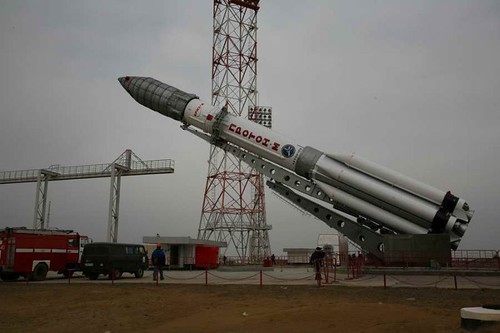
The roll-out of the fully assembled Proton Breeze M launcher, carrying the AMC -14 spacecraft, to Launch Pad 39 commenced early in this morning (at 6:30 a.m. Baikonur time). By 10 a.m. the rocket was erected in vertical position. Once installed onto the pad, the Proton was enclosed inside a mobile service tower.


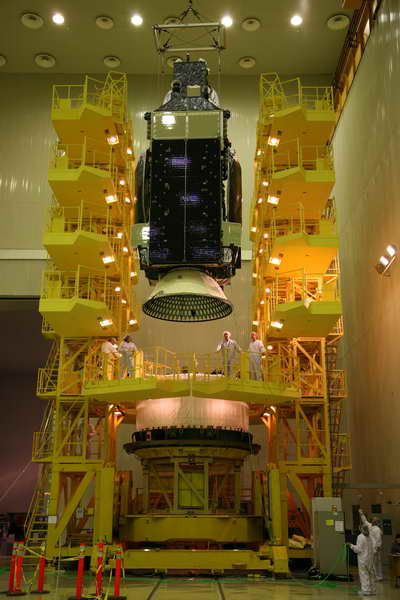
AMC-14 was originally part of a grand plan for direct-to-home services. 8.2 KW of power, the spacecraft has an active phased array (APA) payload consisting of a receive mode APA antenna, and the highest levels of redundancy on core components such as amplifiers, receivers, commanding beam and computer control systems. This means coverage can be reshaped while in orbit.

Developed primarily by Lockheed Martin Commercial Space Systems, the APA will be a key satellite technology for future missions.

From the get-go, AMC-14 will provide AMERICOM2Home® services in the United States for EchoStar Communications’ DISH Network.


HDTV Whopper

Wednesday, February 13th, 2008


In the earnings release issued by DirecTV earlier today, lots of good news with numbers. Or should I say lots of numbers with good news?

"DIRECTV’s content and service leadership continue to drive superior results in a tougher marketplace that reflects increasing competition and a slowing economy. Advanced services–including the launch of the industry’s best HD programming–played an increasingly important role in DIRECTV U.S.’s top-line and bottom-line results," said Chase Carey, president and CEO of The DIRECTV Group, Inc. "Strong net subscriber additions of 275,000 were punctuated by the lowest monthly churn rate in eight years. This 15 basis point reduction in monthly churn to 1.42% was largely due to the significant growth in customers with HD and DVR services–increasing from about 30% of our subscriber base last year to over 40% this year–as well as tighter credit policies. The continued strong subscriber growth coupled with an 8.3% increase in ARPU drove revenues up 14% to $4.38 billion. As with churn, the strong ARPU growth reflects the improving quality of our customers who are purchasing an array of new services."

Billions of dollars, double-digit percentage increases. Good for them.

What all the "satnuts" are asking is where are the 100 channels of HD you promised us a year ago?

To satisfy the insatiable appetite for a greater number of movies in HD, DIRECTV will offer an expanded line-up of HD programming available from all premium movie channels.

"This is DIRECTV’s break-out year for HD," said Chase Carey, president and CEO, DIRECTV, Inc. "The launch of our two new satellites will complete the largest capacity expansion in DIRECTV history, and no other video service will be able to match the sheer volume and quality of our HD programming. With HD adoption now reaching critical mass in the U.S., and 40 million homes projected to have HD-capable TVs this year, DIRECTV will be uniquely positioned as the best choice for HD programming."

With the launch of DIRECTV 10 and DIRECTV 11 satellites in 2007, DIRECTV will have the ability to deliver more than 1,500 local HD and digital channels and 150 national HD channels, in addition to new advanced programming services for customers.

I think I read they ended the year with 97 channels of HD. Three weeks after they made that announcement, Sea Launch had that horrible failure (the NSS-8 satellite was lost when the rocket exploded on the pad). Considering both DirecTV 10 & 11 satellites were on the Sea Launch manifest in 2007, getting 97 out of 100 is not too shabby.

DirecTV 10 was launched out of Kazakhstan, but there was some trouble with the spot beams during testing. Boeing just delivered DirecTV 11, which is scheduled for a March launch via Sea Launch.

More HDTV: that’s what people are looking for. Comcast says they’ve got twice as much (thank you, on demand HD). Cablevision is offering all local New York sports in HD — for free. Dish Network has a new $30 package of "HD essentials. Cox in California has a bunch, too. And don’t forget Verizon FiOS. Even smaller rural telephone cooperatives like West Kentucky are getting into the HD action.

So all these people who bought or gave HDTV sets recently are probably feeling like they’re in the new Burger King TV spots. They want a Whopper. In this case, HD content — and more of it. Like the Wendy’s commercial from the mid-80s, TV viewers want the beef…


Hurling?

Monday, February 11th, 2008

What is Hurling? Other than being “some old Irish game“, most Americans have no clue. Too bad, because the game is pretty cool. Here’s the gist: it is a field sport, similar to field hockey or rugby; players carry wooden axe-shaped sticks (called a hurley). The object of the game is to hit (or “hurl”) a small ball between goal posts for one point or in the keeper-guarded goal for the equivalent of three points.

YouTube has you covered:

Don’t resist watching (in awe) some more hurling highlights. Also, check out “What is Hurling” parts one, two, and three for a little more background.

Hooked, yet? You’ll need Setanta Sports to keep up with the action (which we blogged about before). Satellite TV makes it possible to watch hurling and other great European/Commonwealth sports: rugby, Aussie football, cricket, and British soccer, to name a few. Setanta is available on Dish Network and DirecTV.

The network was formed by a couple of Irish guys in the Bronx who were looking for a way to watch these sports in the U.S. They started a channel distributed in bars and pubs; the company rapidly grew; and now the whole enterprise may pay-off:

Sports broadcaster Setanta Sports has received takeover approaches from several large media companies and is evaluating whether to conduct an auction, a source familiar with the matter confirmed today.

The company is discussing its next move with financial adviser Goldman Sachs, added the source. Both Setanta and Goldman Sachs declined to comment.

Reports say the firm has received offers of over €1.3 billion for the company. It is also believed to have received the unsolicited approach from an unnamed European media company before Christmas.

Setanta is understood to be looking for a valuation in excess of €1.3 billion, even though the company has yet to make a profit.

Among those that may express an interest are BT, ITV, Virgin Media and Disney – the owner of sports network ESPN. ESPN executives have made it clear that they are interested in breaking into the lucrative UK football rights industry.

The company, which in 2006 agreed to pay €500m over three years to share live Premiership football coverage with BSkyB, hopes to break even by the end of the year.

€1.3 – not bad for a couple Gaelic-bronxite-fanatics, but it didn’t all happen by accident. In addition to being advised by Goldman Sachs (who is advising Yahoo! to reject Microsoft’s bid) and JP Morgan, Setanta saved millions by moving part of its operations to Luxembourg:

PAY-TELEVISION broadcaster Setanta Sports has slashed at least £17m from its tax bill by setting up a subsidiary in Luxembourg. The windfall will boost the firm’s valuation as speculation increases that a sale of the company is likely.

Over 1m British and Irish subscribers pay into Setanta’s new Luxembourg subsidiary called Setanta Sports Sarl.

Setanta pays “super reduced” Vat of only 3% on subscriptions routed through the grand duchy against 17.5% charged in the UK and 21% in Ireland.

Setanta has also set up subsidiaries to support its entry into the Canadian and Australian markets this year. Its ultimate parent company remains in Ireland, where more than half of its 450 staff are employed.

Let’s just hope Setanta’s content doesn’t disappear. Cork’s hurling and football teams are on strike.

Voom With A View

Wednesday, February 6th, 2008

Remember the Voom Satellite Service? It was an all-HDTV service intended to compete for viewers with DirecTV, Dish Network and local cable systems. Owned by Cablevision and the Dolan family, they built and launched the Rainbow 1 satellite in 2003. I remember the launch had a rocketcam and they produced the video in HD, of course. Here’s the launch clip (action begins around 1:30):


Unfortunately, the service shut down in 2005 and all subscribers were transitioned to Dish Network, who bought the satellite, which is now a.k.a. EchoStar 12. Fortunately for those looking for HD content, they’re still broadcasting the 15 Voom HD channels — many with original content — to Dish and Cablevision subscribers. Neither DirecTV nor Verizon FiOS offer those channels. I just upgraded my service to HD and I dig those Voom channels, in all its 1080i glory, 24×7 and commercial-free. There’s content for kids, like Flipper from the 60s and UFO from the 70s, a cartoon channel called Animania and for those crazy kids, Rush HD — featuring extreme and action sports. The program they put together on downhill skiing was very well done:


THE THIN LINE: Life on the Edge – HD Trailer from VOOM HD on Vimeop>

Seeing how HDTV is really catching on in the marketplace. Now that the Super Bowl is over, expected prices to drop:

Missed a great deal on an HDTV this past week? Don’t sweat it. Analysts over at Pacific Media Associates say we can expect a 15.6% drop on flat panel display prices this year. According to the research company, last year they saw a 14.7 percent price drop on HDTVs, which increased sales by 41 percent. If their estimates are correct, over 113 million displays were sold worldwide instead of the 80 million units they had predicted.

If you think about it, the idea was ahead of its time. Demand for HD content will continue to increase, and Voom offers good, differentiated content — designed for and originated in HD.

And Voom sees growth outside the U.S., too. An international Voom HD channel is available in Northern Europe on Thor 2 (1° West, transponder 15, 11434V, SR 25000, FEC 2/3) and Southeast Asia on Measat 3 (91.5° East, 3752V, SR 13330, FEC 2/3) — both in MPEG-4, and HD, naturally.

Bharti Time for Gilat and IBM

Tuesday, January 22nd, 2008


After a rough 2007 — in which they lost $335,000 on nearly $40 million in revenues,  compared to a 2006 profit of just over $250,000 — Israel’s Gilat Satellite Networks Ltd. is entering 2008 with some good news:

Israel’s Gilat Satellite Networks Ltd. announced Monday that it will supply India’s Bharti Airtel with a broadband satellite network comprising more than 13,000 small two-way ground stations.

The new network, using Gilat’s SkyEdge technology, will be used by Bharti Airtel to offer information and communication services to the local citizens of India’s Gujarat State.

The agreement "will enable remote citizens in the state of Gujarat to benefit from information and e-governance services," Erez Antebi, CEO of Gilat Network Systems, said in a statement.

Gilat offers VSATs or very small aperture terminal, a two-way satellite ground station with a dish antenna, in India.

SkyEdge is a satellite communications system that delivers high-quality voice, broadband data and video services over a powerful unified system. 

No word yet on the value of the contract, but it’s probably just a taste of the satellite broadband opportunities that are rapidly emerging in India. Compare it, for example, to the deal Bharti signed with IBM, which includes direct-to-home satellite services and IPTV:

In a bid to boost its triple play platform, Bharti Airtel has awarded a $150-million contract to IBM to provide IT solutions and services to support broadcasting services such as DTH and IPTV.

Bharti had already outsourced its IT requirement for the telecom business and the new deal is aimed at providing a one-stop experience spanning mobile, PC and television. 

A direct-to-home satellite TV service in India is, of course, the satcom motherloade. People have been trying to launch that kind of service for years. Back in 1999, News Corp’s ISkyB attempted it in partnership with Hughes; Star TV India was another service from News Corp, which is now a collection of premium content for India.  


DIY Friday: FTA Satellite

Friday, January 18th, 2008

No, politicos, we’re not talking about a "free trade agreement." This is rocket scientist shorthand for "free-to-air" satellite – free, unencrypted satellite television broadcasts.

Downlinkers looking for specialized content are the common customers – especially ex-pats looking for hometown TV.

There is nothing ticky or illegal here. Just buy a dish and receiver (or satellite pc card), look up a station, find its signal, and enjoy free-to-air’ing. You will also want an antenna motor if you wish to receive channels from more than one satellite.

More information is available here and here. Details on each satellite, including a list of all free HDTV channels, are available here.

Unplugging Propaganda

Thursday, January 17th, 2008

In today’s media-saturated world, even extremists have PR campaigns.

Because winning hearts and minds requires reaching as many eyes and ears as possible, it’s little wonder that satellite operators sometimes find themselves inadvertently in the midst of the battle against militant extremists.

The latest incident involves Thaicom and Hezbollah

Satellite operator Thaicom has terminated broadcasts by a Lebanese television channel, al-Manar TV, after learning it was backed by the Shiite militant group Hezbollah. Shin Satellite, which owns Thaicom, pulled the plug on al-Manar TV on Monday.

The satellite had been broadcasting test transmissions for the station.

The abrupt cancellation followed a report by the Israel-based Intelligence and Terrorism Information Center (ITIC) a few weeks ago that a Thai communications satellite, Thaicom, was transmitting al-Manar, to a vast audience.

Thaicom broadcasts to most countries in Asia as well as to Australia, Africa and central Europe.

US counter-terrorism specialist Andrew Cochran said ITIC reported that al-Manar raised funds for Hezbollah through advertisements broadcast on the network and an accompanying website that requested donations for the terrorist organisation.

Al-Manar has also provided support to Palestinian terrorist organisations, including the Palestinian Islamic Jihad (PIJ) and al-Aqsa Martyrs Brigade. It was known to have transferred tens of thousands of dollars for a PIJ-controlled charity, he said.

The report from the Intelligence and Terrorism Information Center in Israel details the sequence of events that led Thaicom to being alerted to the issue and canceling the broadcast. The report can be read here. Wired also reports on the incident.

This isn’t the first time that Al-Manar has crept its way onto western satellites. Way back in August of 2006, we blogged about how one guy on Staten Island built an HDTV uplink in his back yard to distribute Al-Manar via satellite. And last year, Intelsat had its own embarrassing situation in Sri Lanka.

With the proliferation of satellite channels and capacity, we’re likely to see such incidents continue into the future.

Satellite Split

Monday, January 14th, 2008

Today’s SkyREPORT revisits EchoStar’s split. The division will result in two companies: DISH Networks (DISH), which provides direct-to-home satellite service, and EchoStar (SATS) which does…well…pretty much everything else – designs set-top boxes, provides fixed satellite services, and develops Sling Media technology.

The satellite service provides capacity on nine owned and leased in-orbit satellites, and includes a network of seven full-service digital broadcast centers and leased fiber PoPs in 150 cities. Here at SES, we’re looking forward to launching a new satellite for EchoStar.

How’s this split faring on Wall Street?

In a note released last week, William Kidd of Wedbush Morgan lowered his price target on DISH shares (stock that represents the new DISH Network DBS split) from $48 to $37. The move was made given that DISH shares solely represent the pay-TV assets.

While the bulk of the adjustment represents the split, Kidd also said $2 of the change is the result of the company’s recent decision not to raise prices for subscribers this year.

The two stocks are slightly down so far this year. (But what stock isn’t these days?).

The move allows EchoStar to sell its products externally:

Last week, Ergen said that the company is aggressively planning to sell products — from Sling Media-enabled modems to set-tops — to Dish Network’s video rivals, namely cable operators and phone companies.

Ergen and Blake Krikorian, co-founder and chairman of Sling Media, both described the efforts of the spinoff company, EchoStar Holding, to seek buyers for its products beyond the Dish direct-broadcast satellite service.

“As a set-top manufacturer, EchoStar will certainly try to build products and sell them to the cable industry,” Ergen said at a CES press conference.

And this gives the company a way to "better highlight the value of some of its lesser-known technology assets." That publicity definitely hit last week’s CES 2008 convention:

It’s HD DVR, the TR-50, won CNET’s "best in show" for home video:

If you think everybody has cable or satellite, you couldn’t be more wrong. In fact, if you live in an area that’s well-served by digital broadcasters, now’s a better time than ever to get your TV over the air (or "OTA," as the cool kids say): yeah, you get only a handful of channels, but they’re in crystal-clear digital quality–DVD quality at "worst," uncompressed high-definition at best. The problem–as we’re reminded by many an e-mailer–is that there just isn’t a good DVR solution for the rabbit-ears crowd, especially if you prefer high-def. (You can opt for a TiVo HD, but you’d still have to pay a monthly fee for their programming guide.) But that may finally be changing, thanks to the EchoStar TR-50. For all intents and purposes, the TR-50 takes many of the features found on Dish Networks’ excellent satellite DVRs (such as the ViP622 and 722) and brings them to antenna-based TV viewers.

And, after months of delays and questions, the company announced a SlingPlayer mobile version for the Blackberry:

This past week at CES, Sling Media demonstrated its SlingPlayer Mobile on a BlackBerry Pearl at the technology expo; up until now, SlingPlayer Mobile and BlackBerry haven’t played nice together. Sling Media hasn’t given a firm date on when the new player will be available, but states that it’ll be introduced "later this year" for $29.99.
Race for Mobile TV Platform Entering Final Lap

Wednesday, January 9th, 2008

We’ve written before about mobile TV, and about Samsung’s video chipset for mobile TV technology. Now, the race is on to determine which mobile digital television technology will become the standard — with PC Magazine calling the competition a war.

"The battle between Blu-ray and HD DVD may be settling down at last, but in the mobile TV arena another competition is just getting under way," reports the Ecommerce Times:

 Two different mobile digital television technologies will enter testing this year, each backed by a different set of vendors. In one camp, there’s the A-VSB platform developed by Samsung Electronics Latest News about Samsung and Rohde & Schwarz; in the other, it’s the MPH (Mobile-Pedestrian-Handheld) platform, jointly developed by LG Electronics Latest News about LG Electronics and Harris.

Both have performed well in preliminary technical trials conducted by members of the Open Mobile Video Coalition industry alliance, the group said. Ultimately, however, only one will be chosen by the Advanced Television Systems Committee standards-setting body as the official U.S. standard for mobile digital TV, Gerry Kaufhold, principal analyst with In-Stat, told TechNewsWorld.

LG just unveiled its Mobile Pedestrian Handheld (MPH) in Las Vegas:

Woo Paik, LGE president and chief technology officer, said that since the development of the digital broadcast system began, broadcasters have sought a system with the capability of delivering programming to mobile viewers.

LG, which holds the patents to the 8-VSB modulation scheme used in the ATSC television broadcast system, developed MPH to provide broadcast quality video receivable by devices moving at speeds of up to 140 miles per hour. The system will also be capable of working with the current ATSC DTV broadcast standard, LG said.

Here’s Mahalo Daily’s Veronica Belmont at LG’s booth at CES:


Samsung’s technology, meanwhile, is heading for national trials:

The trial will use SES Americom’s IP PRIME facility in Vernon Valley, N.J., and satellite capacity to beam national signals to A-VSB transmitters in local markets, which will also be inserting local content into an A-VSB "in-band" stream that will broadcast within stations’ existing digital spectrum.

Rohde & Schwarz and Samsung are supplying the local transmission technology, Nokia Siemens is providing back-end service management and MobiTV will handle the service’s interactive features. SES Americom will provide overall integration of the project.

Here’s Samsung’s demo from last year’s NAB:


Finally, there are rumors that Apple might announce mobile TV next week at MacWorld. We’ll see on Tuesday.


Distance Learning in India

Wednesday, January 2nd, 2008

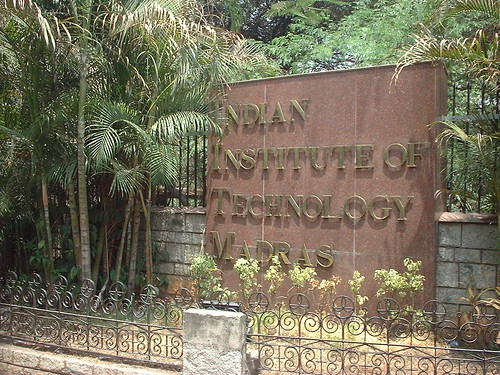
Reading The Hindu today, we see Edusat making major progress:

A major initiative towards providing satellite-based tele-education facilities to engineering colleges in the country was launched on Tuesday by the Indian Space Research Organisation (ISRO) in association with Indian Institute of Technology (IIT), Bombay.

This EDUSAT network would provide satellite-based tele-education facilities to students and teachers of the engineering colleges across the country, an ISRO release said.

The teaching end had been set up at IIT, Bombay by ISRO which will provide satellite bandwidth and install ground equipment at various recipient institutes across the country, while the IIT would arrange for delivering full-fledged courses on various engineering topics through its faculty on this network, it said.

A Memorandum of Understanding in this regard was signed between ISRO and IIT, Bombay in November 2007. To begin with, 13 full-fledged courses had been scheduled on this channel. About 50 colleges including IITs, several National Institutes of Technology (NITs), VJTI Mumbai, Samrat Ashok Technology, Salem, and Delhi College of Engineering, which already have the compatible ground terminal equipment, will start receiving these programmes from tomorrow.

New institutes who wish to join this programme would be provided ground equipment soon.

In the EDUSAT Network, ISRO has set up more than 45 broadcast and interactive networks covering 20 states, including North-Eastern ones and islands of the country.

More than 30,000 classrooms had been provided connectivity through the EDUSAT and the number was still growing steadily, ISRO said. EDUSAT spacecraft was launched on September 20, 2004.

Visvesvaraya Technological University is another one where distance learning via satellite is an important part of the educational mix. 

We’ve seen instances of outages in certain conditions with Edusat, so let’s hope it’s minimized now. Here’s the launch video from 2004: