Archive for the ‘NASA’ Category

Master Satcom

Wednesday, December 5th, 2007

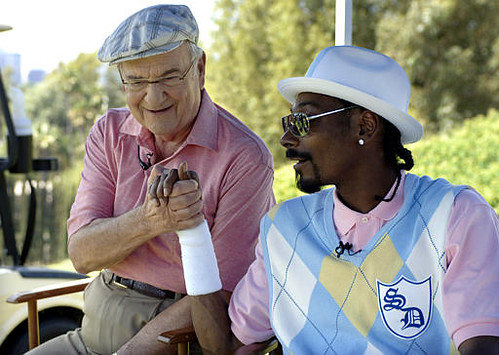
The original vision by Sir Arthur Clarke was you could cover the world with three satellites. There are lots of satellite channel distributed worldwide today. Came across a new one today: a press release about Supreme Master TV being distributed worldwide by RRSat of Israel. What’s all this "supreme master" then? Believe me, it’s got noting to do with hip-hop pioneer Grand Master Flash:

The Supreme Master TV Channel is a free-to-air satellite channel broadcasting 24 hours a day, 7 days a week, with a variety of programs in English with over 40 languages and subtitles.

As part of the agreement, RRsat started broadcasting the channel at the beginning of November 2007, reaching North America, South America, Asia, Africa, Middle East, Australia and New Zealand, including over such prominent satellites as Galaxy 25, Hispasat 1C, Intelsat 10 and Optus B3.

Lily Able, Director of Programming of Supreme Master TV commented "It’s inspiring in that there is a tremendous appreciation for uplifting news and programming. Viewers worldwide have enthusiastically responded to Supreme Master Television in their countries. We’re very pleased and honored to bring positive media to all cultures around the world. RRsat, through its global network of 29 satellite partners is ideally suited to help spread the Supreme Master TV’s positive media around the world, by bringing the channel to millions of new households worldwide."

The channel is available on 12 satellites, so you can’t miss it. So what’s the "uplifting news" like? Here’s a clip from earlier this year:


Now, who is this "supreme master?" The person behind this global television service, broadcast from Los Angeles, is Supreme Master Ching Hai, a Vietnamese vegetarian who advocates meditation:


Master Ching Hai initiates sincere people longing to know the Truth, into the Quan Yin Method. The Chinese characters "Quan Yin" mean contemplation of the Sound Vibration. The Method includes meditation on both the inner Light and the inner Sound. These inner experiences have been repeatedly described in the spiritual literature of all the world’s religions since ancient times.


I was hoping this new channel was about Big Business and CEOs — a "captains of industry" channel of sorts. Or perhaps a channel from Grand Master Flash himself featuring today’s hip-hop innovators such as the "Doggfather of Rap" himself, Snoop Dogg. Or why not both? CEO programming during the day time, hip-hop programming at night. Hey, it’s not that far-fetched. Remember Snoop Dogg and Lee Iacocca getting together to shoot the Chrysler TV spot a couple of years ago? I remember reading the inside account in the Detroit News:

They traded lines like it was the most natural thing in the world that a 6-feet-4-inch, goateed rapper would be teeing it up with a grey-haired corporate big-shot.

Their off-camera moments were priceless. In one scene, Snoop drives a pimped-up golf cart with spinner wheels and white leather seats, with Iacocca sitting next to him. When Snoop gunned the cart down a steep hill, Iacocca held on tight.

"How are the brakes on this thing, Snoop?" he said.

"I got you baby," Snoop replied. "But that would be a funny commercial if I tipped over with the boss in here."

"Yeah," Iacocca huffed. "That’s funny alright."

Getting back to Grand Master Flash, here’s an original video of his showing a snapshot of New York City in the early 80’s:


Choices, Choices: Triple Play or HDTV?

Tuesday, December 4th, 2007


It’s not just the holiday season. With just more than 13 months to go until U.S. broadcasters shut off the analog, and with the increasing proliferation of HDTV broadcasting, the race is on between cable and satellite television providers to convince consumers that their product will give them the most bang for the buck.

One of the primary selling points has been offering HDTV and DVRs, long favored by the satellite TV marketers as their value-added proposition. Cable has been favoring "triple play" — bundling digital TV, IP phone, and internet into one package.

For the time being, it seems that cable/sat TV divide is likely to remain in place, as the new owners of DirecTV believe the period of rapid growth for triple play has passed: 

 Liberty Media CEO Greg Maffei said Monday that DirecTV Group’s strategy of concentrating on video services – primarily HDTV – apparently seems to be working and when his company takes over control of the satellite TV giant later this year, there won’t be a big change in strategy….

When LGreg Maffeiiberty agreed to take control of the satellite TV giant, there was speculation that the Denver-media conglomerate would invest heavily in bringing a wireless high-speed data product to DirecTV. But at the UBS Securities Media & Entertainment conference Monday, Maffei seemed to downplay the need for a high-speed Internet play.

Maffei credited DirecTV’s current management team, which has differentiated the product from cable and telco offerings by focusing on HDTV content and high-end digital video recorders. Their success was proven in the most recent quarter, where DirecTV added about 240,000 customers.

While Maffei admitted that the triple play bundle of voice, video and data may have hindered DirecTV’s subscriber growth in the past, that time appears to have gone by. That, he said is backed up by the recent basic subscriber losses at the larger cable companies.

“Most of the growth in voice and data has already occurred; that is why you’re seeing slowing growth rates for the cable guys,” Maffei said. “By concentrating and differentiating around content and HD and the TV experience, DirecTV has been able to find a customer set that enjoys that product and reaches for that product.”

The early adopters, it seems, have all chosen their path; now the marketplace is focusing on picking up the rest of the subscribers — and the competition is fierce. DirecTV and Dish are matching each other’s offers, though DirectTV has a leg up in its HDTV offerings, providing 85 HDTV channels to Dish’s 34. (On the cable side, the score is this: Cablevision has 42 HDTV channels, including all New York Metro local sports in HD for free, while Comcast has 44 and TimeWarner offers approximately 30.)

Another channel sparking demand for direct-to-home satellite TV is RFD-TV, which bills itself as "Rural America’s Most Important Network" and is the new home of the "Imus in the Morning" video simulcast. RFD-TV is one of the 285+ video channels available on IP-PRIME, the IPTV service built for small and mid-size telcos. 

Meanwhile, the cable guys clearly disagree with Maffei’s observation that triple play’s heyday of growth is behind them; they feel triple play remains underpenetrated

But will a new "quadruple play" — adding wireless cell coverage to cable’s triple play offering — shake up the marketplace? TimeWarner and Comcast are opting out of bidding for the new wireless spectrum being made available by the end of analog, but Cox is in:  

Cox Communications Inc. said Monday it plans to bid in an eagerly anticipated auction of wireless spectrum, likely making it the lone major cable operator to take part.

Parties must indicate Monday if they want to participate in next month’s auction for wireless spectrum, which can be used for cellphone service or new mobile-Internet technologies.

Companies such as Google Inc. and Verizon Communications Inc. are expected to bid billions of dollars to capture the valuable slices of airwaves.

Cox… and characterized the move part of its push towards mobility and convergence of its services. "We like having options," said David Grabert, a Cox spokesman. With other cable operators, Cox bought wireless spectrum in a separate government auction last year.

The company, a unit of Cox Enterprises Inc., has more than 6 million customers nationwide.

So in the end, how will it all shake out? Will one bundle become the VHS to another Betamax? Unlikely, but time will tell.

Can Pakistan silence satellites?

Tuesday, November 13th, 2007

You’ve probably read about Pakistan President, Pervez Musharraf’s decision to declare a state of emergency, suspend the constitution, and fire the chief justice of the Supreme Court. You probably have not read about his decision to limit television to state controlled media:

When besieged President Pervez Musharraf declared a state of emergency Nov. 3, suspending civil liberties and the constitution in Pakistan, one of his first targets was the newly independent media, which he helped create and gave unprecedented freedom. Immediately, the government knocked about 40 independent Pakistani TV stations off the air, which has added to concerns that parliamentary elections set for January may not be free and fair.

"It used to be, we’d stay up until late at night, until 3 a.m., watching talk shows and the news," Khan said. "Now we go to sleep at 10 p.m."

The only news channel Khan could find was government-run Pakistan Television, or PTV, and it featured a bland documentary on India and a news ticker saying that Musharraf had explained to President Bush why an emergency was necessary and that Bush praised Musharraf and Pakistan for helping in the war on terrorism.

Since the emergency was declared, the Pakistani government has grown increasingly thin-skinned about any criticism. TV stations were barred from broadcasting anything that ridiculed Musharraf, who also is the country’s army chief. Cable operators were banned from relaying international TV stations. Internet services were restricted.

At times last week it was almost impossible to find out what was really happening in Pakistan as rumors flew that Musharraf had been overthrown in a bloodless military coup.

But it’s not as easy as it used to be for autocrats these days. As media becomes more decentralized, thanks to satellites and the Internet, its becoming very difficult to cut transmissions of independent news reporting.

There is the "problem" of Satcom for Musharraf. Despite authorities blocking sales of satellite dishes in two Pakistani cities, a dish is a hot commodity right now:

…satellite broadcasts are growing as a source of independent news as well. “Sales of satellite dishes have jumped since the weekend,” Agence France-Presse reported, citing several shopkeepers who were interviewed. One dealer said that while he usually gets one or two new orders a week, this week he already had 30.

Signs of a brisk satellite-dish market in Pakistan were also evident on a local blog in Karachi, which reported a $65 jump in price in the past few days. Below the post, a commenter claimed that the price of installation had suddenly increased as well.

Since the dishes can help Pakistanis circumvent the media blackout by picking up signals from sources beyond the government’s control, the latest development should hardly be surprising: CNN is reporting that the government has banned the sale of satellite dishes.

Musharraf may have underestimated the media’s power:

The Pakistani media, so aggressive that fistfights between reporters at demonstrations are not uncommon, haven’t accepted the new rules quietly.

At least two private TV stations have started broadcasting on the Internet, advertising the service by sending text messages to cell phones. Others are smuggling out news to Dubai, where the channels are broadcast to anyone in Pakistan with a satellite dish and the expatriate Pakistani community.

Journalists have started boycotting minor official events, such as news conferences or military ceremonies. They have held protest rallies. Most think the restrictions can’t continue.

"The government is so mad at the media," said Asim Awan, a TV reporter for Dawn News, an English station, who has continued to work even though most people cannot see his reports.

"But I think this is the only country in the world where political talk shows are more popular than soap operas. People miss them very much. I think they’re more upset that they’re missing their talk shows than they are about the emergency."

Canadian Content Changed by Chinese

Sunday, November 11th, 2007

From the Canadian Broadcasting Corporation (CBC): 

In 1992 a new spiritual practice, called Falun Gong, began to spread throughout China and by 1999 had acquired over 70 million adherents. Fearing the popular practice, the Chinese government banned Falun Gong in 1999 and began harassing and jailing practitioners. To date, over 200,000 have been sent to Chinese jails and forced labour camps, many of them brutally tortured, and at least 2,500 killed.

In 2006, new reports have come from China alleging that thousands of imprisoned Falun Gong practitioners have had their corneas, kidneys and livers forcibly removed for sale by Chinese authorities.

“Beyond the Red Wall” is a hard-hitting documentary special focusing on the movement and the persecution of these people by the Chinese authorities. It focuses on two Falun Gong practitioners – an internationally renowned painter, a Canadian citizen and resident of New York who was jailed and tortured for his beliefs, and a typically North American housewife who actively participates in and fights for Falun Gong.

The film also includes never-seen-before torture footage, smuggled out of China.


The Chinese government was quick to blame Falun Gong when one of the SinoSat satellite’s transponders was overpowered by a pirate signal in 2002. Then again in 2004 and 2005, both on an AsiaSat satellite. Falun Gong denied it, arguing they lacked the tech know-how. Was it poor satcom management? Without a sophisticated transponder locator service, I don’t see how they could quickly triangulate and concluded it came from Taiwan. Considering CITIC Group is a major AsiaSat shareholder, I’m not surprised.

Now we read in The Globe and Mail of a new episdoe in this ongoing saga:

CBC pulls Falun Gong documentary

Network postpones repeat of film aired in the spring after Chinese diplomats raise concerns

by COLIN FREEZE

November 8, 2007

CBC Television abruptly cancelled a featured Falun Gong documentary just hours before it was to air on Tuesday night, prompting complaints that the network bowed to pressure from Chinese government officials.

The network, which had actually already broadcast the documentary once in English and once on its sister French service, Radio-Canada, switched the program at the 11th hour to rerun a piece about Pakistani leader Pervez Musharraf.

A CBC spokesman said the network is simply doing its "due diligence" in holding Beyond The Red Wall: The Story of Falun Gong for prime time, in order to make it "more solid" before airing it at an unspecified date.

"If there is re-editing that’s required, we’re going to do that," CBC spokesman Jeff Keay said. He confirmed the network had been talking with Chinese diplomats who had expressed concerns about promotions the CBC had aired in the runup to this week’s broadcast.

"I was actually contacted myself by a gentleman who is a cultural consultant with the Chinese embassy," Mr. Keay said. "He was very polite." CBC will run a new version of the documentary "sooner rather than later," the spokesman added, but couldn’t say precisely when.

The Canadian director of Beyond The Red Wall says he has no intention of re-editing a piece that he spent three years working on. "We have to quote-unquote give balance," veteran filmmaker Peter Rowe said in an interview. "… I’ve never experienced anything like these kinds of demands."

The Falun Gong and Beijing are locked in a global campaign against one another. Falun Gong members said they interpret the delayed documentary as the latest example of China-sponsored interference against their movement, which Beijing considers a cult that represents a security threat.

The documentary draws attention to Falun Gong practitioners’ complaints of persecution, including beatings, torture and labour camps in China.

It also explores an investigative report done by the former Canadian MP David Kilgour and Canadian civil-liberties lawyer David Matas, who concluded last year that a "large but unknown number of Falun Gong prisoners of conscience" were being executed and their hearts, kidneys, livers and corneas harvested for transplant.

Beyond The Red Wall was to air on The Lens, which CBC Newsworld bills as a forum for Canadian filmmakers whose "up close and personal documentaries feature dramatic stories with new perspectives; films that inform, provoke and entertain."

Parts of the documentary, however, may have been too provocative for the CBC. At 5 p.m. on Tuesday, Mr. Rowe said, he spoke to CBC documentary chief Catherine Olsen, who said the piece would not air during its scheduled 10 p.m. time slot. He said the specific concerns that were raised by Ms. Olsen included explorations of self-immolations in Tiananmen Square that China and the Falun Gong accuse each other of sponsoring.

Another contentious portion was the way the documentary explores the controversial organ-harvesting report.

The Falun Gong-supporting Epoch Times newspaper featured an interview with Mr. Rowe last week in anticipation of the piece. At the time, he lauded the CBC for broadcasting the controversial documentary, especially given the network’s ties to the Olympics in Beijing.

"The fact that they’re willing to broadcast a film that has people in it advocating the boycotting of the Olympics, which they themselves are the broadcaster of in Canada, is remarkable," he told the newspaper on Oct. 29.

What’s most galling for Mr. Rowe is that English CBC already aired the film this spring, albeit in a 4 a.m. time slot.

Radio-Canada aired a French-dubbed version of the film last month, Mr. Rowe said, adding that broadcasters in Spain, Ireland, Portugal, and New Zealand are airing Beyond the Red Wall unedited. He pointed out that CBC had sponsored the project throughout. "Without their funding, the rest of the funding would not have come in," he said.

Prompting this blog post by Clive Ansley:

Human rights advocates the world over lament the Beijing government’s consistent suppression of accurate news reports in China, and its determination to ensure that Chinese citizens never receive fair and accurate information about Falun Gong. Now it is apparent that Beijing has the power to approve or disapprove what is broadcast by news services in democratic countries. CBC is apparently quite comfortable with the idea that what Canadians are allowed to see or hear should be determined by the Chinese Communist Party in Beijing.

Even the New York Times picked up on the story.

Dancing With Mark Cuban

Saturday, November 10th, 2007

A Delta 4 Heavy rocket will launch the DSP-23 (Defense Support Program) satellite from Space Launch Complex 37B at Cape Canaveral Air Force Station tonight (Launch Window: 8:39-10:41 p.m. EST; 0139-0341 GMT). Built by Northrop Grumman, the DSP satellites have been the spaceborne segment of North American Aerospace Defense Command (NORAD’s) Tactical Warning and Attack Assessment System since 1970.

 

DSP satellites use infrared sensors to detect heat from missile and booster plumes against the Earth’s background. Air Force Defense Support Program satellites provide early detection and warning of missile launches and nuclear explosions to National Command Authorities and operational commands.

 

The launch will be broadcast LIVE via satellite (G26 @ 93° West, transponder 5, analog C-band, dowlnink frequency 3800 MHz Vertical) and webcast on the United Launch Alliance site — if they can get it right. ULA’s prior webcasts haven’t worked well. SpaceFlightNow will have real-time text updates. At 11:00 p.m. EST, you can watch it in HD on HDNet, which is available on Dish Network and DirecTV, and many other multichannel providers. HDNet may not stay on DirecTV much longer, given the lawsuit they’ve got going on. DirecTV want to put HDNet in a higher-priced package with other HD channels, and Mark Cuban doesn’t like that at all.


You’ve got to admire how he’s going about this. He saw the future and it was in HD. Yes, he grabbed old shows like Hogan’s Heroes — it was simple to convert from 35mm film to HD, but there wasn’t much content around when he started. Broadcasting launches from the Cape is something we like to see, even if it pre-empts regulars programming. In this case, for example, NASA TV will not be broadcasting the launch (showing STS-122 roll out instead).


At the CTAM Show in Washington last summer, held annually by the Cable & Telecommunications Association for Marketing, trade publication Television Week held a luncheon and discussion with Dan Rather, formerly of CBS News and leader of Mark Cuban’s original news program, Dan Rather Reports. Really good interview; honest, candid and insightful: watch it here.



Also got to give him credit for doing what he wants to, whether it’s competing on Dancing With The Stars on ABC, or picking a fight with Bill O’Reilly of Fox News.  He talked about these topics and more in his closing keynote speech at the BlogWorld Expo in Las Vegas . Here’s the transcript, courtesy of Fast Company:

Connection between Dancing With the Stars and blogging. Dancing With the Stars taught me value of different mediums. People complimenting me for blogs is nothing like little old ladies telling me i should have won and that I was cheated on Dancing With the Stars.

I started my blog in 2004 because I did an interview with the Dallas Morning News about the Dallas Mavericks. I expected to see a write up that equated with the conversation. What was written was different than the email exchange. I decided it was time to start a blog. I put up a link to the article and then put up the email exchange. The response was amazing and was an accelerator for me to start blogging.

All of a sudden they realized they weren’t in charge of me. They had to realize they had to pay attention to people. Blogging isn’t just about people getting things off their chest, it’s a way for ideas and the truth to come out.

Over time I understood what blogging meant to me. Before kids and marriage I knew I could call up my buddies and we talked about everything on our minds: sports, tech, politics — but it was limited to the 5 or 10 drunks I knew

I got to talk to a whole universe of people. It was about how everyone was responding to me. More than 1 million people read the blog in 2004, and the software couldn’t support the comments. But it was the response coming back that mattered.

Are you honest in what you write or are you not? Are you just writing to get people to read. If you do that than you’re no different than mainstream media.

I learned you have to be brutally honest. Once you are honest you can define your brand.

If you’re gonna go the corporate route. MSM is trying to introduce blogs. If you’re a reporter for the newspaper — you’re a reporter. Either you’re a reporter or you’re not.

As exciting as we think our opinions are — we’re gonna run out. I think I’m gonna be able to whip something out in 15 minutess and I say someone is going to call me on that. I wrote a blog recently about facebook about opening its api vs what google is doing for opensocial. As i started doing more homework I realized I was not only gonna look like an idiot to readers but I was gonna feel like one. It becomes stronger when you do the work behind it.

The blogosphere is changing and becoming corporatized. You have to compete with nonbloggers; it’s your opinion vs The New York Times and The Dallas Morning News. You have to understand where you fit. As others enter your brand starts to dissipate.

Replenish yourself through good old fashion research and work. Decide if it’s full time or part time. Is it who you are or not who you are.

When you take the step to get paid to blog you’re going to lose ability to be perfectly honest. Someone is going to want something for paying your bills.

Bill O’Reilly is a moron. I’ve fallen into that trap. I’ve done my f you blogs. The hardest ones are the ones where you scream and yell at someone. It feels really really good. Then you remember these blogs are forever. The Internet archives are there forever. Whatever you write is going to be there forever.

What appears to be an honest answer that brands you today may not be in 2008. People Google you. When we hire people we Google them.

I don’t hold myself back but I’ve got a lot more money than you. I don’t care. I’m the luckiest guy in the world. I can sit up here and not care. But not everybody is that fortunate. But I’m not saying muzzle yourself. Just be honest.

Mark Cuban takes questions from the audience.

Q: When starting should you worry about ads?
A: GoogleAds cheapen it. They need to be appropriately placed. Once you start getting some traffic and you realize you can turn it into a business then you can make decisions about it.

Q: Have you ever considered turning off comments because of haters?
A: I’ve turned them off; deleted them. Anonymity makes people say the darndest things. They say I can’t dance because my toes are funny.

Q: How do you marry your business with blogging?
A: I have this site called Sharesleuth where we investigate companies. I’ll take a position in the stock prior to publishing. I’m open and transparent. We are factual. We haven’t been sued or questioned.

Q: Did it work asking people to vote for you on your blog?
A: I was a complete whore. I put it on facebook and on my blog. I spent more time on trying to get votes than my dancing.

Q: Future of blogging — what can change it? What can take over?
A: The history of all of this is the Website. A lot of people were setting up sites in the 90s. People were putting up sites and speaking their mind. There were forums in Compuserve and Prodigy. Then it was an application that changed it all Don’t think the game is gonna change all that much. I’m not a huge fan of UGC and YouTube. Whenever it is easier to create everybody does. The longer and longer the tail becomes. MSM is also adopting easy tools … other things will come up. It’s gonna be hard to have more than just the ultra long tail. Viewers or readership impact. Look at the music industry. It’s so easy to create a song right now, everybody does. It’s harder to stand out. It will come down to content is king, with marketing being a major part of it.

Q: What about facebook’s new advertising?
A: It’s an advertising forward. It’ll be okay the first couple of times. Then everybody turns into a super spammer and they ain’t your friend no more. Someone will get paid to send and someone to receive. There are much better alternatives.

Q: Do you write your own blog?
A: Yes I do unlike Donald Trump. See I always go back to the people I pick on. Yes I write my own blog.

Q: Do you find Bill O’Reilly’s attacks on you to be a net plus or a net minus?
A: It’s neither. I’ve been putting my e-mail out in the public since 1986. I put it up on the JumboTron. I’ve said it on Letterman and and Leno. It’s the same 25 people saying the same thing. He says I’m gonna get you. It sounds like my 4-year-old daughter.

We put together HDNET and Magnolia so you can see it before it goes to theaters also DVD releases same day. Sneak preview on HDNET. Redacted in limited theaters — theaters don’t want what we’re giving free previews of . But at the end of the day, even if you have large screen, you’re going to the movies — it’s a different experience.

Q: What do you think about UGC now? Do you still think YouTube is not a real business?
A: If the media writes about it, then more media writes about it. YouTube is subsidizing any video you want to put on the Internet for free. Because they hide behind the Digital Millennium Copyright Act — Google can’t get in trouble if someone puts up South Park. South Park has to find it and request it be taken down. They don’t know what’s there. They are hiding behind the DMCA. they can’t put ads around what they don’t know is there. Let Google pay. They can’t sell ads around non-licensed content. If it were any other company in the world, they’d be gone. But they can subsidize a lot of things.

Q: Is facebook overvalued?
A: It’s cheap at the value Microsoft gave if they ever really get to monetize their members. Facebook is the only place where there’s all that information about me. Facebook has the opportunity to be gianormous. But the biggest opportunity is a new OS right now. Microsoft is like 25 years old. Mac is great but you can only use it on Apple. It’ll be great to have something like what Google is proposing with a mobile OS.

Q; If facebook were for sale would you buy it?
A: Yeah I’d buy it but I can’t afford it. The two companies I would buy are Verizon and facebook.

Another highlight at BlogWorld was the world’s larget pajama party, held at the Hard Rock Cafe.

 

Big Ten Network — hurting cable companies?

Friday, November 9th, 2007

In July, I wrote about a Midwestern rage brewing because of local cable companies’ unwillingness to add the NFL Network and the, then launching, Big Ten Network to the cable lineups. Telling Wisconsin fans that they can’t watch Packers or Badgers football from their living rooms is a recipe for disaster. And it may be having an impact.

Time Warner Cable and Charter Communications, two major cable carriers in Wisconsin, are reporting they have lost thousands of cable subscribers, a development some tie to consumers upset that they can’t get the Big Ten Network and the NFL Network.

While acknowledging the erosion of subscribers nationwide and in Wisconsin, spokesmen for both companies say other factors are behind the loss of cable subscribers. They include the downturn in the economy and the roiling of the housing market, as well as heightened competition from telephone companies in major cities around the country.

"The impact of not having the NFL Network or the Big Ten Network has been non-existent," said Alex Dudley, a Time Warner spokesman in New York.

Anita Lamont, a Charter Communications spokesman, echoed that comment, saying her firm had not seen a loss of customers due solely to people unhappy about not being able to purchase the two sports networks.

Time Warner Cable said Wednesday it had lost 83,000 subscribers in the three months ended Sept. 30, and another 57,000 in the three months prior. Time Warner has about 600,000 households in eastern Wisconsin.

Charter, which has 500,000 households in Wisconsin, reported Thursday it had lost 40,200 subscribers in the three months ended Sept. 30 and another 29,300 in the three months before.

At the same time, DirecTV, which has a contract to carry the Big Ten Network and the NFL Network, reported this week it had added 240,000 new subscribers as of Sept. 30, a 6% increase over a year earlier.

At the DISH network, which also has deals with the two sports networks, spokesman Parker McConachie said the company added 170,000 new subscribers in the second quarter.

HDTV Penetration

Wednesday, October 31st, 2007


Think you know about the HDTV market? No question: HDTV is the differentiator. It is or will be why people switch pay-TV providers. DirecTV and Dish Network are in a race toward offering the most HD channels. Local cable companies like Cablevision are giving away HD as part of any digital package. All because the Consumer Electronics Association released figures back in July that 32% of U.S. households have HDTVs — inflection point’s coming at us fast.

Akamai is passing by all this by offering HD content delivery on the Web.

But wait, what’s this from Nielsen? Only 13.7% of households are "HD capable?" The latest, via Broadcasting & Cable:

Measurement giant Nielsen finally released estimates of high-definition-set penetration for both the total United States and Local People Meter markets, and the overall numbers may surprise some consumer-electronics manufacturers and programmers as being rather low — particularly given the recent momentum of HD-set sales and launches of new HD networks.

They may also disappoint advertisers, which have long been seeking clarity on the actual size of the HD audience.

Nielsen found that only 13.7% of TV households in the United States — or roughly 15.5 million out of 112.8 million total U.S. TV households — are equipped with HD televisions and HD tuners capable of receiving HDTV signals, a status Nielsen described as “HD Capable.”

Nielsen didn’t define what an “HD tuner” means, but a conversation with a Nielsen spokesman indicated that it could mean an integrated ATSC (Advanced Television Systems Committee) tuner in the set or a connected HD-capable cable or satellite set-top (there are also over-the-air set-tops that receive HD signals, albeit few).

That 13.7% figure is much lower than research from the Consumer Electronics Association, the trade group representing HDTV-set manufacturers. The CEA estimated that HDTV household penetration in July 2007 stood at 32% — or some 36 million homes, going by Nielsen’s household numbers — and would rise to 36% by year-end. The CEA put the total number of HDTV sets sold by year-end 2006 at 39.9 million, climbing to 60.6 million by the end of this year, and it said one-third of HD households own multiple sets.

Of course, not all HDTV sets are actually used to watch HD programming — something both set-makers and programmers have long lamented. Industry research has generally indicated that anywhere from 40%-60% of HD sets are still being fed exclusively with standard-definition content, either because consumers don’t know any better or they haven’t bothered to sign up for HD cable or satellite service or to hook their TVs up to over-the-air antennas to receive local broadcast HD signals.

The CEA’s own research, in fact, indicated that in 2007, only 44% of HDTV owners are actually receiving HD programming. A CEA spokesperson explained that this was because many consumers buy the wide-screen sets simply to watch DVD movies.

But Nielsen sees HDTV consumption in a more optimistic light. Its HDTV estimates — based on in-home collection by its field staff in metered samples and currently limited to National and Local People Meter samples — suggested that 11.3% of U.S. TV households, or some 12.7 million homes equipped with HD televisions and HD tuners, receive at least one HD network or station, a category it calls “HD Receivable.” And those 12.7 million homes are included within the overall 15.5 million household total, which would indicate that some 82% of homes with HD sets are actually using them to watch HDTV.

That 82% usage number, frankly, is far more surprising than Nielsen’s HDTV household estimate, as it would suggest a much higher adoption of HDTV content among HD set-owners than even the most optimistic network programmers and engineers would claim. When repeatedly asked for further clarification, a Nielsen spokesman stood by the numbers. But he added that Nielsen had actually found that some 21% of U.S. households, or 23.6 million, have HD displays but not necessarily tuners.

Using that larger number from Nielsen — which inexplicably was not included in its press release — means that only 53.8% (the aforementioned 12.7 million) of HDTV-display owners are using them to consume HD content. That usage number falls more in line with CEA research and other industry studies.

In market-by-market breakdowns, Nielsen found that Los Angeles has the highest penetration of HD Capable homes, with 20.4%, or some 1.2 million households, while New York has the highest penetration of HD Receivable homes with some 17.5%, or 1.3 million households.

But the market-by-market numbers don’t include a total for HDTV displays, regardless of whether or not they have tuners, so they similarly lack clarity and suggest an adoption of HD content that is probably much higher than reality. For example, a quick look at the data Nielsen released would suggest that 1.29 million of the 1.33 million HD Capable homes in the New York DMA — or some 97% — are watching HD content.

Nielsen also released some demographic data on HDTV, reporting that 10.4% of U.S. Hispanic or Latino households are HD Capable and 8.2% are HD Receivable, while 8.1% of African-American households are HD Capable and 6.9% are HD Receivable.

 I still think HD will make a difference — especially in the major markets.


More IPTV via Satellite

Tuesday, October 23rd, 2007


I see a competitor to IP-PRIME® on the horizon. EchoStar’s ViP-TV is an interesting adjunct to it’s direct-to-home DISH Network service. The news, via SatelliteGuys.us, with discussion thread:

EchoStar Communications Corporation (NASDAQ: DISH) and its subsidiary, EchoStar FSS Corporation (EFSSC), today announced the launch of ViP-TV™ service, through which EFFSC has the ability to transport over 300 channels of secure broadcast quality popular television programming via satellite to Telco, private and rural cable operators, municipalities and master planned community video providers that have obtained rights for distribution of programming over their wire-line networks. ViP-TV is EFSSC’s turn-key solution for wholesale multi-channel content transport and distribution, and offers customers affordable, scalable and aggregated MPEG-4 Internet protocol encapsulated radio and television programming channels from a high-powered Ku-band satellite.

ViP-TV’s suite of channels includes ViP-Premier™, which offers over 100 channels of the most popular television programming, ViP-HD™, which boasts 40 channels of industry-leading high definition programming; ViP-Movies™, a menu of 40 of the most popular movie services; ViP-Latino™, offering 30 of the top-rated Spanish-language programming services; and the ViP-International™ programming package, providing over 30 programming channels in 10 different languages.

The ViP-TV service is also offered in connection with transport of local broadcast networks from more than 165 local designated market areas (DMAs) currently provided by EchoStar to over 1,000 cable and Telco systems in standard definition. VIP-TV also offers transport of high definition local broadcast networks in over 30 local DMAs.

EFSSC’s ViP-TV delivers its service using a high-performance, high-powered Ku Band satellite with full continental United Sates coverage, so that the service can be rapidly deployed and is low cost to maintain. In addition, EFSSC offers full-service design, engineering and installation of head-end equipment together with its award-winning ViP™ series set top box technology and applications.

“ViP-TV is one of the most comprehensive video iP transport and distribution platforms available in the marketplace,” said Michael Kelly, executive vice president of Echostar Fixed Satellite Services. “More than just programming, it is a premier service buoyed by industry-leading technology, service and support. With over 12 years of experience in the transport and distribution business, EchoStar can create a true end-to-end solution offering everything from set top box technology to satellite distribution to service and customer support.”

Add this new entrant to AT&T’s U-verse (read about their outage on Sunday) and Verizon’s FiOS-TV, who are also rolling out IPTV. What ever happened to AvailMedia?

International News Explosion

Monday, October 22nd, 2007

When you check into a hotel room anywhere in the world, chances are you will have CNN-International. The network launched in 1985, brining 24-hour news programming in English to every corner of the earth, currently reaching 200 million households and hotel rooms in over 200 countries.

Outside of BBC, there wasn’t much competition. Now, it appears a 24-hour news channel explosion is underway:

CNN may have started it all, but international 24-hour television news is rapidly expanding as a bevy of nations are kicking off their own 24-hour multilanguage services, in what observers describe as a global battle of egos and ideas.

The TV news explosion has been most pronounced in the Muslim world, where, until 1996, broadcasts were strictly controlled by the state. Al Jazeera broke that mold, sending its signal out by satellite first throughout the region.

Al Jazeera is now broadcast regularly across the globe. Financed by the emir of Qatar, a nominal U.S. ally, Al Jazeera now has an English-language service and a robust Web site, and reaches an estimated 50 million people.

Here’s a run-down and some of what they’re discussing today:

Al-jazeera: "Mid-East expert admits: No proof of Iran nukes"

CNN International: "Brazilian Grand Prix: And so it ends"

BBC: "Chinese party unveils new leaders"

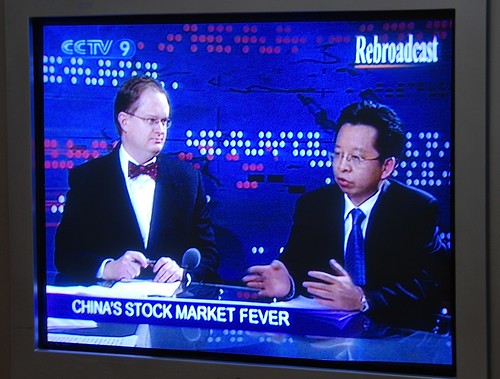
CCTV (China): "Moon orbiter, Chang’e I, sets to take off" (Sound familiar?)

And it’s not just ad revenue that some of these stations are seeking. There can be a real propoganda edge:

The success of Al Jazeera, abetted by the rapid expansion of communications satellites, was not lost on others — in particular, Iran.

Last July, Iran’s PressTV began English-language satellite broadcasts; Iranian officials said the global broadcasting effort is to counter the pro-Western bias of more established outlets.

"We are the target of global media war, and there is hardly any media delivering on its commitment," Iranian President Mahmoud Ahmadinejad said in a widely covered address marking the station’s launch. "The media are used by the domineering powers to occupy lands and people’s hearts."

In addition to Iran; France, Russia, and China have all joined the international news club — led by CNN and the BBC — in recent months and years.

Increasingly these new global networks have an anti-American edge. Earlier this year, the insurgent Islamic Army of Iraq went on the air with Al Zawraa — thanks in part to a cooperative Egypt that gave it satellite access.

Perhaps the most virulently anti-American outlet is Venezuela’s Telesur network. Launched In 2005 by Venezuelan dictator Hugo Chavez, the network has been assiduously signing deals to have the station carried on cable carriers throughout Latin America. Telesur’s coverage promotes a left-wing bent. Recently Telesur was advertising a special documentary on Che Guevara, the communist guerilla.

Others think its all about good old-fashioned ego:

But Stephen Hess, media expert and senior fellow at the Brookings Institution, tells NewsMax that propaganda is generally not the driving force behind these networks. His explanation for the explosion in global television news: "Ego. National ego visited through heads of state."

"I felt that particularly when I looked at the French plans. They want to play with the big nations. This is one way that you get there. You’re almost pushing your way in.

"Hey, what is France’s place in the world today," Hess says. "If we were recreating the Security Council of the United Nations and limiting it to the same people, would France be one of those countries?"

The new France 24 network, with a stated goal of matching CNN, BBC, and Al-Jazeera, launched its service last December. The network broadcasts in French and English, and has found cable and satellite carriers to take it to Europe, the Middle East, Africa, and the Washington D.C. area. As of Oct. 1, it was offering a trilingual Web site in English, French, and Arabic.

"This channel will not be anti-American," network chief Alain de Pouzilhac told The Washington Post upon its launch. "But this channel has to discover international news with French eyes, like CNN discovers international news with American eyes."

NOTE: While we debate the credibility of some of these new networks (Are they anti-American or just releasing an alternative, albeit reasonable perspective?), NewsMax (the source of this post) often receives a similar debate as to its fairness. Many consider the outlet to have a conservative bent.


The Rockies are in. Will Frontier be watching?

Tuesday, October 16th, 2007

With the Colorado Rockies making an improbable run to the World Series (winning 21 of their last 22 games), their home-town airline is scrambling to get the games, in-flight:

Denver-based Frontier Airlines apparently hopes it can get in on some of the hoopla surrounding the first-ever World Series appearance by the Colorado Rockies, who are also based in Denver. Frontier is negotiating with DirecTV for the rights to show the World Series games aboard its flights, The Denver Post reports. Frontier already has satellite TV access on its flights, but the Fox network –- which has the World Series rights -– is not part of Frontier’s in-flight programming contract, according to The Associated Press.

While this looks more like a PR-stunt than an honest service upgrade, it is amazing how much customers appreciate in-flight satellite television. Take JetBlue — the first airline to install Satellite TV: despite a number of embarrasing delays, tarmac-waiting-marathons, and no legacy-airline perks (like the occasional first-class upgrade), JetBlue still ranks at or near the top in most customer surveys.

JetBlue, by the way, already offers Fox programming on its DirecTV lineup.

Let’s hope the players stay warm and the flights are on time. It could be a cold, windy, maybe even snowy series in Denver and either Boston or Cleveland.