Archive for the ‘NASA’ Category

Cleveland Art Festival Utilizes IPTV for Digital Film Fest

Thursday, July 19th, 2007

Hello Cleveland!

Tonight marks the kickoff of the three-day Open Student Television Network (OSTN) / Internet 2 Film Festival, which is being run as part of the Ingenuity Festival at Cleveland State University.

OSTN features the only 24/7 worldwide IPTV channel devoted exclusively to student programming, and boasts 41 million subscribers at 4,500 universities in 36 countries. Internet 2 is a higher education research consortium delivering advanced networking capabilities to its members. And the Ingenuity Festival is 4 days of cool creativity — including "opera, theater, ballet, step dancing, breakdancing, contemporary dance," and "cutting-edge, art-and-technology collaborations and integrations" — in Cleveland’s Playhouse Square.

But here at Really Rocket Science, we’re particularly intrigued by the IPTV delivery of the OSTN/Internet 2 Film Festival:

The collaboration between the Open Student Television Network and Internet2 create the perfect mesh for the Ingenuity Festival, combining both technology and media in the ultimate medium – a premiere channel for student produced work. The Internet2 network acts as a backbone for the OSTN channel’s delivery to colleges and universities all over the country, and allows the channel to deliver streaming NTSC quality video through fiber. The OSTN Channel is available to Cleveland State University, Case Western Reserve University, John Carroll University, the University of Akron and other surrounding Intenet2 member schools.

The organizers have used IP at every stage of the festival:

The student directors and producers will use Internet2 technologies to both submit and screen their films, the organizers said. A variety of media formats will be showcased, including short films, documentaries and student television shows.

Digital programming from diverse sources will be shown, including the work of students the University of Southern California, Brown University, Duke University, Oberlin College, John Carroll University, and the University of Akron.

Not in Cleveland? No worries. Each night of the festival (which lasts from 7-9 pm Eastern) is being webcast (schedule here). You can check out the films being shown here. We’re impressed by the high quality of the submissions, with Feedback Fred (pictured above) of particular note — there’s something about it that perfectly captures the vibe of the Berlin art scene as we remember it  from a visit  to Germany nearly 18 years ago.

 

I want my Big Ten Network

Tuesday, July 17th, 2007

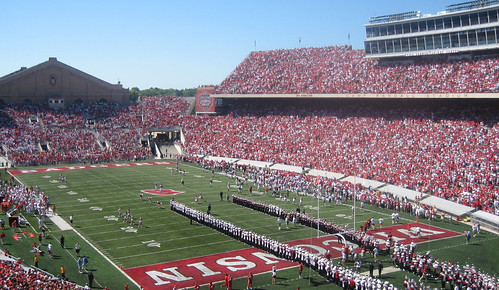
Higher taxes, decreased services, increased crime, atrocious construction—these are the issues that make city residents furious. But last December, absent these circumstances, I’ve never seen more rage in my pleasant home town of Madison, WI. Why? The Green Bay Packers were playing on the NFL Network and the local cable companies refused to carry the network. Listen to the radio or squeeze into an over-packed neighborhood bar — this was a decision Madisonians didn’t want to have to make.

This is a scenario that could play out again in Midwest sports towns, with the launch of the Big Ten Network (BTN) in August. BTN will air 35+ football games, 105+ Men’s basketball games, and 55+ Women’s basketball games a year, in addition to other sports and academic programming. The network currently has national agreements in place with DirecTV and AT&T but many cable operators are still holding-out. This includes Comcast, which responded to BTN sharply:

Indiana basketball fans don’t want to watch Iowa volleyball, but the Big Ten wants everyone to pay for their new network.

Now, BTN is turning to the grassroots to get Comcast and other providers to pay-up (link):

To get the Big Ten Network, Penn State fans should visit www.BigTenNetwork.com and enter your zip code, which will then provide a link to the cable providers in your area, as well as DirecTV and Dish Network, to make a request for them to carry the Big Ten Network.

Back to Madison, WI: cable-subscribing Badger fans are set to be in-the-dark when it comes to the BTN. And, while a lot of reader are outraged at Charter (the dominant local provider), one man is equally ticked-off at the Big Ten:

Commissioner Jim Delany needs to get real about charging Wisconsin fans millions of dollars to watch his new Big Ten Network — the second most expensive national cable channel in the country — which will air what sports columnists are now calling "fifth tier" sporting events such as nonconference tune-up football games and university swim meets.

In order to salvage the BTN into a profit-making venture, Delany says that he will try to migrate to his network many games from the ABC and ESPN networks, thus asking consumers to pay premium fees for many of the games they used to be able to see for free.

But moving the games to the expensive new channel could reduce revenues to our schools and dramatically hurt recruiting efforts. Many high school stars who don’t live in Big Ten states could be effectively shut out of viewing Big Ten games.

To be selfish: as a DC resident with the prospect of getting more Big Ten games out-of-market, I’ll be the first to say: I want my MTV Big Ten Network.


The New Television Situation in Germany

Monday, July 16th, 2007

We read this news clip couple of weeks ago how the German Federal Cartel Office (offically Bundeskartellamt) has again contradicted itself whether a "positive signal" for the planned entavio platform was ever given. The proposition to convert TV viewers to a digital platform in Germany has be mired in regulatory proceedings for a while.


Now it seems they’re ready to launch in September with Premiere, via press release (in German and French, too):

Pay-TV broadcaster Premiere has signed an agreement to use SES ASTRA’s digital satellite platform entavio in Germany. Starting on September 1, 2007, new Premiere customers will be offered the Premiere programmes also via entavio. With this agreement, entavio wins a first important pay-TV client for its technical services. entavio-enabled receivers will be widely available in the market.

The new agreement also improves SES ASTRA`s ability to offer all broadcasters access to more than 2.5 million Premiere and Premiere-enabled satellite receivers in German TV households. SES ASTRA will continue to offer this access to other programme operators on neutral and transparent terms. SES ASTRA thereby further increases the attractiveness of its service portfolio to broadcasters.

I believe entavio will gradually replace Premiere set-top boxes over time. Broadband TV News tells us we can expect additional pay-TV companies to come aboard:

The new thematic bouquet from German pay TV operator Premiere is taking shape. The platform, which will use the entavio encryption facilities of SES ASTRA, is close to signing deals with both the RTL Group and ProSiebenSat1 to carry their new thematic channels.

The two contracts would bring RTL Living, RTL Crime, Passion, SAT1 Comedy and kabel eins classics into the fold. Earlier this year a deal was signed with Turner Broadcasting to carry the German language versions of Cartoon Network, TCM and Boomerang.

The total number of channels on the September 1st launch date is going to be twenty. Also planned are a kids channels and thematic channels about literature, music (concerts) and adult entertainment.

Nice video introduction, in German:

See you!


Who’ll Own Dow Jones?

Tuesday, July 10th, 2007

Talk about the rapidly-shifting media landscape! For the last several days, the press has been abuzz with conflicting reports about the fate of Dow Jones and its true content-producing prize, the Wall Street Journal.

Interestingly, a major satcom player has stepped into the scene of this high-stakes business drama.

A few days ago London’s Business Online claimed an exclusive scoop, handing the prize to Rupert Murdoch:

 Rupert Murdoch has succeeded with his $5 billion bid for Dow Jones, owners of the Wall Street Journal, according to sources acting for the Dow Jones board. Negotiations on price and matters of principle have been completed, though some details remain to be resolved. None is regarded by either side as a deal-breaker.

The Dow board is confident that the terms of the deal will be accepted  by the Bancroft family, which controls a majority of voting shares in Dow Jones, over the next few working days. A formal announcement is expected next week.

On Friday afternoon London time, Dow Jones, reacting to the first posting of this story, issued a statement saying that it was "incorrect". When The Business contacted Dow’s corporate affairs, however, it refused to elaborate on the record.

While it’s only Tuesday, and news confirming the scoop could come at any moment, Forbes reported yesterday that Dow Jones may be holding out for a White Knight

Dow Jones, in talks to be acquired by News Corp., is holding onto hopes that it can avoid Rupert Murdoch’s grasp. The Wall Street Journal publisher was to meet Monday with a supermarket baron who has been looking to buy a major newspaper.

Dow Jones (nyse: DJ news people ) board members were scheduled to sit down with billionaire Ron Burkle. Last month, the Dow Jones union approached Burkle about a possible bid. The union, which represents over 2,000 employees, has opposed a $5 billion, $60-per-share offer from News Corp. (nyse: NWS news people ) saying that Murdoch could meddle with the media company’s editorial products and hurt its journalistic integrity.

But perhaps the White Knight will come from the stars or — in an ironic twist — from a consortium that includes a Web 2.0 guru who got famously rich from (you guessed it) Rubert Murdoch himself:

EchoStar Communications is part of an investor group, led by MySpace cofounder Brad Greenspan, which is looking to buy part of Dow Jones, The Wall Street Journal reported Monday.

Greenspan brought together of group of investors that are looking to purchase part of Dow Jones at $60 per share and to invest another $250 million, offering an alternative to Rupert Murdoch’s $5 billion offer for the financial-news company.

Greenspan’s group “would include the participation” of EchoStar, according to The Journal. EchoStar declined to comment to the paper.

Looking to invest in Dow Jones would be the latest in a series of unusual investment moves on the part of EchoStar, the nation’s second-largest direct-broadcast satellite provider. Earlier this year, Charlie Ergen’s company reportedly made a failed $2.13 billion bid for ION Media Networks, which owns 60 TV stations and runs a broadcast network. ION ultimately accepted a tender offer from NBC Universal and Citadel Investment Group.

And just last month, EchoStar teamed up with its satellite rival, DirecTV, to make a bid for Intelsat, the world’s biggest provider of fixed-satellite services. But BC Partners won in that auction, acquiring a majority stake in Intelsat for $5 billion.

Now, for those who haven’t been closely following the plot: NewsCorp bought MySpace, making Brad Greenspan a rich man. EchoStar chief  executive Charlie Ergen and Murdoch were previously locked in a years-long battle for No. 1 satellite-TV operator DirecTV, which Murdoch’s  News Corp. eventually acquired. Now EchoStar and Greenspan appear to be going head to head with Murdoch in a bid to grab one of global media’s premier content properties.

What’s at stake in this ongoing competition between Ergen and Murdoch to build their respective satellite and content empires? News Corp. wants to launch Fox Business Channel, so having Dow Jones would give them a competitive advantage over CNBC. Considering how quickly Fox News became competitive with CNN, or how quickly MySpace added value to NewsCorp’s media portfolio, it’s not an overstatement to say that the final results of this bidding war will reverbate for years to come.

And so the convergence continues….

Indian DTH Market About to Grow

Wednesday, July 4th, 2007

Via TechWhack:

Airtel and Reliance to offer internet through DTH

Bharti Airtel and Reliance Communications are two companies which are all set to enter the Indian Direct to Home market by launching their services.

They would take on the existing players in the segment including Zee Dish TV and Tata Sky DTH.

However, one interested aspect of their upcoming services is that both Reliance and Airtel are planning to offer satellite-based broadband internet services along with regular DTH services.

Bharti Airtel president, broadband and telephone services, Atul Bindal spoke about their plans: “Satellite internet is a North American model. There are a lot of areas where Bharti would possibly never lay copper cable as it does not make economic sense. In these areas, Bharti will look at a offering broadband through Wi-Max or through DTH.”

Reliance in addition to internet services is also considering offering other services like video on demand to attract more customers to their upcoming BlueMagic service.


And now this bit of promising news from Satellite Finance (subscription):

The Indian government is considering increasing the foreign investment cap in domestic DTH companies from 49% to 74%.

At present the foreign direct investment (FDI) component of any international investment is only 20%. The change in law would bring DTH on a par with cable companies where foreign companies are allowed to own up to 74%, FDI or otherwise.

FDI ownership in a DTH company would, however, remain contingent on a composite shareholding. The move will encourage foreign investment into the sector, with the burgeoning number of cash-starved DTH operators looking to fund their expanding services in a market rife with demand.

Currently, TataSky has 20% FDI, as does Sun Direct TV, while Dish TV has received approval to invite foreign investors to invest in it. The current players in the DTH market are TataSky, Doordarshan and Dish TV with Sun Direct TV, Bharti Airtel and Reliance Communications to roll-out their own services within the next few months.

The government is undertaking a review of foreign investment across all industries, including aviation, media and telecoms. The law change would be of particular interest to Bharti Airtel, which had to reduce its holding in Bharti Telemedia recently due to the existing FDI rules.

Trees

Thursday, June 28th, 2007

Those pesky trees. Let’s say you are finally willing to make the satellite leap, when your installer gives you the bad news: the trees are in the way. Or even worse, let’s say you install a dish, only to have it blocked a year later as your tree-line skyrockets.

It’s a big problem and there isn’t a clear answer. Let’s start by addressing a few common comments on this subject’s many forums (here, here, and here).

I installed my dish in February, it worked fine in my wooded lot, but now I’ve completely lost my signal.

The problem could be, believe it or not, leaves. One woman in Illinois experienced this: "“As the trees started getting leaves on them, we’d get those little squares [on the TV screen]. Then it just kept telling us it’s acquiring a signal.” The installer apparently received a strong signal with the trees obstructing and assured the couple there wouldn’t be a problem. He didn’t consider the leaves come Spring.

My neighbor’s dish is blocked by branches, but his signal is perfect. Why me?

While the provider may have something to do with this, it could be simply a result of geometry. Most cheap, compact dishes are actually offset, so the line perpendicular to the dish’s face is not the actual direction of the signal. See the attached diagram (hat-tip to Aris):

My south-facing roof is completely blocked by trees. What do I do?

Your dish does not necessarily need to face south. Check with your provider and a professional installer. Also, consider a ground placement if there is enough open-space.

Before placing a dish, spend a considerable amount of time surveying your property, ideally with a satellite professional. And do not underestimate the growth of trees. It would be wise to identify your trees and research their maximum height and growth-rates. A Princeton American Elm, for example, can grow three to six feet per year during early development (AmericanElm.com). You can always trim your trees but this could be a costly affair—and don’t count on your local government to trim road-side trees to improve your tv reception.

But, as one reader points out, don’t just resign and let the trees win. Be creative.

So, if you do live in a place that is surrounded with trees and blocking the southern sky, don’t give up because there’s always something that can work out. I honestly didn’t think we stood a chance. But you can make it happen…so don’t give up.

TV Chip for iPhone

Wednesday, June 27th, 2007

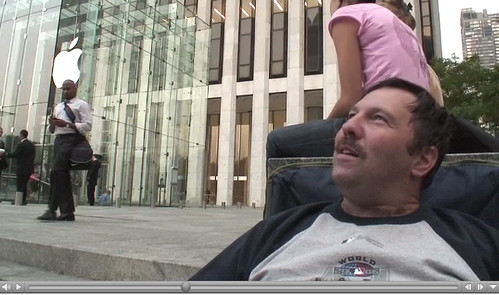
Yes, the Apple iPhone goes on sale Friday. Mr. Packer from Long Island was first in line at the Apple Store in New York. He started the queue at 5:00 a.m. on Monday. Read the "First in Line" blog.

Watch his interview here.  For such an effort, he deserves a digg.

I still think it will be able to receive live TV signals from towers and/or satellites. We blogged about Apple’s trademark filing during  CES 2006. Now consider this new chipset from Samsung, via EETimes:

Samsung Electronics Co., Ltd., has started sampling a multi-standard channel decoder and multi-band radio frequency tuner chipset made using its 65-nm process that it says supports almost all mobile TV standards including DVB-H/T, DAB-IP, ISDB-T, and terrestrial DMB.

Volume production of the part is scheduled for the fourth quarter of 2007.

The chipset is being offered either as two standalone ICs or as a system-in-chip package (SiP).

"Although a new market, we see high growth potential in mobile TV applications," said Yiwan Wong, vice president, Marketing Team, System LSI Division, Semiconductor Business, Samsung Electronics.

Wong added the part will initially be targeted at the European and Asian markets.

Samsung says the multi-band RF tuner, which receives the analog broadcast signal, has a simplified circuit structure by applying a low IF to compliment the conventional zero IF. It is also a general purpose tuner that supports UHF, VHF and L-band commonly used in Europe and the U.S.

The company says the chipset requires no external low noise amplifier (LNA) and additional memory chips, significantly reducing the bill-of-materials (BOM) cost of the total system. The chip set supports Link Layer processing to output fully error-corrected IP datagrams or MPEG2 transport streams.


The iPhone introduction is only the beginning of the new mobile revolution. Keep up with the news if you can.

And now, the official reviews…

David Pogue of The New York Times:


Walt Mossberg of The Wall Street Journal:


Jimmy Neutron Drives a Chrysler

Wednesday, June 27th, 2007


Chrysler’s exclusive Sirius Backseat TV deal just got a little more interesting. As part of a wider sponsorship deal with Nickelodeon, Jimmy Neutron will be promoting the Town & Country’s unique features: MyGig entertainment system, Swivel ‘n Go seating configuration, and Sirius Backseat TV. The details, via MediaPost’s Marketing Daily:

Ads will star Jimmy Neutron, who will explore the vehicle to spotlight features like Swivel-N-Go seating, the latest innovation from the company.

The company says he will also appear in online ads on Chrysler.com. Costumed Jimmy Neutron characters will grace Chrysler’s booth this year and next at auto shows, mobile tours, and in-theater ads where Chrysler products are featured.

The deal also includes a grassroots effort.

Chrysler will be exclusive automotive sponsor of Nickelodeon’s nationwide 20-city road show called "Slime Across America," launching next month.

Chrysler will have a Town & Country display showcasing the SIRIUS Backseat TV and on-site photo opportunities with a Jimmy Neutron costumed character, among other things.

Chrysler will also be featured in billboards on any of Nickelodeon’s local cable affiliate spots geared around the tour.

Chrysler will also have a Town & Country and Chrysler product specialist on site at Nickelodeon Family Suites by Holiday Inn in Orlando, Fla., from November through January 2008, where Chrysler’s custom spots will air on the hotel’s in-house TV network. Nick Hotel branding will be featured on Chrysler.com during the promotional window.


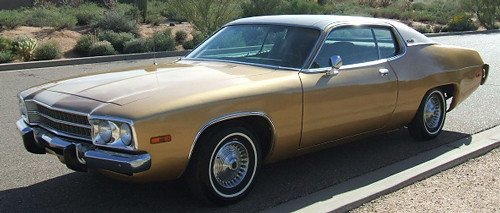
Too bad the Plymouth brand was killed a few years ago, otherwise he’d be driving a Satellite (you can still buy an old one on ebay).


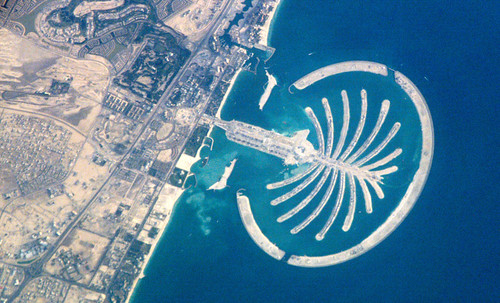
  The folks at Viacom have been pretty busy lately with licensing, especially at last week’s Licensing International show in New York. That theme park deal in Dubai ought to be interesting:


A unit of Viacom Inc. signed a deal with Dubai-based Ruwaad Holdings to create a theme park in the United Arab Emirates, featuring rides and attractions based on the Paramount Pictures film library, which includes “Titanic,” “Forrest Gump” and “The Godfather.”

The park is part of a larger $2.5 billion destination complex that includes boutique hotels and resorts, retail shopping and residential properties. An opening date has not been disclosed.

The deal with Viacom’s Paramount Licensing Inc. division marks the second time Viacom teamed up with a Dubai firm to create a park in the UAE. The company’s Nickelodeon unit signed separate agreements with the Al Ahli Group to license its characters for a $1 billion theme park. Marvel Entertainment Inc. signed a similar deal with Al Ahli.

Nickelodeon will help create rides and attractions based on its children’s cartoon characters, including SpongeBob Square Pants, while Marvel plans to lend its comic book hero’s like Spider-Man, The Incredible Hulk and the Fantastic Four.

Earlier this month, Nickelodeon signed an agreement with Marriott International Inc. to develop a series of upscale resort hotels and theme parks, with the first planned for San Diego in 2010. The companies plan to build up to 20 resorts by 2020 around the world.

Dubai is one of the world’s fastest growing tourism destinations, and the Al Ahli Group theme park is part of a plan to more than double the number of annual visitors to 15 million by 2011. Last year, six million people visited Dubai.


  But back to the TV service, which will include Disney Channel, Cartoon Network and Nickelodeon as part of the package. It will use hardward developed by STMicroelectronics:


SIRIUS Backseat TV, which offers consumers three channels of family TV programming, can be received via an in-vehicle satellite video receiver and two small roof-mounted antennas. The SIRIUS Backseat TV digital audio and video signal is broadcast over the same frequency spectrum allocation as SIRIUS radio.

The core of the in-vehicle satellite video receiver, which is manufactured by Delphi for SIRIUS, is based on three ST chips: the STA210 RF tuner IC; the STA240 channel, service and source decoder IC; and the STA264 advanced hierarchical demodulator chip, which extracts the video stream and performs error correction on the received signal.


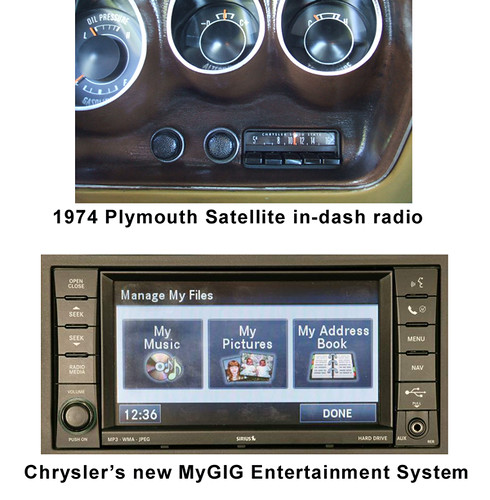
Those Plymouth Satellites came with an AM radio. That’s it. Today, Chrysler’s MyGig system is something we’d expect in a new car:


The system goes a step beyond iPods and other entertainment devices by putting a 20-gigabyte hard drive in the dashboard.

MyGIG allows drivers to download up to 1,600 songs. Users also can put up to eight photos and an address book into the system. Navigation maps with a three-dimensional appearance also are stored on the hard drive. MyGIG incorporates real-time traffic information from Sirius Satellite Radio.


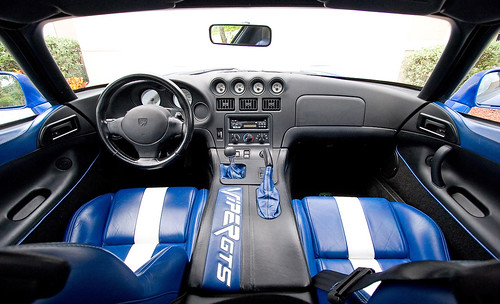
Sirius Backseat TV will not be available as an option in a Dodge Viper, obviously.


Hey, Jimmy Neutron’s been seen on a Campbell Soup can, but let’s not compare him to Andy Warhol.


Satcom @ CommunicAsia

Friday, June 22nd, 2007

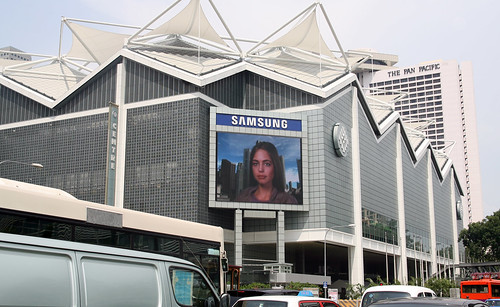
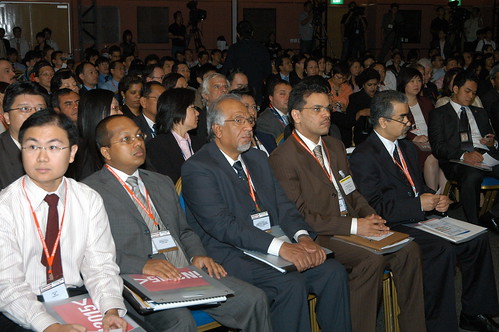
The CommunicAsia 2007 trade show just wrapped up in Singapore, which has been billed as the largest such event ever held in South-East Asia.

There was no shortage of press hype around this show. From Dubai Internet City to Nokia Siemens Networks, Huawei, to Yahoo! and Samsung. We were especially interested in those in the satellite business — and there were nearly 100 of those.


Of the more than 67,000 visitors to this show, we saw one satcom CEO on CNBC Asia this week:


Liberty and EchoStar to Buy Intelsat?

Thursday, June 14th, 2007

Is it roundup time on the satcom ranch? Might be, partner. Time to drive these little doggies to HDTV city.

Here’s a market-shaker via today’s Wall Street Journal (subscription):

Liberty, EchoStar Plot Intelsat Bid
   
Joint Offer Would Set Up Unusual Pairing of Rivals Looking to Reduce Costs
   
By DENNIS K. BERMAN, ANDY PASZTOR, and DANA CIMILLUCA
June 14, 2007; Page A3
   
Liberty Media Corp. and EchoStar Communications Corp. are preparing a surprising joint offer for satellite-communications provider Intelsat Ltd., which is accepting final bids for its auction today, according to people familiar with the matter.
   
The pairing represents a bold cooperation between satellite-TV broadcaster EchoStar and media holding company Liberty, which is slated to take control of competing satellite-broadcaster DirecTV Group Inc. in the coming months. The two firms still could decide against making a formal bid.
   
Intelsat is expected to draw bids of $4.5 billion to more than $5.5 billion, according to people familiar with the auction. The company already supports about $11.5 billion in debt, put on the company after a series of mergers and one-time dividends paid to its group of four private-equity owners.
   
If it succeeds, the joint bid would create a highly unusual partnership between two strong-willed rivals who run satellite-to-home broadcast systems that currently compete with each other. But the two have been exploring ways to work with one another, according to people familiar with their discussions. Their main goal is to reduce operating costs, these people say, and a substantial amount could be cut from both firms with an Intelsat purchase.
   
The satellite-broadcast segment is different from the satellite-services business, where Intelsat is the industry leader. Intelsat provides wholesale capacity over 51 satellites, and its best customers are cable-television providers. The businesses rely on separate fleets, ground facilities and capital-investment schedules.
   
But there are similarities between the designs and technical details of the satellites used for both purposes. Last year, EchoStar Chief Executive Charles Ergen surprised many on Wall Street by projecting an investment of more than $1.6 billion to dramatically expand EchoStar’s satellite fleet, with some of the proposed satellites slated to lease wholesale capacity.
   
Federal regulators are bound to carefully scrutinize any such partnership, partly because the cable industry traditionally has considered satellite broadcasters as archrivals when it comes to attracting subscribers. The bid also could pave the way for closer ties between DirecTV and EchoStar, or possibly even lead to a merger proposal that consumer groups and other critics have long asserted would hurt consumers.
   
People familiar with the process said Intelsat’s current private-equity owners believe that because Intelsat is in a different business than EchoStar and DirecTV, the joint bid doesn’t pose antitrust hurdles. Under this argument, cable operators would retain existing long-term contracts for satellite capacity, or they could switch to fiber lines as an alternative.
   
Antitrust questions are likely to come up in the course of the auction, which could conclude as early as this weekend. Private-equity firm Blackstone Group, which prompted the auction, isn’t expected to bid, according to two people close to the process. Providence Equity Partners, another private-equity firm, is expected to participate, as well might a group of other players such as Carlyle Group and Australia’s Macquarie Bank Ltd., according to people familiar with the auction.
   
But the most intriguing combination is clearly the Liberty-EchoStar group. Over the years, Mr. Ergen has repeatedly broached the idea of forming a limited joint venture between his Dish Network and rival DirecTV. In the past few months, Liberty Chairman John Malone and Mr. Ergen have met several times to discuss ways to develop broader cooperation, according to people familiar with the discussions, including gaining access to additional satellites already in operation.
   
EchoStar, Liberty and Intelsat declined to comment.