Archive for the ‘NASA’ Category

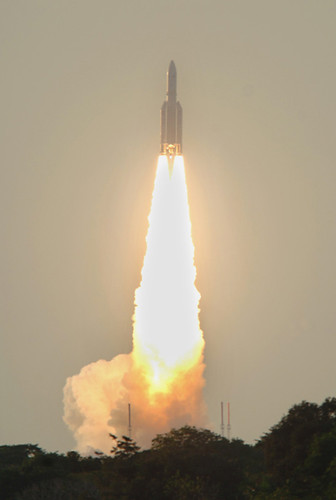
Nice Launch: Ariane 5 ECA

Monday, October 16th, 2006

Mission réussie pour Ariane 5 ECA

Dans la nuit du vendredi 13 au samedi 14 octobre 2006, Arianespace a mis en orbite de transfert géostationnaire le satellite DIRECTV 9S pour l’opérateur américain DIRECTV et le satellite OPTUS D1 pour l’opérateur australien OPTUS. Grâce au plateau ASAP 5, le lancement emportait également le réflecteur expérimental LDREX-2 pour l’agence spatiale japonaise JAXA.

Arianespace placed two satellites into geostationary transfer orbit: DIRECTV 9S for the U.S. operator DIRECTV Inc., and OPTUS D1 for the Australian operator OPTUS. The Ariane 5 ECA launcher was also fitted with the ASAP 5 platform, allowing it to deploy the LDREX-2 experimental reflector for the Japanese space agency JAXA.

Provisional parameters at injection of the cryogenic upper stage (ESC-A) were:
Perigee: 249.4 km for a target of 249.5 km (±3)
Apogee: 35,940 km for a target of 35,946 km (±160)
Inclination: 6.98 º for a target of 7.0 degrees (±0.06º)

DIRECTV 9S was built by Space Systems/Loral in Palo Alto, California, and will be positioned at 101 degrees West. Weighing approximately 5,530 kg at liftoff, DIRECTV 9S is fitted with 52 high-power Ku-band transponders and 2 Ka-band transponders. It will provide direct TV broadcasts using digital compression technology. DIRECTV 9S will give American TV viewers a greater choice of broadcast services, while prefiguring tomorrow’s multibeam satellites for multimedia applications. Design life is about 15 years.

OPTUS D1 was integrated by American manufacturer Orbital Sciences Corporation in Dulles, Virginia, based on a Star-2 platform. OPTUS D1 will weigh about 2,300 kg at launch. Positioned at 160 degrees East, it will provide direct TV broadcasts, Internet links, voice and data services for Australia and New Zealand. Its design life is 15 years.

LDREX-2 (Large-scale Deployable Reflector Experiment 2), launched on behalf of the Japan Aerospace Exploration Agency (JAXA), is a small-sized partial model representing the large deployable antenna to be used on the ETS-8 technology satellite, which will be launched in December 2006.
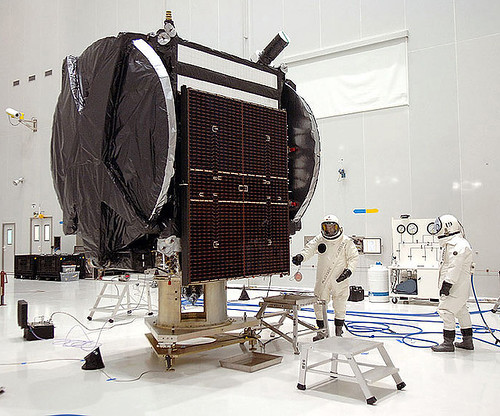
Optus Satellite Fueled for Launch in October

Monday, September 25th, 2006

Seems the next Ariane 5 launch is now scheduled for 12 October 2006.

Here’s one of the rocket’s "passengers" being fueled. Evidently, rocket science is still a dangerous business…

Rupert’s Birds For Sale?

Monday, September 18th, 2006

Here’s the source of the "turd birds" comment: CNBC’S Faber Report on Thursday, 14 September 2006. Here’s the transcript:

A controlling stake in satellite broadcast company DirecTV [Group Inc. (DTV)] is the subject of talks between News Corp. [NWS] and Liberty Media designed to allow News Corp. to buy back the $10 billion stake in the company Liberty currently controls.

The on-again, off-again talks have picked up significant momentum of late, according to people familiar with the situation. And the possibility of a tax-free exchange of News Corp.’s DirecTV stake for Liberty’s roughly $10 billion voting and non-voting stake in News Corp. is under consideration.

News Corp. is pushing the process along in hopes of resolving something prior to its Oct. 20 annual meeting at which it will hold a non-binding vote of its shareholders on whether it can extend its poison pill for two years.

News Corp. installed the pill in late 2004 after Liberty significantly increased its voting stake in the company to what is now roughly 19%. While the vote on the pill is non-binding, News Corp. would love to avoid the negative corporate governance implications if its shareholders advise against the pill, but it keeps it. Better to eliminate the threat from Liberty and its Chairman John Malone and therefore eliminate the pill.

The two sides have been talking for years, but the possibility of a deal has increased of late and both Peter Chernin, News Corp.’s president, and Greg Maffei, Liberty’s CEO, have sent positive signals about the talks to investors with whom they have been meeting at a Merrill Lynch media conference that is wrapping up today.

Liberty’s News Corp. stake, 188 million voting shares and 324 million non-voting, carries a taxable gain. Therefore, Liberty has been negotiating a swap with News Corp. Under current tax laws, a deal could be tax free if News Corp. sent Liberty an entity, 75% of which was made up of cash and 25% of an operating business. The tax-free treatment of the cash component begins declining next year to about 66% cash so Liberty may also have reason to move quickly.

Still, it is the possibility that the DirecTV stake could change hands which would have the most significance. Rupert Murdoch pursued DirecTV for years, but has lately soured somewhat on the asset, calling it a "turd bird."

He is distressed by the company’s lack of a robust broadband solution and building competition from Verizon [Communications Inc. (VZ)] and AT&T [Inc. (T)] on the video front. If he can get deals for Fox News and a potential business channel before jettisoning the stake, people familiar with his thinking tell me he would consider doing so.

An even swap of the News Corp. stake and the DirecTV stake would not be tax free and so News Corp. would need to include some sort of operating business known as an active trader that would allow it to be tax free. That is deemed as possible by people with knowledge of the talks.

Liberty officials declined comment and News Corp. officials have not returned calls. 
 

New Satellite Receiver Stores 50,000 Channels; Can Be Used Worldwide

Wednesday, September 6th, 2006

Most “satellite people” are very familiar with the Lyngsat Web site. It could very well be the world’s most complete database of accurate satellite ladder charts. Pick a satellite and you can view all the channels available for viewing. For example, the AMC-4 satellite carries a number faith-based and international channels in North America. On another site, LyngSat Address, select a country and you can find out which satellites their channels are using for broadcasting – in their home market and internationally. TV Prima Romania, for instance, is using several satellites over Europe, Asia and the Atlantic.

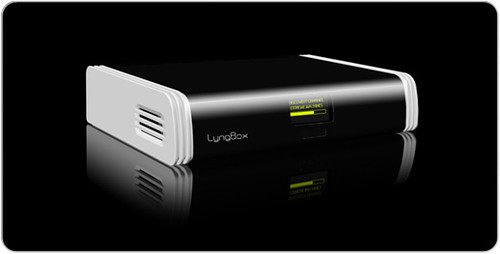
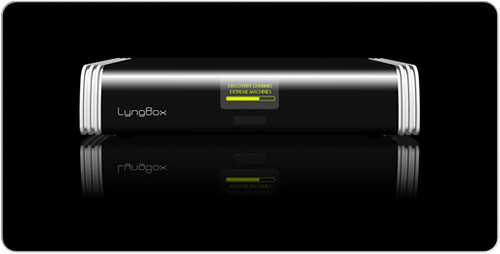
Get ready for the LyngBox.

We were tipped off by a Polish Web site in February about a new project involving LyngSat for a “super receiver” based on the DVB-S2 standard, but also capable of receiving DVB-T and decoding HDTV:

Christian Lyngemark – właściciel legendarnego serwisu satelitarnego www.lyngsat.com – zamierza wprowadzić na rynek "superodbiornik" HD combo DVB-S/DVB-T.

Projekt prowadzony jest przez firmę Lyngsat Media AB i Europejską Agencję Kosmiczną ESA. Najważniejsze cechy planowanego odbiornika to dwie głowice – satelitarna i naziemna, odbiór w nowym standardzie DVBS2, dekodowanie zarówno MPEG-2 jak i MPEG-4 oraz dysk do zgrywania programów.

Największą nowością ma być łączność przez internet z portalem www.lyngsat.com i automatyczne aktualizowanie listy programów satelitarnych.


The Swedish National Space Board found it interesting as well:

Lyngbox är ett av de företag som för första gången 2005 genomför projekt med Rymdstyrelsens stöd. Lyngbox utvecklar ett intressant koncept för att via en databas på Internet automatiskt ställa in kanalerna på satellit-TV-mottagare, oberoende av var I världen man befinner sig.

More than a little intrigued, we looked it up and found it: a European Space Agency (ESA) project, for a telecom application called “LyngBox.” They set out to build a satellite receiver last July that would be able to continuously update itself from data published on the Internet. Brilliant. The ESA and Hollycroft Associates got together with LyngSat to develop this new “super satcom box” and got into the development work last December. Could they be using some of the new chips introduced at CES? According to the Swedish patent filing (see PDF, page 26) from earlier this year, this receiver can do it all.

With the patent issued, Lyngbox is set to debut at the IBC show in Amsterdam on Friday, 8 September 2006. Along with a 160-gig drive, it has all the features you’d expect:

Features:
> Can store up to 50,000 channels
> Free access to all LyngSat Network services (LyngSat, LyngSat Guide and LyngSat Maps) with exclusivity to the LyngBox. No other receiver has access to these services
> Always corrects channel names, not relying on service names in the DVB stream
> Family user profiles and parental lock. Each user can have their own selection of channels based on countries, languages and genres which will be updated automatically
> HDTV support (720p and 1080i)
> Supports H.264/MPEG-4 AVC and MPEG-2
> Built-in tuners for both satellite TV (DVB-S/DVB-S2) and terrestrial TV (DVB-T)
> Internal slot system which makes it possible to install an additional tuner card
> 4:3 and 16:9 TV screen format support
> Teletext decoding
> Dual Common Interface slots for use with pay-TV channels
> PVR functionality with hard disk
> Possibilities to store recordings on an external DVD recorder connected with USB2
> DiSEqC 1.2 support for controlling LNB and motorised dish
> Remote control as standard and a wireless remote keyboard as accessories
> Channel selection by typing the name of the channel on the keyboard
> View images from a digital camera connected to the LyngBox

Interfaces:
> DVB-S2 input
> DVB-T input + output (pass-through)
> Expansion slot for additional tuner card
> 2 Common Interface slots
> HDMI-output.
> Component output
> Composite output
> SCART output (RGB and composite)
> S/PDIF optical output with AC-3 support
> Stereo audio (2 RCA)
> 4 USB 2.0 ports
> Ethernet connection (100BaseT)


Backyard International Teleport

Thursday, August 31st, 2006

Hats off to Doug Lung, who just published this masterfully researched piece in his weekly RF Report:

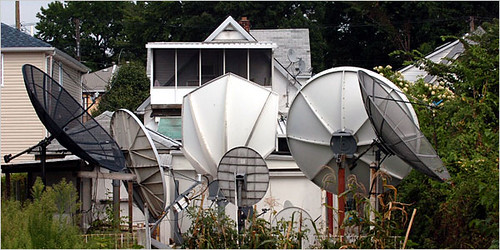
Last week the FBI raided Javed Iqbal’s Brooklyn storefront and his house in Staten Island, which was home to an FCC-licensed earth station (E040456). Iqbal was arrested for making available broadcasts from Al-Manar, a Hezbollah-controlled Arabic TV station based in Lebanon. Articles in the Washington Post and the New York Times cover the legal and political side of Javed Iqbal’s arrest but provide little information on Javed Iqbal’s HDTV Corp. satellite and uplink operation. I was intrigued by the operation of an uplink that has attracted worldwide attention from its owner’s back yard! Using information available on the FCC Web site, Lyngsat.com, Iqbal’s own Web site www.hdtvuplink.com and satellite operators’ Web sites, I was able to gain more insight into the technical operations of HDTV Corp.

According to its Web site, HDTV Corp.’s customers include several government agencies: FEMA, the FBI, the U.S. Department of State, NASA, the U.S. House of Representatives and others. Several large international companies, including Shell, Exxon Mobil, General Dynamics and Fluor are also listed as customers.

Once you’ve browsed through the HDTV Corp. Web site take a look at the picture at the top of the article, "New York Man Charged With Enabling Hezbollah Television Broadcasts". Information on Iqbal’s uplink is available using the Quick Search feature on the FCC International Bureau’s IBFS Web page. The only license I could find using his company name — HDTV.LTD is what shows up in the FCC database — and his FRN 0011344298 was E040456, granted in January 2005. This authorizes a Ku-band uplink at 242 Van Ness Avenuein Staten Island, NY. The application for the license specifies "ALSAT" as the points of communication (these are all the U.S. licensed satellites, plus those on the FCC’s permitted list) and shows the antenna as a Radiation Systems 240AT 2.4-meter dish. Maximum input power is listed as 290 watts. Can you find that satellite dish in the photo?

News reports indicated that Iqbal was arrested because he was supporting terrorist activities. At least one report notes that since the U.S. has determined Hezbollah is a terrorist organization, doing business with it is a clear violation of U.S. law. How did Iqbal bring Hezbollah programming into the U.S.? It is unlikely he paid Hezbollah for the programming. According to the premier source of satellite information, LyngSat.com, Al-Manar TV, the Hezbollah channel Iqbal was arrested for distributing, is available on at least three satellites, Arabsat 2B, Badr 3, and Nilesat 102 at no charge. My research showed none of these satellites have a footprint that reaches the U.S. However, www.hdtvuplink.com says HDTV Corp. has teleports in the Pakistan and the United Kingdom, where the Al-Manar satellites can be received.

The LyngSat listing for the Amazonas satellite at 61 degrees WL shows HDTV Corp. as having a portion of transponder 1(V), at 11,972 MHz. The LyngSat listing for HDTV Teleport shows Iqbal’s company had access to Telstar 12, Hispasat 1C, as well as Amazonas. Any of these could be used to relay signals from Pakistan or the United Kingdom to the United States.

Did Javed Iqbal simply provide a way for his customers in the United States to see Middle Eastern satellite broadcasts, or was he supporting or promoting terrorism through his relays? The Times article considers this. If the customer list is accurate, it appears that the U.S. government used his satellite services. It will be interesting to see how this case develops.

An article in today’s New York Sun, titled "D.C. Lobbyist is Key in Stopping Hezbollah Broadcasts," indicates that a Coalition Against Terrorist Media lobbyist may have been responsible for shutting down a satellite service that the U.S. State Department may have been using.

Could broadcasters be arrested for showing video from a terrorist organization? To follow this story, use this Google News search. While none of the articles have the technical detail I’ve provided here, they provide an interesting look at the legal issues in this case from several different perspectives, including possible First Amendment problems with the case.


DIY Friday: Install Your Own Dish

Friday, August 25th, 2006

I gotta admit, there are times when I’m just not feeling the DIY vibe. One of them is when I have a satellite dish that needs installing. The last couple of times I’ve moved, I’ve had someone some an install the dish for me, but apparently there are some folks out there who just want to do it themselves. And I salute them. After all, better them than me.

They may just be better at it than I am. Or more creative. I’m just a "bolt-it-to-the-side-of-the-house-and-call-it-a-day" kind of guy. Who knew there’s a better way to do it? Well, some people do.

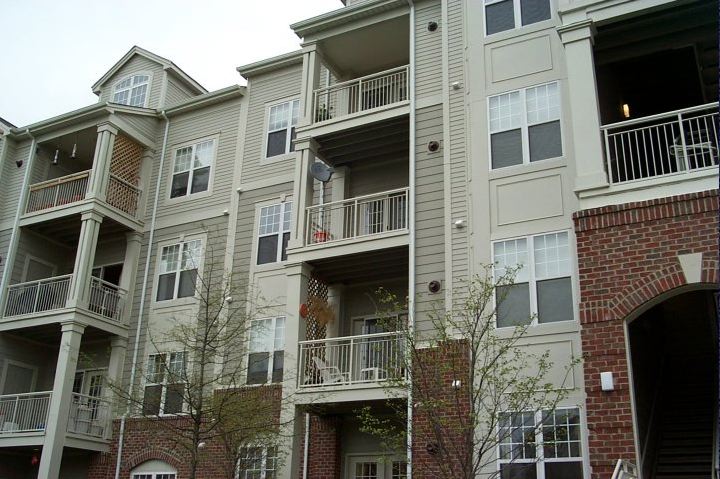
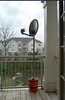
For example, can you spot the dish in this picture?

Spot Dish

The author goes into some detail on just how an apartment dweller can achieve an aesthetically pleasing satellite installation.

Spot Dish 2

So as we all know, to use satellite TV, I needed to install a dish. I elected for the Dish500 dish, which is slightly larger than your normal 18-inch DBS dish, but it can also lock on to 2 satellites at once, giving me a wider channel range. The real difficulty was going to be where to install the dish, and would the apartment complex let me. The second problem was solved by the FCC last year. They issued a resolution that says that no one, not an HOA, locality, or my landlord, can prevent me from installing a dish of less than 36 inches in diameter somewhere that I have exclusive access to (like my balcony). However, in the interest of keeping up good relations, I told my landlord before I started the install. They wanted me to sign a lease addendum, which I did because it didn’t have any significant language in it. Having done that, I proceeded to the question of how to install the dish securely on the balcony.

I elected to go with the concrete bucket install described by a couple people on some of the DBS message boards. Basically, I mounted a piece of metal conduit in a bucket full of concrete, mounted the dish on top of the conduit, and bungeed the whole assembly to the rails of my balcony. It provides a very stable installation. I haven’t had any problems with the dish so far, and we’ve gotten some really high winds for the area since I got it set up.

It actually looks like quite an effective setup, and easier than drilling holes in an external wall.

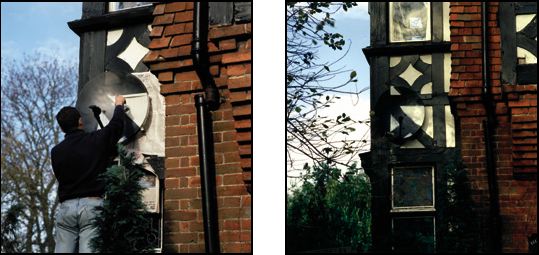
There’s some pretty good advice for householders too, such as painting it the same color(s) as your house, in order to camouflage it.

Spot Dish 3

There are also some other suggestions, like hiding it under an artificial rock or in the attic, in front a conveniently-placed window (which would be great in the winter, because you don’t have to go out and brush the snow off the dish to get your picture back.)

Me? I’ll stick to calling the guys with the tools, to come bolt it to the wall. Unless someone else has another idea.

Satellite-based Bar Game Provider Offers New Game

Thursday, August 24th, 2006

Even the best rocket scientists need a beer from time to time, so that’s why we were heartened to find out one of our favorite bar game vendor and satellite-based, interactive game provider, Buzztime, has announced a new product, Crazy Golf.

For those that haven’t gotten to use Buzztime products in the past, the company’s most popular games (by far) are trivia-based, spicing up the standard pub quiz by automating the process and pitting you against fellow booze-hounds around the country and the world via satellite. Those that are really into the trivia can form a team, keep the name, and log on to the company’s player’s forum and trash talk that team in Tucson that kept on demanding Lord of the Rings questions to their heart’s content.

Pique your interest? Use Buzztime’s website to find a bar near you that has the service. For those of you who are already Buzztime junkies, you might want to consider subscribing via Dish Network, it only costs $3.99/month and it’ll definitely save you on your bar tab. As for your dating opportunities? Well, it’s probably not going to help — but that’s why you took up bar trivia, right?

The British Telecommunications Market 2006

Friday, August 18th, 2006

Doug Lung points to more evidence of the transformation of the media landscape. OfCom, the independent regulator and competition authority for the UK communications industries, has released The Telecommunications Market 2006 report. Lung summarizes:

The 293-page report contains some interesting findings about trends in the communications industry, including TV broadcasting, and consumer usage of, and attitudes to, various communications services. One conclusion reached was that a new "networked generation" is turning away from TV, radio and newspapers in favor of online services, downloadable content such as Podcasts and participation in online communities.

In a result that’s sure to concern traditional TV broadcasters, the report found that on average 16- to 24-year-olds in the United Kingdom spend one hour less per day watching television than the average television viewer. Their radio listening is lower too, by an average of 15 minutes per day compared to the wider population. One bright spot, however, is that among all groups, TV viewing increased slightly, by 11 minutes per week.

Digital television, consisting of both satellite and terrestrial Freeview channels, is growing in popularity. Freeview households spend more time watching digital-only channels than any of the five main public broadcasting channels, but the public service broadcasters’ own digital-only channels are gaining audience, with total viewing increasing nearly 6 percent between 2001 and 2005. Free TV remains popular and Freeview was the main driver of multichannel TV growth, adding 2.0 million homes in the 12 months ending March 2006. The report said there are now 7.1 million homes in the U.K. in which the main set receives digital terrestrial TV.

While the TV broadcasting model in the U.K. is quite different from that in the U.S., it is interesting to see that subscription revenues in 2005 were up by 8.5 percent to 3.9 billion pounds ($7.3 billon) for all pay TV services, exceeding commercial television advertising revenue in 2005 by almost 10 percent. Overall TV industry revenues increased 4 percent in 2005 compared with 2004.

A PDF of the key points of the report can be seen here.
 

Satellite Tops Cable in Customer Satisfaction

Thursday, August 17th, 2006

According to survey results recently released by J.D. Power and Associates, you’re more likely to be satisfied with satellite than cable television. As Multichanel News points out, DirecTV and EchoStar Communications did extreamly well in customer satisfaction throughout the country, while the nation’s largest cable provider, Comcast, ranked below average in every region in the United States. Steve Donehue reports:

"J.D. ranked DirecTV as the best pay TV company overall, with the direct-broadcast satellite provider receiving the top rankings in overall satisfaction; performance and reliability; cost of service; billing; image; offerings and promotions; and customer service."

But it wasn’t all bad news for cable companies. According to the same J.D. survey, digital cable penetration rose by 11% since last year, with 41% of all cable using households using the digital option. Moreover, while the average satellite bill has risen $3 over the past year — to nearly $61 — the average cable bill has dropped a $1 since 2005 to $58 a month, a change most likely due to the bundling of television, voice, and internet services modern cable companies are able to provide.

Creating “Test Bed” Spectrum

Thursday, August 10th, 2006

Yesterday the Federal Communications Commission (FCC) began its most recent auction of radio spectrum, a move that could bring over $15 billionFCCLogo into Federal coffers and, potentially, major advancements to tomorrow’s communications devices, including new high-speed internet offerings from satellite television providers, more vivid video on mobile phones, better cell coverage, and rapid advances in IPTV.

But while opening up more of the nation’s airwaves might bring greater access to better gadgets, it also could limit spectrum space for engineers and scientists looking to experiment with and develop new technologies.

(Currently, only a tiny fraction of the radio frequency spectrum is unlicensed (e.g. the 2.4 gighertz band used for cordless phones, baby monitors, and Wi-Fi).)

To leave space for future experimentation, the National Association of Broadcasters (NAB) and The Association for Maximum Service Television (MSTV) are lobbying the FCC for the creation a band of frequencies specifically for testing purposes.

If approved, new "test bed" frequencies would serve as a virtual sandbox for those looking to develop devices that might otherwise endanger the frequencies of other, more established devices.