Archive for the ‘NASA’ Category

Consumer Electronics Everywhere: Updates from CES & Macworld

Wednesday, January 10th, 2007

Yesterday was a huge day (probably the biggest of 2007… just 9 days in) for the announcement and release of Consumer Electronics, as we teased yesterday, at CES and Macworld Conference & Expo.

Of course, Apple takes the cake with three of the biggest announcements of the day:

The release of Apple TV which brings iTunes Store purchased music, television shows, and movies (over 350, now including many from the Paramount vault) to the big screen via your wired or wireless network.

The introduction of the iPhone, a product which will foreseeably revolutionize the mobile phone market. WIth over 200 individual patents to its name, when its released in June, the iPhone will be the most technology advanced mobile phone on the market featuring a full blown operating system, multiple wireless connection technologies (Quad-band GSM, EDGE, 802.11b/g, & Bluetooth 2.0 w/ EDR), and a huge 3.5-inch screen that utilize new multi-touch display technology.

The announcement that the company would know be known as Apple, Inc. rather than Apple Computers, Inc. While meaningless to most techies, the name change is akin to Apple screaming, "Bring it on" to consumer electronic juggernauts such as Sony, Motorola, or Nokia, representing its transition to a consumer electronics company and a willingness to take on a new industry.
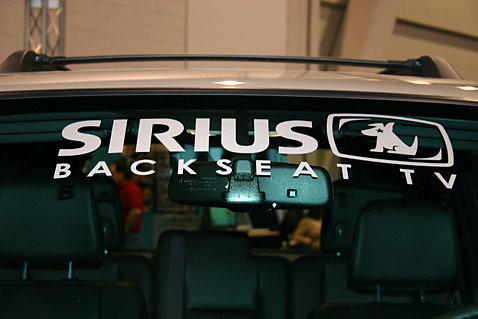
Back at CES, Satellite Radio company Sirius announced, according to Sat Radio blog Orbitcast, that Dodge will be offering Sirius Backseat Television in some 2008 models. With multiple zones, Orbitcast notes, the Dodge set-up allows the driver to listen to the raunchiest bits of Howard Stern while the kids watch Spongebob. Coolness!
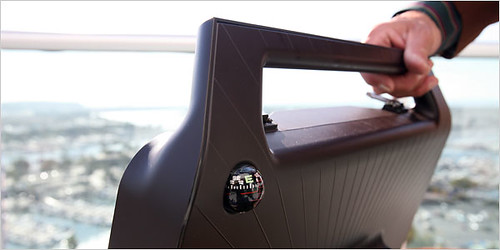
 

For those looking to watch TV themselves, The New York Times featured an article Monday about another major announcement from DirectTV, Sat-Go, which allows you to watch satellite TV anywhere. With an interesting genesis, partially invented by the man who produced CHiPS and The New Hollywood Squares, its a product that sure to be a huge hit in the right markets, even if there have been less elegant solutions in the past.

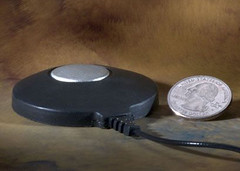
DirecTV Now Connects to Viiv Boxes

Friday, December 15th, 2006


Very interesting post on Engadget this morning:

After DirecTV’s long-awaited HR20 HD DVR finally got its rightful announcements and actually hit users’ hands, it wasn’t too long before folks were plugging and praying in hopes of getting their new toy to play nice with that HTPC beside it. While we knew the two firms had gone hand-in-hand awhile back, we finally got the thumbs-up that a new, Viiv-alicious DirecTV Plus HD DVR would be unveiled soon to interact out-of-the-box with Viiv-enabled systems, but more importantly, that a software update was coming to the plain ole HR20s to accomplish the same thing. The time has come, and users are reporting over at DBSTalk that the “0×108 software” has opened up the Ethernet port for use, and allows browsing / connections via a Viiv-certified machine, but definitely made things difficult for those not exactly keen on shelling out for a few new components. Nevertheless, there’s already been somewhat of a workaround worked out, which allows PCs with just Windows MCE installed to “see” the HR20, but not “serve up files in a way that HR20 can work with,” which we’re all but certain will change as the wheels spin in owners’ heads. Reportedly, DirecTV is establishing a dedicated website to getting folks up and running with the new connectivity options, and be sure to keep an eye on the linked thread for any “future developments” regarding non-Viiv-savvy PCs.


But do you really need a Viiv PC? This Digger doesn’t think so.

Sirius Satellite Television?

Monday, December 4th, 2006

We’ve been to the back seat to watch TV, but the antenna was a little on the big side. With a few modifications, Sirius Satellite Radio can send TV to their subscribers (probably for an extra fee). They’ve been talking about this for a while, and we heard Bell Labs was working on something for them. Some think TV in cars is dangerousSkyreport reports on CEO Mel Karmazin’s revelation at the Reuters Media Summit:

"We have three content deals that are very close to being finalized. I don’t know if they will be done by CES, but that is what we are shooting for," he said. "We will have video in the rear seat of the car up and running."

While the comments aren’t completely new – the company said in 2004 it would offer video by mid-2005, Oppenheimer’s Thomas Eagan said they are "intriguing" because Sirius could cost-effectively improve its financial and operational wellbeing with a video service.

Sirius could launch a video service with its existing satellite and repeater infrastructure without reducing its audio content, the analyst said, but consumers would need new or different handsets/in-car receivers to get the signal. Eagan said the video product would consist of three or more children’s channels (i.e. Nickelodeon, Disney and HBO Family) with a DVR downloading service sometime down the line.

"We don’t expect significant difficulties integrating a video service into OEM assembly as many of Sirius’ auto partners, such as Ford and Chrysler are already assembling SUVs with drop down LCD screens," Eagan said. "The size of the video market is clearly smaller than the audio market (and) without significant costs we expect the higher OEM conversion rate and higher ARPU would be accretive."


Watch this Reuters clip of the Karmazin interview. I found it interesting.

No Signal, No School

Monday, November 27th, 2006

While snow days might elicit cries of joy from kids here in the US, half-way around the world loss of a satellite signal might shutter the school house doors, albeit without as much elation.

The Indian Express (an online source for news from India) reported last week that many small towns and villages throughout India regularly suffer visual freezes for up to 10 minutes on live telecasts transmitted over the country’s EDUSAT education-only satellite. What’s worse is that residents of the country’s wetter northern regions occasionally lose access to the system for days and weeks at a time when rain blocks clear access to the bird.

The irony of the system’s failure, of course, is that it might be preventing those tasked with fixing its problem in the future from learning from it. While post graduate sociology students and civil service aspirants, who have been completely tuned out of the ongoing Maharashtra Public Service Commission (MPSC) exam coaching currently going on are rumored to be the one’s losing the most, Anna University, whose schools use the satellite system, educates engineers at 250 locations around the country.

If you didn’t already know about it, the EDUSAT, launched in 2004, is a path-breaking project that aims to insure access to education to everyone throughout the world’s largest democracy and is the first satellite meant exclusively for formal education, ranging from grade school to higher education. According to the Indian News article,

"It provides audio-visual lessons employing Direct To Home (DTH) quality broadcast. The satellite has multiple regional beams covering different parts of India — five Ku-band transponders with spot beams covering northern, north-eastern, eastern, southern and western regions and six C-band transponders with their footprints covering the entire country."

What Dish? That Antenna Looks Like a Turkey

Wednesday, November 22nd, 2006

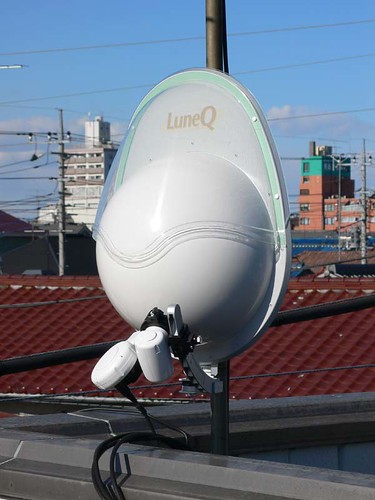
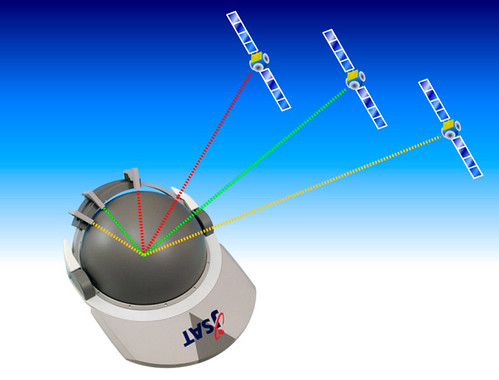
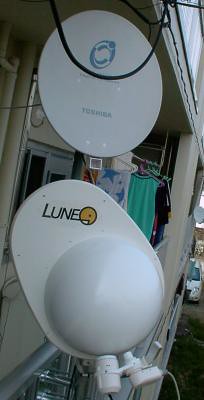
There’s a revolutionary satellite antenna being sold in Japan, based on the Luneberg Lens, capable of receiving signals from multiple satcoms. JSAT’s press release in 2001 announced this breakthrough, and a joint release with Sumitomo Electric introduced it to the marketplace in 2003. This photo journal demonstrates assembly, which looks simple enough.


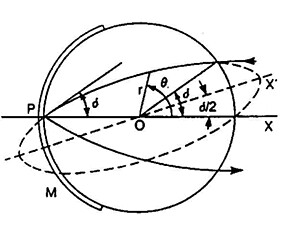
But was it really a “breakthrough?” I think it was – at least from a marketing perspective.  R. K. Luneberg proposed the principle of this lens for electromagnetic waves in 1944, where a sphere made of materials with relative dielectric constants varying in square distribution from 1 at the surface to 2 at the center becomes a dielectric lens with countless foci on its surface. A dielectric constant is a measurement of a material’s capacity to modify electromagnetic waves. This suggests a single lens antenna is capable of receiving and transmitting waves to and from multiple directions simultaneously – without moving the sphere. Brilliant!


What we have here is a high-gain, low-cost antenna that may have substantial market potential in the U.S and Europe, too.  Presently, antennae based on the Luneberg Lens have been used in mobile military applications, especially on aircraft where a low profile is required. Datron makes and sells a Luneberg Lens Array (LLA). Lun’tech of France is selling one today, and Raven in the U.K. has been talking about one for some time.


Pretty cool how this 60-year-old technology may have an impact in today’s most advanced satellite communications systems. Want to learn more? This comprehensive overview from Stevens Tech in Hoboken is very useful. And if you want to start selling them, the folks at Rozendal Associates can help you make them.


SinoSat2, Optus D1 on the Fritz

Monday, November 20th, 2006

We wrote in September about China’s efforts to improve television coverage for up to 300 million mainland households through the launch of the SinoSat2 communications satellite, which lifted on October 29th.

Now reports are coming in that SinoSat2 is failing less than a month after being launched. IOL reports:

 A Chinese communications and broadcast satellite is failing less than a month into orbit because of malfunctioning solar panels, a China-watching Hong Kong-based group said on Monday.

The SinoSat-2 satellite, launched on October 29 in the southwestern province of Sichuan, is designed to serve live television signals and digital broadband multimedia systems in China, Hong Kong, Macau and Taiwan.

But technicians discovered its main solar panel had failed to unfold as planned on November 7, disabling some antennae from receiving ground instructions, the Hong Kong-based Information Centre for Human Rights and Democracy said.

"Chinese satellite experts are doing their utmost to save it but the chance of success is slim," the group said in a faxed statement, quoting unnamed sources.

One hopes things are going better with China’s seed breeding satellite. 

SinoSat2’s failure was not the only satellite to give the satellite underwriting market "a serious setback this week," as Satellite Finance (subscription required) reports:

 Next came the problems faced by Optus D1…. After the satellite was launched in orbit tests showed that one of the antennas was not functioning properly. The insurance placement was done by ISB.
 
“Insurers were sworn to absolute secrecy on it,” said one source. “The rumour is that they’re looking at a 50% partial loss.” The satellite was insured for a total of US$130m and Optus may thus get US$65m. Whether underwriters will subsequently turn to Orbital Sciences, the satellite’s manufacturer, in an attempt to recoup some of the outlay remains to be seen.


Live HDTV from the ISS

Thursday, November 16th, 2006

This was really cool. Thank you, NASA

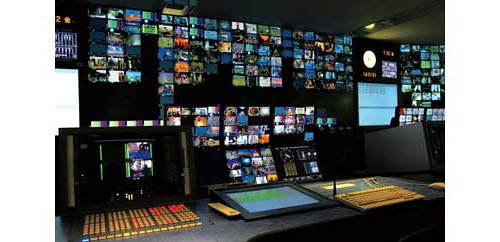
Images from the world’s first high definition television (HDTV) broadcast from space flashed across the screen yesterday in Times Square. On Nov. 15, 2006, NASA made history with the first live HDTV broadcasts from space, in cooperation with the Japan Aerospace Exploration Agency, Discovery HD Theater and Japanese broadcast network NHK.

The two HDTV broadcasts featured Expedition 14 Commander Michael Lopez-Alegria on the International Space Station, with Flight Engineer Thomas Reiter serving as camera operator aboard the 220-mile-high laboratory.

"HDTV provides up to six times the resolution of regular analog video," said Rodney Grubbs, NASA principal investigator. "On previous missions, we’ve flown HDTV cameras but had to wait until after the mission to retrieve the tapes, watch the video and share it with the science and engineering community, the media and the public. For the first time ever, this test lets us stream live HDTV from space so the public can experience what its like to be there."

Known as the Space Video Gateway, the system transmits high bandwidth digital television signals to the ground that are not only spectacular, but also valuable to scientists, engineers and managers.

NASA and the Japan Aerospace Exploration Agency, along with both NHK and Discovery, are cooperating in this effort though a Space Act Agreement originally signed in 2002.

Image credit: Discovery Channel

Arabsat Launches Today

Wednesday, November 8th, 2006
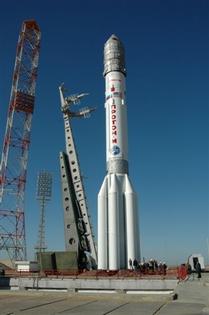
ILS is launching the BADR-4 satellite today from Baikonur at 19:40 GMT. Watch it live or tune your satellite receivers to…
In North America:
IA-6 @ 93 West
C-band, analog/NTSC
Transponder 14, 3980H
In Europe & Asia:
NSS-7 @ 338 East
Ku-band, digital/PAL
Transponder: WHL4/EUH3,Channel-1, 11,098.9H
Symbol Rate: 6.1113 Msps
FEC: 3/4
In Africa & Asia:
BADR-C (formerly Arabsat 2C) @ 26 East
Ku-band, digital/PAL
Transponder: C21, 4,120H
Symbol Rate: 27.5 Msps
FEC: 3/4

We like their blog.


BIG Airplane Lands in Cayenne

Tuesday, November 7th, 2006

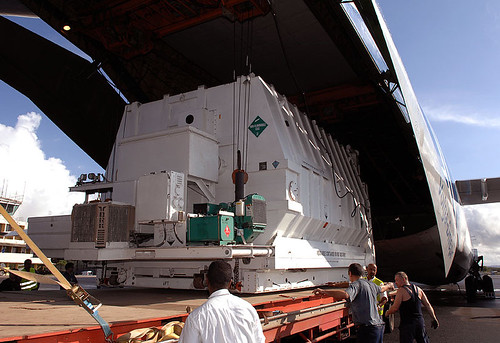
What is THAT? Is it the Big Kahuna landing for Election Day in Florida? No, that’s an Antonov 124 delivering the AMC-18 satellite at Cayenne’s Rochambeau International Airport. The satellite, scheduled for launch in December, is now being transferred to Europe’s Spaceport.

SKY Perfect Merging With JSAT

Wednesday, October 25th, 2006


The Nihon Keizai Shimbun reported that Japanese DTH service SKY Perfect is merging with satellite operator JSAT, which provides carriage for the satellite TV service. The news report prompted this reply from SKY Perfect:

SKY Perfect is currently looking into strengthening its relationship with and possible merger with JSAT, but nothing definite, including the stock transfer ratio, has been decided on at this stage. SKY Perfect will immediately disclose if anything on this matter is decided.

But Reuters goes a little deeper:

Japanese satellite broadcaster Sky Perfect Communications Inc. will acquire satellite communications company JSAT Corp. and create a holding company next spring, the Nihon Keizai business daily reported in its evening edition on Wednesday.

The paper said Sky Perfect will become a holding company, while creating a new entity for its operations. The holding company will bring the new firm and JSAT under its umbrella.

Each JSAT share will likely be swapped for about 4 shares in the holding company, the paper said.

Based on Sky Perfect’s closing share price on Wednesday, the deal would value JSAT at around 93.7 billion yen ($786 million), 7.5 percent below actual market capitalisation.

Shares in Sky Perfect closed down 1.9 percent at 65,700 yen, and JSAT ended down 2.4 percent at 284,000 yen. They underperformed the benchmark Nikkei average’s 0.48 percent fall.

Sky Perfect currently does not own JSAT shares. JSAT, which transmits programming for Sky Perfect’s Sky PerfecTV, holds a 6.9 percent stake in Sky Perfect.

Interesting to note SKY Perfect, the leading satellite TV service in Japan, started up its own IPTV service, OptiCast. For about $25 (3,000 yen), you get 68 channels.  Such a deal.