Archive for the ‘Satellites’ Category

Lockheed Pulls Out of Russian J.V.

Friday, September 8th, 2006

As reported in this morning’s Kommersant (Коммерсантъ):

The Lockheed Martin Corp. announced yesterday that it will withdraw from the Russian-American joint venture that markets Russian Proton rockets. The company cited the rising prices being demanded by the rockets maker, the Khrunichev State Space Research Center, and a number of unfulfilled obligations of the center, as the motivation for its decision. In the 11 years of its existence, the International Launch Services sold 37 Proton rockets for a total of $2.5 billion.

Lockheed Martin said yesterday that Space Transport Inc., a company registered in the Virgin Islands, would be the purchaser of its shares in ILS as well as Lockheed Khrunichev Energia International. A source in the Russian space industry said that Space Transport was being launched as a temporary holder of the assets Lockheed is selling. Eventually, those assets will be bought by Khrunichev, apparently with Vneshtorgbank acting as creditor. The value of the deal was estimated by the source as about $150 million. He added that the ILS would remain as a company registered in the United States and would also market Khrunichev’s new Angara rocket in the future. Lockheed Martin will sell its Atlas rockets through its Lockheed Martin Commercial Launch Services.

ILS has 11 open contracts for launches with a value of $500 million. At the center, they told Kommersant yesterday that they expect orders to increase. Analysts also predict that the industry will have a healthy growth rate in the next several years. Vitaly Davydov, deputy head of Roscosmos, the Russian space agency, predicted recently that Russian rockets account for 40 percent of the world market. Roscosmos press secretary Igor Panarin commented to Kommersant yesterday that “Lockheed Martin’s decision will not affect Russian interests in launch services in the least. On the contrary, it will strengthen bilateral relations between Russia and the U.S. in the space field.” Khrunichev press secretary Alexander Bobrenev concurred, saying that “The Russian side will continue marketing the Proton and Angara carrier rockets. We are capable of meeting our obligations to our clients.”

A Lockheed Martin spokesman told Kommersant that that ending its partnership with Khrunichev was a purely business decision and does not affect its joint ventures with other Russian enterprises, such as Energomash. “Our collaboration with them [Khrunichev] was very fruitful and we still have projects that we will possibly work on jointly in the future,” the spokesman said.

Kommersant has learned that Lockheed informed Khrunichev of its intentions to pull out of the joint business in May. The official explanation for the move is a change in Lockheed’s marketing strategy. “After analyzing conditions on the world market, we decided to concentrate on launches of satellites with masses of 4.5-6.5 tons,” ILS president Dr. Mark Albrecht said in June. In essence, that means that Lockheed has decided to leave the commercial market in favor of more profitable state orders. Boeing made the same decision in 2003. Of the 11 Proton launches in the last three years only five of them were heavier then 4.5 tons.

Another source at Lockheed said that the company disagreed with Khrunichev’s decision to raise the price of the rockets by 15 percent, to $45-50 million each, to pay for the services of an intermediary to conclude contracts with ILS. ILS also received 15 percent of every contract. Another source of contention was $68 million that Lockheed paid in 1999 under an agreement to market the new Angara rocket. The first launch of that rocket was to take place in 2003, but now plans call for the first launch in 2010. “Lockheed Martin will consider its investment in the purchase of the marketing rights to the Angara and include them in the cost of its package in ILS and LKEI,” a source said.

DIY Friday: Satellite Reception on the Move

Friday, September 8th, 2006

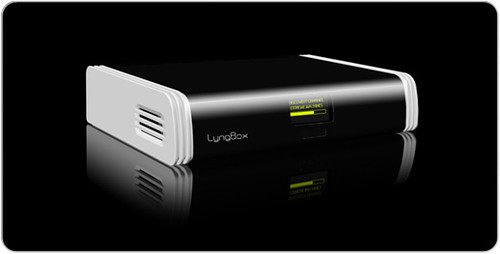
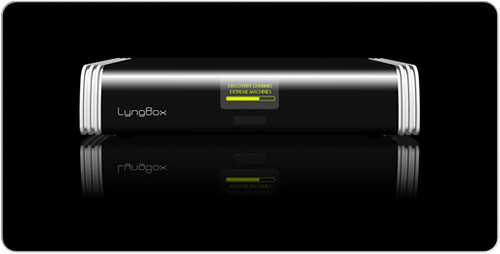
On Wednesday, Rocco scooped the world with the first photographs of the Lyngbox, which was officially unveiled today in Europe.

What makes the Lyngbox "officially cool" by Really Rocket Science standards is its database of worldwide satellite ladder charts, which essentially allows users to "plug and play" the Lyngbox anywhere in the world. Travelling from London to Capetown? Just bring your Lyngbox with you, plug it in, peruse the database, and within moments you’ll be watching the local satellite channels.

Of course, there has always been an alternative to purchasing cool gadgets — and that alternative is to Do It Yourself. This site has long offered instructions on Satellite for Caravans — how you can rig your RV (or car or "caravan") and stay connected to the world of satellite TV while on the road in Europe: 

You will not get a picture by simply waving the dish around; the digibox has to decode the signal before a picture can appear for the first time and that can take a couple of minutes or more. So if you just swing the dish around, you’ll have already moved it out of the signal again long before the picture has a chance to appear. Providing you know the technique however, it is fairly straightforward to tune in a digital system and once you’ve got the hang of it you would be very unlucky if it took longer than about 5 minutes. I’ve had people writing to say they got a signal within a few minutes, others took longer. For myself, it normally takes me only a minute or two these days. My own record is 10 seconds – pure fluke, I stuck the dish on its mast and obtained an immediate signal – just happened to point it in precisely the right direction first time!

You’ll need a satellite dish, a digibox, and a TV (don’t forget that) to catch signals while on the road from Astra or Sky:

 The Astra 2 system consists of 3 satellites close together in space so that your dish will ‘see’ all of them as if they were a single unit. All 3 transmit signals aimed at Europe but the coverage on the ground varies considerably. The 2 older satellites, 2A and 2B, can be thought of as flood lights, lighting up a huge area of Europe, whereas the newer Astra 2D is more like a spot light focused on the British Isles. For the sake of convenience the signals are referred to as the north beam, south beam and narrow beam (or more usually just the 2D beam).

If all of this is sounding confusing, the alternative to DIY is always to buy. Newsfactor magazine has a great article on gadgets available to bring you satellite content while in the fast lane, including some DIY tips for acquiring satellite radio in the U.S.:

Do-it-yourselfers have plenty of options too. There are two ways to go with DIY satellite radio: purchasing a car stereo with satellite radio built-in (requires professional installation) or purchasing a dashboard mounted controller that uses a vacant FM frequency to provide the satellite programming.

Dashboard-mounted models, such as the Delphi Roady XT ($79.99) or the Sirius Sportster Replay radio ($139.99), plug into the vehicle’s cigarette adapter and use a roof mounted magnetic antenna to capture the satellite signal. There is a caveat: as a vehicle travels over long distances an FM channel may no longer be unused and available for satellite signals, so the satellite signal will lose clarity as the FM signal gains strength. At that point, a new vacant FM frequency will have to be selected to improve satellite signal clarity. In spite of the limitations, these dash-mounted models provide a quick way to get satellite radio without having to install a compatible stereo system professionally.

So when it comes to acquiring satellite signals while on the road, the question is not whether or not you can receive them. The question is simply: DIY or buy?

New Satellite Receiver Stores 50,000 Channels; Can Be Used Worldwide

Wednesday, September 6th, 2006

Most “satellite people” are very familiar with the Lyngsat Web site. It could very well be the world’s most complete database of accurate satellite ladder charts. Pick a satellite and you can view all the channels available for viewing. For example, the AMC-4 satellite carries a number faith-based and international channels in North America. On another site, LyngSat Address, select a country and you can find out which satellites their channels are using for broadcasting – in their home market and internationally. TV Prima Romania, for instance, is using several satellites over Europe, Asia and the Atlantic.

Get ready for the LyngBox.

We were tipped off by a Polish Web site in February about a new project involving LyngSat for a “super receiver” based on the DVB-S2 standard, but also capable of receiving DVB-T and decoding HDTV:

Christian Lyngemark – właściciel legendarnego serwisu satelitarnego www.lyngsat.com – zamierza wprowadzić na rynek "superodbiornik" HD combo DVB-S/DVB-T.

Projekt prowadzony jest przez firmę Lyngsat Media AB i Europejską Agencję Kosmiczną ESA. Najważniejsze cechy planowanego odbiornika to dwie głowice – satelitarna i naziemna, odbiór w nowym standardzie DVBS2, dekodowanie zarówno MPEG-2 jak i MPEG-4 oraz dysk do zgrywania programów.

Największą nowością ma być łączność przez internet z portalem www.lyngsat.com i automatyczne aktualizowanie listy programów satelitarnych.


The Swedish National Space Board found it interesting as well:

Lyngbox är ett av de företag som för första gången 2005 genomför projekt med Rymdstyrelsens stöd. Lyngbox utvecklar ett intressant koncept för att via en databas på Internet automatiskt ställa in kanalerna på satellit-TV-mottagare, oberoende av var I världen man befinner sig.

More than a little intrigued, we looked it up and found it: a European Space Agency (ESA) project, for a telecom application called “LyngBox.” They set out to build a satellite receiver last July that would be able to continuously update itself from data published on the Internet. Brilliant. The ESA and Hollycroft Associates got together with LyngSat to develop this new “super satcom box” and got into the development work last December. Could they be using some of the new chips introduced at CES? According to the Swedish patent filing (see PDF, page 26) from earlier this year, this receiver can do it all.

With the patent issued, Lyngbox is set to debut at the IBC show in Amsterdam on Friday, 8 September 2006. Along with a 160-gig drive, it has all the features you’d expect:

Features:
> Can store up to 50,000 channels
> Free access to all LyngSat Network services (LyngSat, LyngSat Guide and LyngSat Maps) with exclusivity to the LyngBox. No other receiver has access to these services
> Always corrects channel names, not relying on service names in the DVB stream
> Family user profiles and parental lock. Each user can have their own selection of channels based on countries, languages and genres which will be updated automatically
> HDTV support (720p and 1080i)
> Supports H.264/MPEG-4 AVC and MPEG-2
> Built-in tuners for both satellite TV (DVB-S/DVB-S2) and terrestrial TV (DVB-T)
> Internal slot system which makes it possible to install an additional tuner card
> 4:3 and 16:9 TV screen format support
> Teletext decoding
> Dual Common Interface slots for use with pay-TV channels
> PVR functionality with hard disk
> Possibilities to store recordings on an external DVD recorder connected with USB2
> DiSEqC 1.2 support for controlling LNB and motorised dish
> Remote control as standard and a wireless remote keyboard as accessories
> Channel selection by typing the name of the channel on the keyboard
> View images from a digital camera connected to the LyngBox

Interfaces:
> DVB-S2 input
> DVB-T input + output (pass-through)
> Expansion slot for additional tuner card
> 2 Common Interface slots
> HDMI-output.
> Component output
> Composite output
> SCART output (RGB and composite)
> S/PDIF optical output with AC-3 support
> Stereo audio (2 RCA)
> 4 USB 2.0 ports
> Ethernet connection (100BaseT)


The UAV Invasion

Wednesday, August 30th, 2006

I’m picturing a sky filled with flying robots. Believe me, I’m not being paranoid here. I know I keep going on and on and on about them, but they seem to be everywhere lately. Everyone’s using them for something, and building better versions of them every day.

Remember that competition in Europe? Remember that European robotics contest back in May, that featured flying robots (a/k/a UAVs)? Turns out there was one that took place stateside back in July, in Fort Benning, GA: the International Aerial Robotics Competition.

The winners were a team of students from the South Dakota School of Mines and Technology. And this after losing their primary remote-controlled helicopter. Luckily they waited a few hours after the final competition to crash their back-up device.

sduav4Long days and sleepless nights paid off for a team of students at South Dakota School of Mines & Technology that finished first in the International Aerial Robotics Competition at Fort Benning, Ga., July 24-27.

The team rebounded from the loss of its primary remote-controlled helicopter only to crash its backup helicopter within hours of the final round of competition.

“Not many of us slept before it (the competition),” team manager D.J. Kjar of Custer said. He said some team members worked 43 consecutive hours, slept for five to six hours … and then went back at it.”

…After crashing the primary helicopter two weeks before the event, the team’s backup helicopter was wrecked during a practice flight when its engine failed the day before the flight competition.

Tech learned at a banquet the night before the flight contest that it was leading with firsts in best paper, best presentation and best team T-shirt design.

“That really renewed everybody’s strength,” Kjar said. The team worked all night to rebuild the helicopter.

Tech and the University of Alabama had the only vehicles that successfully completed the flight course.

The South Dakota team has website featuring photos and videos of their robots in flight.

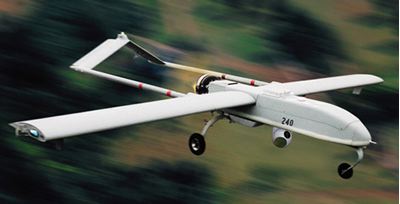
One of the South Dakota students quoted in the article above mentioned that this technology might have potential for military use. Um, yeah. Turns out the Army already has one — called the Shadow 200 TUAV — zipping around the skies above Alaska.

shadowtuav

There’s photos and videos of that one in action too.

Now, if you’ll excuse me, there’s a buzzing I keep hearing outside my window and I must investigate…

How’d They Get That Shot?

Wednesday, August 30th, 2006

More UAV posting. Have you ever watched a movie or even a television commercial and asked "How’d they get that shot?" I know I have, and I usually find myself wondering just how they maneuvered a helicopter to get that shot. Until now I thought that maybe it was due some pilots with very steady hands. Now it turns out there aren’t any pilots at all.

Companies like 1 Advanced Technologies employ UAVs (those flying robots that haunt my dreams) to get some of the best shots in film and television. But some of these shots would be impossible with a helicopter. (Where’s the wind?) That’s where this little thing comes in.

I don’t know what it’s called, but it gets into some tight spots that no manned aerial vehicle could, to produce the kinds of visual shots that we pretty much take for granted. And I won’t even get into the maneuvers it makes possible. I’m not sure how it all happens, but the company has a video demo on its "Film Industry" page that shows this flying robot in action, making movie and commercial magic (OK, "commercial magic is probably a stretch) you might have seen before.

Flying Robots & Free Fuel?

Monday, August 28th, 2006

I don’t mean to go on about those flying robots. You know, the ones with the tentacles? In Europe? Yeah, those. I don’t mean to go on about them, but they always seem to be in the news.

This time they’re going by a different name: Stratellites. And they’re taking up a new function: wi-fi.

StratelliteBob Jones has a lofty idea for improving communications around the world: Strategically float robotic airships above Earth as an alternative to unsightly telecom towers on the ground and expensive satellites in space.

Jones, a former NASA manager, envisions a fleet of unmanned “Stratellites” hovering in the atmosphere and blanketing large swaths of territory with wireless access for high-speed data and voice communications.

…Jones believes his solar-powered, helium-filled Stratellites _ so named because they would hang in the stratosphere — could replace unsightly cell towers and cost less than satellites. Because of the airship’s altitude according to Jones, its radio equipment can cover an area the size of Texas.

Cell towers are hampered by line-of-sight limitations and limited range. Geostationary satellites suffer from the quarter-second it takes a signal to travel out 22,300 miles and back — insignificant in one-way TV transmissions, but terrible for two-way Internet computer communications.

The idea bubbled up and popped around the same time as the dot.com bust, yet it may be an idea whose time has come again. If so, Jones might want to consider some alternative fuels for getting his stratellites aloft.


Fuel Cell UAV

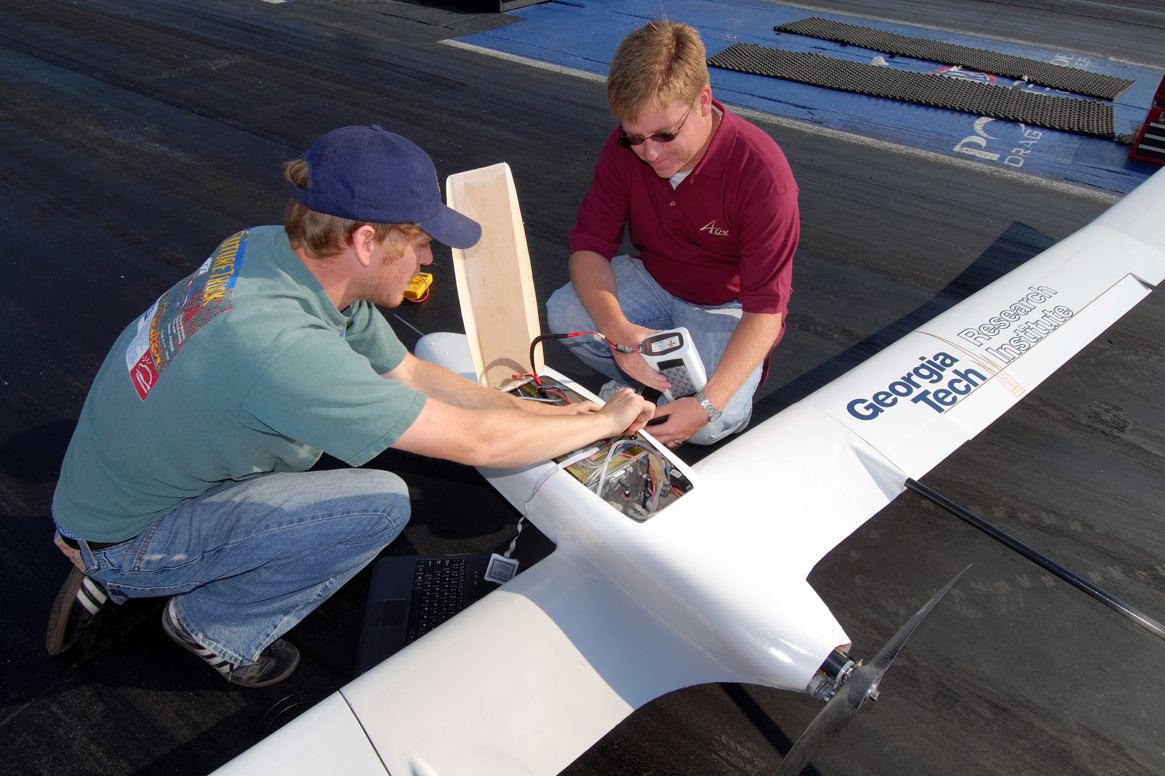
For example, he might look into fuel cells. These guys at the Georgia Institute of Technology got their flying robot aloft using a hydrogen fuel cell. And if hydrogen is cost prohibitive, Boing Boing says this company has build a machine that generates free energy.

Then again, if the comments and tags on that Google video are right, maybe not.

Katrina: How Satcom Walked the Talk

Monday, August 28th, 2006

Hurricane Katrina was the costliest storm in American history, which occurred during what became one of the nation’s busiest hurricane seasons. The category 5 hurricane hit the Gulf of Mexico’s northern coastlilne on 29 August 2005, including the city of Biloxi, Miss.

Sustained winds of approximately 150 miles per hour, accompanied by its rain and storm surge, caused catastrophic flooding in Biloxi – dozens of feet above and further inland than normal – destroying important terrestrial infrastructures vital for adequate shelter, economic sustainability and civic functions. Homes, office buildings, telephone poles, hospitals, television and cell phone antennas, government headquarters and places of worship, were completely flattened.

Since most of the area’s terrestrial-based forms of communication had been destroyed and were near useless, a satellite-based WiMAX (Worldwide Interoperability for Microwave Access) WAN (Wide Area Network) communication network for the city of Biloxi was a viable option. WiMAX is a wireless communications technology that provides high-throughput broadband connections for considerably longer distances than that offered via a WiFi (Wireless Fidelity) LAN (Local Area Network) network.

Motivated to immediately help in relief efforts after the hurricane dissipated, Craig McCaw, who through his investment company Eagle River, has an ownership in Clearwire, offered the Clearwire WiMAX service to government leaders in Mississippi in order to provide the needed communications after the hurricane. Clearwire is a high-speed, wireless broadband Internet service provider. SES AMERICOM was then contacted to join in his quest to help reestablish Biloxi’s communication network.

SES AMERICOM employees were dispatched to Biloxi, and immediately installed and connected two-way satellite ground stations called VSATs (Very Small Aperture Terminals) to Clearwire’s WiMAX towers. Relief agencies, hospitals, fire, police as well as businesses and residences within the established WiMAX network were able to get reliable, 24×7 voice and data connectivity to the outside world via this hybrid satellite/WiMAX network.

It’s experiences like these that prompted the Satellite Industry Association to publish a "First Reponder’s Guide to Satellite Communications" earlier this summer.

A year later, businesses in the area are still squabbling over what resources get restored first.

A Sputnik Moment?

Monday, August 28th, 2006

Earlier this month I was somewhat obsessively following the story of China’s space program and U.S. concerns about a looming "Sputnik moment" with China. Well, it looks like using "Sputnik" and China in the same breath may be appropriate as China teams up with Russia for a mission to Mars.

China and Russia are planning a joint mission to Mars that will not only bring samples back to earth but also land on one of the red planet’s tiny moons, a Chinese space scientist here has said.

SputnikYe Peijian, a leading scientist with the Chinese Research Institute of Space Technology, made the announcement at an ongoing forum on China’s space technology development.

Ye said Russia will launch the spacecraft in 2009 and it will carry China-made survey equipment. It will collect samples on Mars and the planet’s nearest moon.

Sun Laiyan, administrator of the China National Space Administration said last month at an international space conference that China is actively planning its deep space exploration over the next five years, focusing on lunar and Mars exploration.

"We will encourage other countries to take part in space science programs initiated by China, and Chinese scientists will participate in international space science programs," Sun said.

The lunar mission definitely jibes with previous reports of China’s space-related ambitions. And the invitation for other countries to take part might bode well for similar U.S. ambitions, in light of China’s earlier invitation to a NASA official to visit the country next month, and check out their space program.

But it sounds like the Russians are already on board. So does this qualify as a "Sputnik Moment" yet?

Webinar on Satellite Communications

Thursday, August 24th, 2006

Here’s a plug: SES AMERICOM is presenting a Webinar next Tuesday called "Satcom Talk" — a discussion of how businesses are using a mix of both land-based and space-based communications.  As new and innovative technologies continue to evolve and converge with established approaches, enhanced business solutions are developing in:  

  • Corporate Communications and Intranets
  • Training and Distance Learning
  • File Transfers and Information Delivery
  • Inventory Management
  • News Media and Financial Market Updates
  • Business Continuity and Disaster Recovery

Tuesday, 29 August 2006 @ 11:30 a.m. EDT (15:30 GMT). Click here for more details and how to register.

Construction to Resume on Space Station

Tuesday, August 22nd, 2006

"For more than three years, the International Space Station has floated half-built above the Earth. Maintained by a skeleton crew, the station — an assemblage of modules and girders — has not come close to its stated goal of becoming a world-class research outpost," the New York Times reports.

But the long break in building out the International Space Station— a result of the grounding of the space shuttle fleet following the Columbia disaster— is about to come to an end:

Since the project began in late 1998 with the joining of two American and Russian modules, the United States and 15 other nations have slowly put together a structure that weighs more than 400,000 pounds, with a habitable volume of almost 15,000 cubic feet. When completed, it is to weigh almost a million pounds and have a cabin volume of more than 33,000 cubic feet, larger than a typical five-bedroom house.

Getting to that goal will require some of the most difficult shuttle missions ever mounted by the National Aeronautics and Space Administration, starting with the Atlantis’s launching from the Kennedy Space Center at Cape Canaveral, Fla [next Sunday]. The shuttle and its crew of six will haul a 30,000-pound, 45-foot truss segment to the station, delicately remove it from the cargo bay and install it during three spacewalks by two teams of astronauts….

NASA has allotted about 15 flights to complete the project before the shuttles are retired in 2010. The next four missions will carry other massive truss segments to extend the station’s central girder to more than 350 feet. The girder will eventually support four huge sets of solar-power arrays, batteries and heat-dispensing radiators.

The additional truss segments, which will increase the mass of the station by 40 tons, will also include 10-foot-wide rotary joints shaped like wagon wheels that will allow the solar arrays to track the sun for optimum power as the station moves in orbit. The Atlantis is delivering the second array, joining one put on the station in 2000.

You can learn more about the International Space Station here