Satcom gibberish or industry standard?

To officially become a rocket scientist, you have to pass a single, very simple test — you need to understand what "broadband satellite terminals compliant with the DVB-S2/IPoS air interface standard, including the Adaptive Coding Modulation (ACM) feature" are.

Just kidding, but it is complicated. Today, Hughes Network Systems announced the that it has shipped more than 300,000 of the devices. What makes these broadband satellite terminals different? Let’s break it down:

IPoS specifies a “Satellite Independent Service Access Point” (SI-SAP), which creates a well defined interface between the satellite-dependent functions and the application layers, thereby enabling an open-service delivery platform. Its first version was approved by the world’s major standards organizations in 2005: the Telecommunications Industry Association (TIA) in North America, and ETSI and ITU (International Telecommunications Union) in Europe.

In December 2006, ETSI further approved the Internet Protocol over Satellite.v2 (IPoS.v2) air interface standard, which incorporates the DVB-S2 industry standard including ACM (Adaptive Coding and Modulation). Link performance is continually optimized even during high rain conditions by adjusting error-correcting codes and modulation dynamically, based on signal quality feedback from remote terminals.

With the addition of DVB-S2 including the ACM feature, IPoS-compliant networks yield higher throughputs and up to 50 % more efficient bandwidth utilization over the DVB-S specification.The unique Hughes implementation of the ACM feature means the combination of coding and modulation of the outbound channel can be configured for each remote terminal, so that the Hughes system is able to transmit data at the optimum efficiency for each terminal. This ability to custom design the outbound link per terminal enables an operator typically to realize an additional 50 percent throughput over the DVB-S specification.

One prominent deployment worth mentioning is Kuwait-based, Gulfsat, which runs a large Middle-East communications network:

Mustafa Murad, chief operating officer at Gulfsat, said, “We are very pleased to be using the Hughes broadband satellite platform to provide our new, two-way residential Internet service and to have the first DVB-S2 NOC serving the residential market in the Gulf region.” Mr. Murad added , “One of the key factors in selecting Hughes was their proven experience with over 170,000 DVB-S2/ACM capable terminals shipped worldwide as of February 2007. The Hugh es implementation of DVB-S2 allows us to provide a very efficient and cost-effective service to our customers with improved satellite Internet browsing and download performance at a level that traditional landline service cannot match.”

Gulfsat has one of the largest satellite antenna farms in the region, reaching ten satellites, in total.


Next stop: the asteroid belt

We’re one day until launch. NASA’s newest mission, a 3-billion mile, 8-year journey, will explore the asteroid-belt. The mission’s chief engineer, Marc Rayman, sure knows how to build the excitement: "In my view, we’re going to be visiting some of the last unexplored worlds in the inner solar system."

"Dawn" will, appropriately, launch just after sunrise tomorrow morning. That is, if the forecast of rain holds off.

USA Today has the mission details:

Dawn will travel to the two biggest bodies in the asteroid belt between Mars and Jupiter — rocky Vesta and icy Ceres from the planet-forming period of the solar system.

Ceres is so big — as wide as Texas — that it’s been reclassified a dwarf planet. The spacecraft will spend a year orbiting Vesta, about the length of Arizona, from 2011 to 2012, then fly to Ceres and circle there in 2015.

Dawn’s three science instruments — a camera, infrared spectrometer, and gamma ray and neutron detector — will explore Vesta and Ceres from varying altitudes.

[…]

Because Vesta and Ceres are so different, researchers want to compare their evolutionary paths.

No one has ever attempted before to send a spacecraft to two celestial bodies and orbit both of them. It’s possible now because of the revolutionary ion engines that will propel Dawn through the cosmos.

Dawn is equipped with three ion-propulsion thrusters. Xenon gas will be bombarded with electrons, and the resulting ions will be accelerated out into space, gently shoving the spacecraft forward at increasingly higher speeds.

"It really does emit this cool blue glow like in the science fiction movies," Rayman said.

NASA tested an ion engine aboard its Deep Space 1 craft, which was launched in 1998. Ion engines have been used on only about five dozen spacecraft, mostly commercial satellites.

Dawn also has two massive solar wings, nearly 65 feet from tip to tip, to generate power as it ventures farther from the sun. Ceres is about three times farther from the sun than Earth.

You can watch the launch live on NASA TV — available on web stream. The "pregame show" begins at 5:15am. The main event will begin sometime between 7:20am and 7:49am:

Dawn’s Sept. 27 launch window is 7:20 to 7:49 a.m. Eastern Daylight Time (4:20 to 4:49 a.m. Pacific Daylight Time). At the moment of liftoff, the Delta II’s first-stage main engine along with six of its nine solid-fuel boosters will ignite. The remaining three solids are ignited in flight following the burnout of the first six. The first-stage main engine will burn for 4.4 minutes. The second stage will deposit Dawn in a 185-kilometer-high (100-nautical-mile) circular parking orbit in just under nine minutes. At about 56 minutes after launch, the rocket’s third and final stage will ignite for approximately 87 seconds. When the third stage burns out, actuators and push-off springs on the launch vehicle will separate the spacecraft from the third stage.

Germs from Space!

You may have heard about the meteorite that recently fell near Puno, Peru (the impact crater is pictured above), and about the rash of illnesses that have occurred among locals following the crash:

According to Peru’s La Republica newspaper, due to the high number of illnesses, district authorities are considering placing the town of Carancas, Puno, Peru in a state of emergency. It has been reported that at least 600 people have been affected by the meteorite.

Puno, Peru’s Regional Health Director, Jorge López Tejada, reported yesterday that at least 150 people had been seen after having stated they had dermal injuries, were dizzy, nauseous or vomiting.

According to the townspeople, the illnesses began after the meteorite crashed and they began to touch the glowing rock believing it had some type of monetary value. Aside from the hundreds of townspeople that were affected, Tejada reported that 8 police officers had to be hospitalized after having taken samples of the meteorite.

Scientists have confirmed that the meteorite is a chondrite meteorite, meaning it likely originated in the asteroids that orbit the Sun between Jupiter and Mars.

The stories out of Peru along with a story out of the Toronto Globe and Mail have us thinking about the Andromeda Strain.

First, the Globe and Mail:

Bacteria that cause food poisoning on Earth get stronger in space, says a team of researchers that sent dozens of carefully packaged vials of salmonella on a 2006 shuttle mission.

After 12 days in orbit, the shuttle bugs were nearly three times more deadly to mice.

The researchers, who are reporting their findings this week in the Proceedings of the National Academy of Sciences, were able to zero in on the protein that caused the increased virulence. They say their work may one day lead to a vaccine to protect against Salmonella typhimurium, or a new antibiotic to keep an infection in check – both in space and on Earth.

Next, the Andromeda Strain. You remember this, don’t you? It’s the story of a U.S. Army satellite that returns to Earth and lands in the small town of Piedmont, New Mexico. The satellite "brings a mutant living being and all the population, except a crying baby and an old man with ulcer, dies with clotted blood. A team of five scientists are summoned and gathered together in the top secret Wildfire facility" to identify the virus before it’s too late.

Well, that’s not what’s happening in Peru. So what is? Here’s one theory:

"The meteor that crashed in Peru caused a mystery illnesses. The cause of the illness has been found. The meteor was not toxic. The ground water it contacted contains arsenic. The resulting steam cloud is what caused the mystery illness. "The meteorite created the gases when the object’s hot surface met an underground water supply tainted with arsenic, the scientists said." There is a very good photo of the impact crater in the article. The rim of the crater is lined with people for a size comparison."

We’ll undoubtedly learn more about the source of the illnesses in Peru (check out this comprehensive analysis of the various theories). But for now, we want to share a bit of local advice that we kept close to heart during our years living on the Colorado Plateau, where uranium is found in abundance: Don’t touch glowing rocks. Nothing good ever comes of it.

Personal Distant Locals via Satellite TV


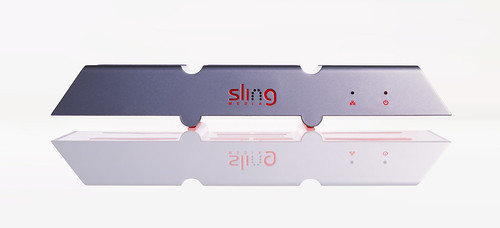
Us rocket scientists love our Slingboxes. Whether at 35,000 feet, at a baseball game or hooked up as a traffic webcam. Our friends at Dish Network like them enough to buy them for $380 million, according to Transmitter News:

EchoStar Communications Corporation has agreed to acquire Sling Media, Inc., a privately-held digital lifestyle products company. EchoStar, through its DISH Network®, is the third largest pay-TV provider in the United States. The transaction values Sling Media at approximately $380 million and is payable in cash and EchoStar options. The transaction is subject to customary closing conditions, and is expected to close in the fourth quarter of 2007.

Established in 2004, Sling Media has been a leading innovator in the digital lifestyle space through the introduction of the internationally-acclaimed, Emmy award-winning Slingbox™ and SlingPlayer™ software. Sling Media’s product line is distributed in over 5,000 retail stores in 11 countries.

In 2006, Sling Media created the Sling Entertainment Group with the mission of developing entertainment experiences and business models that reach beyond the Slingbox. The group also fosters and manages relationships with content creators and owners. Its first initiative, Clip+Sling™, dramatically changes the way consumers socialize around TV by enabling users to clip and share limited segments of their favorite television programming.

“As an early investor in Sling Media, EchoStar has been pleased with the progress and commitment the company has made establishing Sling Media and the Slingbox as powerful and beloved digital media brands,” said Charlie Ergen, CEO and co-founder of EchoStar. “With today’s increasingly mobile lifestyle, EchoStar’s acquisition of Sling Media will allow us to offer innovative and convenient ways for our customers to enjoy their programming on more displays and locations, including TVs, computers and mobile phones, both inside and outside of the home. This combination paves the way for the development of a host of new innovative products and services for our subscribers, new digital media consumers and strategic partners.”

“We are psyched to make this announcement. We have worked closely with EchoStar for more than two years, and have come to realize that both companies have similar entrepreneurial cultures and mutual dedication and passion for creating empowering experiences that benefit the consumer and the media industry,” said Blake Krikorian, co-founder, chairman and CEO of Sling Media. “By combining strategies, resources and technologies with EchoStar, Sling Media will be able to rapidly expand our open multi-platform product offerings, not only for DISH Network subscribers, but for digital media enthusiasts around the globe.”

Scott Greczkowski is asking the right questions: 

Last night’s late announcement that Echostar is acquiring Sling Media did not come as a big surprise to me. And while it did not surprise me it did set off a few flags in my head.

1)      Will DISH Network keep Sling as a separate company or would they bring the technology and the company in house?

2)      Sling Media is a Partner with DIRECTV and the NFL for delivering the NFL Sunday Ticket online, how will this deal affect this setup?

3)      There are a number of other companies who are invested in Sling Media including the soon to be parent company of DIRECTV, Liberty Media. How does this deal affect them?

4)      What is going to happen to unreleased products such as the Sling Catcher?

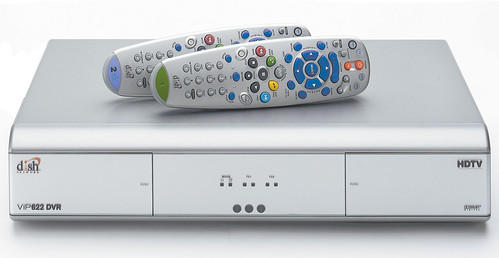
5)      When will we see the first receiver from Echostar that has built in Slingbox functionality?

I personally hope that DISH continues to allow Sling Media to be Sling Media, a separate company, a company with some amazing thoughts and ideas.

I personally own 3 Slingbox units and I honestly consider it to be the best consumer electronics device made so far in the 21st century! No matter where  I am at I can watch and I can control all of my satellite receivers, I can even watch and control things on my PDA/Phone. Having a 4 year old, the Slingbox has been a godsend, especially when you’re out at a restaurant and your child is being loud. When this happens I pull out my cell phone, log into one of my Slingbox units change the channel to Noggin and give the phone to my son, and now a noisy child is a quiet happy child.

Echostar to spin off?

As I was writing this column I got a press release from Echostar saying that they were considering spinning off its hardware division. The question is what does this mean?

Now I am not a stock guy (and I should state for the record that I own no stock in any satellite company) but what this signals to me is that sometime in the future we could see Echostar selling off it’s Dish Network service to another company, all while continuing to make equipment for Dish Network and while retaining ownership of the Echostar satellite fleet.

Is this what they are planning? Your guess is as good as mine. But it does make you go hmm.


Loral’s Acquisition of Telesat Canada Approved

Loral and its Canadian partner, the Public Sector Pension Investment Board (PSP Investments), have gained approval from Industry Canada for its acquisition of Telesat Canada.
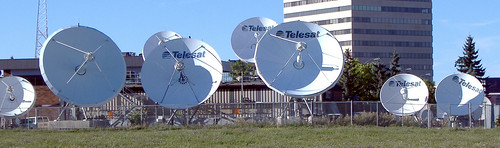
We already heard that Loral is closing the Hawley Earth Station in Pennsylvania (pictured at left), moving all those functions "elsewhere." Does this approval mean "elsewhere" is north to Canada, perhaps? 

"On December 16, 2006, the joint venture company formed by Loral and PSP Investments entered into a definitive agreement with BCE Inc. to acquire 100 percent of the stock of Telesat Canada from BCE for CAD 3.25 billion," according to the PR Newswire release.

The open question is what this new deal means vis a vis Loral’s reetnry in the U.S. market. (Loral, struglling under the weight of high debt, sold their U.S. space assets to Intelsat in 2004. As part of that agreement, Loral agreed to not compete in the U.S. satellite services market for a couple of years.)

Telesat has been an active player in the U.S. market. Portions of  Anik F2’s Ka-band payload was leased to WildBlue two years ago, and Anik F3 is leased to Echostar for Dish Network services.

Incorporated in 1969, Telesat made history with the launch of its Anik A1 satellite in 1972 – becoming the first commercial company in the world to operate a domestic geostationary communications satellite. These days they’re pushing consumer-oriented satellite broadband via resellers:

Telesat’s Anik F2 is the first satellite to fully commercialize the Ka frequency band – a breakthrough satellite communications technology for delivering cost-effective, two-way broadband services. The two-way capability means customers do not need an additional phone or cable line or the expense of a traditional dial-up ISP in order to receive high-speed Internet access. This state-of-the-art development enables dramatic improvements in access to two-way, high-speed Internet services for consumers and businesses in rural and remote areas.

(The picture below is of Telesat’s Edmonton facility.)


Muszaphar to be First Malaysian in Space

Because many of us in America (as well as Russia and many European countries) have become a bit jaded by more than four decades of space travel, it’s always interesting to see the excitement in other countries as they send their first astronauts into space, usually on a mission bound for the International Space Station.

The next country to send a first astronaut into space is Malaysia:

Malaysia’s astronaut candidates Dr Sheikh Muszaphar Shukor and Kapt Dr Faiz Khaleed have passed their training programme successfully and have qualified to become astronauts.

Both the medical officer and army dental surgeon are equally eligible to be sent to space on Oct 10, but if all goes according to plan, it will be Dr Sheikh Muszaphar making history as the first Malaysian in space.

Dr Sheikh Muszaphar, 35, has been named as part of the three-member first crew for the Soyuz 15-S mission alongside Yuri Malechencko from Russia and American Peggy Whitson, while Kapt Dr Faiz, 27, is a member of the second crew with Michael Fincke from the United States and Russian Sharizan Sharipov. 


Both Muszaphar and Khaleed are keeping a blog about their efforts to "realize the country’s dream." The two beat out a large number of aspirants who went through rigorous training for the honor of becoming Malaysia’s first astronauts. 

It’s also interesting to note how different cultures face different questions as they send their first members into space. For example, Muszaphar’s October 10th launch will take place at the tail end of the Muslim holy month of Ramadan, when practicing Muslims fast and pray five times per day. Being in space might make such acts of devotion difficult, however, so what are Muszaphar’s obligations as a Muslim while in zero gravity?

The International Herald Tribune gives us the answer: 

Malaysia’s first astronaut will not be required to fast while in space even though he is a Muslim and the flight will be during Ramadan, a government minister said Monday….

Sheikh Muszaphar, who has been fasting during training along with his backup Faiz Khaleed, can postpone the fasting until after he returns.

The fasting month of Ramadan started on Sept. 13 and is expected to end on Oct. 12, which means Sheikh Muszaphar will have to fast for only two or three days if he insists on not eating from dawn to dusk, an Islamic religious requirement….

Jamaluddin also said he expects Sheikh Muszaphar to pray only three times a day instead of the obligatory five to reduce the inconvenience of going through prayer rituals in the gravity-free atmosphere….

Malaysia’s National Fatwa Council has ruled that the astronaut will not be required to kneel to pray if the absence of gravity makes it too hard, nor will he have to wash hands and face with water as required — a simple wet towel will do.

Russian television has also filed a report on Malaysia’s first foray into space:

WiMAX is Easy as ABC


We’ve been writing about "wifi on steroids" — or WiMAX — since the earliest days of the Really Rocket Science blog, when it was but a dream on the technological horizon.

These days, understanding the deployment and growth of WiMAX  is as easy as A-B-C.

A is for Alaska, where AT&T Alascom, which has been using satellites to deliver telecom across Alaska since 1974, is rolling out WiMAX using  Alvarion Ltd.’s BreezeMAX 2.3 GHz TDD equipment:

 Alvarion’s solution is capable of delivering flexible and enhanced coverage even in difficult terrain, such as the hilly and wooded areas. In addition, Alvarion’s nomadic self-install Si CPE can incorporate a patent-pending fast-switching algorithm with six integrated antennas. The Si can is available with a wide variety of options, from multiple POTS interfaces to built-in Wi-Fi.

To deliver WiMAX, AT&T Alascom utilizes SES-Americom’s AMC-8 satellite (also known as Aurora III) exclusively.

Rumors also have AT&T deploying WiMAX in the South soon:

AT&T Inc. is preparing to launch WiMax services during the second quarter of 2008, Unstrung has learned from an industry source. The services will likely be in the South of the U.S. where the operator has suitable licenses for broadband wireless services.

The cellular giant is planning to deploy limited WiMax services in the 2.3 GHz band that could be used as a fixed-wireless alternative to DSL or cable offerings, the source says. AT&T is said to have its suppliers for the service lined up now.


B is for Breezemax; Alvarion of Israel is making real progress in selling their BreezeMAX system for WiMAX apps:


Commercially available since mid 2004, deployed by over 150 operators in more than 30 countries, BreezeMAX is the most advanced, field proven commercial WiMAX solution and the first to offer CPE powered with Intel PRO/Wireless 5116 broadband interface WiMAX chip.


Built from the ground up based on the IEEE 802.16-2004 standard, BreezeMAX supports fixed, nomadic and portable services with a clear path for the emerging WiMAX mobile industry based on the IEEE 802.16e standard. BreezeMAX is designed for a variety of frequencies in both licensed and license-exempt bands from 2GHz to 6GHz spectrum, and operates in both FDD and TDD duplex modes.

Check out this long list of PDF case studies to see how Breezemax is deployed worldwide.

But C isn’t for "check out" — it’s for the Caribbean, where Digicell is rolling out WiMAX using Alvarion products, most recently in Cayman Islands using AMC-6.

Given the continuing rapid growth in WiMAX deployment, we could probably go all the way to Z….

t2

Work on Warp Drive


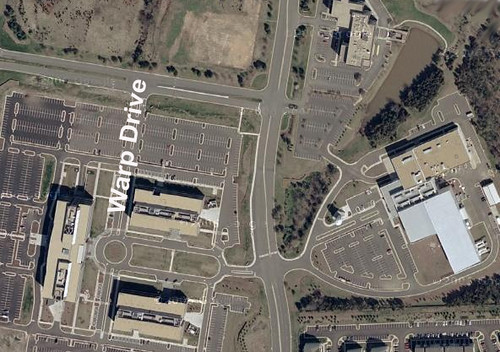
We blogged about getting a space job before, but now it looks like a few hundred can call their new business address "Warp Drive." That’s right: Warp Drive is an "inside" street name on the corporate campus Orbital Sciences, a company that’s about to expand in Northern Virginia, according to the Washington Post:

Orbital Sciences, a rocket and space technology manufacturer for the government and military, is embarking on a major expansion of its headquarters in Dulles, adding as many as four buildings and about 600 jobs to its campus.

The company’s 77-acre campus along Route 28 employs 1,500 workers. More than 100 employees work at leased office space a few miles down the road, and Orbital continues to grow. To date, the company said it has $4 billion worth of backlogged contracts.

"Orbital’s business is doing extremely well and growing quite rapidly," said Barron Beneski, a company spokesman.

The buildings — totaling 140,000 square feet — will house office, engineering and manufacturing space on an undeveloped tract of land adjacent to the campus. Construction on the first building has been approved by Loudoun County and is scheduled to begin in early 2008. The first new employees could occupy the space in 2009.

"The next several years we will build buildings as the need arises," Beneski said.

The federal government is Orbital Sciences’ biggest customer. The satellite company has contracts with the Defense Department and military intelligence agencies.

Space flight, in particular, is fueling much of Orbital Sciences’ growth, Beneski said. In 2010 NASA plans to retire the Space Shuttle. The company is part of a team led by Lockheed Martin that is producing the next generation of manned spacecraft to launch astronauts to the moon and beyond. The company stands to make $450 million to $500 million over the next 12 years from its role in the program.

Orbital also manufactures commercial communication satellites for companies such as Intelsat and SES Global.
"In the Washington area, there’s not a whole lot of manufacturing going on," Beneski said. "Consultants and IT people produce a lot of paper and gigabytes. We actually produce real stuff." 


DIY Friday: A Hard Drive Clock

Hack a Day points us to today’s DIY Friday project: a hard drive clock that uses the actual drive mechanism and heads to keep track of time (as opposed to simply a regular clock mechanism with a recycled hard drive face).


Instructions can be found here. Don’t sprechen Deutsche? Google can translate:

The synchronous motor, which propels the magnetic disks, engages in 16 positions per revolution dead magnetically. 12 positions are used thereby as hour announcement, after 12 o’clock must run the engine of 5 steps further, in order to continue again with 1 o’clock. The write/read head, which is propelled with a stepping motor, engages likewise dead magnetically. It is used, in order to indicate the minutes within one hour. Beginning of the internal point it moves within one hour to the outside edge of the magnet disk.

Since it’s German, you can rest assured that your DIY project will run on time, but you’ll want to use the atomic clock at Fort Collins to set the clock correctly. (Consistency with errors creates consistent error.) 

Also be sure to check out this very cool video of another hard drive clock. (It’s available on YouTube, but embedding is disabled for this particular video.) 

If all of this seems a bit too complicated for you, for $5 you can make a Salvador Dali melting clock — but obviously, without hard drive parts.