BSkyB: Cark It!

After the blokes at NOTW got caught being stickybeaks with cell phone hacking, it seems News Corp. has a Buckley’s chance of buying the 61% of BSkyB it was after. He must have spit the dummy at the meeting.

The news is everywhere, with the most interesting being how executives must deal with an investor relations crisis, et. al. The details, via Business Insider

The phone hacking scandal at News Corp’s UK newspaper the News of the World has now cost the company a large prize.

Yesterday it officially withdrew its offer for the remaining 61 percent of BSkyB – and the chances of it returning to bid again in the near future are remote.

Still, the pressure continues, the implications are spreading and the results not only threaten the company’s business interests, but also its IR efforts in the US.

News Corp and Murdoch wanted BSkyB because it continues to grow and, according to company financial records, throws off 12 percent of its revenue as free cash. That’s a big temptation to News Corp, which currently has long-term debt of $15.5 bn.

The pace of increased problems seems only to speed up. Calls for investigations, which eat up management time and create fires that IR personnel must put out, have grown. UK Prime Minister David Cameron said the government will investigate rumors that News Corp journalists tried to gain illegal access to phone data of some victims of the 9/11 attacks in the US.

That could help open a potentially ugly new front for the company. News Corp, which is registered in the US, might already be liable under the Foreign Corrupt Practices Act for alleged payments to police in the UK. Hacking into phones of 9/11 victims would not only add another potential criminal investigation, but one that is an emotional hot button in the States.

Senator Jay Rockefeller has called for an investigation into the allegations, and a group of institutional investors amended a suit filed against News Corp in March to include the current scandal and back allegations that ‘Murdoch has treated News Corp like a family candy jar, which he raids whenever his appetite strikes’, as a copy of the complaint states.

News Corp continues to look for ways out of the scrape, including a $5 bn stock buyback, which is $3.2 bn over and above what remains of an existing buyback plan. And there are other, larger potential changes in the works, such as the sale of its UK newspaper division – well, at least if there were a potential buyer for holdings in an economically wounded industry. But it will take something extraordinary to get ahead of the developing story at this point.

Now the AP is reported the FBI is going to give it a burl.


It Was 49 Years Ago Today


This Telstar, a ground spare currently in the care of the Smithsonian National Air and Space Museum, is what gave birth to a huge space-based business: video by satellite. On this day in 1962, a video link between the U.S. and France proved what Sir Arthur conceived in 1947.

Bye-Bye Space Shuttle

STS-135 launch video — the last one.

WBMSAT News Bits – post July 4th catchup issue

WBMSAT Satellite Industry News Bits July 8, 2011

Thales Alenia Space selects EMS Technologies to supply hardware for  French-Italian Ka band and EHF satellite to support armed forces and civil  security agencies.
[Market Watch – 07/07/2011]

Arianespace will launch THOR 7 satellite for Telenor.
{Space Travel – 07/07/2011]

NOAA deputy administrator tells local leaders that satellite programs are key to saving lives and lessening economic impact of severe weather.
[Market Watch – 07/07/2011]

Freeing up some government broadband spectrum for commercial use could take more than 10 years.
[Government Video – 07/07/2011]

LightSquared creates rural initiative to drum up popular support for its wireless network plans while arguing that installing filters on GPS systems would address possible interference problems.
[Connected Planet Online – 07/07/2011]

Vizada looks to Expand Networks to enhance its existing Inmarsat BGAN, Swift  Broadband, and Fleet Broadband offerings with WAN optimization features for the  satellite networks.
[TMCnet – 07/07/2011]

Thuraya introduces specialised suite of solutions aimed at offering all the functionality of satellite communication indoors.
[Al Bawaba – 07/06/2011]

‘Remote Cueing’ capabilities of the Space Tracking and Surveillance System demonstration satellites built by Northrop Grumman demonstrated during Aegis test.
[Market Watch – 07/06/2011]

General Dynamics Information Technology gets task order from Defense  Intelligence Agency for enterprise communication services including satellite  communications support on coalition networks.
[PR Newswire – 07/06/2011]

India set to launch GSAT-12 communications satellite onboard a Polar  Satellite Launch Vehicle on July 15.
[Satellite Spotlight – 07/06/2011]

Hughes to connect 1,500 broadband satellite sites for India’s Restructured Accelerated Power Development & Reforms Programme.
[TMCnet – 07/05/2011]

Lockheed Martin’s BSAT-3c/JCSAT-110R satellite ready for launch aboard Ariane  5-ECA launch vehicle.
[Satellite Spotlight – 07/05/2011]

Comtech announces receipt of a SATCOM equipment contract from India-based  Bharti Airtel.
[TMCnet – 07/05/2011]

Spanish Ministry of Defence awards Indra maintenance contract for its  satellite communications terminals worth C17 million.
[Defence Professionals – 07/05/2011]

European Space Agency saves a four-satellite Cluster mission from near loss  by using “an unorthodox, dirty hack.”
[Satellite Today – 07/04/2011]

Italian Space Agency to cooperate with Eutelsat and Skylogic on broadband  connectivity in Italy.
[PR Newswire – 07/04/2011]

Consilium partners with Orange to market maritime VSAT service.
[Satellite Today – 07/04/2011]

Space rock passes through satellite belt within 12,000 kilometres of  Australia.
[University World News – 07/03/2011]

Dual launch of ASTRA 1N and BSAT-3c/JCSAT-110R scrubbed due to LH2 valve  fault on vulcain core stage of Ariance 5 ECA vehicle.
[NASA Spaceflight – 07/01/2011]

LiightSquared offers three-part solution to interference to GPS by its  proposed network, saying it remains committed to a robust GPS system and GPS  manufacturers could have avoided the problem with filters as cheap as 5 cents  each..
[SatNews  – 06/30/2011]

HISPASAT selects Gilat for broadband VSAT network in Spain.
[MarketWatch – 06/30/2011]

Pentagon’s ORS-1 imaging satellite carried to orbit aboard Orbital Sciences  Corp. Minotaur 1 rocket.
[Space News  – 06/30/2011]

Dish Network wins bid for TerreStar for $1.375 billion.
[Multichannel – 06/28/2011]

Raytheon triples bandwidth on National Weather Services’ satellite broadcast  network.
[PR Newswire – 06/28/2011]

Airport Authority of India says GAGAN {GPS-Aided Geo Augmented Navigation)  satellite is in position and certification is underway.
[Inside GNSS – 06/26/2011]


WBMSAT PS  satellite communications systems services


One Night in Wallops

Excellent launch video of the ORS-1 spacecraft from Wallops Island in Virginia. The news, via the USAF:

An Air Force team successfully launched the first Operationally Responsive Space prototype satellite aboard a Minotaur I launch vehicle at 11:09 p.m. EDT June 29 from the NASA Wallops Flight Facility on Wallops Island, Va. ORS-1 deployed 12 minutes after launch.

This marks a great achievement by the Space and Missile Systems Center’s Space Development and Test Directorate, the Operationally Responsive Space Office and their contractor teams, according to Col. Carol Welsch, the directorate’s acting director and the ORS-1 mission director. ORS-1 is the Operationally Responsive Space Office’s first operational prototype satellite and represents the potential of low-cost, tactically focused satellites designed to provide critical battlespace awareness capabilities to the joint warfighter.

“Words cannot express how proud I am of the entire ORS-1 team,” she said. “The men and women of the Space Development and Test Directorate, the Operationally Responsive Space Office, and our industry partners of Goodrich, ATK, and Orbital have all worked tirelessly to move forward on the concept of a responsive space capability designed to support the warfighter. Their teamwork and dedication is simply inspiring.”

Rapidly developing and fielding ORS-1 is an important step to demonstrating the possibilities to meet emerging and persistent warfighter needs in operationally relevant timelines, Colonel Welsch said.

“Our team was able to develop, integrate, test and launch this system in just over 30 months which is a remarkable achievement,” she said.

ORS-1 was initiated as a result of a requirement to the ORS office from the commander of U.S. Strategic Command to support U.S. Central Command.

Built by ATK in 16 months! In Maryland, no less.

Another Star Joins EchoStar

After the bloodbath at SES this spring, followed by a new management scheme announced at the beginning of May, it was inevitable they’d lose some of their star performers. Anders Johnson was one of them and he just joined EchoStar Satellite Services

EchoStar Corporation (NASDAQ: SATS), the premier global provider of satellite operations and digital TV solutions, announced today that Anders Johnson has joined EchoStar as President of EchoStar Satellite Services, reporting directly to Michael Dugan, Chief Executive Officer and President of EchoStar.

“Anders brings us a wealth of experience in global satellite spectrum development, international markets, satellite financing and investment, which will help us in continuing to develop our satellite services business as well as working with myself and Hughes management to develop and implement our international expansion strategy,” said Mr. Dugan.

Mr. Johnson was most recently at SES World Skies where he served as Senior Vice-President, Strategic Satellite Development since 2005. Prior to SES, Anders worked at GE from 1985 in a variety of executive level roles including Satellite Services, Aviation Services and Transportation & Industrial Financing.

He also graduated from New York Tech and worked for Manny Hanny.

It’s Alive!


Thank you, doctor. Nice piece by Jeremey Hsu at Space.com, calling the new Mars exploration spacecraft “Frankenstein” for all the money-saving shortcuts on the build side…

Take the DNA of the deceased NASA Phoenix Mars Lander, add bits and pieces from several lost Mars missions and you have a “Frankenstein” mission competing for a spot on NASA’s space exploration lineup for the next decade.

The mission, once called the Geophysical Monitoring Station, is nameless for now. It would carry a seismometer that flew aboard a doomed Mars Surveyor 98 spacecraft, and a burrowing “mole” device based on an instrument lost during the British Beagle 2 mission’s hard landing in 2003.

But the probe’s goal is clear: to learn the early evolution of terrestrial planets such as Earth by tapping a Martian geological record more than 4 billion years old.

“Mars is not an easy place to land on, but we’ve done it a number of times,” said Bruce Banerdt, a planetary scientist at the Jet Propulsion Laboratory in Pasadena, Calif. “We’re going to try and do it exactly like how we did it with Phoenix a few years ago.”

The mission planners’ willingness to cannibalize technologies from other missions has allowed them to put together the Mars mission for relatively low cost. About 77 percent of the spacecraft is lifted from the Phoenix Mars Lander, and another 20 percent has just minor modifications. Only 3 percent of the spacecraft would need to be built from scratch or completely replaced.

Not specific enough for you? Here’s the abstract (PDF) by Bruce Banerdt and Zainab Nagin Cox…

The GEophysical Monitoring Station (GEMS) is a Phase A Discovery mission designed to fill a longstanding gap in the scientific exploration of the solar system by performing, for the first time, an in-situ investigation of the interior of Mars. This mission would provide unique and critical information about the fundamental processes governing the initial accretion of the planet, the formation and differentiation of its core and crust, and the subsequent evolution of the interior.

The scientific goals of GEMS are to understand the formation and evolution of terrestrial planets through investigation of the interior structure and processes of Mars and to determine its present level of tectonic activity and impact flux. A straightforward set of scientific objectives address these goals: 1) Determine the size, composition and physical state of the core; 2) Determine the thickness and structure of the crust; 3) Determine the composition and structure of the mantle; 4) Determine the thermal state of the interior; 5) Measure the rate and distribution of internal seismic activity; and 6) Measure the rate of impacts on the surface.

To accomplish these objectives, GEMS would carry a tightly-focused payload consisting of 3 investigations: 1) SEIS, a 6-component, very-broad-band seismometer, with careful thermal compensation/control and a sensitivity comparable to the best terrestrial instruments across a frequency range of 1 mHz to 50 Hz; 2) HP3 (Heat Flow and Physical Properties Package), an instrumented self-penetrating mole system that trails a string of temperature sensors to measure the planetary heat flux; and 3) RISE (Rotation and Interior Structure Experiment), which would use the spacecraft X-band communication system to provide precision tracking for planetary dynamical studies. The two instruments would be moved from the lander deck to the martian surface by an Instrument Deployment Arm, with an appropriate location identified using an Instrument Deployment Camera.

In order to ensure low risk within the tight Discovery cost limits, GEMS reuses the successful Lockheed Martin Phoenix spacecraft design, with a cruise and EDL system that has demonstrated capability for safe landing on Mars with well-understood costs. To take full advantage of this approach, all science requirements (such as instrument mass and power, landing site, and downlinked data volume) strictly conform to existing, demonstrated capabilities of the spacecraft and mission system.

It is widely believed that multiple landers making simultaneous measurements (a network) are required to address the objectives for understanding terrestrial planet interiors. Nonetheless, comprehensive measurements from a single geophysical station are extremely valuable, because observations constraining the structure and processes of the deep interior of Mars are virtually nonexistent. GEMS will utilize sophisticated analysis techniques specific to single-station measurements to determine crustal thickness, mantle structure, core state and size, and heat flow, providing our first real look deep beneath the surface of Mars.

WBMSAT Satellite Industry News Bits 06/24/11

TeleCommunication Systems is awarded additional incremental funding of $2.4 million to provide U.S. Marine Corps with field services support for its Wireless Point-To-Point Link-Delta Solutions.
[Satellite Spotlight – 06/24/2011]

Hughes Network Systems introduces new business-grade satellite Internet service plans for small- and mid-sized business offering download speeds up to 5 Mbps.
[Small Business Trends – 06/24/2011]

Spacecom, operator of the AMOS satellite fleet, pre-sells capacity on the AMOS-5’s Ku- and C-band beams to existing leading Southern African Internet technology provider.
[SatNews – 06/24/2011]

NASA’s plans to demonstrate on-orbit satellite refueling and encourage U.S. companies to enter that business causes great concern at Canadian company MacDonald, Dettwiler and Associates, which plans to build its own spacecraft servicing vehicle.
[Space News – 06/23/2011]

Astrium continues to prepare Europe’s future propulsion technology by signing a 60 million euros rider with the European Space Agency (ESA) and its partners of the joint propulsion team consortium: Avio SpA (Italy) and SNECMA (SAFRAN Group) (France).
[SatNews – 06/23/2011]

Kazakhstan signs deal with the Russian Information Satellite System Reshetnev (ISS-Reshetev) Company to build KazSat3, a communications satellite for the country; Thales Alenia Space will build the communications payload.
[Satellite Spotlight – 06/23/2011]

Y1A satellite in-orbit testing is completed and satellite is handed over to Al Yah Satellite Communications Company (YAHSAT) by Astrium and Thales Alenia Space.
[WEBWIRE – 06/23/2011]

KVH announces that coverage for the last remaining region in its original plan – South America – is now under contract and scheduled to go live in July 2011 using the IS-14 satellite, making its seamless global network the largest Ku-band marine network.
[Market Watch – 06/23/2011]

Inmarsat launches IsatPhone Link, new global fixed satellite phone service offering same capabilities as IsatPhone Pro in a fixed rather than mobile installation.
[SatNews – 06/23/2011]

TeleCommunications Systems receives $12.8 M in funding from U.S. Army for equipment and field services in support of Secret Internet Protocol Router and Non-secure Internet Protocol Router Access Point VSAT satellite systems.
[Satellite Spotlight – 06/23/2011]

Alphabus, world’s largest communication satellite platform, meets all technical requirements and is ready to offer satellite operators worldwide unrivalled payload capacity and high power for new services.
[Space Ref – 06/22/2011]

Is NASA repeating European Space Agency mistakes resulting in high costs for Arianespace, with respect to SpaceX?
[NSR – 06/22/2011]

Dish Network wins approval of bankruptcy court to be opening ‘stalking horse’ bidder at auction of assets of TerreStar Networks.
[RTT News – 06/22/2011]

Globalstar, Inc. announces that the second launch of six new Globalstar satellites is scheduled for July 11, 2011, from the Baikonur Cosmodrome in Kazakhstan.
[SatNews – 06/22/2011]


Department of Defense military surveillance satellite is set to launch from Wallops Island aboard a 70-foot tall U.S. Air Force Minotaur I rocket June 28.
[delmarvanow – 06/22/2011]

Astrium is selected by the European Space Agency and the European Union as prime contractor for the Galileo Full Operational Capability Ground Control Segment.
[SatNews – 06/22/2011]

Integral Systems’ wholly owned subsidiary SAT Corporation successfully completes installation of a fully integrated carrier monitoring, satellite interference detection and spectrum scheduling system for MEASAT Satellite Systems.
[Market Watch – 06/22/2011]


DeLorme has just announces the Fall 2011 release of the DeLorme inReach, the first Iridium-based personal communicator to deliver truly global two-way satellite text messaging; delivery confirmations; SOS capabilities; remote tracking, and an Android smartphone interface.
[SatNews – 06/22/2011]

Intelsat allows MacDonald, Dettwiler and Associates to extend the requirements phase of its service initiative to extend the life of Intelsat’s on-orbit satellites via a space-based service vehicle.
[Satellite Today – 06/21/2011]

SES continues trend by selecting Arianespace to launch its new Astra 5B satellite in mid-year 2013.
[SatNews – 06/21/2011]

University of South Pacific, owned by governments of 12 countries, switches VSAT service to iDirect’s Evolution platform.
[PR Newswire – 06/21/2011]

Affiliates of the bankrupt telecommunications firm TerreStar Networks are disputing a $104 million bill from Sprint Nextel, claiming that the invoice is based on a flawed interpretation of an earlier Federal Communications Commission ruling.
[Satellite Spotlight – 06/21/2011]

Space Systems/Loral named Top Performing Company in Space Systems category by Aviation Week.
[Market Watch – 06/21/2011]

Integral Systems’ wholly-owned subsidiary Newpoint Technologies introduces Mercury G3 Remote Site Manager with high redundancy and complete visibility into all remote site equipment.
[Market Watch – 06/21/2011]

Tuaropaki Communications Limited (Tuaropaki), a satellite service provider based in New Zealand, launches a broadband network built on iDirect’s Evolution DVB-S2 with Adaptive Coding and Modulation (ACM) product line.
[PR Newswire – 06/21/2011]

Space Systems Loral contracted by Telenor Satellite Broadcasting to build multi-mission THOR 7, with Ka-band payload for maritime broadband, and Ku-band for expanded broadcast capacity in Central and Eastern Europe.
[SatNews – 06/20/2011]

Chinasat 10 communications satellite delivered to orbit aboard Long March rocket to replace aging 12-year old satellite serving Asia.
[Spaceflight Now – 06/20/2011]

Sky Perfect JSAT to Launch JCSAT-13 Two Years Early .
[Satellite Today Insider – 06/20/2011]

Goodrich and sub-contractor ATK Space Systems successfully complete all programs and deliver ORS-1 satellite to NASA’s Wallops Island Flight Facility.
[Satellite Today – 06/20/2011]

European Commission signs agreement transferring 104 million euros to the European Space Agency for the initial operations of the space component for the Global Monitoring for Environment and Security program.
[SatNews – 06/20/2011]

Iridium signs a contract with International Space Company (ISC) Kosmotras as a supplemental provider of launch services for its next-generation satellite constellation, Iridium NEXT.
[Market Watch – 06/20/2011]

LightSquared plans to use spectrum leased from Inmarsat instead of its own L-band spectrum until it can figure out how to avoid interfering with GPS..
[Wireless Week – 06/20/2011]

Raytheon gets $51.6M contract to provide logistics support for communication terminals of the Navy’s Extremely High Frequency Satellite Program.
[Space Daily – 06/20/2011]

Researchers use data from NASA’s Solar Dynamics Observatory to study “magnetic rope” phenomenon, which could trigger solar storms; might be first step toward mitigating adverse affects the storms can have on earth’s communication satellites.
[msnbc – 06/20/2011

Surrey Satellite Technology moves its technical operations into The Kepler Building, providing assembly, testing and integration of satellite platforms and payloads in a single location.
[SatNews – 06/2011]

Ico Global Communications changes name to Pendrell Corp.
[Satellite Today – 06/20/2011]

WBMSAT PS satellite communications systems services

 

WBMSAT Satellite Industry News Bits 06/17/2011

Navy selects Raytheon for satellite communications terminals under $51.6m contract for Navy’s Extremely High Frequency Satellite Program.
[Military Aerospace Electronics – 06/18/2011]


Top secret Menwith Hill project in Yorkshire, UK, defence shield inspired by Ronald Reagan’s ‘Star Wars’ program, ready to open with 33 satellite dishes receiving data from SBIRS’s four satellites, after almost two decades of construction.
[The Observer – 06/18/2011]

Globecomm Systems is awarded GSA FCSA Schedule-70 Transponded and Subscription service awards covering five-year period with two five-year renewal options and total IDIQ value of approximately $3 billion.
[SatNews – 06/17/2011]

Honeywell acquisition of rugged mobile vendor EMS Technologies gives is a foothold in rugged products for satellite communications.
[eweek – 06/17/2011]

LightSquared sees setbacks on two fronts – attempt by primary investor Harbinger to gain access to S-band frequencies is foiled by Dish Network’s acquisition of Terrestar; then public safety group testing affects of use of L-band reach verdict that “interference to public safety operations (using GPS) will occur” if LightSquared deploys its network as planned.
[Space News – 06/17/2011]

Rural Cellular Association and Cellular South join other tech companies in urging FCC to come up with a “win-win” solution for LightSquared and the GPS industry in the controversy over possible interference to GPS by LightSquared.
[Wireless Week – 06/17/2011]

Euroconsult expects global mobile satellite revenue to grow 7% per year over next 10 years in new report.
[Space News – 06/17/2011]

U.S. House of Representatives attempts to kill DISA plan for long-term lease of commercial satellite in favor of additional WGS satellite – questions emerge regarding long-term viability of defense-related commercial satellite capacity.
[NSR briefing – 06/16/2011]

Key House lawmaker asks FCC to kill LightSquared network, but FCC gives company extra two weeks to report on potential GPS interference issue.
[nextgov – 06/16/2011]


Cablevision executive John Bickham feels “Satellite penetration (of cable market) at 30% is unnatural and unsustainable.  It’s a one-way network.  It has no tricks I know of that we can’t do twice as well.”
[Multichannel News – 06/16/2011]

Intelsat confirms upcoming launch schedule for four satellites, part of $1.3b fleet investment program in the Asia-Pacific region.
[SatNews – 06/16/2011]

Is DISH Network transforming itself by acquiring valuable wireless frequency spectrum which could allow it to grow a viable pay-TV distribution network or become a wireless service provider?
[Zacks – 06/16/2011]

ATCi to provide uplink disaster recovery services for the Outdoor Channel from its Southwest operations center, located in a storm free/earthquake free/hurricane free zone.
[SatNews – 06/16/2011]

Integral Systems announces plans to combine development for its RT Logic TElemetrix-500 series and the Avtec Programmable Telemetry Processors into the Satellite Ground Systems division of its subsidiary RT Logic.
[Benzinga – 06/16/2011]

Advantech Wireless launches new series of VSAT hubs and terminals.
[SatNews – 06/16/2011]

Cont-Trak offers reliable container tracking worldwide via satellite.
[Web Wire – 06/16/2011]

KNS and H2OSatellite announce 100th successful installation of SuperTrack A-Series VSAT on H2O Lightspeed Service, a high speed broadband VSAT solution specifically developed for the maritime market.
[SatNews – 06/16/2011]

Iran launches second domestically built satellite.
[SatNews – 06/15/2011]

USAF 50th Space Wing successfully completes two-phase GPS constellation expansion known as “Expandable 24,” providing civil, military, and commercial GPS users with more robust signal and higher signal acquisition probability.
[SatNews – 06/15/2011]

Vizada Networks ramps up capacity on Eutelsat W7 satellite.
[PR Newswire – 06/15/2011]


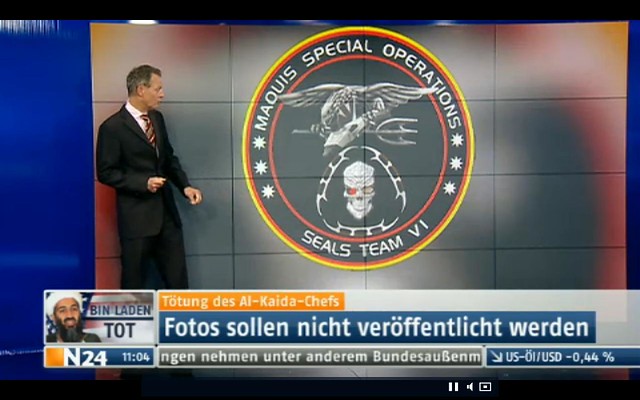
SES ASTRA announces that N24 will be first German news channel broadcasting in HD on the ASTRA HD+ platform.
[SatNews – 06/15/2011]

WildBlue launches low-cost rural broadband plan funded through the American Recovery and Reinvestment Act.
[socaltech – 06/15/2011]

Satellite manufacturers around the world prepare to compete for contract to build Nigeria’s second satellite.
[Vanguard – 06/15/2011]

Scientists say magnitude of decrease in solar activity may indicate that the current solar maximum might be the last we’ll see for a few decades, as sunspot cycle may be going into hibernation.
[Bloomberg – 06/15/2011]

The Satellite Interference Reduction Group teams up with the Global VSAT Forum to develop initiatives to combat satellite interference.
[Satellite Today – 06/15/2011]

Vizada and Thrane & Thrane sign partnership agreement to launch new broadband offering to the maritime market.
[Satellite Today – 06/15/2011]

Satellite and cellular phone provider Mobal expands Website with comprehensive buyer’s guide to prepaid and postpaid phones and rental options.
[MailWire – 06/15/2011]

Air Force recoups costs to save AEHF satellite that failed to reach orbit, as Lockheed Martin will offset up to $25m of those costs.
[SpaceFlight Now – 06/14/2011

U.S. climate experts stress importance of new weather satellites in era of tight federal budgets, as current earth observation satellites have served past their lifetimes.
[R&D Magazine – 06/14/2011]

U.S. Air Force’s newest Space Based Infrared Systems GEO-1 satellite successfully achieves orbital slot postion.
[SatNews – 06/14/2011]

Burma to launch first state-owned satellite, expand communications.
[Mizzima – 06/14/2011]

MultiChoice Africa and Eutelsat initiate pan-African student competition called “DStv Eutelsat Star Awards” to inspire innovative thinking among secondary and high-school students, create awareness how science and technology can be applied in everyday life, and show impact of satellites on African continent development.
[PR Newswire – 06/14/2011]

ARY Digital leases C-band capacity on AsiaSat 3S.
[Satellite Today – 06/14/2011]

SpaceX is chosen to launch new Thaicom 6 telecommunications satellite into geosynchronous orbit.
[SatNews – 06/13/2011]

House appropriators slam USAF satellite block buy proposal, stating that detailed information on the strategy is “woefully lacking,” and denying request for advance appropriations.
[Space News – 06/13/2011]

Orbital Sciences wins contract to build Thailand communications satellite.
[Examiner – 06/13/2011]

Norsat granted $3.5 million satellite-based communications network and services contract by First Nations’ Emergency Services Society of British Columbia.
[Satellite Today – 06/13/2011]

San Marino RTV signs three-year contract with Eutelsat to broadcast SMtv channel on Eurobird 9A satellite.
[Satellite Today – 06/13/2011]

Inmarsat and Thrane complete IPv6 trials over BGAN.
[Satellite Today – 06/13/2011][

Expanding use of remotely piloted aircraft by Defense Department consumes large amounts of satellite bandwidth – currently over 80% is commercial capacity – commercial operators are expected to upgrade geosynchronous fleets over next few years to meet increasing demand.
[National Defense Magazine July Report]

Air Force embraces small satellites as budget outlook grows dim.
[National Defense Magazine July Report]


The Price Is Right


There are a lot of very smart people in the satcom business. Rocket scientists, engineers and business-heads find ways to make money. Good money. We’re talking 80% EBITDAs. You don’t have margins like that without knowing what you’re doing.

You’ve got to plan ahead years in advance, making sure your space assets are fully utilized. The radio spectrum you own is the most prized “asset” you’ve got. You can always build more spacecraft, but you can’t make more spectrum. Unless you find ways to either make better use of what you got or go out and get spectrum that’s not being used effectively.

Great. Now go out and sell it, baby!

Pricing is the real challenge. New satcom services priced to assure an 80% EBITDA are destined to fail, as they’re based on costs incurred many years before service launch. And what do we know of today’s data communications pricing schemes? They move fast. Very fast. Extremely competitive, too, so prices move lower and lower. Iridium? Financial disaster: pricing was based on mobile costs-per-minute in the 1990’s. When they launched, people were paying a fraction of that. As Iridium was about to go belly-up, the U.S. DoD steps in and says “we’ll carry you after bankruptcy.” Why? Iridium covered the globe with a diverse path for communications, and that’s very valuable. But not at that old price.

Diversity is for when other communications fail or are unavailable. We always thought a combination iPhone that uses the S-band for connectivity when regular signal or WiFi are not available would be oh so cool. So maybe now our vision might be realized.

With Dish Network as the “stalking horse bidder” in the TerreStar Networks bankruptcy auction, they see something not readily apparent to others. It’s the spectrum, stupid. Yes, TerreStar has S-band spectrum for CONUS service, but they also have authority for a combined satellite and ancillary terrestrial component (ATC) service. The FCC granted authority in January, 2010. This is really good and it comes without the GPS interference crap that LightSquared has to contend with.

Good move. Dish has a chance to sell mobile data plans with their current TV service packages — or perhaps future packages for on-demand (Blockbuster) or à la carte services to appeal to the growing number of cord-cutters.

Two scenarios emerge: (1) Dish Network adds reasonably-priced mobile data plans to satellite TV services, and (2) an alternate mobile telecom infrastructure emerges to augment today’s overloaded terrestrial networks.

Dean Olmstead was a fan of TerreStar, so he probably had much to do with laying plans to make this kind of move before he passed on.