Author Archive

Atlas Launches (Secret) NRO Payload

Monday, June 18th, 2007

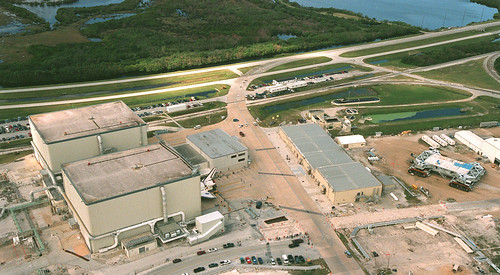
On Friday, a United Launch Alliance Atlas V rocket lifted off from Space Launch Complex 41 at Cape Canaveral, carrying a pair of top-secret spy satellites for the National Reconnaissance Office (NRO).

The NRO designs, builds and operates America’s reconnaissance satellites. According to their website:

The NRO is guided by its vision of being Freedom’s Sentinel in Space: One Team, Revolutionizing Global Reconnaissance. Our Mission: The NRO develops and operates unique and innovative overhead reconnaissance systems and conducts intelligence related activities essential for U.S. National Security.

We’ve uploaded video of the launch:

And here’s a rather beautiful clip of the rocket in the Centaur stage:

One minor glitch: the satellites initially ended up in the wrong orbit:

Two top secret National Reconnaissance Office (NRO) ocean surveillance spacecraft were fired into the wrong orbit June 15 when the 200-foot-tall Atlas V rocket they were riding on stopped firing too early in space following launch from Cape Canaveral, Fla.

The top secret satellites separated safely from the malfunctioning booster, however, and have enough rocket propellant to continue their mission, an official said on background.

The U.S. Air Force, which managed the Atlas V launch, and the NRO have begun an official investigation into the launch and malfunction. The $83 million Atlas V used in the launch is a model 401 with no solid rocket boosters.

"The Atlas V people have a lot of explaining to do," the official said on background. The flight was the first NRO secret mission for the new Atlas V Evolved Expendable Launch Vehicle.

The two spacecraft are critical to tracking ships that may conceal al Qaeda terrorists. The new spacecraft will also track Iranian and Chinese sea-based military operations.

The Lockheed Martin website has a nice diagram of the Atlas V 400 series. The Atlas is used extensively to lift satellites for the U.S. Air Force and other government customers. In fact, the manifest is so full manifest of government projects that  commercial launches are increasingly going to Kazakhstan and French Guiana. 

The NRO also has a website for children; and for those of us adults with a child-like fascination with all things space, be sure to check out this article from Wired, which covers spy satellites — and the amateurs who look for them.
 

DIY Friday: Card-Dealing Robot!

Friday, June 15th, 2007

So you’ve completed all of our DIY Friday activities, and the beer-launching robot fridge is armed for the weekend, but you want more. Something to do inbetween catching aerial beers with your friends.

The answer, you decide, is cards — which brings us to today’s DIY Friday project: the robot arm playing card dealer.

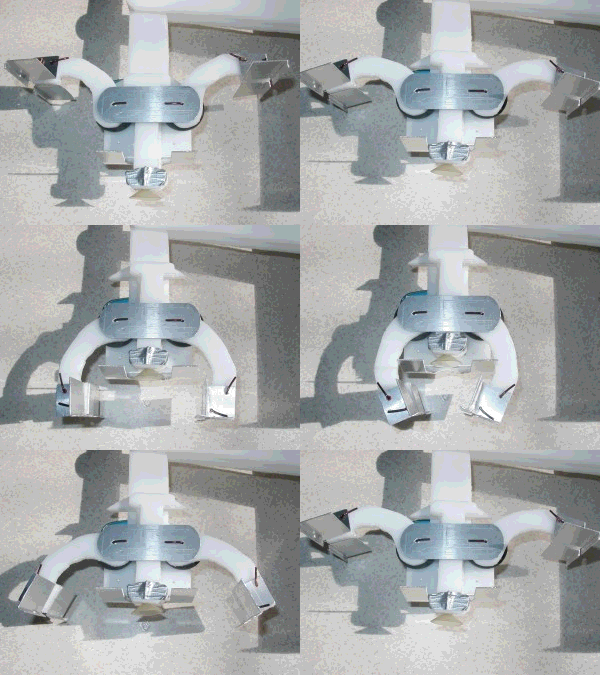
The robot is capable of shuffling cards, cutting the deck twice, and dealing cards to any number of players. A suction cup is used to pick up the cards; two remote controlled servos lift the arm; it’s the gripper that is the most technical part of the robot:


Finally, the robot arm is programmed using a PIC16F877. The inventors of the arm had to use "an external zero insertion force PIC programmer so we kept several PICs around to swap out quickly. A motor driver IC controlled the DC motor. The motor had a PID control algorithm with a homemade encoder."

No word yet on whether the arm is programmed to stay on a soft 17.

(Also be sure to check out this robot arm tutorial page from the Society of Robots.) 


Connectivity While Adrift

Thursday, June 14th, 2007

Isolation has been among the defining characteristics of maritime travel ever since man first crossed the oceans in primitive boats. Once you left shore, there was no way to reach those still on land until the journey was over.

Radio, of course, changed that, though it was not until the advent of satcom that true global connectivity became available. And today the progression of maritime communications continues with the introduction of seamless global roaming for data and voice communications at sea.

A truly seamless system would give each ship a direct phone number that would work anywhere in the world — meaning you could call, say, the rower of the Zeeman Ocean Challenge to say, "How are your arms feeling now?"


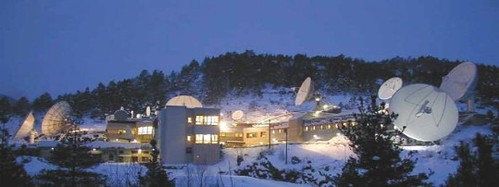
Telenor (whose Eik teleport station in Norway, which provides telecom services to the the North Sea, is pictured above) has just unveiled their product to reach a marketplace that is literally oceans-wide:

OceanRoam™ will provide vessels worldwide Internet and telephone connectivity around-the-clock using the ships’ assigned IP addresses and telephone numbers regardless of location. 
Telenor’s OceanRoam will offer “always-on” Internet access and IP-based service at a fixed monthly price.  The service will enable voice services and unlimited data transfer for ship’s business and crew communications and will feature a variety of committed information rate (CIR) service levels up to 128 kbps.  Additionally, OceanRoam will meet vessels’ communications requirements for bandwidth intensive applications, such as video conferencing and large data transfers, by providing a series of optional bandwidth on demand information rates of up to 1024 kbps.

(Note that the Director of Media and Public Relations is named, appropriately enough, Tom Surface.) 

We haven’t quite delved into the details of how OceanRoam differs from another Telenor product, WaveCall, but Alan Spicer runs a good blog on marine telecom that provides in-depth analysis of products and trends for those interested in following the maritime space (no pun intended) more closely. DigitalShip is also a good resource for tracking the convergence of IP, satcom, and other communications platforms in the maritime marketplace.

Satcom Supports Security at G8

Thursday, June 7th, 2007

It’s a reoccurring ritual. World leaders gather for a major summit such as the current G8 Summit in Rostock, Germany. Citizens and activist groups gather outside to unfurl banners, carry placards and hoist puppets in the air, all as a means of airing their grievances and points of view. And between these two groups, security personnel work to keep a respectable distance and, when possible, to keep the peace.

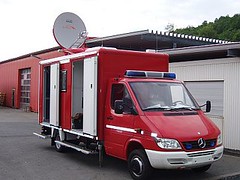
Serving those security and first responder forces is an integrated array of satcom technology

ND SatCom, an SES ASTRA company, is supporting reliable communications during the G8 Summit in Heiligendamm (Germany) for first responders of the German Federal Agency for Technical Relief (THW). THW staff members will be providing technical assistance to the summit’s infrastructure and using the network for telephony and data exchange via satellite. A satellite-based communication network using SkyRAY Light, ND SatCom’s new antenna system, shall establish the link to THW headquarters in Bonn via a mobile station in Heiligendamm. The SkyRAY Light system is very fast to deploy and easy to use, which is of utmost importance in critical government applications. SkyRAY Light’s operational concept is plug & play. Antenna pointing is based on a one-button operation enabling non-technical first responders to be on air within minutes.

There’s no shortage of footage from the current G8 meeting in Rostock, incuding this clip from SkyNews featuring Annie Lennox:

Here’s more from CNN.

But not all the protests are turning into clashes. Here’s a Flickr photo from Tuesday’s campaign stunt by Oxfam, the day before the G8 leaders arrived in Rostock for 2007’s G8 Summit, featuring the infamous ‘Big Heads’ dressed as Pinnochio:


Union Strike at Kennedy Space Center?

Tuesday, June 5th, 2007


"A union representing about 570 United Space Alliance space shuttle program workers at Kennedy Space Center is recommending that the workers vote today to authorize a strike," Florida Today reports:

The bargaining team for the International Association of Machinists and Aerospace Workers Local 2061 believes that the company’s latest contract offer is "substandard," in relation to contracts at other aerospace companies, according to Lynn Beattie, a member of the bargaining team and former Local 2061 president.

He said the company’s proposals related to health care and retirement benefits are among the provisions the union doesn’t like.

The company and union were negotiating into the evening Friday before talks ended. Beattie said the union would present members with the company’s latest offer this morning.

If Local 2061 members turn down the contract, both sides still have a chance to resolve the situation during a five-day "cooling-off "period, Beattie said. If that is not successful, the workers could go out on strike as early as the end of next week, he said.

The IAM website urges its visitors to "keep the pressure on." Negotiations opened on May 21st, and have focused on job security and retirement concerns "in the wake of plans by NASA to shift from the current Space Shuttle program to next generation Ares/Orion systems." The  United Space Alliance is a joint venture of The Boeing Company and Lockheed Martin, and is contracted as NASA’s main provider of services for the space shuttle program through 2010.

A strike, if voted upon, would not have an impact on the shuttle Atlantis launch scheduled for this Friday, because the Local 2061 workers’ jobs are not directly related to launches, according to a USA spokesperson. 

Joint C3I Shows Skillz

Tuesday, May 29th, 2007


No, the title of this post isn’t referring to a new rap group. Joint C3I stands for "Joint Command, Control, Communications and Intelligence," and Raytheon Company recently demonstrated its Joint Battlefield Integration capability with a "real-time hardware in-the-loop" demonstration of Joint C3I:

 The… demonstration pushed required battlefield situational awareness to a new level by using existing and future communications infrastructures to enable real-time warfighter response at both strategic and tactical command levels. Using Raytheon’s Joint Fires (JFires) tool, which brings its own unique warfighting capability, commanders will now be able to view a single integrated picture by integrating tactical command and control with intelligence systems using satellite communications links. Open architecture and net-enabled products were key contributors bringing this capability forward….

The backbone technology that enables this capability is Raytheon’s TCN(R) (Tactical Component Network) software. Systems integrated for the demonstration included the U.S. Navy’s Zumwalt Total Ship Computing Environment, Raytheon’s JFires sensor networking environment, a satellite communications link, the U.S. Air Force’s Distributed Common Ground System, and Deep Siren, a submarine tactical paging system. Raytheon officials conducting the demonstration said that other sensor systems will also be integrated into Joint C3I.

Global connectivity is achieved using advanced extremely high frequency satellite communications with bandwidth to support video streaming, still images and intelligence, surveillance and reconnaissance data among geographically dispersed terminals.

Solypsis has a flash animation that gives you more information about one TCN (Tactical Component Network), while this document from the Navy Department Library explains the Navy’s view of network-centric warfare:

The concept of network-centric warfare (NCW) is a key element of the Department of Defense’s (DOD’s) transformation effort.1 NCW focuses on using computers, highspeed data links, and networking software to link military personnel, platforms, and formations into highly integrated local and wide-area networks. Within these networks, personnel will share large amounts of critical information on a rapid and continuous basis. DOD believes that NCW will dramatically improve combat capability and efficiency.

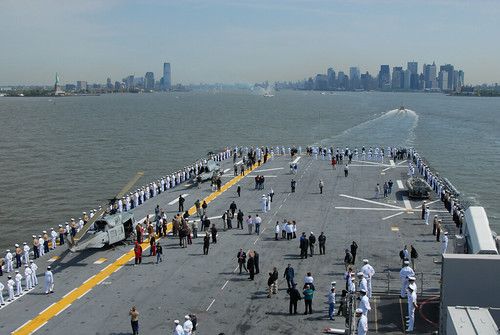
While we’re on the subject of the Navy, this weekend marks the 20th Navy Fleet Week in New York. Among the events (opens in PDF) are the chance to speak with developers of the latest Navy/Marine Corps technologies; the chance to take a virtual tour of a battle zone; and (this one we’re looking forward to) the opportunity learn to weld pipes in a virtual shipyard using the Office of Naval Research´s virtual reality training systems.

And who knows, learning to weld pipes might come in handy for our DIY Friday series.

BP Hits Oil Off Angola

Wednesday, May 23rd, 2007

Offshore Magazine reports that BP has hit deepwater oil off the coast of Angola:

Sociedade Nacional de Combustíveis de Angola (Sonangol) and BP Exploration (Angola) Ltd. have hit oil with the Cordelia discovery in ultra deepwater block 31 offshore Angola. Cordelia is BP’s fourteenth discovery drilled in block 31.

GlobalSantaFe’s Jack Ryan drillship drilled the Cordelia well in 2,308 m (7,572 ft) water depth 371 km (230.5 mi) northwest of Luanda. The well reached a TVD of 4,040 m (13,255 ft). Cordelia lies 3.5 km (2 mi) to the southeast of the recently announced Miranda discovery. The well tested at an operationally restricted flow rate of 2,063 b/d of oil.

Sonangol is concessionaire of block 31. BP Exploration (Angola) Ltd. operates the block with 26.67% interest. Partners include Esso Exploration and Production Angola (Block 31) Ltd. with 25% interest, Sonangol E.P. with 20% interest, Statoil Angola A.S. with 13.33% interest, Marathon International Petroleum Angola Block 31 Ltd. with 10% interest, and Total subsidiary TEPA (Block 31) Ltd. with the remaining 5%.

The capital city, Luanda, is booming.

Rubidium Clock Marks Year In Orbit

Tuesday, May 22nd, 2007

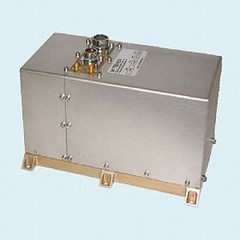
Physorg reports on the rubidium clocks being tested for ESA’s Galileo satellite system, which, when fully deployed in the early years of the next decade, will be the first civilian positioning system to offer global coverage:

GIOVE-A, the first Galileo in-orbit validation element, was launched on 28 December 2005. One of its two rubidium clocks was switched on for the first time on 10 January 2006 and Galileo signals were transmitted two days later.

The timekeeping of the clocks on the Galileo spacecraft will play an important role in determining the overall accuracy of the system, so evaluation of their performance is a crucial part of the Galileo in-orbit verification process.

The orbit of GIOVE-A is precisely measured by a network of 10 ground-based laser ranging stations, to provide orbital data independent of the navigation data. The navigation signals broadcast from GIOVE-A, and from the GPS spacecraft constellation, are received by the world-wide network of 13 Galileo experimental sensor stations belonging to the GIOVE Mission Segment.

The technique used to characterise clock performance is known as Orbit Determination and Time Synchronisation (ODTS). ODTS is a statistical method which takes the Galileo and GPS data, together with the laser ranging data, and calculates spacecraft orbits, clock times, the effects of the Earth’s atmosphere on the radio signals and the delays in the receiving systems. The precision of the calculations is so great that even the tiny orbit disturbances caused by the pressure of sunlight shining on the satellites is taken into account…. 

The measured performance of the clocks meets the specification over short and medium timescales. A few ‘jumps’ in clock frequency have been observed, which impact the long term accuracy. Such frequency changes are a well known phenomenon in rubidium clock technology but their cause is not yet well understood. Their effect on GPS performance has already been analysed and corrective measures proposed. The Galileo team are ground testing a number of improvements to the clock design which are intended to minimise both the occurrence and size of the jumps. 

(It ain’t pretty, but it’s accurate!)

The ESA website offers further explanation about the accuracy of the rubidium clock:

The Galileo satellites will carry two types of clocks: Rubidium atomic clocks and Hydrogen atomic clocks. The stability of the Rubidium clock is so good that it would lose only 3 seconds in 1 million years, while the Hydrogen maser is even more stable and it would lose only 1 second in 3 million years. However this kind of stability is really needed since an error of only a few nanoseconds (billionths of a second) on the Galileo measurements would produce a positioning error of meters which would not be acceptable.

For those who really want to get into the complexities of such atomic clocks, check out this page from Harvard’s Department of Physics. In addition to details about the frequencies used by atomic masers (hey, no one said this wasn’t rocket science!) the page features a downloadable poster illustrating N-resonances and atomic clocks.

Surf’s Up

Monday, May 21st, 2007

First, let’s set the mood. (Click the button to play .)

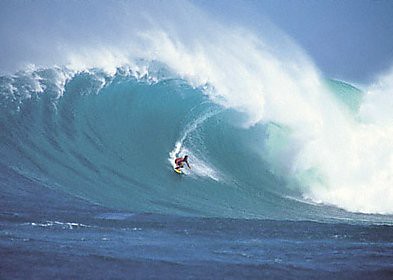
Next, let’s set the scene.


That’s right — it’s Monday, and we don’t feel like working, so we’re going to fantasize for a bit about surfing and the freedom of the endless summer that is almost upon us.

This idle day dreaming, to be clear, is prompted by this news report of a series of huge waves that struck Reunion Island in the Indian Ocean (as well as parts of Indonesia, the Maldives, Thailand and Western Australia) on Saturday.

There was no official warning about the freakish waves that killed at least one person, damaged hundreds of homes and displaced thousands of people across Indonesia. Homes and fishing boats were also damaged in Thailand and the Maldives.

Weather officials said the waves were the result of an accumulation of winds in one spot on the ocean, but were looking at why they were so intense.

How do weather officials know where the waves originated? Why, through satellite observation, of course:

The origin and movement of waves reaching up to 11 metres that devastated France’s Reunion Island in the Indian Ocean on Saturday evening have been detected with ESA’s Envisat satellite.

The waves that thrashed the southern port of Saint Pierre, leaving two fishermen missing, causing several piers to collapse and flooding several homes and businesses, originated south of Cape Town, South Africa, and travelled northeast for nearly 4000 km over a period of three days before slamming into Reunion Island.

Dr Bertrand Chapron of IFREMER, the French Research Institute for Exploitation of the Sea, and Dr Fabrice Collard of France’s BOOST Technologies in Brest located and tracked the swells using standard processed Synthetic Aperture Radar (SAR) ESA products…

Chapron and Collard are working on a project that will make data for global swells available to scientists and users by the end of the year as a demonstration. The products will be useful for weather centres to complement the accuracy of their sea forecast models.

Envisat is equipped with an advanced version of the SAR instrument, Advanced Synthetic Aperture Radar (ASAR), flown on the ERS-1 and ERS-2 missions. Its wave mode acquires 10 by 5 km small images, or ‘imagettes’, of the sea surface every 100 km along the satellite orbit. These small ‘imagettes’, which depict the individual wave heights, are then mathematically transformed into averaged-out breakdowns of wave energy and direction, called ocean-wave spectra, which ESA makes available to scientists and weather centres.

A typical SAR satellite images a swath of 400 km, enough to capture complete ‘mesoscale’ phenomena such as tropical storms. While optical satellite images show the swirling cloud-tops of a hurricane, a SAR image pierces through the clouds to show the sea surface roughness and its modulation through the combination of wind wave and currents….

As part of the Global Monitoring for Environment and Security (GMES), a joint initiative of the European Commission and ESA, the space agency has undertaken the development of Sentinel-1, a European polar-orbiting satellite system for the continuation of SAR operational applications. The Sentinel-1 SAR instrument will have a dedicated wave mode allowing the Near Real Time tracking and forecasting of swell for European users. 

No need to wait for the Europeans to get their act fully together, however. Thanks to publicly-available information from the U.S. Navy’s Fleet Numerical Meteorology and Oceanography Center, surfers can already plan their vacations according to where the waves are, dude. Using the WaveWatch III model, FNMOC provides computer-generated models of global wave height and direction (such as this global model).

Proving, as we well know as we sit at our desks this morning daydreaming, that the surf’s up, dude. Somewhere. 

Test

Friday, May 18th, 2007