Archive for the ‘Cool Stuff’ Category

A.P. Looks at Virgin Galactic’s Lowered Profile

Monday, August 27th, 2007

Few space stories have captured the public’s imagination (and the press’ attention) more than the efforts of Virgin Galactic to bring the nascent space tourism business to the (well-heeled) masses via the Burt Rutan-designed SpaceShipTwo.
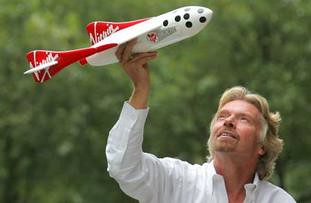
 

While the attention is surely a boon to Virgin Galactic (and probably a source of resentment for its competitors), it can be problematic when things go wrong, as when an explosion at the factory of Scaled Composites (which made the first private trip into space with SpaceShipOne) killed three people in July during testing of a propellant system.

Today, the Associated Press looks at how the accident has impacted Virgin Galactic’s public profile: 

The accident at the remote site run by famed aerospace designer Burt Rutan rattled the fledgling space tourism industry, which has enjoyed a honeymoon period since 2004 when Rutan launched SpaceShipOne, the first private manned rocket into space.

It also offered insight into how two pioneering companies that forged an unlikely partnership two years ago to fly civilians to space reacted to the tragedy. In a reversal of roles, Richard Branson’s publicity-seeking Virgin Galactic kept a low profile while its usually silent partner, Rutan’s Scaled Composites LLC, took to the Internet to mourn its workers.

Some space experts believe Virgin Galactic is following the right strategy because the accident was of an industrial nature and not directly related to spaceflight. But eventually customers and the public will demand answers, they say.

While Virgin Galactic kept a low public profile after the accident, the company did reach out privately to reassure its "founding" customers, who have already paid $200,000 to be the first to go up in SpaceShipTwo, according to the AP report.

It was Virgin Galactic’s partner, Scaled Composites, that was forced into the limelight following the accident:

Before the accident, hardly anything was known about Scaled’s progress on its suborbital spaceship program. Afterward, Rutan acknowledged for the first time the company was testing a propellent system for SpaceShipTwo, the successor to SpaceShipOne. Many details about the program are still unknown, including how far along Scaled is….

Scaled has since shed some of its stoic image. Its technical Web site was transformed into a virtual shrine for the three rocket workers killed in the line of duty. It set up a memorial fund, posted poignant online remembrances and gave updates on funeral arrangements and conditions of the injured, who are expected to survive.

Scaled also sought outside experts to determine what went wrong and vowed to share lessons learned with the industry to prevent another accident.

"Burt is taking it hard because it’s the first time he’s lost people. There is a feeling of shock that some of his friends died," said space business consultant Thomas Matula.

The Personal Spaceflight Federation, made up of more than a dozen private space companies, has vowed to plow ahead despite the tragedy in Mojave, according to the article. 
Voyager, 30 Years On… and On…

Tuesday, August 21st, 2007

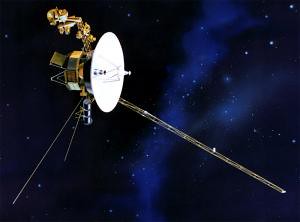
Billions of miles away from earth, way past the edge of our solar system, Voyager 1 is quietly (we assume) celebrating its pearl anniversary this week.


Space.com reminds us of the two Voyagers’ origins: 

Voyager 2 launched on Aug. 20, 1977, and Voyager 1 launched on Sept. 5, 1977. Both spacecraft continue to return information from distances more than three times farther away than Pluto, where the sun’s outer heliosphere meets the boundary of interstellar space…

Voyager 1 currently is the farthest human-made object at a distance from the sun of about 9.7 billion miles (15.6 billion kilometers). Voyager 2 is about 7.8 billion miles (12.6 billion kilometers).

Originally designed as a four-year mission to Jupiter and Saturn, the Voyager tours were extended because of their successful achievements and a rare planetary alignment. The two-planet mission eventually became a four-planet grand tour. After completing that extended mission, the two spacecraft began the task of exploring the outer heliosphere.

During their first dozen years of flight, the spacecraft explored Jupiter, Saturn, Uranus, Neptune and their moons. These planets were previously unknown worlds. The Voyagers returned never-before-seen images and scientific data and helped make fundamental discoveries about the outer planets and their moons.

The spacecraft revealed Jupiter’s turbulent atmosphere, which includes dozens of interacting hurricane-like storm systems, and erupting volcanoes on Jupiter’s moon Io. They also showed waves and fine structure in Saturn’s icy rings from the tugs of nearby moons.

 
The NASA Voyager site also contains some amazing facts about the spacecraft, their navigation and observation technologies, and the scientific discoveries that they have made possible.

30 years is a long time, to be sure — but we should enjoy many more anniversaries to come: 

 Barring any serious spacecraft subsystem failures, the Voyagers may survive until the early twenty-first century (~ 2020), when diminishing power and hydrazine levels will prevent further operation. Were it not for these dwindling consumables and the possibility of losing lock on the faint Sun, our tracking antennas could continue to "talk" with the Voyagers for another century or two!


Phoenix & Mars Are All Right

Wednesday, July 25th, 2007


Great animation, via Phoenix Mars Mission, which launches next week:

Rough-Cut Launch, Entry, Descent, and Landing Animation Developed in the summer of 2004, this animation visulaizes launch in August 2007 and entry, descent, and landing of the Phoenix Mars Mission in May 2008. Currently the animation is in the rough-cut phase and is being modified as the spacecraft develops. The animation was created by Maas Digital under the direction of the Jet Propulsion Laboratory’s Solar System Visualization Project.


Darpa Goes “Deep Green”

Tuesday, July 24th, 2007

When it comes to battlefield planning and execution, a crystal ball would certainly make a field commander’s life a whole lot easier.

That’s exactly what DARPA — the research and development arm of the Department of Defense — hopes to create (sort of) with the "Deep Green" program.


DARPA describes the requirements for Deep Green in its call for ideas (PDF here):

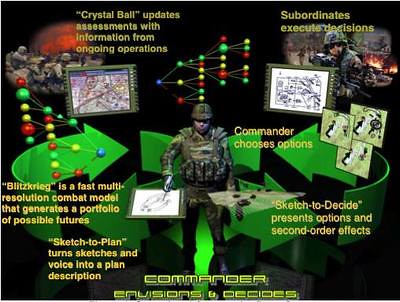
Deep Green will build a battle command decision support system that interleaves anticipatory planning with adaptive execution. Deep Green must be capable of addressing the full spectrum of joint and combined arms capabilities available to the modular brigade commander, drastically increasing the option and future space. This will allow the commander to think ahead, identify when a plan is going awry, and help develop alternatives “ahead of real time.” The commander (and his support staff) is involved in essentially two major asynchronous functions: generating options and making decisions. The goal of this program is to create a commander-driven system to assist the commander and his support staff in generating options or Courses of Action (COAs).

Wired explains further: 

Deep Green has a half-dozen different interlocking components, including a "Sketch to Plan" program that reads a commander’s doodles, listens to his words, and then "accurately induces" a plan, "fill[ing] in missing details."  That allows an officer "to specify an option at a coarse level, then move on to the next cognitive task."  A related program, "Sketch to Decide" allows a commander to "see the future" by producing a "comic strip" to represent his possible options in a given situation.  That may "sound exotic," the Agency notes.  But "since the 1970s (and perhaps earlier), there have been novels and game books in which the reader is asked to make a decision and then is directed to a different page or paragraph, depending on the choice made."

To make these warzone versions of choose-your-own-adventure novels, Darpa proposes two pieces of software. "Blitzkrieg" will quickly model sets of alternatives, while "Crystal Ball" will take information currently coming into a headquarters to figure out which scenarios are the most likely to happen, and which plans are likely to work best.    Crystal Ball will use this estimate to nominate to the commander futures at which he/she should focus some planning effort to build additional options/branches.  Crystal Ball will identify the trajectory of the operation in time to allow the commander to generate options before they are needed.

 So why the name Deep Green? The Register snarkily explains:

The colour presumably alludes to the fact that – at least to start with – the robocommand package is intended to help US Army bird colonels handle their "modular brigade" battle groups. If the project were a British Army one, the project might be known as "Deep Brown" (Or there again, maybe not). As Deep Blue is already taken, future versions for the other US services will presumably be known as Deep Periwinkle (air force) and Actually Deep Blue (navy).

The R&D timeline is slated for just three short years, though that estimate is made without the benefit of a crystal ball, we presume.

Astronauts Toss Junk Overboard from ISS

Monday, July 23rd, 2007

At 6:24 am EDT this morning, two International Space Station crew members — Astronaut Clay Anderson and cosmonaut and station commander Fyodor Yurchikhin — stepped from the Quest Airlock to take out the trash.

Specifically, they had to get rid of a refrigerator-size ammonia reservoir and a supporting brace.

The Houston Chronicle explains:

After months of deliberation, NASA decided to throw away the coolant tank and a 218-pound brace. Normally, the no-longer-needed pieces of hardware would have been returned to Earth aboard a space shuttle.

However, NASA is planning only 12 to 14 more assembly and supply missions to the 210-mile-high orbital outpost before it retires the shuttle fleet in 2010. There won’t be enough room to bring the ammonia tank and the brace back, space agency officials said earlier this month.

The brace was occupying external stowage space on the station that will be needed to hold a new gyroscope that is awaiting launch aboard the shuttle Endeavour early next month.

But wait — we’ve written before about the dangers that space junk poses to satellites and the ISS. So how will the ISS avoid smacking into a 1,400 pound ammonia coolant tank? 

Late today, NASA plans to raise the altitude of the space station by several miles to lower the risk of a catastrophic collision with the space station. The two objects will be tracked by military radar so the operators of other spacecraft can be notified of a potential collision.

Even in a zero-G environment, of course, trash can be unwieldy. That’s why Cosmonaut Oleg Kotov stayed in the U.S. laboratory Destiny to operate the Canadarm2 and help the two spacewalkers with the morning chores:

Canadarm 2 is a larger and more sophisticated version of the robotic arm built for the space shuttle. Fully extended, the arm is nearly 18 metres long, three metres longer than the shuttle’s arm, and can handle loads up to 116 tonnes.

The new arm also has a hand on either end so one can latch onto the space station while the other end reaches out and picks up things that it needs. Then it can let go and grab on somewhere else.

The real talent in the new design is in its ability to move around where the astronauts most need the robot arm. The Canadarm 2 can crawl along the body of the space station on its two hands, end over end like an inchworm. The outside of the station has a number of sockets where the arm can plug in. As well, the arm can be fixed to a work platform that moves on rails from one end of the station to the other.

For all that sophistication, however, we are sad to report that the Canadarm2 still cannot open a can of beer. (See video.)

Video of this morning’s spacewalk can be seen here. Also check out this news report on astronaut Clay Anderson, who brought a football with him to the ISS in honor of his Nebraska roots.

DirecTV Satellite Launch Friday at 8:50 pm EDT

Thursday, July 5th, 2007

DirecTV customers have been promised 100 HD channels by September — and the delivery of that promise is riding on a rocket that launches tomorrow night.

The Proton Breeze M launch vehicle will lift off from Pad 39 at the Baikonur Cosmodrome, Kazakhstan, with the DIRECT 10 satellite on board. According to the International Launch Services (ILS) website, "this will be the debut of the Enhanced Proton Breeze M, which is capable of launching spacecraft over 6,000 kg into Geosynchronous Transfer Orbit (GTO)."

The payload is the Boeing-built Direct 10 satellite:

DIRECTV’s next-generation satellite features state-of-the-art antenna and payload subsystem that will provide customers with unparalleled national and local HDTV (High Definition Television) service. The powerful 131-transponder payload integrates 32 active and 12 spare TWTAs at Ka-band for national service and 55 active and 15 spare TWTAs for spot beams. The payload is powered by a gallium arsenide solar array that spans more than 48 meters. DIRECTV 10 will receive and transmit programming throughout the United States with two large Ka-band reflectors, each measuring 2.8 meters in diameter, and nine other Ka-band reflectors.

ILS is running a launch blog, where the most recent entry chronicles the rocket’s journey out to Pad 39 on Tuesday:

The rather uneventful train trip out to the pad could be watched from various points around Area 95 and drew the biggest crowd of onlookers we have seen out here so far. Everyone who wanted to attend was permitted on the pad deck to watch the incredible sight as the assembled ILV rolled horizontally into position next to the flame bucket. Then it was hydraulically rotated to its vertical launch position.

Talk about a photo opportunity. Pictures, videos, Russian and Americans alike… everyone tried to capture it in as many ways as they could. One of the favorite pictures to take is to pose as if one hand is pushing the rocket to vertical. It never really DOES look like one person is doing the lifting, but it is a tradition to try and get that shot to commemorate this exciting day.

The launch will be webcast live here. Also be sure to check out this photo gallery

To the Asteroid Belt!

Thursday, June 21st, 2007

NASA has scheduled a news briefing for next Tuesday, June 26, at 2 p.m. EDT.
The purpose of the news briefing is to preview the July 7 launch of the asteroid belt-bound Dawn mission.

Named "Dawn" because it is designed to study objects dating from the dawn of the solar system, Dawn will launch aboard a Delta II rocket from Cape Canaveral, Fla:

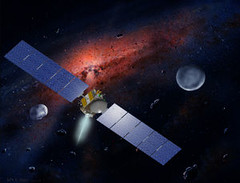
[The mission] will send the Dawn spacecraft, a robotic space probe, to the asteroid belt. Dawn will orbit and examine the two most massive members of the asteroid belt, the dwarf planet Ceres and the asteroid Vesta. Dawn will be the first spacecraft to enter into orbit around two different planetary bodies other than the Earth and Moon, and the first to visit the largest asteroid….

The mission’s goal is to characterize the conditions and processes of the solar system‘s earliest epoch by investigating in detail two of the largest protoplanets remaining intact since their formation. Ceres and Vesta have many contrasting characteristics that are thought to have resulted from them forming in two different regions of the early solar system; Ceres is theorized to have experienced a "cool and wet" formation that may have left it with subsurface water, and Vesta is theorized to have experienced a "hot and dry" formation that resulted in a differentiated interior and surface vulcanism.

To cruise from Earth to its targets it will use three DS1 heritage Xenon ion thrusters (firing only one at a time) to take it in a long outward spiral.

Images from the Hubble Space Telescope, such as the ones below, are being used by astronomers to help plan the mission:


 Of particular note is that this Dawn almost never arrived:

The mission originally was approved in December 2001 and was set for launch in June 2006. Technical problems and other difficulties delayed the projected launch date to July 2007 and pushed the cost from its original estimate of $373 million to $446 million. The decision to cancel Dawn was made March 2, 2006, after about $257 million already had been spent. An additional expenditure of about $14 million would have been required to terminate the project.

The reinstatement resulted from a review process that is part of new management procedures established by NASA Administrator Michael Griffin.

The briefing will air live on NASA Television and be streamed on the agency’s Internet homepage at www.nasa.gov.

DIY Friday: Card-Dealing Robot!

Friday, June 15th, 2007

So you’ve completed all of our DIY Friday activities, and the beer-launching robot fridge is armed for the weekend, but you want more. Something to do inbetween catching aerial beers with your friends.

The answer, you decide, is cards — which brings us to today’s DIY Friday project: the robot arm playing card dealer.

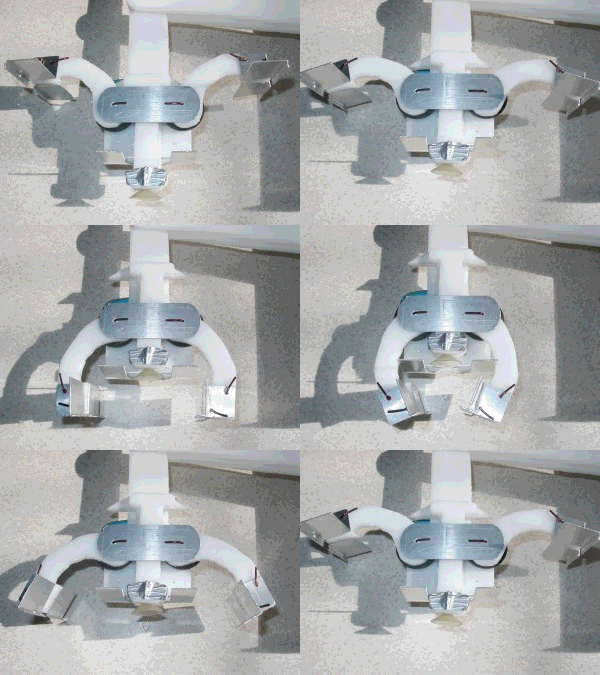
The robot is capable of shuffling cards, cutting the deck twice, and dealing cards to any number of players. A suction cup is used to pick up the cards; two remote controlled servos lift the arm; it’s the gripper that is the most technical part of the robot:


Finally, the robot arm is programmed using a PIC16F877. The inventors of the arm had to use "an external zero insertion force PIC programmer so we kept several PICs around to swap out quickly. A motor driver IC controlled the DC motor. The motor had a PID control algorithm with a homemade encoder."

No word yet on whether the arm is programmed to stay on a soft 17.

(Also be sure to check out this robot arm tutorial page from the Society of Robots.) 


Satcom Supports Security at G8

Thursday, June 7th, 2007

It’s a reoccurring ritual. World leaders gather for a major summit such as the current G8 Summit in Rostock, Germany. Citizens and activist groups gather outside to unfurl banners, carry placards and hoist puppets in the air, all as a means of airing their grievances and points of view. And between these two groups, security personnel work to keep a respectable distance and, when possible, to keep the peace.

Serving those security and first responder forces is an integrated array of satcom technology

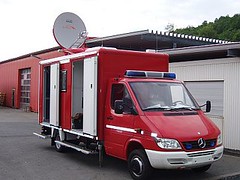
ND SatCom, an SES ASTRA company, is supporting reliable communications during the G8 Summit in Heiligendamm (Germany) for first responders of the German Federal Agency for Technical Relief (THW). THW staff members will be providing technical assistance to the summit’s infrastructure and using the network for telephony and data exchange via satellite. A satellite-based communication network using SkyRAY Light, ND SatCom’s new antenna system, shall establish the link to THW headquarters in Bonn via a mobile station in Heiligendamm. The SkyRAY Light system is very fast to deploy and easy to use, which is of utmost importance in critical government applications. SkyRAY Light’s operational concept is plug & play. Antenna pointing is based on a one-button operation enabling non-technical first responders to be on air within minutes.

There’s no shortage of footage from the current G8 meeting in Rostock, incuding this clip from SkyNews featuring Annie Lennox:

Here’s more from CNN.

But not all the protests are turning into clashes. Here’s a Flickr photo from Tuesday’s campaign stunt by Oxfam, the day before the G8 leaders arrived in Rostock for 2007’s G8 Summit, featuring the infamous ‘Big Heads’ dressed as Pinnochio:


Joint C3I Shows Skillz

Tuesday, May 29th, 2007


No, the title of this post isn’t referring to a new rap group. Joint C3I stands for "Joint Command, Control, Communications and Intelligence," and Raytheon Company recently demonstrated its Joint Battlefield Integration capability with a "real-time hardware in-the-loop" demonstration of Joint C3I:

 The… demonstration pushed required battlefield situational awareness to a new level by using existing and future communications infrastructures to enable real-time warfighter response at both strategic and tactical command levels. Using Raytheon’s Joint Fires (JFires) tool, which brings its own unique warfighting capability, commanders will now be able to view a single integrated picture by integrating tactical command and control with intelligence systems using satellite communications links. Open architecture and net-enabled products were key contributors bringing this capability forward….

The backbone technology that enables this capability is Raytheon’s TCN(R) (Tactical Component Network) software. Systems integrated for the demonstration included the U.S. Navy’s Zumwalt Total Ship Computing Environment, Raytheon’s JFires sensor networking environment, a satellite communications link, the U.S. Air Force’s Distributed Common Ground System, and Deep Siren, a submarine tactical paging system. Raytheon officials conducting the demonstration said that other sensor systems will also be integrated into Joint C3I.

Global connectivity is achieved using advanced extremely high frequency satellite communications with bandwidth to support video streaming, still images and intelligence, surveillance and reconnaissance data among geographically dispersed terminals.

Solypsis has a flash animation that gives you more information about one TCN (Tactical Component Network), while this document from the Navy Department Library explains the Navy’s view of network-centric warfare:

The concept of network-centric warfare (NCW) is a key element of the Department of Defense’s (DOD’s) transformation effort.1 NCW focuses on using computers, highspeed data links, and networking software to link military personnel, platforms, and formations into highly integrated local and wide-area networks. Within these networks, personnel will share large amounts of critical information on a rapid and continuous basis. DOD believes that NCW will dramatically improve combat capability and efficiency.

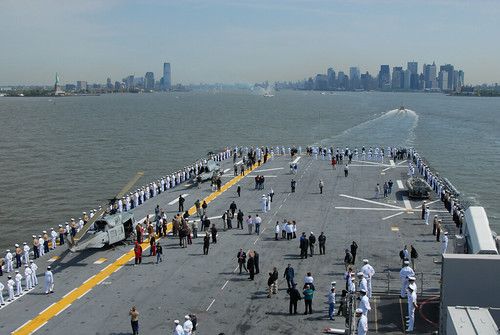
While we’re on the subject of the Navy, this weekend marks the 20th Navy Fleet Week in New York. Among the events (opens in PDF) are the chance to speak with developers of the latest Navy/Marine Corps technologies; the chance to take a virtual tour of a battle zone; and (this one we’re looking forward to) the opportunity learn to weld pipes in a virtual shipyard using the Office of Naval Research´s virtual reality training systems.

And who knows, learning to weld pipes might come in handy for our DIY Friday series.