Archive for the ‘Satellites’ Category

DIY Friday: Military Satellite Hacking

Friday, September 7th, 2007

Relax. We are not designing instructions on how to take-down U.S. military satellites. But the U.S. Space Countermeasures Hands On Program (Space CHOP, for short) is trying to do just that — using store bought, DIY gear to disrupt or take-down U.S. military satellites. The goal: if we can discover our own vulnerabilities first, we can protect ourselves from the real enemies. Popular Mechanics chronicles Space CHOP’s activities:

Space CHOP was formed in 1999, and one of its earliest experiments used a UHF generator and a small amplifier purchased from an electronics store. The team pieced together an antenna out of copper wire, PVC piping and other easily obtained materials. (The Air Force won’t elaborate on Space CHOP hardware or targets.) By aiming the antenna at the sky and turning on just a few milliwatts of power, the team showed it could block signals from a military communications satellite.

"We demonstrated that a few unsophisticated guys with a few thousand dollars’ worth of equipment could interfere with a seriously sophisticated satellite system," says John Holbrook, Space CHOP’s program manager. "If we had turned on full power, we would’ve knocked [the system] out."

And it is not just DIY, technological experimentation. This team uses good, old-fashioned intelligence and face-to-face investigating:

More often than not, the Space CHOP team doesn’t need any equipment to uncover a vulnerability. They scour the Internet for potentially damaging information. They case out Air Force bases. Or, posing as graduate students, they pump defense contractors and military officers for information until they’ve figured out a way to take down a satellite or its link on the ground.

As the author of this Popular Mechanics article, Noah Shachtman, notes on his blog, this is not a fantasy threat. From the AP:

The Bush administration warned Wednesday against threats by terrorist groups and other nations against U.S. commercial and military satellites, and discounted the need for a treaty aimed at preventing an arms race in space.

Undersecretary of State Robert G. Joseph also reasserted U.S. policy that it has a right to use force against hostile nations or terror groups that might try to attack American satellites or ground installations that support space programs. President Bush adopted a new U.S. space policy earlier this year.

"We reserve the right to defend ourselves against hostile attacks and interference with our space assets," Joseph said in prepared remarks to the George C. Marshall Institute.

Joseph, the senior arms control official at the State Department, said nations cannot all be counted on to use space purely for peaceful purposes.

"A number of countries are exploring and acquiring capabilities to counter, attack, and defeat U.S. space systems," Joseph said

He also said terrorists "understand our vulnerabilities and have targeted our economy in the past, as they did on 9/11." He said terrorists and enemy states might view the U.S. space program as "a highly lucrative target," while sophisticated technologies could improve their ability to interfere with U.S. space systems and services.

Not a member of Space CHOP but still want to hack satellites? Try grabbing free satellite signals.

JCSAT-11 Set to Launch Tonight

Wednesday, September 5th, 2007

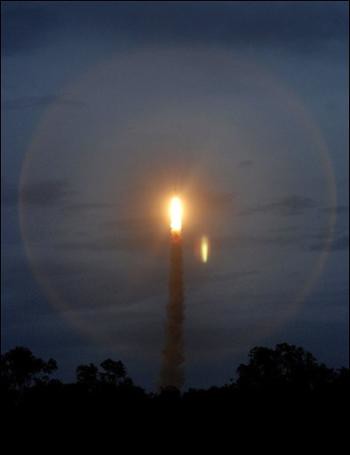
The Japanese telecommunications satellite JCSAT-11 was rolled out over the weekend to launch pad No.200 at the Baikonur cosmodrome. Liftoff of the Proton-M launch vehicle with a Briz-M upper stage is scheduled for 6:43 p.m. EDT tonight.

Built by Lockheed Martin, JCSAT-11 is a hybrid satellite, equipped with Ku-band high-power transponders and C-band medium-power transponders. For the time being, JCSAT-11 will be reserved entirely in orbit as a back up satellite for other JCSAT satellites as part of JSAT’s efforts to build a seamless global network.

ILS is lifting the bird. They’ve set up a launch blog, though the most recent post is a few days old:

 Bright and early Friday morning (well, not that bright, as the sun was just rising), the entire launch vehicle was rolled out to the Breeze M fueling station, where its propellants (fuel and oxidizer) were loaded into the upper stage over a two-day span. These operations are entirely in the hands of our partners at Krunichev and the Russian Space Forces, so our team had a little bit of time to catch up on administrative tasks. In the meantime, the Russian state commission arrived on the second day of fueling and gave the go-ahead for the integrated launch vehicle to roll to the pad with the JCSAT-11 satellite.

During these two fueling days, our team had a chance to sneak in a quick tour of the launch pad, which was used for the Russian N-2 Moon Booster and Energia boosters in years past. These were truly massive rockets, with a lift capability of over 100 metric tons (220,000 pounds) to Low Earth Orbit! The sheer scale of the pad was equally large and impressive.

On a related note, JSAT is helping the Widely Integrated Distributed Environment (WIDE) Project, which is seeking to produce the next generation of communications and broadcasting based on the IPv4 and IPv6 multicast technology. WIDE recently announced an IPTV partnership with the Open Student Television Network (OSTN), which we recently blogged about here.

As always, we’ll update you on the launch in the comments below. 

Go India, Go!

Monday, September 3rd, 2007


India’s ISRO had a great launch yesterday, via Hindustan Times:

After more than two hours of tension, space launcher GSLV on Sunday successfully placed in orbit the communication satellite INSAT-4CR. Weighing 2,130 kg, it is the heaviest payload to be placed in orbit by an Indian launcher.

With the failure of the last GSLV mission in July 2006 on their minds, Indian Space Research Organisation scientists had readied the present launch in a record 13 months. But the GSLV-F04 kept them on their toes well beyond the planned schedule time. The launch was delayed by a day due to a sudden change in weather. On Sunday, 15 seconds before lift-off at 4.21 p.m., the launch was once again put on hold. It wasn’t till two hours later that the problem—a failed communication link between the third cryogenic stage and ground link — was rectified and the space vehicle soared in a darkening sky.

The drama wasn’t over yet. Thirteen minutes into the flight path, mission control lost contact with the vehicle. Thankfully, it came back on and a hugely relieved ISRO chairman G. Madhavan Nair was heard muttering “thank god”.

Seventeen minutes after blast-off, as the satellite injected into the slotted transfer orbit, the smiles were back on the faces of the ISRO brass. “It was a dramatic mission with a lot of anxiety but something that gave us immense satisfaction when everything went off successfully. Team ISRO has done it,” said Nair.

B.N. Suresh, director of Vikram Sarabhai Space Centre, which designed the vehicle, said: “It was a small communication glitch.”

Nair said that though mission control had the option of postponing the launch by 48 hours, they were confident the launch sequence was in place. “The perfect and precise launch confirmed our confidence in the system and our team.”

This launch marks the third by ISRO in 2007 with two more scheduled.

Here’s the quick CNN/IBN report:


And here’s the full 5+ minute highlight reel:

Taxi!

Monday, August 27th, 2007

We’ve written before about plans to use satellite tracking technology to follow the progress of New York City Transit buses.

No one seemed to complain about that idea, since being able to see exactly where the bus you’re waiting for is on its route is of undeniable benefit to the riders, and at worst makes no difference to a bus driver.


But a plan to put GPS in New York City taxis has cabbies screaming and honking like — well, like New York City cabbies:

The New York Taxi Workers Alliance — which accounts for more than 8,000 city drivers — is threatening to curb their cabs on Sept. 5 if the Taxi and Limousine Commission does not get rid of their GPS system, which the union says invades a driver’s privacy….

The issue over a driver’s privacy is the driving issue in the debate, with a driver’s location being tracked no matter where he or she goes.

"The Taxi & Limousine Commission wants to spy on drivers and they want drivers to pay for it," argues Desai.

Both sides agree the TLC uses satellite GPS technology to track everywhere a taxi cab goes and keeps a log of that information. The dispute is over how that information will be used and just who will have access to it.

Mateo says it’s understandable that the taxis are fitted with the technology and adds it’s even advantageous to each driver. "It indicates where you’re located, you can see where you’re going," he says.

But Desai says there is a different motive for the TLC to install the satellite. "They will use this information to decide on drivers’ incomes," she says.

Sources within the TLC and individual taxi drivers tell CBS 2 that the GPS fears have nothing to do with privacy and everything to do with money. Many drivers fear the IRS will use the data to audit drivers and alert the INS about illegal immigrants driving cabs.

Could this be the first strike ever started by GPS? 

Satcom Success at WildBlue

Thursday, August 23rd, 2007

"Dude, I can’t handle dial-up anymore," is probably what people without broadband are saying. I know I can’t. For me, it’s either broadband or nothing at all.

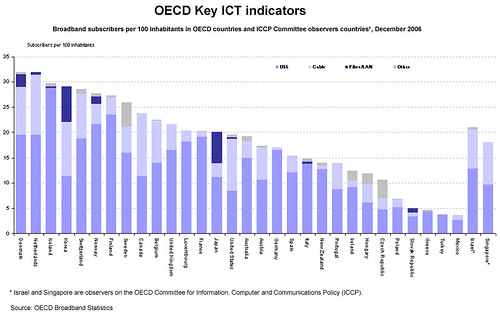
And the number of broadband subscribers keeps growing. According to the OECD (Organization for Economic and Co-operative Development), the U.S. has the most households with broadband, but doesn’t rank in the top 10 in terms of penetration:


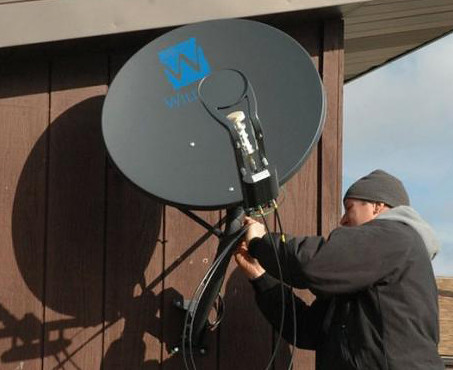
Seems the battle is being waged between cable and DSL providers. But what about people who are rural or ex-urban? Yes, WiMAX is building a following, notably via Clearwire. But satcom remains a viable option, with Hughes (HughesNet) and Spacenet (Starband) grabbing the early lead in providing national service. Now here comes WildBlue. Since launching their own spot-beam Ka-band satellite, they’ve been booking 1,000 and 1,500 new subscribers every week.


They’ve been so successful, in fact, that they’ve been turning away business in some coverage areas. Check this out, via SkyREPORT.com:

Satellite broadband provider WildBlue Communications is suspending sales across several beams due to capacity constraints. In a letter written to dealers this week, the company said it would begin to halt sales on three spot beams beginning Sept. 1.

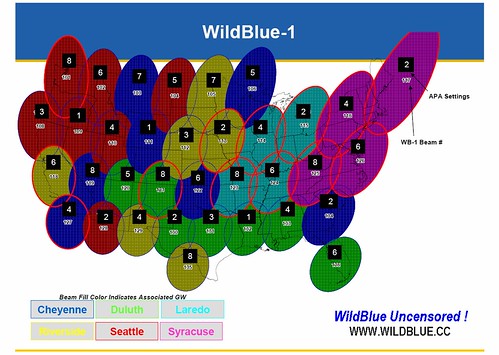
According to the WildBlue’s Beam Sales Suspension Notice, sales of the company’s satellite broadband product have continued at a "record-breaking pace" since the launch of its new satellite, WildBlue-1. As a result, the company said, WildBlue is experiencing new capacity constraints in certain areas of the U.S.

The beams in question are 131, 132 and 133, which, the company said, are 85 percent full. "Because of this overwhelming demand for WildBlue broadband service, and in order to maintain maximum performance for all of our customers, we are unfortunately left with no choice but to begin our first WildBlue-1 beam suspensions," the company said. The beams in question cover much of eastern Texas and the majority of both Louisiana and Alabama.

WildBlue told its dealers that beginning Sept. 1 the company will suspend all marketing and will not take any new orders in these particular beams. The company also said it has prioritized the portion of the country served by these beams for the next software and hardware upgrades, and it would notify dealers in advance of any additional capacity as it becomes available.

"In an effort to continue to provide the highest quality service for all of our valued WildBlue customers, we carefully monitor and manage the capacity on each of our spot beams throughout the country," the company told SkyREPORT. "As a normal course of business we may from time to time decide to suspend new sales in certain areas of the country, again, so that we can maintain the high quality service that our customers have come to expect from WildBlue."


Wow. Even before the launch, I heard they were selling out some capacity on Anik-F2 over the Ohio River Valley. Now new capacity is being sold out. Good for WildBlue, I say.

Googling the Universe

Wednesday, August 22nd, 2007

Without a doubt, Google Earth has put the functional utility of satellite imaging at the fingertips of millions, rekindling for many the shear wonder of what satellites can do to improve our lives.

Now Google’s virtual "satellites" (which aren’t really satellites, of course, but rather "the superimposition of images obtained from satellite imagery, aerial photography and GIS 3D") are doing what no single satellite has yet been designed to do: they’re turning their gaze from the Earth to the Heavens with today’s release of Google Sky:


With Sky, users can now float through the skies via Google Earth. This easy-to-use tool enables all Earth users to view and navigate through 100 million individual stars and 200 million galaxies. High resolution imagery and informative overlays create a unique playground for visualizing and learning about space.

To access Sky, users need only click "Switch to Sky" from the "view" drop-down menu in Google Earth, or click the Sky button on the Google Earth toolbar. The interface and navigation are similar to that of standard Google Earth steering, including dragging, zooming, search, "My Places," and layer selection….

"Never before has a roadmap of the entire sky been made so readily available. Anyone interested in exploring the wonders of our universe can quickly see where the stunning objects photographed by Hubble actually dwell in the heavens. Sky in Google Earth will foster and initiate new understanding of the universe by bringing it to everyone’s home computer," said Dr. Carol Christian of STScI, who co-led the organization’s Sky team with Dr. Alberto Conti.

Google Sky features seven layers, including Hubble Space Telescope Imagery, Constellations, the Moon and Planets, a "Users Guide to Galaxies" and a "Life of a Star" layer, as well "The Backyard Astronomer," which "is useful for the amateur astronomer who may benefit from a comprehensive, organized way to reference fragments of the night sky."

"The Sky imagery was stitched together from more than one million photographs from scientific and academic sources, including the Sloan Digital Sky Survey, the Palomar Observatory at the California Institute of Technology and the NASA-financed Hubble," according to the New York Times.

The BBC also has some good video of the new release. 

To get Google Sky, simply download the latest version of Google Earth.

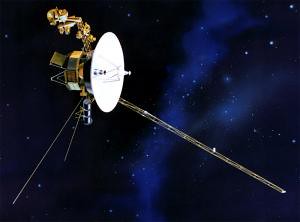
Voyager, 30 Years On… and On…

Tuesday, August 21st, 2007

Billions of miles away from earth, way past the edge of our solar system, Voyager 1 is quietly (we assume) celebrating its pearl anniversary this week.


Space.com reminds us of the two Voyagers’ origins: 

Voyager 2 launched on Aug. 20, 1977, and Voyager 1 launched on Sept. 5, 1977. Both spacecraft continue to return information from distances more than three times farther away than Pluto, where the sun’s outer heliosphere meets the boundary of interstellar space…

Voyager 1 currently is the farthest human-made object at a distance from the sun of about 9.7 billion miles (15.6 billion kilometers). Voyager 2 is about 7.8 billion miles (12.6 billion kilometers).

Originally designed as a four-year mission to Jupiter and Saturn, the Voyager tours were extended because of their successful achievements and a rare planetary alignment. The two-planet mission eventually became a four-planet grand tour. After completing that extended mission, the two spacecraft began the task of exploring the outer heliosphere.

During their first dozen years of flight, the spacecraft explored Jupiter, Saturn, Uranus, Neptune and their moons. These planets were previously unknown worlds. The Voyagers returned never-before-seen images and scientific data and helped make fundamental discoveries about the outer planets and their moons.

The spacecraft revealed Jupiter’s turbulent atmosphere, which includes dozens of interacting hurricane-like storm systems, and erupting volcanoes on Jupiter’s moon Io. They also showed waves and fine structure in Saturn’s icy rings from the tugs of nearby moons.

 
The NASA Voyager site also contains some amazing facts about the spacecraft, their navigation and observation technologies, and the scientific discoveries that they have made possible.

30 years is a long time, to be sure — but we should enjoy many more anniversaries to come: 

 Barring any serious spacecraft subsystem failures, the Voyagers may survive until the early twenty-first century (~ 2020), when diminishing power and hydrazine levels will prevent further operation. Were it not for these dwindling consumables and the possibility of losing lock on the faint Sun, our tracking antennas could continue to "talk" with the Voyagers for another century or two!


Satellite VoIP

Monday, August 20th, 2007

In remote areas with no reliable wired telephone services, deploying a voice over internet protocol system over satellite may be the best voice option. This can be problematic, however, mainly because of satellite latency:

Latency is the term that describes the time it takes to get a packet to its destination. It is usually expressed in milliseconds, or ms. Since the satellites are located 23,000 miles above the equator, and satellite signals travel at the speed of light, this journey takes approximately 540 ms. You then add on the latency of the various Internet hops and servers plus the VoIP provider’s network to end with a total latency in the range of 650 ms to 700ms or more depending on the state of the Internet itself. Another contributing factor could be the quality of your satellite signal which may cause packets to be resent. This latency is heard as a delay between the sender and the receiving ear. Users of VoIP over satellite need to learn how to communicate with this inherent latency much like the older press-to-talk radio phones. Further, the delay requires the users to be patient and refrain from interrupting the caller.

This excerpt comes from an informative white paper produced by Galaxy Broadband (below).

The recently released, DTECH WHISPER V0IP System hopes to solve some of these latency issues:

The integration of the WHISPER system with the iDirect line of satellite hubs and remotes can provide end users with up to a 600 percent increase in V0IP call capacity over a single remote iDirect satellite link. The system can also reduce the amount of bandwidth required to support standard V0IP traffic by more than 30 percent.

With its reliance on large numbers of small, delay sensitive packets, V0IP traffic can quickly stress the resources of a remote satellite link. The WHISPER V0IP System, based on DTECH’s small-footprint, high-performance integrated hardware platform, is powered by VX Software from Network Equipment Technologies to deliver greater network efficiency through packet consolidation, header compression, and call consolidation.

This feature set reduces the number of packets and overhead required to support a V0IP call. A 1.5 Mbps iDirect satellite link can support more than 150 simultaneous V0IP calls, while a 3 Mbps remote link can support more than 250 simultaneous V0IP calls. The combined increase in calls per packet with the reduced bandwidth required allows network operators to utilize the same space segment they currently lease to provide a more robust voice network and greater capacity for data traffic.

India – manned space flight?

Monday, August 20th, 2007

A months ago, we discussed Ukraine’s new space program — including its plan to independently launch three new satellites. While we are not seeing a new space race, the list of minor players (beyond the usual U.S.-Russian dominance) is expanding rapidly. The European Space Agency is implementing a number of new programs, from the Galileo positioning system, to the Herschel Space Observatory, to the ExoMars mission.

Now, India plans to join only the U.S., Russia, and China in sending humans into Orbit. Russian news-agency, ITAR-TASS explains:

India will invest within the coming five years some 1.5 billion U.S. dollars in the development of a set of technologies to carry out a manned space flight by 2015. Chairman of the Indian Space Research Organisation (ISRO) ManhaVan Nair said that most of the designing, research and technical jobs would be completed already within the current five-year period – up to 2012.

According to the ISRO-endorsed project, an autonomous orbital reusable space apparatus is to be developed to carry out the first such Indian mission. It is to be launched by means of an Indian-made GSI.V rocket. Nair admitted in his interview, published here on Monday, that Indian experts were yet lacking the necessary experience to build vehicles guaranteeing human safety on board. It is also necessary to increase the dependability of the booster rocket, which was earlier develop to place heavy satellites on a geosynchronic orbit.

ISRO is hatching some other ambitious plans, too. "The leading global space powers have already announced their preparations to set up manned bases on the Moon in 2020," Nair noted. "We believe India should not lag behind them," he added.

The "Chandrayan-1" project, envisaging the launching of an unmanned space vehicle to explore the Earth’s satellite, will be the first step "towards the moon" approximately a year later, stipulated by the Indian space program. The exploration vehicle with a net weight of 560 kilograms is to be lifted by a PSI.V booster from the national launching ground on Shriharikota Island, which is off the coast of the southern state of Andhra-Pradesh. Placed on a round-the-moon, it will take photographs of its surface. The experiment is expected to last about two years. It was earlier reported that the Russian Roskosmos Agency, as well as NASA and the European Space Agency, were invited to take part in the preparation of the Chandrayan-1 project. According to ISRO sources, the preparatory work is proceeding according to schedule. Several of the Chandrayan-1 components are already being tested.

DIY Friday: Satellite Gazebo

Friday, August 17th, 2007

Have an old, extra satellite dish? We’ve put them to good use in the past, consructing a wifi directional antenna and, better yet, a solar cooker. But where are you going to point the antenna and enjoy the BBQ (if that’s what you call a solar-baked entree)?

How about a satellite gazebo? These DIY’ers converted a vintage satellite dish (or a "BUD," big-ugly-dish, as they described it) into a surprisingly attractive gazebo.

The plan: Remove the satellite base, dig 2ft holes for six (or four or eight) 4×4 uprights, secure with concrete, mount dish with nails and wire, then nail lattice sides. The result:

Not bad. Not bad, at all.