Loral Buying Telesat

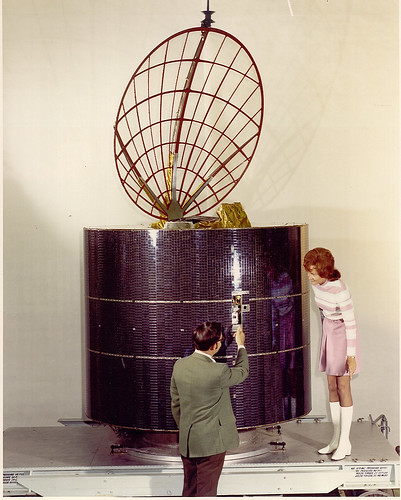
CFRA newsradio read the Wall Street Journal this morning and announced Loral and PSP were buying Telesat from BCE. Telesat was the first domestic satellite operator (Anik A, pictured below, was the first satellite).
Here’s the scoop from WSJ (subscription):

Loral Space & Communications Inc., in partnership with a Canadian pension fund, is expected today to announce a deal to acquire the Telesat satellite unit of Canada’s BCE Inc. for more than three billion Canadian dollars (US$2.59 billion), according to people familiar with the details.

As part of the transaction, Loral will contribute cash as well as all of its own satellite assets to form a new company, based in Canada, that will own and operate the combined satellite fleet, these people said. The structure is intended to create the fourth-largest global commercial fixed-satellite operator, with 11 satellites in orbit and four more under construction, while complying with Canadian laws restricting foreign ownership of such firms.

A Loral spokesman declined to comment, as did a spokesman for Telesat. It was unclear which pension fund was participating in the deal. The combined company would have an order backlog of more than C$5 billion for leasing in-orbit capacity to customers who use it to transmit video and data for applications ranging from television service to Internet connections. For the first nine months of this year, Telesat reported revenue of C$351 million.

By combining Telesat’s existing coverage over North America with Loral’s international business and longstanding ties to large customers and other operators, the new entity would be designed to compete more effectively against global satellite behemoths such as Intelsat Ltd. and SES Global SA of Luxembourg.

A deal would pave the way for BCE to follow its strategic plan to exit the satellite business. And the pension fund will have two-thirds of the voting rights in the new entity, the people familiar with the matter said. But Loral, which also had been toying with the idea of bailing out of what is known as the satellite-services sector, is expected to have control over two-thirds of the economic assets, these people said. Loral’s satellite-manufacturing business won’t be affected.

Consolidation among smaller satellite operators has picked up momentum following a spate of larger acquisitions over the past few years. Daniel Goldberg, who became president and chief executive of Telesat in September, will become chief executive of the newly formed company. Since the summer, BCE has been weighing an initial public offering of the unit in the U.S. and also inviting alternative bids from private-equity groups and others. Loral took part in the auction despite comments from Chief Executive Michael Targoff earlier this year that the New York company was considering exiting the segment because its fleet was too small to compete against larger global rivals.

Private-equity groups have invested nearly US$10 billion in various satellite-related acquisitions and mergers over the past few years, pledging to reduce capital expenditures and improve profitability. But the latest deal signals that the next industry trend may feature consolidation among regional and second-tier and third-tier operators, hoping to gain size and coverage to compete with global rivals.


Frisbee in Space


The Swedish astronaut on STS-116, Christer Fuglesang,  is a former Frisbee champion back home.  Philly.com reports he set a new world record for maximum speed aloft last Friday.

DirecTV Now Connects to Viiv Boxes


Very interesting post on Engadget this morning:

After DirecTV’s long-awaited HR20 HD DVR finally got its rightful announcements and actually hit users’ hands, it wasn’t too long before folks were plugging and praying in hopes of getting their new toy to play nice with that HTPC beside it. While we knew the two firms had gone hand-in-hand awhile back, we finally got the thumbs-up that a new, Viiv-alicious DirecTV Plus HD DVR would be unveiled soon to interact out-of-the-box with Viiv-enabled systems, but more importantly, that a software update was coming to the plain ole HR20s to accomplish the same thing. The time has come, and users are reporting over at DBSTalk that the “0×108 software” has opened up the Ethernet port for use, and allows browsing / connections via a Viiv-certified machine, but definitely made things difficult for those not exactly keen on shelling out for a few new components. Nevertheless, there’s already been somewhat of a workaround worked out, which allows PCs with just Windows MCE installed to “see” the HR20, but not “serve up files in a way that HR20 can work with,” which we’re all but certain will change as the wheels spin in owners’ heads. Reportedly, DirecTV is establishing a dedicated website to getting folks up and running with the new connectivity options, and be sure to keep an eye on the linked thread for any “future developments” regarding non-Viiv-savvy PCs.


But do you really need a Viiv PC? This Digger doesn’t think so.

DIY Friday: Build an Air Laser


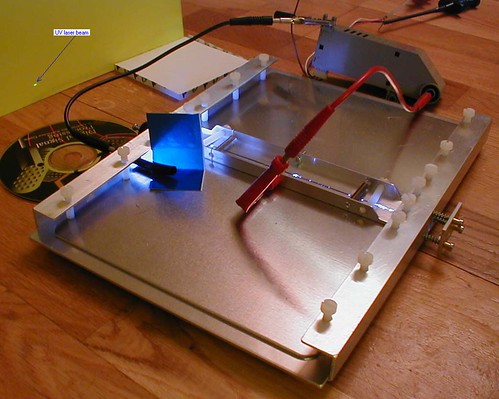
Ever dream of blasting your friends (or your enemies) with really freakin’ cool laser gun when you were kid? Well, it might not be the gun, but the MAKE blog points to a really cool how-two guide for building your own Air Laser. That’s right, "Laser" (insert Dr. Evil air quotes) technology for $10 and none of the crazy stuff that requires a government license and HAZMAT signage.

We describe a very simple laser: no special gas, no chemical products, no vacuum and no glass work! This Nitrogen laser uses normal air at atmospheric pressure. All you need is some metal parts and an about 10 kV 1 mA adjustable High tension DC source.

Dig it! Oh, and if you dig our DIY feature and haven’t checked out the MAKE blog or the quarterly magazine of the same name, do yourself a favor and take a look. You won’t regret it.


IPTV Movin’ and Shakin’

Longtime readers of Really Rocket Science know that we’ve been closely tracking the emerging (and soon to be explosive growth) in IPTV (see our posts here, here and here).

It’s expected that global household subscriptions to IPTV will leap from 2 million in 2005 to more than 34 million by 2010 — and with growth like that, you’d expect to see lots of players jumping into the game, or consolidating to form a larger team.

And indeed they are. Marketwire today carries a press release announcing that IPTV and advanced media services companies Auroras Entertainment, LLC and Broadstream Communications, Inc. have signed a Letter of Intent to merge following shareholder approval. The name of the combined entity will be Avail Media, Inc.

We heard this scoop a few days ago over at Fierce IPTV. From the press release:

  Ramu Potarazu, formerly COO of Intelsat and now CEO of Broadstream, will become CEO of Avail. Diane Smith, Auroras’ CEO, will become President of Avail. Rounding out the executive team will be Jon Romm – EVP of Sales, Marketing and Business Development; Steve Bukowski – EVP, Integration and Operations; Mike Kazmier – EVP, Technology; and Ben Goux – CFO. Both Broadstream and Auroras will be wholly owned entities of Avail Media.

It’s interesting that Ramu Potarazu and Jon Romm, formerly of Intelsat, are playing key roles in this new venture, especially considering rumors that Intelsat has internally killed its IPTV service. One wonders if the new venture will lead Auroras to move off of Telesat’s satellite.

In related news, the progress of other IPTV ventures is less than encouraging

And merger announcements aside, an obvious key to future IPTV success is content— and SES Americom has a clear lead in transport agreements with major content providers.

Nonetheless, we’ll continue to watch this space closely, and to bring you the latest news from the burgeoning IPTV market. 

ILS Launches Malaysia’s MEASAT3 Communications Satellite

International Launch Services successfully lifted Malaysia’s third and most powerful communications satellite — MEASAT3 — via a Proton rocket from ILS’s launch facility at Baikonur Cosmodrome in Kazakhstan yesterday.

On hand to witness the launch in person were Tai Kai Xin, age 10, and Izza Azreenah binti Azizan, 17 — winners of a launch drawing contest (link opens in PDF) that MEASAT Satellite Systems held for schoolchildren across Malaysia.

New Straits Times provides the details from the chilly launch pad: 

Cheers, sighs of relief, and even tears of joy flowed freely among most of the over 50 officials and invited guests who braved icy conditions and temperatures of -17 degrees Celsius to witness the lift off at 5.28am Kazhak time (7.28am Malaysian time).

As the countdown hit zero, the 5.5- tonne rocket, propelling the Measat 3 to its orbit in outer space, tore off almost silently from the launch installation with a huge ball of fire from burning fuel below propelling its upward trajectory.

Only seconds later did the blast off register to witnesses on the ground with a major tremor that jolted the surrounding areas and a delayed, deafening thud to sound the lift off.

Measat 3, which carries a payload of 24 C-band and 24 Ku-band, is the biggest satellite launched so far by owners Measat Satellite Systems Sdn Bhd which also has Measat 1 and Measat 2 already in operation.

The new satellite has a 15-year orbit mission life and will change the lives of Malaysians and alter the landscape of the regional satellite business.

The launch of Measat 3 was telecast live in Malaysia by sister firm and pay TV operator Astro, which will be a big user of the new satellite in future.

The event was also telecast live globally on the Internet by US-Russian joint venture firm International Launch Services (ILS) and top officials of ILS and Boeing, the makers of the satellite.

The ILS broadcast of the launch can be viewed (in its full 51-minute glory) here. Also be sure to check out ILS’s Launch Blog for additional details, as well as their photo gallery for some cool shots of the Proton rocket.

Behind the Scenes on the Shuttle Night Launch

After a delay due to weather, the Saturday night launch of the Space Shuttle Discovery marked the first shuttle night launch in more than four years.

The Discovery mission involves more than NASA, however: Playing a key role in analyzing the weather and the launch itself was the Air Force’s 45th Space Wing out of Patrick Air Force base in Florida.

Air Force Link provides a unique behind-the-scenes look into the role of the 45th Space Wing in Discovery’s launch:

Several units across the 45th SW played vital roles such as helping validate the pad after the shuttle rolled out, final ordnance installation, providing weather forecasts, organizing and training Department of Defense contingency response forces and media relations.

The wing also provided eastern range support with a vast network of radar, telemetry, meteorological, optical and communications instrumentation that helped facilitate a safe, picture-perfect launch….

Another of the ways the 45th SW supported this mission was monitoring restricted airspace near Kennedy Space Center and helping keep it clear during the launch window.

Staff Sgt. Adam Greer, of the wing’s 1st Range Operations Squadron, served as an aerospace control officer. He closely monitored a radar scope and had the capability to facilitate contacting pilots who strayed into the restricted airspace, if necessary, during the mission.

Sergeant Greer remembers watching space shuttle launches as a kid. He said it’s surreal that he is part of the launch team now.

"The fact that I played a role in space exploration by helping launch a mission to the International Space Station is something that will stay with me forever," he said.

The STS-116 mission is the 33rd for Discovery and the 117th space shuttle flight. During the planned12-day mission, the crew will continue construction on the International Space Station, rewiring the orbiting laboratory and adding a segment to its integrated truss structure. 

Click here for more information on the 45th Space Wing at Patrick AFB.

NASA has the BEST WEEK EVER! Oh, and wins a Nobel Prize…

Sure, shuttle disasters and budget cuts have left a chip on its’ shoulder, but many are arguing that NASA has had, in the words of that timeless Vh1 show, the best week ever! Between the surprisingly successful shuttle launch, the announcement of the agency’s plan to return to the moon, and now a Nobel prize, the AP explains, NASA is having a week better than the one you spent in Cabo with Heidi Klum.

The Nobel, of course, went to John C. Mather whose study of cosmic background radiation works to confirm much of the big bang theory. From the Nobel Committee:

"This year the Physics Prize is awarded for work that looks back into the infancy of the Universe and attempts to gain some understanding of the origin of galaxies and stars. It is based on measurements made with the help of the COBE satellite launched by NASA in 1989.

The COBE results provided increased support for the Big Bang scenario for the origin of the Universe, as this is the only scenario that predicts the kind of cosmic microwave background radiation measured by COBE. These measurements also marked the inception of cosmology as a precise science. It was not long before it was followed up, for instance by the WMAP satellite, which yielded even clearer images of the background radiation. Very soon the European Planck satellite will be launched in order to study the radiation in even greater detail."

Take a look at some of the photos tied to the announcement (rhetorical question: are all nobel prize-winning physicists not photogenic or does the Nobel prize committee actually seek out individuals who look odd in front of the lens?) and Mather’s acceptance speech.


Saturday Night Shuttle Launch

Gorgeous launch. I’ll be watching this mission on NASA TV


Ariane 5 Launches AMC-18 and Wildblue-1


Watched the launch live via satellite from French Guiana. A little cloudy, but still pretty cool. They may can it for viewing here.

Hope tomorrow’s STS-116 launch from Florida is clearer.

According to Arianespace:

Dans la nuit du vendredi 8 au samedi 9 décembre 2006, Arianespace a mis en orbite de transfert géostationnaire deux satellites pour deux opérateurs privés américains : WildBlue-1 pour WildBlue Communications et AMC-18 pour SES Americom.

Trentième lancement d’Ariane 5, seizième succès d’affilée

Ce nouveau succès du lanceur Ariane 5, le cinquième en 2006, confirme que l’offre de Service & Solutions d’Arianespace est la référence la mieux adaptée aux besoins des opérateurs, qu’ils soient privés ou institutionnels.

Au cours de ces 12 derniers mois, Arianespace aura mis en orbite douze satellites de télécommunications et une expérience technologique.

Aujourd’hui, Ariane 5 est le seul lanceur opéérationnel disponible sur le marché commercial capable de lancer simultanément deux charges utiles.

Au service de deux clients américains prestigieux

Le choix d’Arianespace par un nouvel opérateur du secteur des télécommunications spatiales américains et par le plus grand opérateur de services par satellites aux Etats-Unis, illustre la reconnaissance d’un service de lancement de qualité.

C’est en utilisant les capacités du satellite Anik F2 de Telesat, lancé par Ariane 5 en juillet 2004, que la société WildBlue Communications, basée dans le Colorado, a lancé son activité Internet. WildBlue-1 permettra à WildBlue Communications d’élargir son offre en large bande à destination des utilisateurs privés et des petites entreprises dans les zones où l’offre terrestre est actuellement inexistante.

Le satellite AMC-18 est le vingt-cinquième satellite confié au lanceur européen par le groupe SES Global (Euronext Paris et Bourse du Luxembourg : SESG), le plus grand opérateur privé de satellites au monde. Le satellite AMC-18 sera exploité par SES Americom, premier fournisseur de services par satellite aux Etats-Unis, qui exploite une flotte de 18 satellites en orbite, fournissant principalement ses services sur l’ensemble du continent américain. En tant que membre de la famille SES Global, SES Americom est aujourd’hui à même de fournir des solutions de télécommunication de bout en bout dans toutes les régions du globe.