Kenyan Post Office, Citizens Cut Off from Satellite-based Internet

In his best-selling memoir Dreams from My Father, U.S. Senator Barack Obama wrote extensively about how corruption in his father’s native Kenya constantly thwarted his father’s ambitions and drive toward personal and economic betterment.

Obama recently returned to Kenya; now it appears that such corruption continues to this day. According to BusinessDay, the Kenyan Post Office and the citizens who used the cheap, high speed Internet access available at their local post offices had their satellite-based access to the world-wide web cut off due to lack of payment. Universal Satspace, a satellite communications company-based in Israel (or Delaware, depending on who you ask) had to cut off the service after the African country failed to pay its bills for over five quarters and owed more than $12.3 million dollars to the company.

First reported last month in All Africa, the Kenyan government is supposedly holding back its payment to Universal Satspace because it suspects that the contracted is connected to government contract-leasing scandal that has emerged in the country over the past year and a half. Universal Satspace is, understandably, fervently denying any allegations of wrong doing, claiming that the Kenyan government is using the claims of corruption as a way of getting out of making the necessary payments.

The real tragedy, of course, is that the country’s refusal to pay and Universal Satspace’s response has resulted in the Kenyan people’s disconnection from the Internet. According to the Business Day report, while the agreement’s main goal was to modernize the state’s postal system (which, in turn, has made it a model for the rest of Africa) the introduction of Internet service to even the most rural of post offices enabled the government to provide its people access to fax and Internet service at prices far lower than what was offered by Internet cafes.

As we can see in the video above, the service really worked and was doing a great deal to connect Kenyans to growing online communities. Hopefully, an agreement between Universal Satspace and the government can be worked out soon.
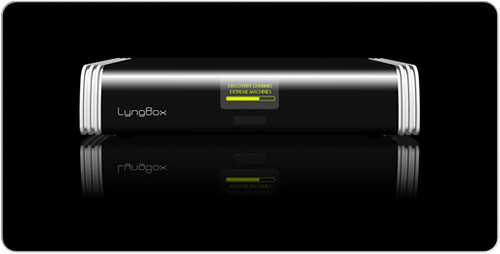
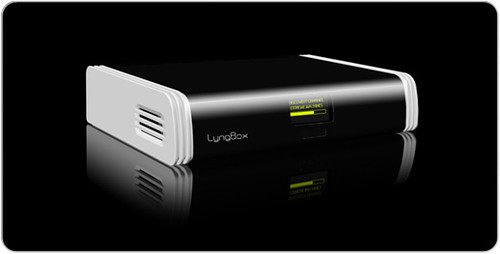
New Satellite Receiver Stores 50,000 Channels; Can Be Used Worldwide

Most “satellite people” are very familiar with the Lyngsat Web site. It could very well be the world’s most complete database of accurate satellite ladder charts. Pick a satellite and you can view all the channels available for viewing. For example, the AMC-4 satellite carries a number faith-based and international channels in North America. On another site, LyngSat Address, select a country and you can find out which satellites their channels are using for broadcasting – in their home market and internationally. TV Prima Romania, for instance, is using several satellites over Europe, Asia and the Atlantic.

Get ready for the LyngBox.

We were tipped off by a Polish Web site in February about a new project involving LyngSat for a “super receiver” based on the DVB-S2 standard, but also capable of receiving DVB-T and decoding HDTV:

Christian Lyngemark – właściciel legendarnego serwisu satelitarnego www.lyngsat.com – zamierza wprowadzić na rynek "superodbiornik" HD combo DVB-S/DVB-T.

Projekt prowadzony jest przez firmę Lyngsat Media AB i Europejską Agencję Kosmiczną ESA. Najważniejsze cechy planowanego odbiornika to dwie głowice – satelitarna i naziemna, odbiór w nowym standardzie DVBS2, dekodowanie zarówno MPEG-2 jak i MPEG-4 oraz dysk do zgrywania programów.

Największą nowością ma być łączność przez internet z portalem www.lyngsat.com i automatyczne aktualizowanie listy programów satelitarnych.


The Swedish National Space Board found it interesting as well:

Lyngbox är ett av de företag som för första gången 2005 genomför projekt med Rymdstyrelsens stöd. Lyngbox utvecklar ett intressant koncept för att via en databas på Internet automatiskt ställa in kanalerna på satellit-TV-mottagare, oberoende av var I världen man befinner sig.

More than a little intrigued, we looked it up and found it: a European Space Agency (ESA) project, for a telecom application called “LyngBox.” They set out to build a satellite receiver last July that would be able to continuously update itself from data published on the Internet. Brilliant. The ESA and Hollycroft Associates got together with LyngSat to develop this new “super satcom box” and got into the development work last December. Could they be using some of the new chips introduced at CES? According to the Swedish patent filing (see PDF, page 26) from earlier this year, this receiver can do it all.

With the patent issued, Lyngbox is set to debut at the IBC show in Amsterdam on Friday, 8 September 2006. Along with a 160-gig drive, it has all the features you’d expect:

Features:
> Can store up to 50,000 channels
> Free access to all LyngSat Network services (LyngSat, LyngSat Guide and LyngSat Maps) with exclusivity to the LyngBox. No other receiver has access to these services
> Always corrects channel names, not relying on service names in the DVB stream
> Family user profiles and parental lock. Each user can have their own selection of channels based on countries, languages and genres which will be updated automatically
> HDTV support (720p and 1080i)
> Supports H.264/MPEG-4 AVC and MPEG-2
> Built-in tuners for both satellite TV (DVB-S/DVB-S2) and terrestrial TV (DVB-T)
> Internal slot system which makes it possible to install an additional tuner card
> 4:3 and 16:9 TV screen format support
> Teletext decoding
> Dual Common Interface slots for use with pay-TV channels
> PVR functionality with hard disk
> Possibilities to store recordings on an external DVD recorder connected with USB2
> DiSEqC 1.2 support for controlling LNB and motorised dish
> Remote control as standard and a wireless remote keyboard as accessories
> Channel selection by typing the name of the channel on the keyboard
> View images from a digital camera connected to the LyngBox

Interfaces:
> DVB-S2 input
> DVB-T input + output (pass-through)
> Expansion slot for additional tuner card
> 2 Common Interface slots
> HDMI-output.
> Component output
> Composite output
> SCART output (RGB and composite)
> S/PDIF optical output with AC-3 support
> Stereo audio (2 RCA)
> 4 USB 2.0 ports
> Ethernet connection (100BaseT)


Antennas on the Move


Andrew’s new MilSatCom 2.4 Meter Nomadic Antenna offers superior features—such as light weight design, high radio frequency performance, efficient gear driven pedestal mounts for high accuracy, and quad-band operation. The new antenna will debut at IBC 2006 in Amsterdam from September 8-12.

“Customers will find that Andrew has combined the best and most needed features into a single antenna system that meets the requirements of high-end users in the commercial and government sectors,” said George Tong, director, Government/Radar, Satellite Communications Group, Andrew Corporation.

The durable antenna supports interchangeable feeds that are engineered for simple removal and replacement in hostile or challenging communications environments, such as military situations, disaster relief efforts, and natural resource exploration.

Andrew’s Satellite Communications Group provides a complete line of antennas from 46 centimeters to 11.5 meters for all enterprise, government/military, and consumer satellite communication applications. Andrew-designed and -built products—which cover C, Ku, K, X, and the emerging Ka band—include type approved earth station antenna hubs and gateways for broadband and broadcast, VSAT broadband antennas for consumer and enterprise customers, DBS antennas for home satellite broadcast systems, and complete installation and testing services.

Shuttle Launch Delayed

Maybe tomorrow? The AP reports:

NASA postponed the launch of space shuttle Atlantis by another day after discovering a problem with a fuel cell early Wednesday.

The fueling process had yet to start when one of three cells that provide electricity to Atlantis malfunctioned. The space agency planned to further examine the problem, and if possible try to launch at 12:03 p.m. EDT Thursday.

"The launch rules say you need to have three good, operating fuel cells," said NASA spokesman Bruce Buckingham. "We’re going to see if it’s something that’s a real problem or whether it’s something we can rectify."

The problem was discovered shortly before an overnight meeting to decide whether to start pumping the shuttle’s fuel tank with supercold liquid hydrogen and liquid oxygen. When the shuttle’s fuel cells were powered up, a low voltage reading came from one of the units, and the other two spiked up to compensate.


Atlantis to Launch Tomorrow at 12:29 pm EDT

The Space Shuttle Atlantis is set to (finally) lift off tomorrow, Tuesday, September 6th at 12:29 pm EDT. NASA’s launch blog should begin coverage of the event around 6:30 am tomorrow.

Weather has twice delayed the start of STS-115. Lightning at Kennedy Space Center on August 25th delayed the previously-scheduled launch, and then the Atlantis crew had to wait out the passing of Tropical Storm Ernesto.

The launch of STS-115 will make history when it carries Heidemarie Stefanyshyn-Piper, the first Ukrainian-American into space. (Be sure to check out her biography or this interview.)

As always, we’ll bring you updates on the launch of the Shuttle as the countdown begins.

Cool New M-Shaped Boat for the Navy

While its use of the global positioning system or SatCom may be its only direct tie to satellites, the new Twin M hull vessel “Stiletto” was too cool to avoid mention here on RRS. In addition to looking really cool, the craft offers new advances in watercraft design, it’s twin M hull allowing the craft, according to M Ship Company’s (it’s maker) website, "[recapture] the bow wave using its energy to create an air cushion for more efficient planing."

Navy SEALs are already using the technology according to a navy website:

"The Stiletto’s patented M-shaped hull provides a stable, yet fast, platform for mounting electronic surveillance equipment or weapons, or for conducting special operations. The hull design does not require foils or lifting devices to achieve a smooth ride at high speeds in rough conditions. Its shallow draft means the M80 Stiletto can operate in riverine environments and potentially allows for beach landings."

Although tangential to a lot of what we cover on RRS, the Sitletto really shows the interesting work that is being done around the country in engineering. Awesome stuff!

Backyard International Teleport

Hats off to Doug Lung, who just published this masterfully researched piece in his weekly RF Report:

Last week the FBI raided Javed Iqbal’s Brooklyn storefront and his house in Staten Island, which was home to an FCC-licensed earth station (E040456). Iqbal was arrested for making available broadcasts from Al-Manar, a Hezbollah-controlled Arabic TV station based in Lebanon. Articles in the Washington Post and the New York Times cover the legal and political side of Javed Iqbal’s arrest but provide little information on Javed Iqbal’s HDTV Corp. satellite and uplink operation. I was intrigued by the operation of an uplink that has attracted worldwide attention from its owner’s back yard! Using information available on the FCC Web site, Lyngsat.com, Iqbal’s own Web site www.hdtvuplink.com and satellite operators’ Web sites, I was able to gain more insight into the technical operations of HDTV Corp.

According to its Web site, HDTV Corp.’s customers include several government agencies: FEMA, the FBI, the U.S. Department of State, NASA, the U.S. House of Representatives and others. Several large international companies, including Shell, Exxon Mobil, General Dynamics and Fluor are also listed as customers.

Once you’ve browsed through the HDTV Corp. Web site take a look at the picture at the top of the article, "New York Man Charged With Enabling Hezbollah Television Broadcasts". Information on Iqbal’s uplink is available using the Quick Search feature on the FCC International Bureau’s IBFS Web page. The only license I could find using his company name — HDTV.LTD is what shows up in the FCC database — and his FRN 0011344298 was E040456, granted in January 2005. This authorizes a Ku-band uplink at 242 Van Ness Avenuein Staten Island, NY. The application for the license specifies "ALSAT" as the points of communication (these are all the U.S. licensed satellites, plus those on the FCC’s permitted list) and shows the antenna as a Radiation Systems 240AT 2.4-meter dish. Maximum input power is listed as 290 watts. Can you find that satellite dish in the photo?

News reports indicated that Iqbal was arrested because he was supporting terrorist activities. At least one report notes that since the U.S. has determined Hezbollah is a terrorist organization, doing business with it is a clear violation of U.S. law. How did Iqbal bring Hezbollah programming into the U.S.? It is unlikely he paid Hezbollah for the programming. According to the premier source of satellite information, LyngSat.com, Al-Manar TV, the Hezbollah channel Iqbal was arrested for distributing, is available on at least three satellites, Arabsat 2B, Badr 3, and Nilesat 102 at no charge. My research showed none of these satellites have a footprint that reaches the U.S. However, www.hdtvuplink.com says HDTV Corp. has teleports in the Pakistan and the United Kingdom, where the Al-Manar satellites can be received.

The LyngSat listing for the Amazonas satellite at 61 degrees WL shows HDTV Corp. as having a portion of transponder 1(V), at 11,972 MHz. The LyngSat listing for HDTV Teleport shows Iqbal’s company had access to Telstar 12, Hispasat 1C, as well as Amazonas. Any of these could be used to relay signals from Pakistan or the United Kingdom to the United States.

Did Javed Iqbal simply provide a way for his customers in the United States to see Middle Eastern satellite broadcasts, or was he supporting or promoting terrorism through his relays? The Times article considers this. If the customer list is accurate, it appears that the U.S. government used his satellite services. It will be interesting to see how this case develops.

An article in today’s New York Sun, titled "D.C. Lobbyist is Key in Stopping Hezbollah Broadcasts," indicates that a Coalition Against Terrorist Media lobbyist may have been responsible for shutting down a satellite service that the U.S. State Department may have been using.

Could broadcasters be arrested for showing video from a terrorist organization? To follow this story, use this Google News search. While none of the articles have the technical detail I’ve provided here, they provide an interesting look at the legal issues in this case from several different perspectives, including possible First Amendment problems with the case.


GPS for Pets

I’ve been accused of being a crazy cat lady from time to time, and I can live with that. And I have a penchant for tech toys and all things geek. So it figures that I would come across this new product while surfing.

A company called Petsmobility, Inc. says they plan to release a GPS cell phone for dogs:

Measuring approximately 5 cms wide, 2.5 cms thick and 9.4 cms long, the PetsCell™ sets the standard for GPS tracking devices for pets. Unlike any other ‘Rush to Market’ products currently available. The PetsCell™ utilizes the new CDMA / GPS tracking technology, rather than the current GSM technology. This technology is so new, PetsMobility is the first company to be provisioned by network providers to use this technology in the (LBS) pet industry.

I don’t know if I like this idea or not. I guess it can work but…calling my pet’s cell phone? Using GPS to track where my dog has been all day?


European Airline to Allow Mobiles Onboard

An article in today’s issue of the Financial Times, says that flights on discount airline, RyanAir, are going to make use of mobile telephones available on their entire fleet of Boeing 737-800s over the next two years. AirFrance will launch the first trial of the same system, which uses technology developed by OnAir, in February, while RyanAir hopes to have obnoxious ringtones going off at 35,000 feet starting in July. BMI British Midlands and TAP Air Portugal will also be testing the OnAir system in Q2 2007.

For those that are worried about the inevitable volume increase the addition of mobile phone service to airliners will cause, Ryan Air’s Chief Executive Michael O’Leary tells customers to expect nothing less from his airline.

"If you want a quiet flight, use another airline. Ryanair is noisy, full and we are always trying to sell you something."

Nonetheless, there is some hope that airlines without Ryanair’s brashness will limit the calling to some degree: According to the Financial Times piece, pilots can control the service and are likely to switch to "silent" mode on night flights, blocking calls but allowing text messages.

The UAV Invasion

I’m picturing a sky filled with flying robots. Believe me, I’m not being paranoid here. I know I keep going on and on and on about them, but they seem to be everywhere lately. Everyone’s using them for something, and building better versions of them every day.

Remember that competition in Europe? Remember that European robotics contest back in May, that featured flying robots (a/k/a UAVs)? Turns out there was one that took place stateside back in July, in Fort Benning, GA: the International Aerial Robotics Competition.

The winners were a team of students from the South Dakota School of Mines and Technology. And this after losing their primary remote-controlled helicopter. Luckily they waited a few hours after the final competition to crash their back-up device.

sduav4Long days and sleepless nights paid off for a team of students at South Dakota School of Mines & Technology that finished first in the International Aerial Robotics Competition at Fort Benning, Ga., July 24-27.

The team rebounded from the loss of its primary remote-controlled helicopter only to crash its backup helicopter within hours of the final round of competition.

“Not many of us slept before it (the competition),” team manager D.J. Kjar of Custer said. He said some team members worked 43 consecutive hours, slept for five to six hours … and then went back at it.”

…After crashing the primary helicopter two weeks before the event, the team’s backup helicopter was wrecked during a practice flight when its engine failed the day before the flight competition.

Tech learned at a banquet the night before the flight contest that it was leading with firsts in best paper, best presentation and best team T-shirt design.

“That really renewed everybody’s strength,” Kjar said. The team worked all night to rebuild the helicopter.

Tech and the University of Alabama had the only vehicles that successfully completed the flight course.

The South Dakota team has website featuring photos and videos of their robots in flight.

One of the South Dakota students quoted in the article above mentioned that this technology might have potential for military use. Um, yeah. Turns out the Army already has one — called the Shadow 200 TUAV — zipping around the skies above Alaska.

shadowtuav

There’s photos and videos of that one in action too.

Now, if you’ll excuse me, there’s a buzzing I keep hearing outside my window and I must investigate…